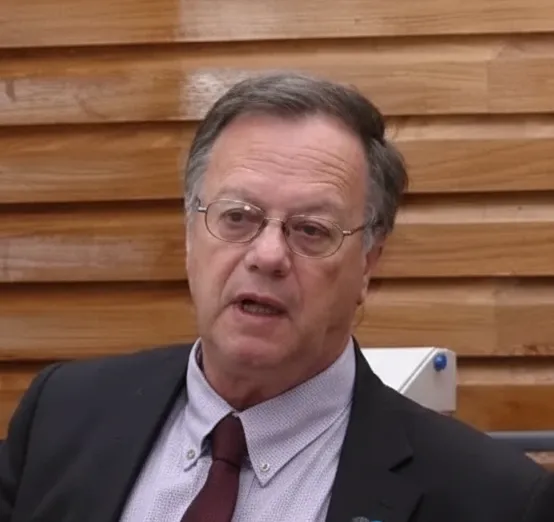
Giorgio Gaviraghi
Giorgio Gaviraghi is an Italian Architect, Space Architecture Researcher, Industrial Designer, and the Founder and CEO of Exponential Design Lab (EDL), a design and project management company specializing in advanced and global projects.
He is the Editor-in-Chief of the Aeronautics and Aerospace Open Access Journal (AAOAJ) published by MedCrave, and a Professor at the Universidade Federal de Mato Grosso (UFMT) in Brazil, where he teaches Astronautics and Exponential Creativity, a disruptive postgraduate course focused on innovation.
With a career spanning over five decades across architecture, aerospace, industrial design, and space development, Giorgio has established himself as a visionary thinker at the intersection of architecture, technology, and humanity’s expansion into space.
Giorgio has specialized in space architecture for advanced projects and proposals for major space agencies. As a tutor for college and high school students, he has guided teams to over 18 prizes in international space settlement and space-related competitions, including a Grand Prize from NASA Ames in 2007 for the Ecopolis artificial planet project. He is the author of more than 80 papers covering space exploration, transportation, city planning, and design, published across peer-reviewed journals and major aerospace conferences.
As Editor-in-Chief of the Aeronautics and Aerospace Open Access Journal, Giorgio oversees a multidisciplinary, internationally recognized, peer-reviewed open access journal covering all aspects of aeronautic engineering, astronautic engineering, and aerospace engineering. His recent publications in the journal include Essential Moon: A Framework for Permanent Lunar Development, Roadmap to Interstellar Travel, Future Multiplanetary Economy Utilizing the Space Elevator, The Ring — An Optimized Spaceship for the 21st Century, and SpaceMed: A Healthcare System for Space Habitats.
In his Essential Moon paper, Giorgio presents a comprehensive framework for establishing a permanent human and robotic presence on the Moon, centered on a fully reusable Cruiser–Feeder Transportation System and standardized modular containers.
Giorgio founded Exponential Design Lab (EDL) in December 2007, operating from Latin America with clients worldwide. The company specializes in advanced projects spanning disruptive innovations in city planning, transportation, mobility, product design, and ecosystems.
He was also the Founder of Pianeta Marte, an organization whose main goal was to propose innovative designs to the world’s industry, with more than 1,000 innovative proposals in its pipeline. Among these are AstroHab, an extraterrestrial construction system for the assembly of space stations on other celestial bodies utilizing local materials, as well as novel concepts of space development, such as a deflected asteroid as a cycler for affordable Moon or Mars missions. Read Design Concepts for Space Settlements.
Giorgio is also the Founder of the Star Voyager organization for the advancement of space development and interstellar travel. Giorgio is a Member of the Team at Hanu Ventures, a global venture capital group focused on extending human healthy longevity by supporting the growth of companies working on emerging exponential technologies, including biotechnology, nanotechnology, robotics, computing systems, and brain-computer interface systems. His addition to the team was announced publicly in August 2024.
Hanu Ventures’ portfolio companies receive global exposure through major international conferences, with the team participating in events across the United States, London, Dubai, Canada, Spain, Belgrade, Budapest, Portugal, and Abu Dhabi. Hanu Ventures’ portfolio companies gather annually in Portugal to network, strategize, and receive strategic advisory from world-class visionary leaders and investment experts.
Between 2013 and 2014, Giorgio was the Cofounder of UNISPACE-EC. He was a partner in the ACHEON (Aerial Coanda High Efficiency Orienting-jet Nozzle) project, funded under the EU FP7 programme (Grant Agreement no. 309041). ACHEON was run by a multidisciplinary consortium of six organizations — four universities, one research and technology transfer organization, and one research-intensive SME — from four European countries. He was additionally a partner in the MAAT project consortium for a revolutionary airship-based air transportation system, also sponsored by the EU.
In his early career, Giorgio worked as a Project Architect and then as a Project Manager at the Austin Company, an international design and construction firm, where he managed international projects. He subsequently served as CEO for international companies operating in Europe, the United States, Latin America, and the Middle East in the fields of design, construction, aerospace facilities, real estate, and touristic resort development.
In various capacities, he was responsible for major initiatives worth over $500 million, including the design and construction management of the reconstruction of thousands of buildings damaged by the 1976 Friuli earthquake, an aerospace facility for commercial aircraft final assembly for Aeritalia–Boeing, an aircraft overhauling facility for HAI in Greece, advanced testing facilities for the SDI initiative in the United States, high-rise buildings in New York, and several touristic resorts in Sardinia and the Red Sea region.
As a product designer, Giorgio co-designed the Kartell 4850 chair in 1965 alongside Giorgina Castiglioni and Aldo Lanza, while still a student. This chair is recognized as the first chair ever made in the world in a single stackable monocoque, a groundbreaking achievement in industrial design that earned international recognition.
Giorgio earned his degree in Architecture from the Politecnico di Milano in 1968. He subsequently completed postgraduate management courses at New York University (NYU) in 1982, followed by additional graduate studies in management, marketing, and design at several leading international universities.
He is a Member of the Ordine degli Architetti di Milano. Giorgio has delivered courses at universities across Europe and Latin America. He is the author of several books, including Global Challenges, Mapping the Future: The Sapientia Scale, Future Evolution, published by the Lifeboat Foundation, and the science fiction novel First Contact.
In Future Evolution, he explores humanity’s transformation from a planetary to a cosmic species, covering the emergence of Homo Technologicus through biotechnology and brain-computer interfaces, the development of human-AI symbiosis, and the eventual evolution toward what he calls the OMNI Continuum — the long-term merger of knowledge, energy, and consciousness. In Mapping the Future, he introduces the Sapientia Scale, a knowledge-based scale to measure societies’ progress, which he has applied in subsequent research papers on interstellar travel and space development.
Giorgio is based in Milan, Italy. He has presented papers at major aerospace conventions and conferences and has been featured at events including the Unicorn Summit Europe in Portugal. He has been a featured speaker at the Chicago Society for Space Studies and at numerous international conferences on neuronanorobotics, biotechnology, and future technologies.
Visit his LinkedIn profile, ResearchGate profile, and Hanu Team profile.