Toggle light / dark theme

Novel prosthetic design combines AI and 3D printing to improve fit

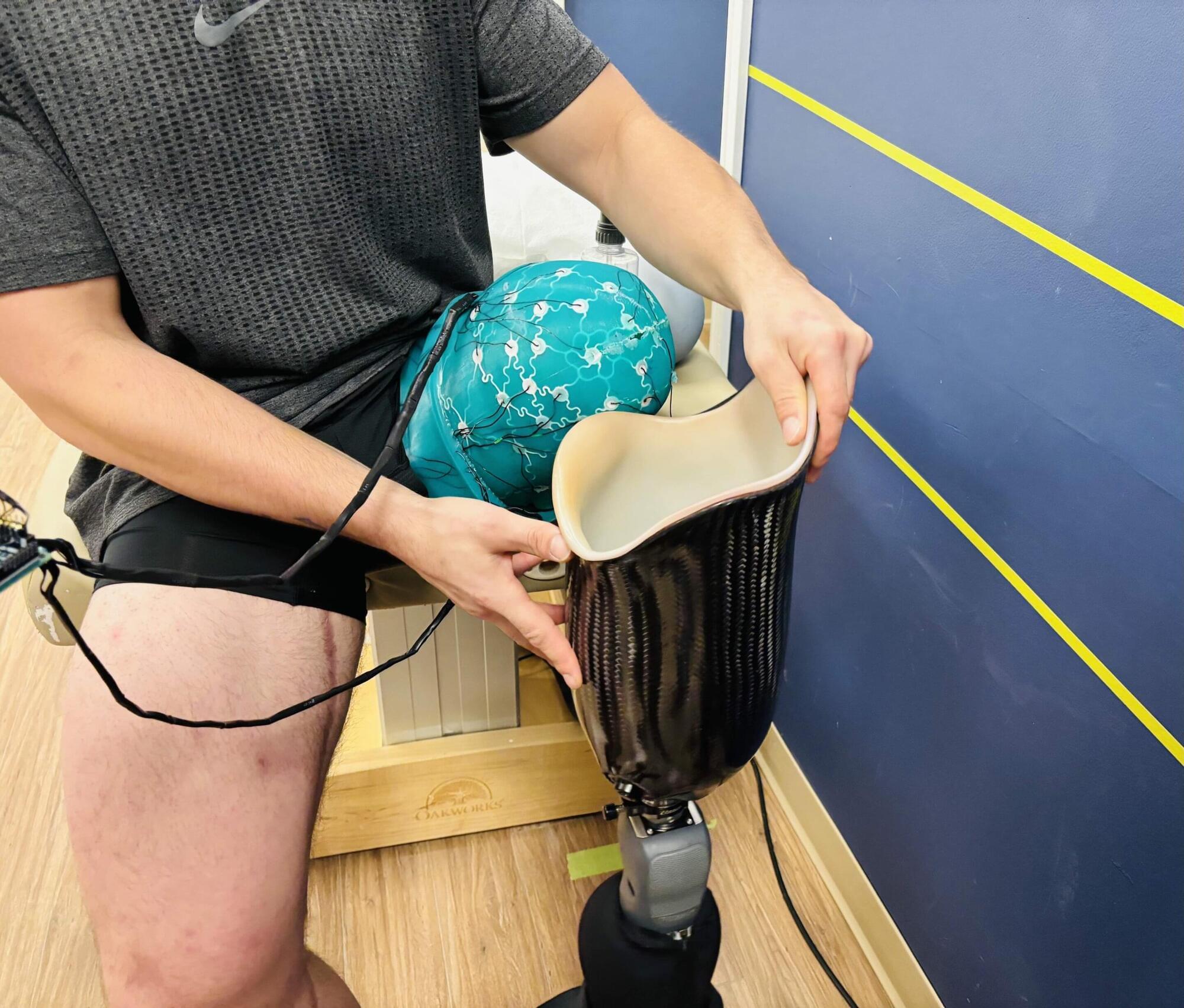
A new, fully customizable 3D printed socket design is set to transform the prosthetics industry. The reimagined limb socket interface combines highly personalized pressure mapping with AI software and a lighter infill, creating a highly customized prosthetic that’s more comfortable to wear, for much longer, say researchers at Simon Fraser University.

3D-printed ‘plug’ links fiber optics to photonic chips with low loss

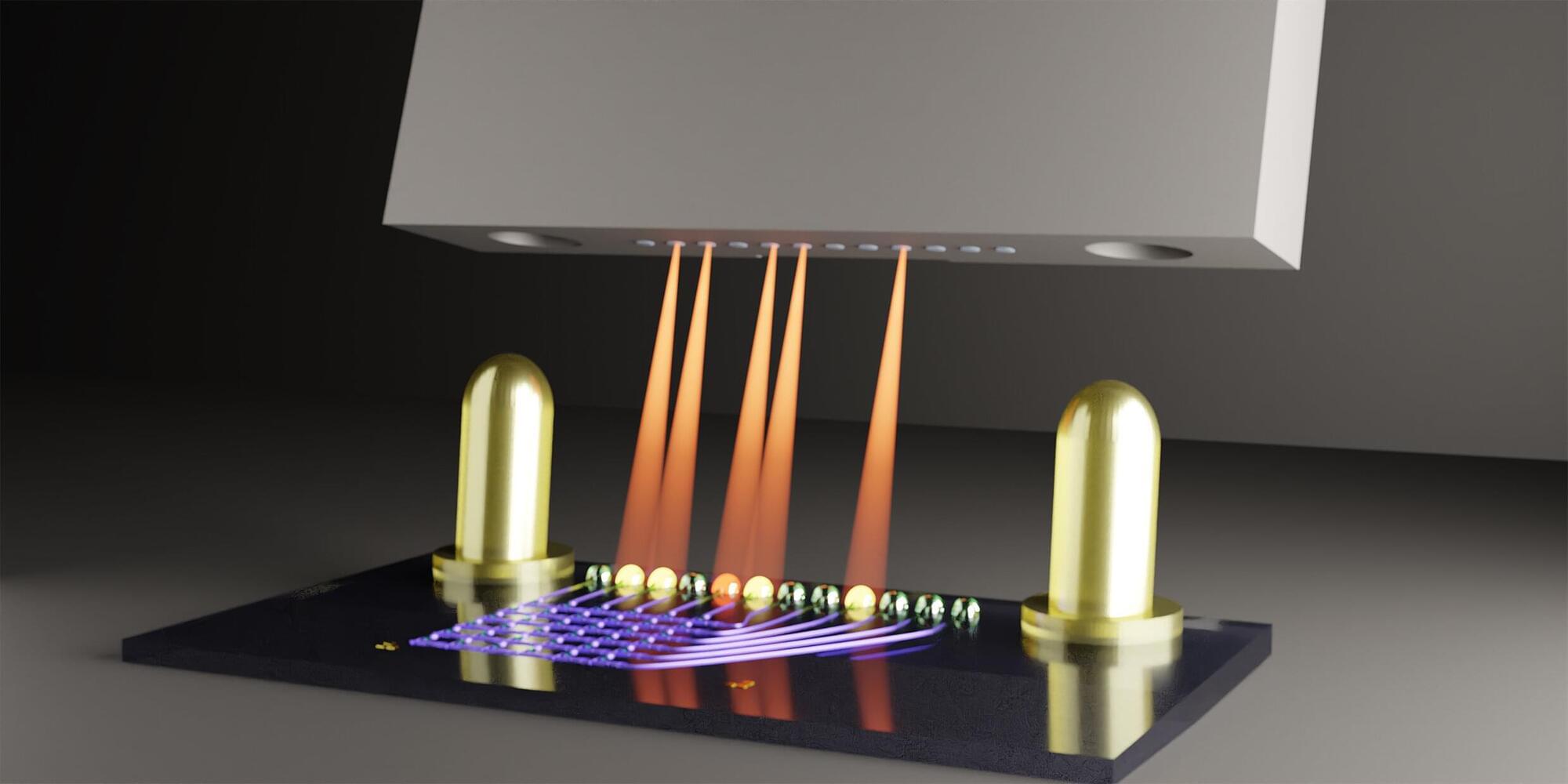
Physicists and chemists at Heidelberg University have realized a photonic microchip that is driven by light just as easily as electronic components via a “plug.” Their development could serve as the basis for fast and cost-effective production of photonic integrated systems that are of great importance for implementing innovative computing and communications systems.

Prof. Dr. Wolfram Pernice of the Kirchhoff Institute for Physics headed up the research on this novel coupling concept for light-controlled chips. The results appear in the journal Science Advances.

3D printing with moon dirt for lunar habitats

“By combining different feedstocks, like metal and ceramics, in the printing process, we found that the final material is really sensitive to the environment,” said Sizhe Xu. [ https://www.labroots.com/trending/space/30260/3d-printing-mo…habitats-2](https://www.labroots.com/trending/space/30260/3d-printing-mo…habitats-2)


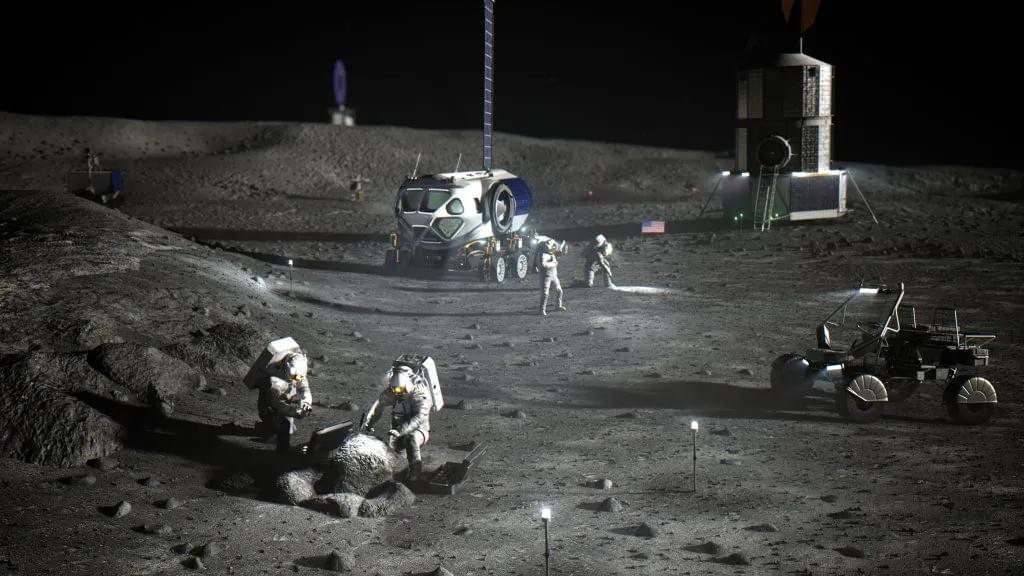
How can lunar regolith be used to construct future habitats on the Moon? This is what a recent study published in Acta Astronautica hopes to address as a team of scientists investigated novel methods for using lunar regolith for making structures on the lunar surface. This study has the potential to help scientists, engineers, mission planners, and future astronauts develop methods for working and living on the Moon, which comes as NASA’s Artemis program plans to land humans on the Moon in 2028.

For the study, the researchers examined how a laser 3D printing method called laser directed energy deposition (LDED) could be used for manufacturing structures using lunar simulant under a myriad of environments, specifically lunar conditions of zero atmosphere, oxygen, and complete vacuum. The lunar simulant used for the experiments is known as LHS-1 (lunar highland regolith simulants), with the lunar highlands being the lighter-colored mountainous regions of the Moon as seen from Earth, as opposed to the volcanic regions of the Moon that are darker in appearance.

Along with the environmental conditions, the researchers also examined how printing LHS-1 on various types of surfaces yielded different results. They also examined laser speed, scanning power, and the final microstructure products. In the end, the researchers found that alumina-silicate ceramic surfaces and high temperatures produced the most promising structures but cautioned that laboratory conditions vary from the real-world environment on the Moon.
A puddle that jumps: What bubble bursts reveal about water on lotus-like surfaces

Water droplets have a unique ability: They can leap from a surface on their own. This can happen for a variety of reasons, such as when a surface repels water or when heat is involved, such as a water or oil droplet skittering across a hot pan.

It also happens at a very small scale. Up to this point, researchers have observed droplets up to 3 millimeters in diameter exhibiting this behavior. When droplets are larger than that, gravity prevents it from jumping.

A new study published in Nature Physics identifies a previously unreported way to get a puddle of water up to a centimeter wide to jump into the air, something that could support applications from surface cleaning to 3D printing.

New Technique for 3D Printing Artificial Muscle Paves the Way for More Freaky Robots

While 2026 has been an objectively terrible year for humans thus far, it’s turning out—for better or worse—to be a banner year for robots. (Robots that are not Tesla’s Optimus thingamajig, anyway.) And it’s worth thinking about exactly how remarkable it is that the new humanoid robots are able to replicate the smooth, fluid, organic movements of humans and other animals, because the majority of robots do not move like this.

Take, for example, the robot arms used in factories and CNC machines: they glide effortlessly from point to point, moving with both speed and exquisite precision, but no one would ever mistake one of these arms for that of a living being. If anything, the movements are too perfect. This is at least partly due to the way these machines are designed and built: they use the same ideas, components, and principles that have characterised everything from the water wheel to the combustion engine.

But that’s not how living creatures work. While the overwhelming majority of macroscopic living beings contain some sort of “hard” parts—bones or exoskeletons—our movements are driven by muscles and ligaments that are relatively soft and elastic.

3D-weaving tech that uses body-scan data from shoppers could mean a better fit, fewer returns, and a zero-waste future for fashion

3D-printed designs and 3D-woven clothing by tech startup Unspun hints at what the fashion industry’s sustainable, zero-waste future could look like.

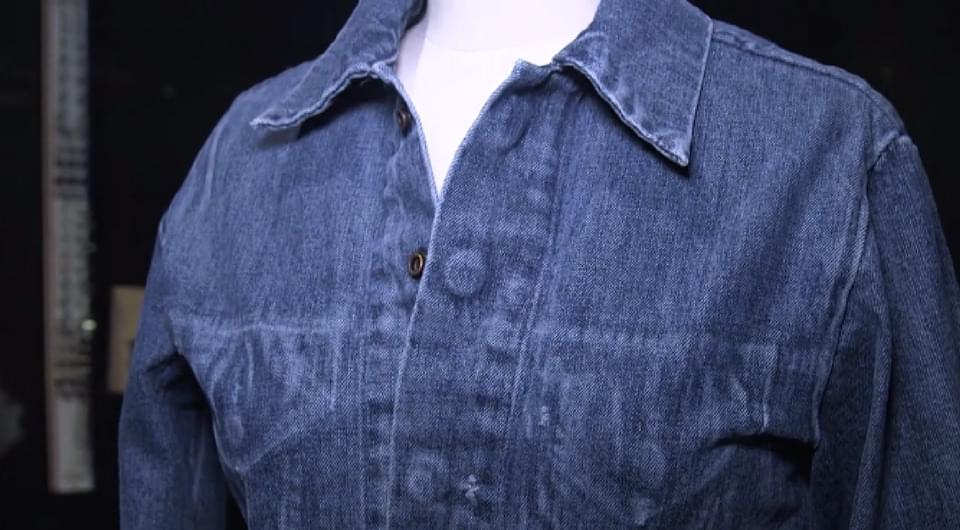
Levi’s® Tests 3D Printing Technology

Over 50 years ago, the classic Levi’s® Trucker jacket was introduced. But we are not one to rest on past accomplishments.

Now, the brand is turning to futuristic modes of innovation in manufacturing, pioneering a new approach in denim design.

Fast Company joined Levi’s® Head of Global Product Innovation, Paul Dillinger, at the Autodesk Pier 9 Workshop in San Francisco to witness how Levi’s® has been experimenting with 3D printing, creating digital renderings of the denim jacket which is essentially a shell of what the “real” thing could look like.

New sound-based 3D-printing method enables finer, faster microdevices

Concordia researchers have developed a new 3D-printing technique that uses sound waves to directly print tiny structures onto soft polymers like silicone with far greater precision than before. The approach, called proximal sound printing, opens new possibilities for manufacturing microscale devices used in health care, environmental monitoring and advanced sensors. It is described in the journal Microsystems & Nanoengineering.

The technique relies on focused ultrasound to trigger chemical reactions that solidify liquid polymers exactly where printing is needed. Unlike conventional methods that rely on heat or light, sound-based 3D-printing works with key materials used in microfluidic devices, lab-on-a-chip systems and soft electronics that are hard to print at small scales.

This work builds on the research team’s earlier breakthrough in direct sound printing, which first showed that ultrasound could be used to cure polymers on demand. While that earlier method demonstrated the concept, it struggled with limited resolution and consistency. The new proximal approach places the sound source much closer to the printing surface, allowing far tighter control.

Harvard researchers develop novel 3D printing method for soft robotics — rotational multi-material method creates muscle-like structures that can be programmed to twist, lift, or bend

A new spin on robotics, thanks to a novel 3D printing method

/* */