Toggle light / dark theme

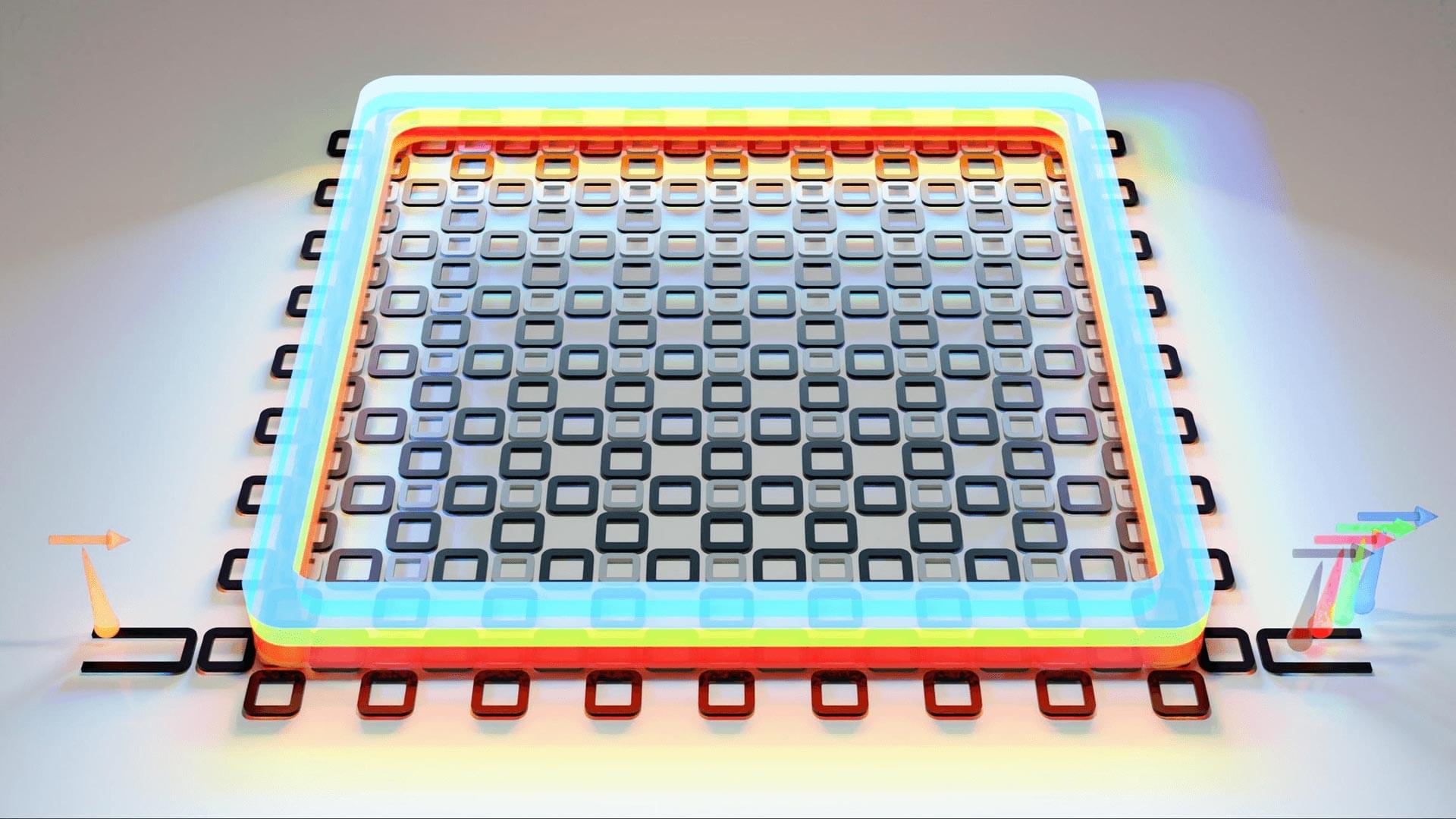
Scientists Create Chip That Generates Brand-New Colors of Light, Cracking a Decades-Old Nonlinear Optics Challenge

For decades, scientists and engineers have steadily advanced technologies that control and manipulate light. These tools now underpin everything from ultra-precise atomic clocks to the massive data flows moving through modern data centers.

As industries increasingly rely on optical systems, the market for dependable light-based technologies has grown into a sector worth hundreds of billions of dollars worldwide.

Atom-sized gates could transform DNA sequencing and neuromorphic computing

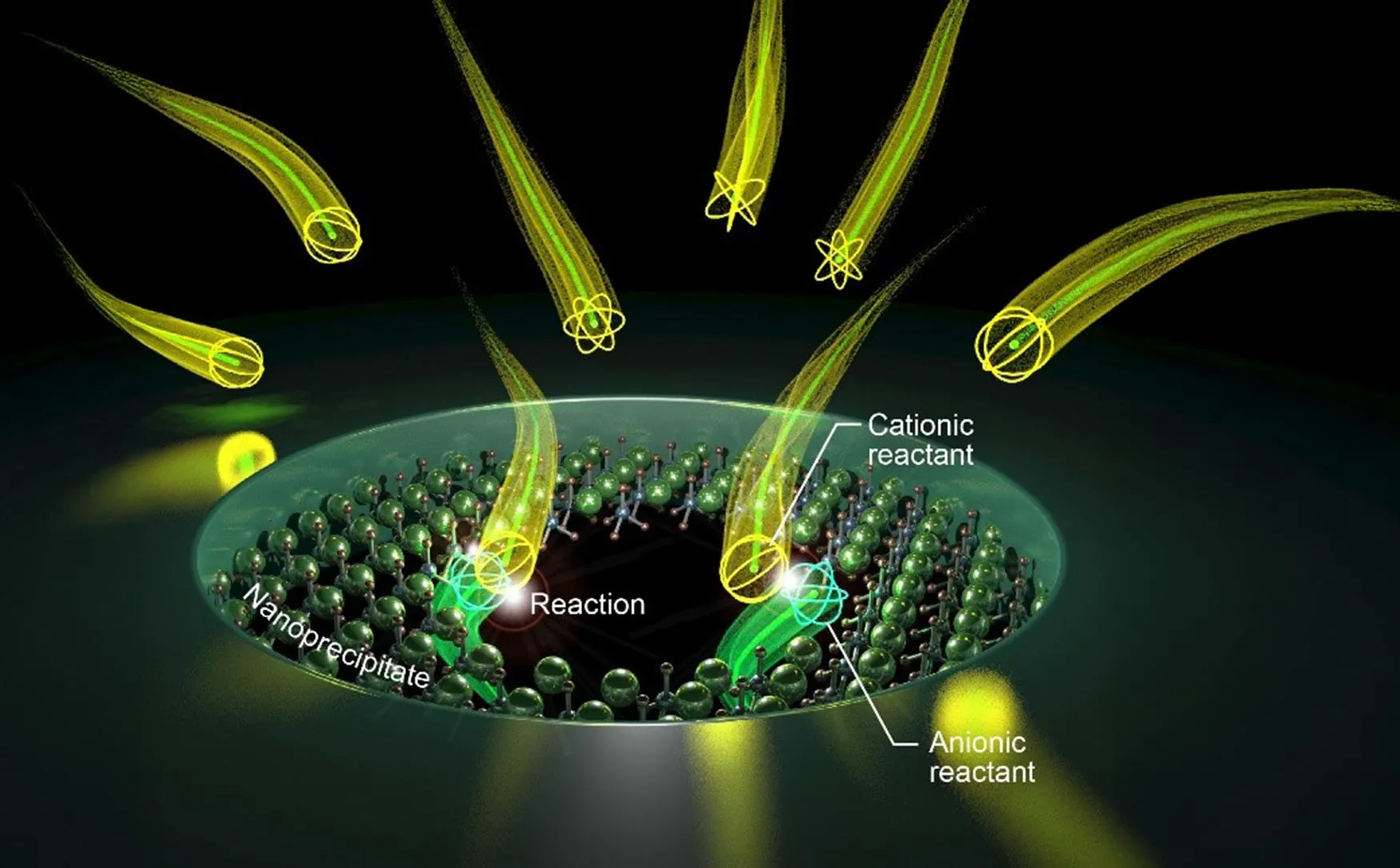
Scientists have taken a major step toward mimicking nature’s tiniest gateways by creating ultra-small pores that rival the dimensions of biological ion channels—just a few atoms wide. The breakthrough opens new possibilities for single-molecule sensing, neuromorphic computing, and studying how matter behaves in spaces barely larger than atoms.

Cytoplasmic flow induced by a rotating wire in living cells: magnetic rotational spectroscopy and finite element simulations

How can scientists measure viscosity inside a living cell, whose entire volume is just a few picolitres? Using computer simulations, researchers evaluated magnetic rotational spectroscopy, a technique that spins microscopic magnetic wires to probe the cytoplasm. The study shows that the motion generated by the wire is extremely localized, affecting less than one percent of the cell, so the measurement does not harm the cell. The results also confirm that, under standard conditions, magnetic rotational spectroscopy accurately captures the cytoplasmic viscosity. These findings validate magnetic rotational spectroscopy as a precise and minimally invasive technique for quantifying the mechanical properties of living cells.

Read the article in Interface.


Abstract. Recent studies have highlighted intracellular viscosity as a key biomechanical property with potential as a biomarker for cancer cell metastasis.

Feedback neurons based on perovskite memristor with nickel single-atom engineered reduced graphene oxide cathode

Scientists have long looked to the human brain as the ultimate blueprint for computing, seeking to build “neuromorphic” systems that process information with the same efficiency and flexibility as our own neurons. However, replicating the brain’s complex ability to both excite and inhibit signals—essentially “talking” and “listening” simultaneously—has proven difficult with standard hardware.

The problem? Perovskites are often too chaotic. Tiny charged particles called ions tend to zip around inside the material too quickly, making the device’s behavior hard to control. Additionally, the “bottlenecks” (barriers) where the electricity enters the device often cause lopsided performance, preventing the smooth, bidirectional communication required for advanced brain-like tasks.


Li et al. report feedback neurons based on perovskite memristors with a nickel single-atom modified reduced graphene oxide cathode. The device successfully implements an unsupervised learning network with over 50% clustering accuracy and cooperative learning for solving NP-hard combinatorial optimisation problem.

Quantum algorithm beats classical tools on complement sampling tasks

Quantum computers—devices that process information using quantum mechanical effects—have long been expected to outperform classical systems on certain tasks. Over the past few decades, researchers have worked to rigorously demonstrate such advantages, ideally in ways that are provable, verifiable and experimentally realizable.

A team of researchers working at Quantinuum in the United Kingdom and QuSoft in the Netherlands has now developed a quantum algorithm that solves a specific sampling task—known as complement sampling—dramatically more efficiently than any classical algorithm. Their paper, published in Physical Review Letters, establishes a provable and verifiable quantum advantage in sample complexity: the number of samples required to solve a problem.

“We stumbled upon the core result of this work by chance while working on a different project,” Harry Buhrman, co-author of the paper, told Phys.org. “We had a set of items and two quantum states: one formed from half of the items, the other formed from the remaining half. Even though the two states are fundamentally distinct, we showed that a quantum computer may find it hard to tell which one it is given. Surprisingly, however, we then realized that transforming one state into the other is always easy, because a simple operation can swap between them.”

Quantum computers go high-dimensional with a four-state photon gate

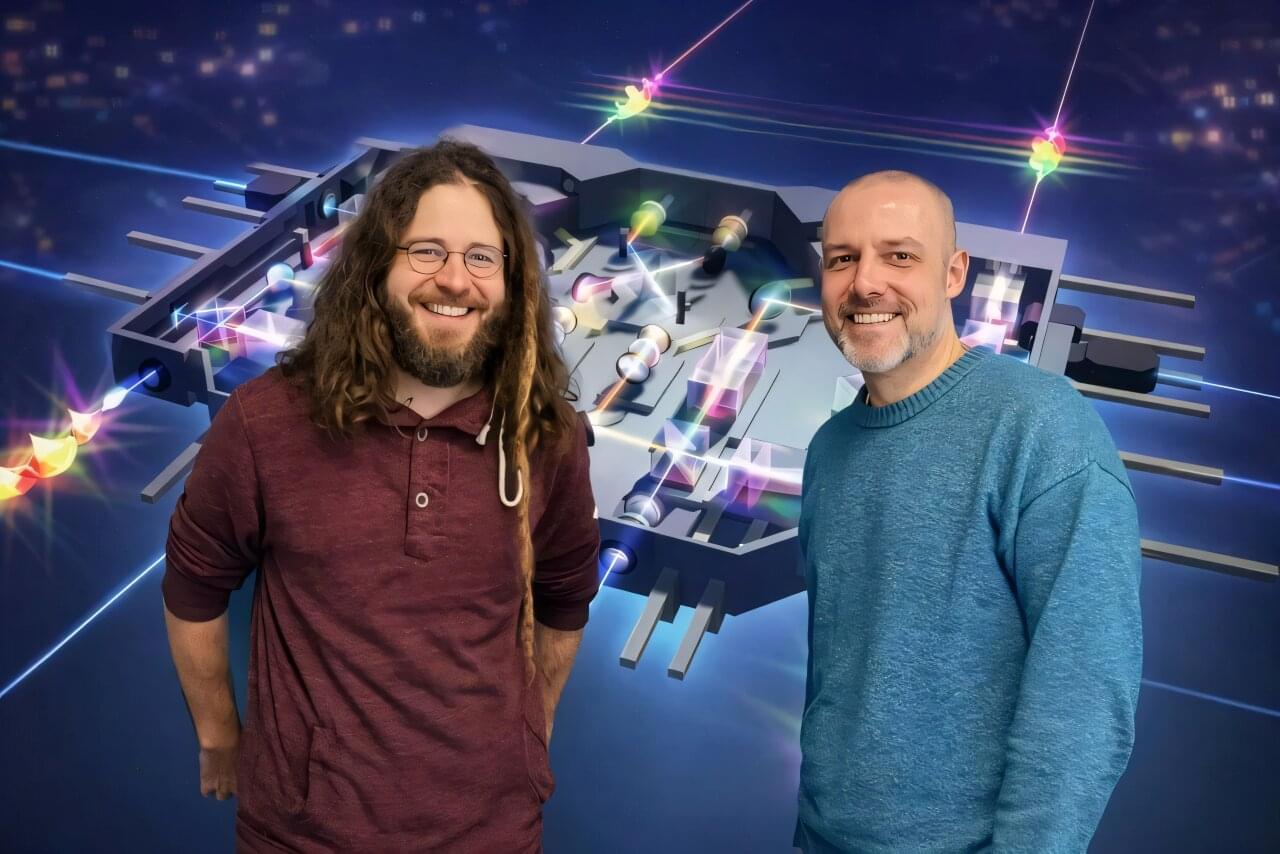
The collaboration of TU Wien with research groups in China has resulted in a crucial building block for a new kind of quantum computer: The realization of a novel type of quantum logic gate makes it possible to carry out quantum computations on pairs of photons that are each in four different quantum states, or combinations thereof. The advancement is an important milestone for optical quantum computers. The study has now been published in Nature Photonics.

The basic idea of quantum computers is simple: While a classical computer only works with the values “0” and “1,” quantum physics allows for arbitrary combinations of these states. In a certain sense, a quantum bit (“qubit”) can be in the states 0 and 1 simultaneously. This makes it possible to develop algorithms that can solve some problems much faster than a comparable classical computer.

However, such superpositions can in principle involve more than two states. Depending on what degree of freedom one considers, a quantum system such as a photon may not just have two different settings—two different outcomes of a potential measurement—but many. In this case, one refers to the system as a “qudit” rather than a “qubit.”

Ultra-efficient optical sensors can keep light circulating longer inside a microscopic chip

CU Boulder researchers have built high-performing optical microresonators, opening the door for new sensor technologies. At its simplest form, a microresonator is a tiny device that can trap light and build up its intensity. Once the intensity is high enough, researchers can perform unique light operations.

“Our work is about using less optical power with these resonators for future uses,” said Bright Lu, a fourth-year doctoral student in electrical and computer engineering and a lead author on the study. “One day these microresonators can be adapted for a wide range of sensors from navigation to identifying chemicals.”

For this endeavor, published in Applied Physics Letters, the team focused on “racetrack” resonators, named for their elongated shape that resembles a running track.

How to improve the performance of qubits: Super-fast fluctuation detection achieved

Using commercially available technology and innovative methods, researchers at NBI have pushed the limits of how fast you can detect changes in the sensitive quantum states in the qubit. Their work allows researchers to follow rapid changes in qubit performance that were previously invisible. The study is published in the journal Physical Review X.

The workhorse of any quantum-based application aimed at the coveted, but not yet fully realized quantum computer is the qubit. It is, however, a rather fragile workhorse.

Qubits, and quantum processors in general, are highly sensitive to their environment. Typically, the materials in which they are embedded contain microscopic defects that are still not fully understood. These defects can spatially fluctuate extremely fast, sometimes hundreds of times per second. As they fluctuate, the rate at which a qubit loses energy, and therefore useful quantum information, also changes.

People with synesthesia experience distinct thematic patterns in their dreams

From the article:

The thematic analysis revealed that synesthete dreams systematically differed from control dreams in four distinct categories. People with synesthesia were more likely to describe dreams involving digital life. This theme included references to scrolling, screens, computer accounts, and routine technology use.

Synesthetes also reported more dreams centered on interpersonal regret. This theme featured scenarios involving guilt, moral conflict, missed opportunities, and urgent apologies. The scientists note that this aligns with the heightened emotional reactivity and memory retention frequently observed in people with synesthesia.

The third prevalent theme in synesthete dreams was diverse worlds. This category included shifting environments, cultural settings, and complex or dystopian landscapes. Because synesthetes tend to score high in openness to experience, they may possess a more flexible cognitive style that supports the construction of richly detailed and varied dream settings.

Finally, the violent conflict theme appeared more often in the dreams of synesthetes. This theme involved fictional threats, horror imagery, and words associated with intense physical clashes. The researchers suggest that individuals with enhanced memory abilities, a common trait in synesthesia, might be more likely to incorporate intense waking experiences into their dreams.


Do waking perceptual traits influence our sleep? New research indicates that people with synesthesia have unique dream patterns, providing evidence that our individual brain structures actively shape our imagination long after we fall asleep.
Scientists Believe Quantum Computers AreAbout to Cross a Major Line

We began this inquiry by looking at the mismatch between our computers and our brains. We realized that we were trying to run biological software on the wrong hardware. That era is ending. As we refine these quantum processors, we are finally building a mirror that is accurate enough to reflect the true nature of the mind. We are not just building faster computers. We are building a vessel that can hold the physics of thought.

▀▀▀▀▀▀
Timestamps:
0:00 Quantum Computers.
1:18 The Scale Problem.
4:40 The Thermodynamic Wall.
8:11 Quantum Mechanics in Wetware.
13:58 The \

/* */