Toggle light / dark theme

How AI could unlock deep-sea secrets of marine life

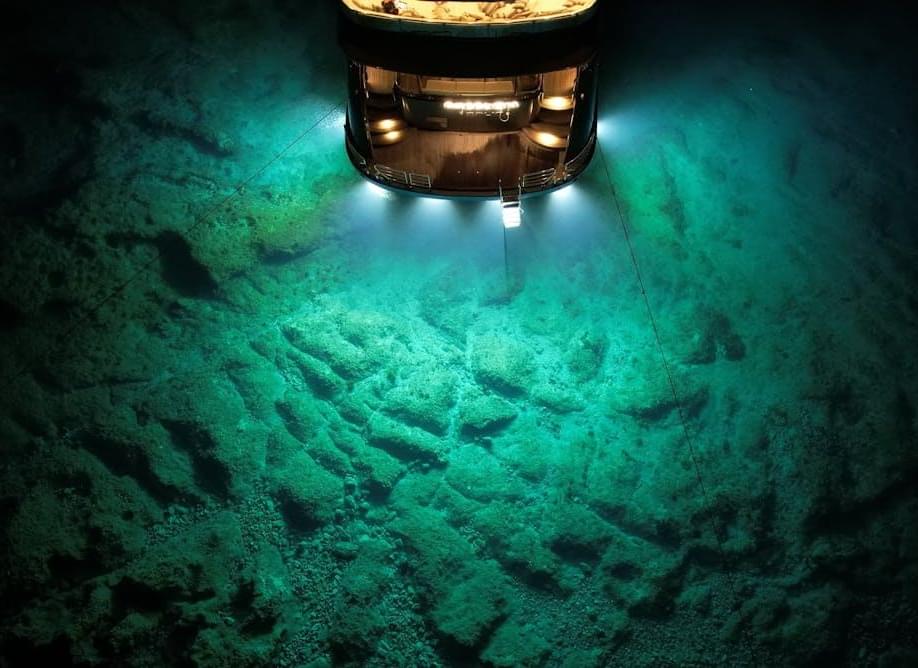
The reef is a home and feeding ground for dozens of species that depend on it the way a woodland creature depends on trees. It has survived ice ages – but whether it will survive increasing pressures from industrial fishing, deep-sea mining and climate change is, in part, a question about data. If we don’t know it exists, how can we protect it?

A new project called Deep Vision could fundamentally transform our understanding of the deep ocean by digging into pictures and videos sat largely unexamined in research archives around the world. By using AI, thousands of hours of seafloor footage can be analysed to produce the first comprehensive maps of vulnerable marine ecosystems across the entire Atlantic basin.

Over the past two decades, robotic and autonomous underwater vehicles have collected vast quantities of footage from the deep sea. This represents an extraordinary resource – a record of ecosystems that most humans will never see.

Caretaker AI & Genius Loci: When Worlds Grow Minds of Their Own

Meet the caretaker AIs: guardians of planets, habitats, and civilizations. What happens when machines become the spirit and soul of the worlds they protect?

Checkout Rifftrax https://go.nebula.tv/rifftrax?ref=isa… Watch my exclusive video The Fermi Paradox — Civilization Extinction Cycles: https://nebula.tv/videos/isaacarthur–… Nebula using my link for 40% off an annual subscription: https://go.nebula.tv/isaacarthur Grab one of our new SFIA mugs and make your morning coffee a little more futuristic — available now on our Fourthwall store! https://isaac-arthur-shop.fourthwall… Visit our Website: http://www.isaacarthur.net Join Nebula: https://go.nebula.tv/isaacarthur Support us on Patreon: / isaacarthur Support us on Subscribestar: https://www.subscribestar.com/isaac-a… Facebook Group: / 1,583,992,725,237,264 Reddit: / isaacarthur Twitter: / isaac_a_arthur on Twitter and RT our future content. SFIA Discord Server: / discord Credits: Caretaker AI & Genus Loci 2025 Edition Written, Produced & Narrated by: Isaac Arthur Editors: Ludwig Luska Graphics: Bryan Versteeg Jeremy Jozwik Ken York YD Visual Kris Holland Mafic Studios Select imagery/video supplied by Getty Images Music Courtesy of Epidemic Sound http://epidemicsound.com/creator.
Watch my exclusive video The Fermi Paradox — Civilization Extinction Cycles: https://nebula.tv/videos/isaacarthur–
Get Nebula using my link for 40% off an annual subscription: https://go.nebula.tv/isaacarthur.

Grab one of our new SFIA mugs and make your morning coffee a little more futuristic — available now on our Fourthwall store! https://isaac-arthur-shop.fourthwall

Visit our Website: http://www.isaacarthur.net.
Join Nebula: https://go.nebula.tv/isaacarthur.
Support us on Patreon: / isaacarthur.
Support us on Subscribestar: https://www.subscribestar.com/isaac-a
Facebook Group: / 1583992725237264
Reddit: / isaacarthur.
Twitter: / isaac_a_arthur on Twitter and RT our future content.
SFIA Discord Server: / discord.
Credits:
Caretaker AI & Genus Loci 2025 Edition.
Written, Produced & Narrated by: Isaac Arthur.
Editors: Ludwig Luska.
Graphics:
Bryan Versteeg.
Jeremy Jozwik.
Ken York YD Visual.
Kris Holland Mafic Studios.
Select imagery/video supplied by Getty Images.
Music Courtesy of Epidemic Sound http://epidemicsound.com/creator

Life on Generation Ships: A Journey Through the Stars Across Centuries

In this video, we explore one of the most fascinating concepts in interstellar travel: **generation ships**, massive spacecraft that would carry human civilizations across the stars, with journeys lasting hundreds or even thousands of years. As humanity dreams of traveling beyond the solar system, the idea of generation ships offers a possible solution to the immense distances between stars—a journey that could span multiple human lifetimes.

Join us as we dive deep into the science, challenges, and philosophical questions surrounding these massive space-faring habitats.

What you’ll learn in this video:

**The Structure and Design of a Generation Ship**: Discover how these spacecraft could be built to support life for centuries, from creating artificial gravity to maintaining a self-sustaining ecosystem. We’ll explore the futuristic technologies, such as nuclear fusion engines and advanced life support systems, that could make these ships possible.

**Daily Life Aboard a Generation Ship**: What would day-to-day life look like on a ship traveling through deep space for centuries? We’ll talk about the work, education, and entertainment that would keep future generations engaged. How would people handle the psychological strain of never seeing Earth or their final destination?

**Society and Governance**: How would politics and society evolve in the isolated, confined world of a generation ship? We explore the potential for new social structures, systems of governance, and the ethical dilemmas surrounding generations born aboard who may have never chosen this life.

Closing in on a universal vaccine: Nasal spray protects mice from respiratory viruses, bacteria and allergens

In the realm of medical advancements, a universal vaccine that can protect against any pathogen has long been a Holy Grail—and about as elusive as a mythological vessel. But Stanford Medicine researchers and collaborators have taken an astonishing step forward in that quest, surprising even themselves.

In a new study in mice, they have developed a universal vaccine formula that protects against a wide range of respiratory viruses, bacteria and even allergens. The vaccine is delivered intranasally—such as through a nasal spray—and provides broad protection in the lungs for several months.

In the study, published in Science, researchers show that vaccinated mice were protected against SARS-CoV-2 and other coronaviruses, Staphylococcus aureus and Acinetobacter baumannii (common hospital-acquired infections), and house dust mites (a common allergen).

Cryogenic Arks — Sleeping Through the Ages

From frozen habitats to millennia-long journeys, we explore the science behind cryogenic arks and deep-time interstellar travel.

Get Nebula using my link for 50% off an annual subscription: https://go.nebula.tv/isaacarthur.
Check out Joe Scott’s Oldest & Newest: https://nebula.tv/videos/joescott-old… my exclusive video Chronoengineering: https://nebula.tv/videos/isaacarthur–… 🚀 Join this channel to get access to perks: / @isaacarthursfia 🛒 SFIA Merchandise: https://isaac-arthur-shop.fourthwall… 🌐 Visit our Website: http://www.isaacarthur.net ❤️ Support us on Patreon: / isaacarthur ⭐ Support us on Subscribestar: https://www.subscribestar.com/isaac-a… 👥 Facebook Group: / 1,583,992,725,237,264 📣 Reddit Community: / isaacarthur 🐦 Follow on Twitter / X: / isaac_a_arthur 💬 SFIA Discord Server: / discord Credits: Cryogenic Arks – Sleeping Through the Ages Written, Produced & Narrated by: Isaac Arthur Select imagery/video supplied by Getty Images Music by Epidemic Sound: http://nebula.tv/epidemic & Stellardrone Chapters 0:00 Intro 2:50 The Need for Cryogenic Arks 6:12 From Freezing Flesh to Preserving Life 12:33 The Physics and Engineering of the Cryogenic Ark 18:46 The Problem of Time and Identity 24:59 Oldest & Newest 25:59 How Long Can We Stay Frozen? 30:48 Crew Dynamics and Risk 35:18 Beyond Cryogenics – Slowing Time Itself.
Watch my exclusive video Chronoengineering: https://nebula.tv/videos/isaacarthur–

🚀 Join this channel to get access to perks: / @isaacarthursfia.
🛒 SFIA Merchandise: https://isaac-arthur-shop.fourthwall
🌐 Visit our Website: http://www.isaacarthur.net.

❤️ Support us on Patreon: / isaacarthur.
⭐ Support us on Subscribestar: https://www.subscribestar.com/isaac-a

👥 Facebook Group: / 1583992725237264
📣 Reddit Community: / isaacarthur.
🐦 Follow on Twitter / X: / isaac_a_arthur.
💬 SFIA Discord Server: / discord.

Credits:

Water-window X-rays without a synchrotron: How graphite flakes could shrink bioimaging tools

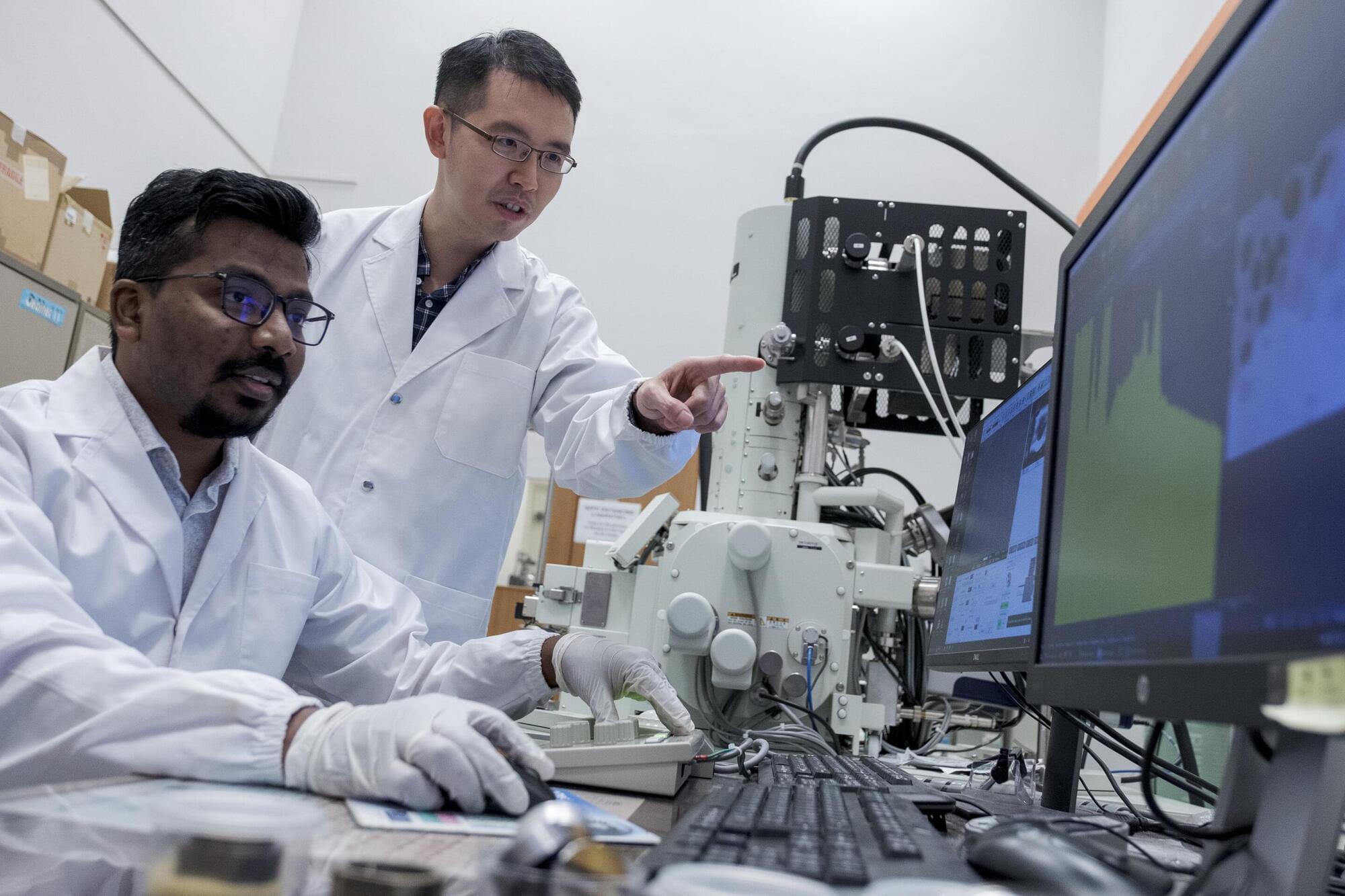
Researchers from Nanyang Technological University, Singapore (NTU Singapore) have found a new way to produce X-rays with wavelengths in what is called the “water window.” This new method holds promise in making bioimaging X-ray machines smaller and more flexible to use.

Water-window X-rays are useful for bioimaging because they visualize biological cells at high contrast without staining them or requiring potentially damaging preparation.

However, some tabletop machines only produce radiation in a fixed range of energies, so more machines are needed if X-rays of varying energies are required to improve image contrast. Even then, they cannot cover the full spectrum of energies in the water window. There are single machines that can flexibly produce X-rays of different energies, but these are expensive synchrotrons larger than a house and difficult for most researchers to access.

Missing technosignatures? Turbulent plasma may blur ultra-narrow signals before they leave their home star systems

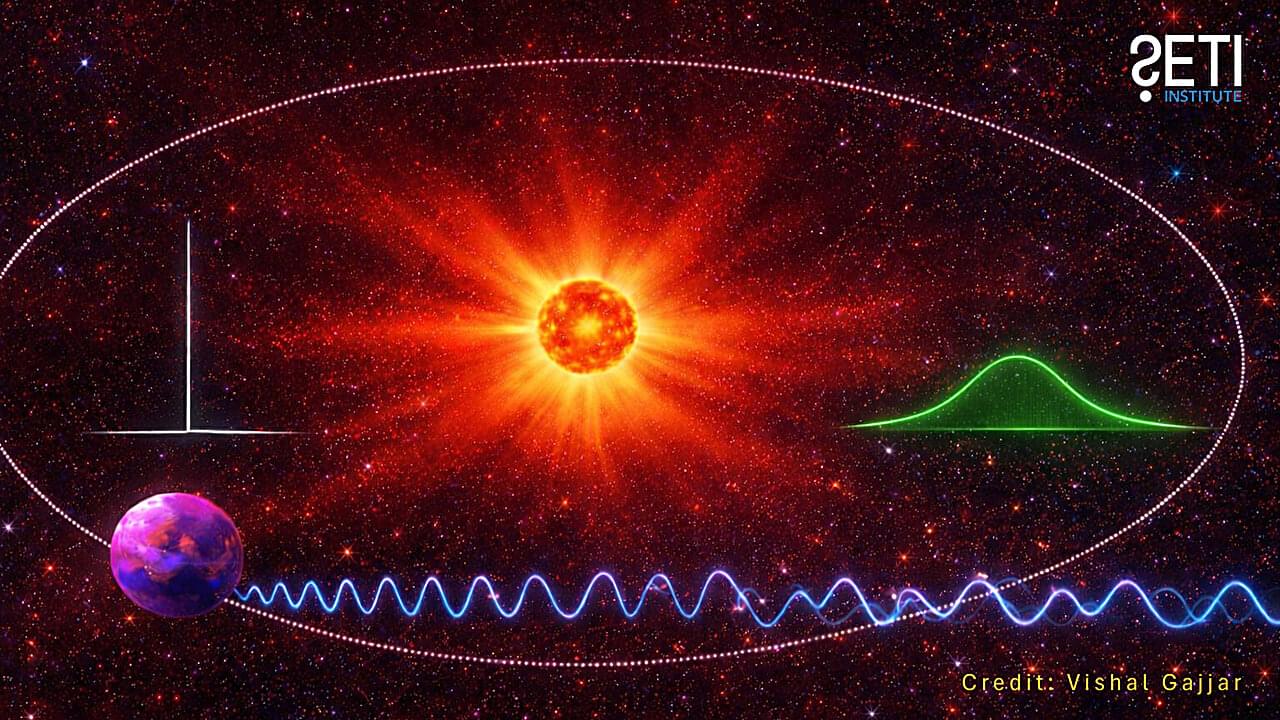
A new study by researchers at the SETI Institute suggests that stellar “space weather” could make radio signals from extraterrestrial intelligence harder to detect. Stellar activity and plasma turbulence near a transmitting planet can broaden an otherwise ultra-narrow signal, spreading its power across more frequencies and making it more difficult to detect in traditional narrowband searches. The paper is published in The Astrophysical Journal.

For decades, many SETI experiments have focused on identifying spikes in frequency—signals unlikely to be produced by natural astrophysical processes. But the new research highlights an overlooked complication: even if an extraterrestrial transmitter produces a perfectly narrow signal, it may not remain narrow by the time it leaves its home system.

In most technosignature searches, scientists account for distortions that happen as radio waves travel across interstellar space. This study focuses on what can happen closer to the source. Plasma density fluctuations in stellar winds, as well as occasional eruptive events such as coronal mass ejections, can distort radio waves near their point of origin, effectively “smearing” the signal’s frequency and reducing the peak strength that search pipelines rely on.

Scientists put forward a new theory of brain development

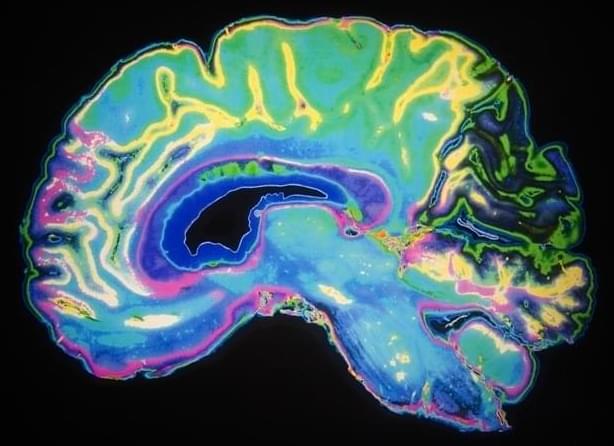
Your brain begins as a single cell. When all is said and done, it will house an incredibly complex and powerful network of some 170 billion cells. How does it organize itself along the way? Cold Spring Harbor Laboratory neuroscientists have come up with a surprisingly simple answer that could have far-reaching implications for biology and artificial intelligence.

Stan Kerstjens, a postdoc in Professor Anthony Zador’s lab, frames the question in terms of positional information. “The only thing a cell ‘sees’ is itself and its neighbors,” he explains. “But its fate depends on where it sits. A cell in the wrong place becomes the wrong thing, and the brain doesn’t develop right. So, every cell must solve two questions: Where am I? And who do I need to become?”

In a study published in Neuron, Kerstjens, Zador, and colleagues at Harvard University and ETH Zürich put forward a new theory for how the brain organizes itself during development.

/* */