Toggle light / dark theme

Wireless induction concept demonstrates self-recharging mechanism in batteries

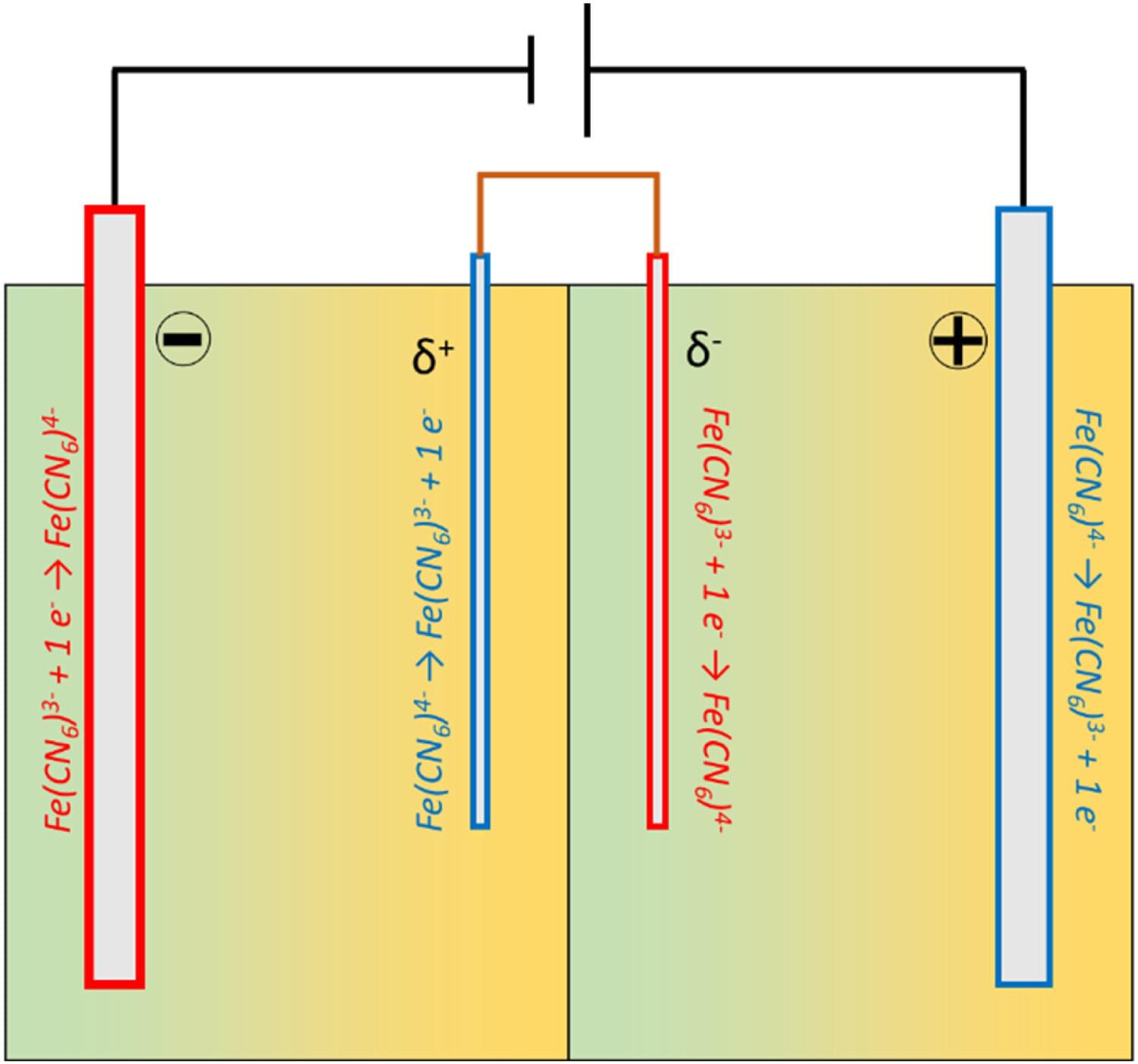
A research team led by the Institute of Materials Science of Barcelona (ICMAB-CSIC) has demonstrated a new induction-based mechanism that enables partial self-recharging in batteries, using a symmetric iron-based configuration as a proof of concept. The study, published in Electrochimica Acta, lays the groundwork for future battery systems that integrate wireless recharging capabilities through induced redox reactions.

Regrowing hearing cells: New gene functions discovered in zebrafish offer clues for future hearing loss treatments

While humans can regularly replace certain cells, like those in our blood and gut, we cannot naturally regrow most other parts of the body. For example, when the tiny sensory hair cells in our inner ears are damaged, the result is often permanent hearing loss, deafness, or balance problems. In contrast, animals like fish, frogs, and chicks regenerate sensory hair cells effortlessly.

Ultrafast coherent dynamics of microring modulators

An ultra-compact, ultra-wide-bandwidth in-phase/quadrature modulator on a silicon chip is demonstrated, enabling coherent transmission for symbol rates up to 180 Gbaud and a net bit rate surpassing 1 Tb s−1 over an 80 km span, with modulation energy consumption as low as 10.4 fJ bit−1, and promising enhanced performance and scalability for future networking infrastructures.

Replicating Kolmogorov’s Counterexample for Fourier Series in Context of Fourier Transforms

It is a famous result of Kolmogorov that there exists a (Lebesgue) integrable function on the torus such that the partial sums of Fourier series of $f$ diverge almost everywhere (a.e.). More specifically, he exhibited an $f\in L^{1}(\mathbb{T})$ such that.

\begin{align*} \sup_{N\geq 1}\left|S_{N}f(x)ight|=\sup_{N\geq 1}\left|(f\ast D_{N})(x)ight|=\infty, \qquad\forall \text{ a.e. } x\in\mathbb{T}, \end{align*} where $S_{N}$ is the $N^{th}$ partial sum and $D_{N}$ is the $N^{th}$ Dirichlet kernel given below. \begin{align*} S_{N}f(x):=\sum_{\left|night|\leq N}\widehat{f}(n)e^{2\pi inx}, \quad D_{N}(x):=\dfrac{\sin 2\pi(N+\frac{1}{2})x}{\sin \pi x} \end{align*} and we identify $\mathbb{T}$ with the unit interval $[0,1]$.

I have read, for example pg. 118 in [Pinsky], that Kolmogorov’s counterexample can be replicated in the context of the Fourier transform on the real line $\mathbb{R}$, showing that $L^{1}$ pointwise Fourier inversion can fail quite horribly. If my understanding is correct, then the following claim is true:

Largest review of antidepressants to date finds most people do not experience severe withdrawal

The largest review of “gold standard” antidepressant withdrawal studies to date has identified the type and incidence of symptoms experienced by people discontinuing antidepressants, finding most people do not experience severe withdrawal.

“Incidence and Nature of Antidepressant Discontinuation Symptoms, A Systematic Review and Meta-analysis” was published in JAMA Psychiatry.

In a and meta-analysis of previous randomized controlled trials relating to antidepressant withdrawal, a team of researchers led by Imperial College London and King’s College London concluded that, while participants who stopped antidepressants did experience an average of one more symptom than those who continued or were taking placebos, this was not enough to be judged as significant.

/* */