Toggle light / dark theme

Why conversation is more like a dance than an exchange of words

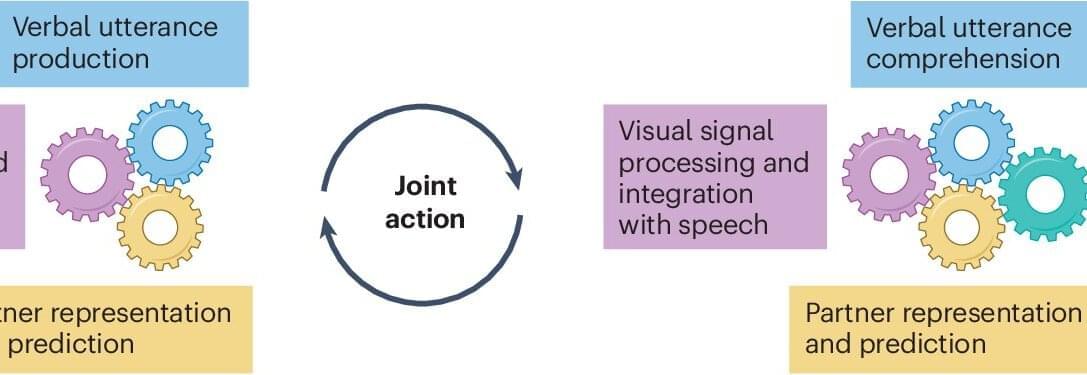
Think about the last time you told a story to a friend. You probably adjusted it halfway through. You saw their eyebrows lift. You noticed them lean in, or glance away. You clarified a detail. You sped up the ending. That constant fine-tuning is not a bonus feature of communication: it is communication. And you can read all about this real-time coordination process in a new review by Judith Holler and Anna K. Kuhlen (Max Planck Institute for Psycholinguistics), published in Nature Reviews Psychology.

Holler and Kuhlen argue that conversation is not simply one person speaking while another listens. It is a process in which both participants continuously monitor, predict, and shape each other’s behavior. “Conversation is not a linear exchange of words,” Holler writes. “It is a jointly managed activity in which meaning emerges through coordination.”
‘Nano-origami’ reshapes liquid droplets into six-pointed stars

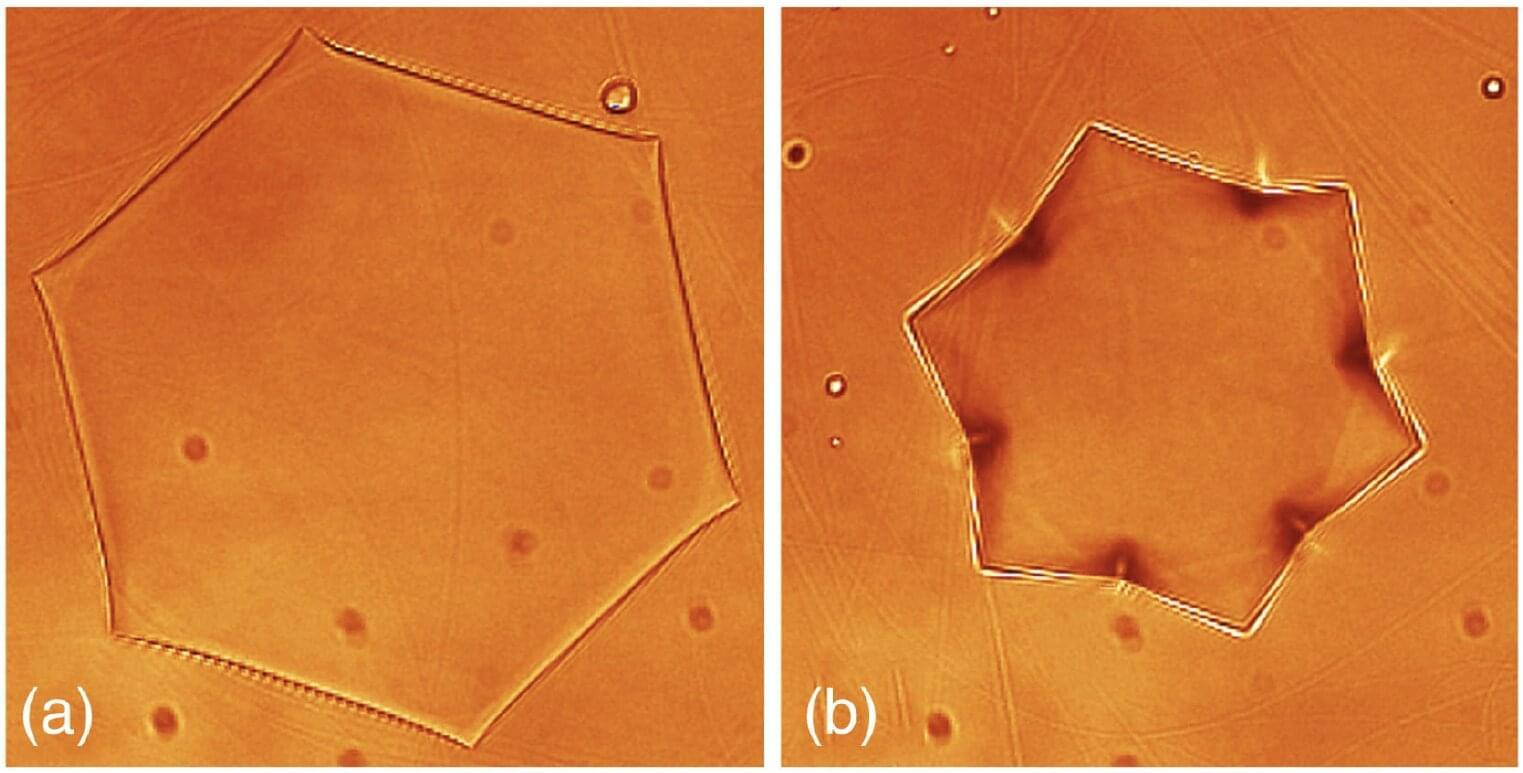
For the first time, researchers in France and Israel have observed how an emulsified liquid droplet can transform from a hexagon into a six-pointed star shape in response to rising temperature. Publishing their results in Physical Review Letters, a team led by Eli Sloutskin at Bar-Ilan University has shed new light on the mechanisms underlying this striking behavior, revealing a previously unseen form of “nano-origami,” that could inspire future generations of self-assembling nanostructures.

When tiny amounts of liquid are isolated, surface tension usually drives them to adopt a spherical shape—but over the past decade, researchers have uncovered far more complex behavior in emulsions of oil and water. In these systems, droplets are stabilized by surfactant molecules, which reduce the surface tension between the two liquids.

Under carefully controlled temperature changes, these droplets can undergo dramatic shape transformations. Previous studies have shown spheres turning into icosahedra, and then flattening into triangular, parallelogram or hexagonal, lens-like shapes with exclusively convex edges.

Unveiling hidden variables in stressed bacteria

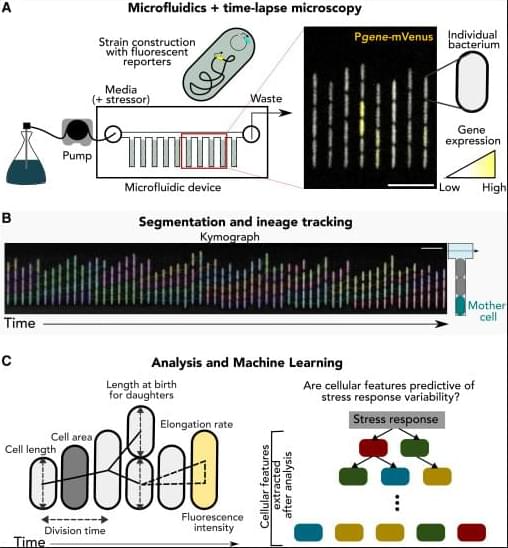
Noise in bacterial stress responses is often dismissed as mere randomness. While true stochasticity exists, much variation reflects hidden variables—cell state, history, and microenvironment—that are only now becoming measurable. Choudhary and Vincent review emerging tools that disentangle chance from determinism, moving microbiology toward more mechanistic and predictive frameworks.

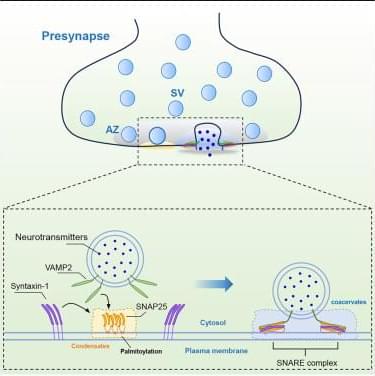
SNAP25 undergoes phase separation to facilitate the assembly of the synaptic vesicle fusion machinery

Zhu et al. find that SNAP25, a key SNARE protein involved in synaptic vesicle fusion, undergoes phase separation, which is regulated by palmitoylation modification and interaction with syntaxin-1. The SNAP25 condensates recruit syntaxin-1 and VAMP2 to form coacervates, facilitating vesicle docking and the assembly of the SNARE complex.

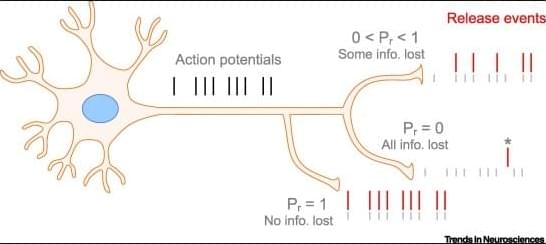
Noisy Synaptic Conductance: Bug or a Feature?

More often than not, action potentials fail to trigger neurotransmitter release. And even when neurotransmitter is released, the resulting change in synaptic conductance is highly variable. Given the energetic cost of generating and propagating action potentials, and the importance of information transmission across synapses, this seems both wasteful and inefficient. However, synaptic noise arising from variable transmission can improve, in certain restricted conditions, information transmission.

Evidence for the Resurrection that Changed a Generation of Scholars (Gary Habermas Response)

At the recent “Jesus on Trial” Christian apologetics mega-seminar, resurrection expert Dr. Gary Habermas gave a two-hour lecture called “Evidence for the Resurrection that Changed a Generation of Scholars”. What is this evidence, and did it also change a generation of skeptics? Jesus on Trial Conference — https://jesusontrialconf.com Support Paulogia at / paulogia http://www.paypal.me/paulogia https://www.amazon.ca/hz/wishlist/ls/.… Paulogia Audio-Only-Version Podcast https://paulogia.buzzsprout.com Follow Paulogia at / paulogia0 / paulogia0 / discord.

Read more

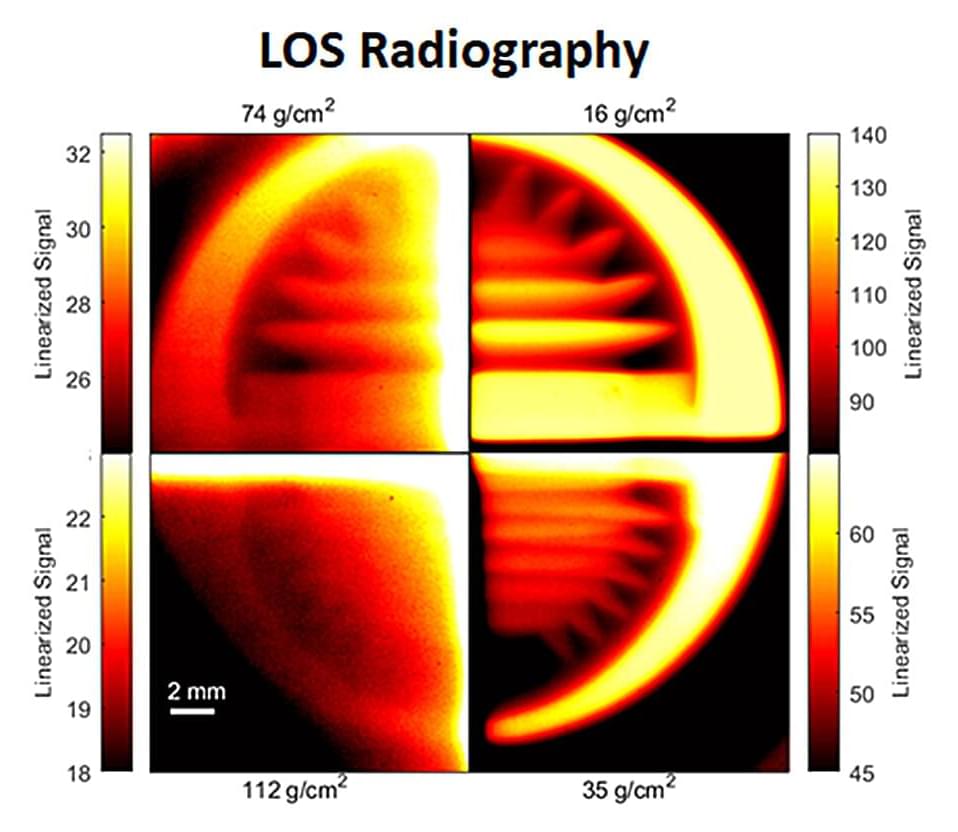
Laser-within-a-laser delivers MeV X-ray radiography in picoseconds

Lawrence Livermore National Laboratory’s National Ignition Facility (NIF) is the hottest place on Earth for the briefest of moments during an experiment. Now, it can be one of the brightest places thanks to the Advanced Radiographic Capability (ARC), NIF’s laser-within-a-laser. How this is possible and how it’s measured is detailed in a paper in Physics of Plasmas titled “Development and scaling of MeV X-ray radiography at NIF-ARC.”

“This paper is a culmination of 13 NIF experiments over five years of data gathering, analyzing experiments, modeling and refining diagnostics,” said LLNL physicist Dean Rusby, the paper’s first author. “We’re able to create and measure an MeV X-ray source that can’t be done anywhere else on Earth.”

/* */