Toggle light / dark theme

Stress-testing the Cascadia Subduction Zone reveals variability that could impact how earthquakes spread

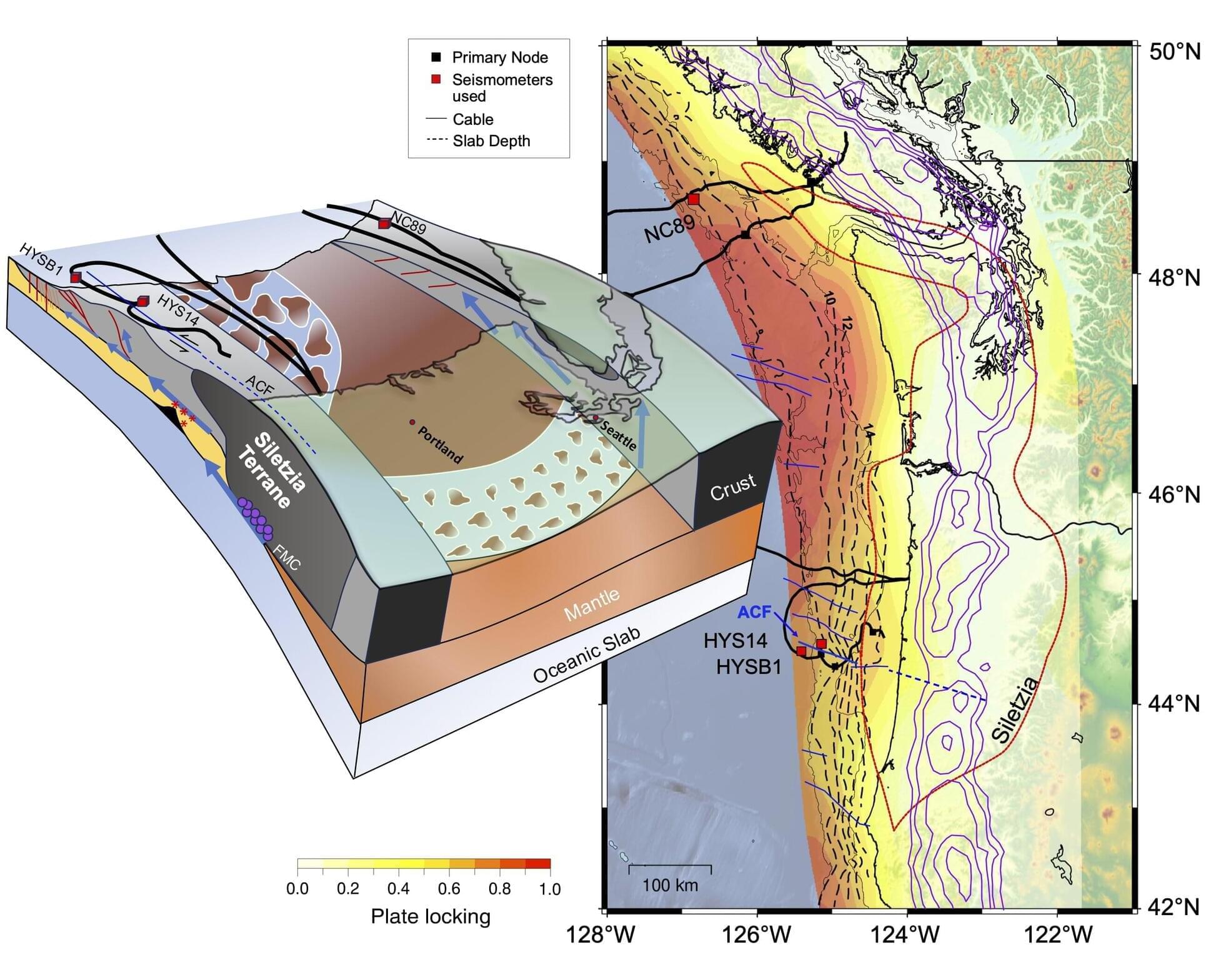
The Cascadia Subduction Zone is unusually quiet for a megathrust fault. Spanning more than 600 miles from Canada to California, the fault marks the convergence of the Juan de Fuca and North American plates. While other subduction zones produce sporadic rumblings as the plates scrape past each other, Cascadia shows very little seismic activity, fueling assumptions that the plates are locked together by friction.

The subduction zone—miles offshore and deep underwater—is difficult to observe. Most data collection is based onshore, which limits the breadth and quality of results. The lack of earthquakes further complicates efforts to understand its behavior and structure.

In a new study, the first to monitor strain offshore over an extended period of time, University of Washington researchers report that the plates may not be fully locked.
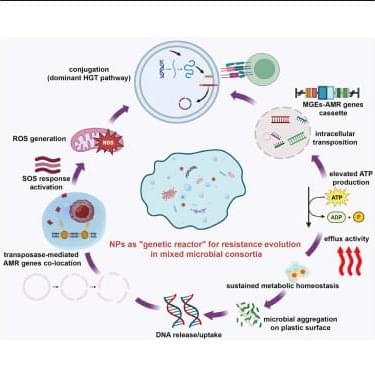
Micro- and nanoplastics facilitate the propagation of antimicrobial resistance in mixed microbial consortia

Zhen et al. show that micro-/nanoplastics increase antimicrobial resistance gene abundance and mobilization in mixed microbial consortia. Nanoplastics intensify oxidative stress and SOS responses and strengthen ARG-MGE co-localization, promoting dense horizontal gene transfer networks and turning plastisphere biofilms into resistance hotspots.

A short-acting psychedelic intervention for major depressive disorder: a phase IIa randomized placebo-controlled trial

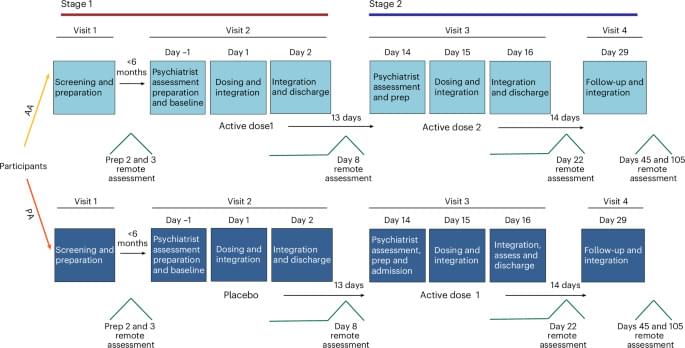
A single intravenous dose of the psychedelic dimethyltryptamine, combined with psychological support, produces rapid and lasting reductions in depressive symptoms in adults with major depressive disorder.

/* */