Toggle light / dark theme

Tesla Robotaxis, AGI Myths, and the Real Economics of the Musk Economy

Elon Musk’s ventures, particularly Tesla’s robotaxis and advancements in AI, are poised to revolutionize the economy and society, with significant potential for growth, discovery, and profound implications for the future ##

## Questions to inspire discussion.

Robotaxi Economics & Business Model.

🚖 Q: What determines robotaxi success beyond achieving autonomy? A: Success depends on unit economics, fleet scalability, and supply elasticity during peak demand, not who reaches autonomy first, with the ability to integrate privately owned vehicles into a single economic system being critical.

💰 Q: What margin advantage does Tesla’s robotaxi model have over competitors? A: Tesla projects 35% margins by 2030, significantly higher than Uber’s 7.9% and Waymo’s break-even margins, enabling rapid revenue growth.

📈 Q: What revenue growth is expected for Tesla’s robotaxi business? A: Tesla expects 4.4-5x growth in robotaxi revenue over the next 5 years, potentially greater due to untapped use cases like long road trips.
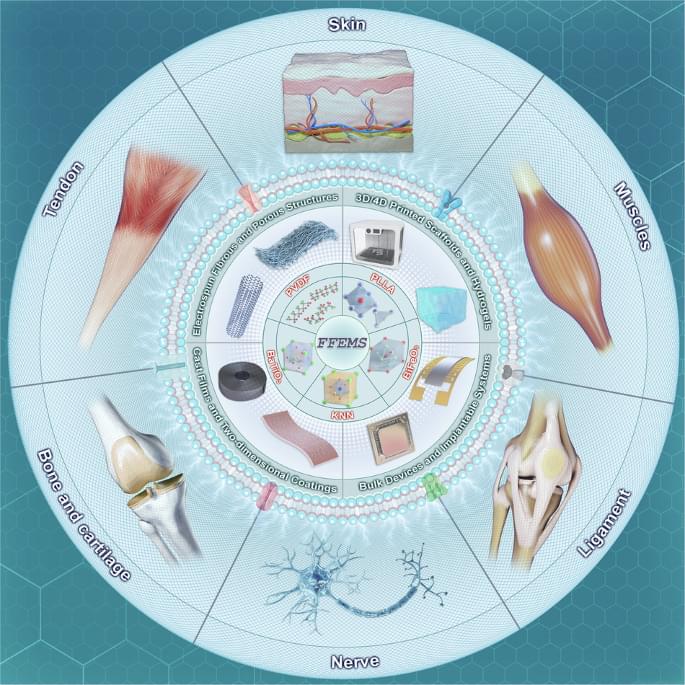

Flexible ferroelectric biomaterials for skin, neural, and musculoskeletal tissue repair

npj Flexible Electronics, Article number: (2026) Cite this article

We are providing an unedited version of this manuscript to give early access to its findings. Before final publication, the manuscript will undergo further editing. Please note there may be errors present which affect the content, and all legal disclaimers apply.

Is This The End of OpenAI?

Elon Musk’s lawsuit against OpenAI aims to expose the company’s alleged abandonment of its non-profit mission and potential shift to a for-profit model, sparking a heated dispute over the company’s future and integrity ##

## Questions to inspire discussion.

Understanding the lawsuit timeline and stakes.

🔍 Q: When is Elon Musk’s lawsuit against OpenAI going to trial and what is he claiming?

A: The lawsuit is set to go to trial in April 2026, with Musk arguing he’s owed billions from the value of intellectual property developed from his contributions as the primary funder who wanted OpenAI to remain nonprofit and open source.

📄 Q: What evidence exists in Greg Brockman’s personal files from 2017?

Ray Dalio: AI Is Accelerating the Collapse — Most People Aren’t Ready for What’s Next

With rapid advancements in AI and automation, individuals must prepare for a potentially unstable future by building financial strength, adapting to change, and rethinking traditional economic policies to avoid societal collapse ## ## Questions to inspire discussion.

Financial Preparation.

💰 Q: How should I structure my finances to build wealth? A: Focus on the fundamental equation: earn minus spend equals save, then invest that saved amount wisely to determine your financial success, as this simple formula is the foundation of building financial strength.

🏃 Q: When should I consider relocating geographically? A: Evaluate your location during major financial shifts and changing world orders, as the ability to move to better places and away from bad places has been historically important for protecting wealth and opportunity.

Career Strategy.

🎯 Q: How do I choose a career that maximizes financial success? A: Select careers that align with your passions while understanding their financial implications, since the work you do will directly impact your financial success during economic transitions.

Cybercab Game Changers Tesla & Elon Kept Under Wraps

Questions to inspire discussion.

Design & Manufacturing Innovation.

🔧 Q: Why were conventional door locks added despite weight concerns? A: Conventional door locks on frameless doors were likely required for global market compliance, though positioning locks closer to the pivot point reduces the work required compared to weight at the door’s end.

Tire Optimization for Taxi Operations.

🛞 Q: What tire specifications optimize Cybercab for taxi service? A: 20–22 inch tires with thicker sidewalls provide smoother ride at lower speeds typical of taxi use, require less frequent changes, and achieve 6–7 miles per kilowatt hour efficiency through reduced rolling resistance.

Accessibility Features.

SpaceX IPO: Tesla Shareholder Warrants, SPARC, and Elon’s Liquidity Event

SpaceX’s potential Initial Public Offering (IPO) could not only reward long-term Tesla shareholders but also has significant implications for Elon Musk’s companies, with a possible valuation of $1.2–1.5 trillion, driven by ventures like Starlink and Starship # ## Questions to inspire discussion.

IPO Timing and Valuation Strategy.

🚀 Q: When could SpaceX realistically go public and at what valuation? A: SpaceX IPO timing targets mid-2026 with potential valuation of $1.2–1.5 trillion, dependent on Starship production readiness, successful orbital launches with Starlink payloads by mid-2024, and prevailing volatile public market conditions at listing time.

💰 Q: How much capital would SpaceX raise in the IPO? A: SpaceX would likely issue new shares to raise approximately $80 billion at the $1.2–1.5 trillion valuation target, rather than conducting a buyback of existing shares, with potential share prices ranging $50–150 per share.

📈 Q: What drives SpaceX’s trillion-dollar valuation thesis? A: Valuation hinges on Starlink satellite network (10M subscribers, 10K satellites), rapid and complete reusability of Starship launch vehicles, planned Moon and Mars bases by 2030–2040, and the Musk premium factor where investors pay extra for his involvement.

Starship as IPO Catalyst.

Stanford AI Experts Predict What Will Happen in 2026

After years of fast expansion and billion-dollar bets, 2026 may mark the moment artificial intelligence confronts its actual utility. In their predictions for the next year, Stanford faculty across computer science, medicine, law, and economics converge on a striking theme: The era of AI evangelism is giving way to an era of AI evaluation. Whether it’s standardized benchmarks for legal reasoning, real-time dashboards tracking labor displacement, or clinical frameworks for vetting the flood of medical AI startups, the coming year demands rigor over hype. The question is no longer “Can AI do this?” but “How well, at what cost, and for whom?”

Learn more about what Stanford HAI faculty expect in the new year.

Toward high entropy material discovery for energy applications using computational and machine learning methods

npj Computational Materials, Article number: (2025) Cite this article

We are providing an unedited version of this manuscript to give early access to its findings. Before final publication, the manuscript will undergo further editing. Please note there may be errors present which affect the content, and all legal disclaimers apply.

/* */