Toggle light / dark theme

The physics of sneaker squeaks: High-speed imaging shows how they arise from supersonic detachment pulses

Basketball shoes on a gym floor, bicycle brakes in need of a tune-up, or the squeal of tires are everyday examples of squeaking sounds. Such sounds have long been attributed to stick-slip friction, or a cycle of intermittent sticking and sliding between surfaces. While this framework explains many rigid-on-rigid systems such as door hinges, it does not fully capture the physics of soft-on-rigid interfaces, like shoes on a floor.

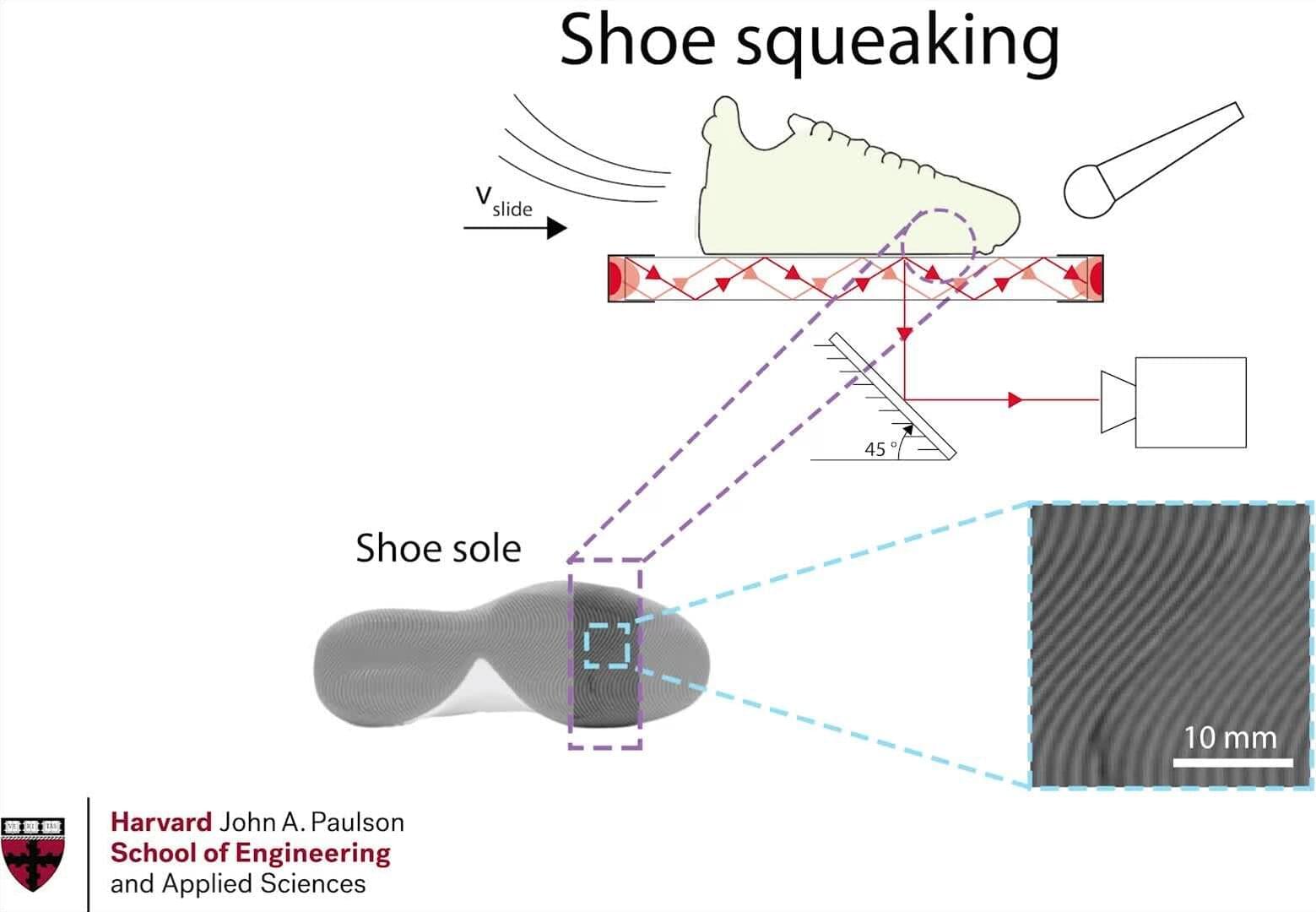
To shed light on this little-understood physical process, researchers at the Harvard John A. Paulson School of Engineering and Applied Sciences (SEAS), in collaboration with the University of Nottingham and the French National Center for Scientific Research, have used high-speed imaging to investigate the dynamics of soft solids sliding rapidly on rigid substrates.

In a study published in Nature, the team led by first author Adel Djellouli, a postdoctoral fellow in the lab of Katia Bertoldi, the William and Ami Kuan Danoff Professor of Applied Mechanics at SEAS, reports that squeaking emerges from a previously unseen mechanism.
Physicists develop new method to measure universe’s expansion rate

We have known for several decades that the universe is expanding. Scientists use multiple techniques to measure the present-day expansion rate of the universe, known as the Hubble constant. These methods are internally consistent and based on the same physics, so all observed values of the Hubble constant should agree. But those that come from early-universe datasets disagree with those that come from late-universe datasets. This problem is known as the Hubble tension and is considered to be one of the most significant open questions in cosmology.

Now a team of astrophysicists, cosmologists, and physicists at The Grainger College of Engineering at the University of Illinois Urbana-Champaign and at the University of Chicago has developed a novel way to compute the Hubble constant using gravitational waves—tiny ripples in the spacetime fabric. The researchers were able to improve upon the accuracy of prior gravitational-wave methods of measuring the Hubble constant. As our capability to observe gravitational waves improves in the future, this new method can be used to make even more accurate measurements of the Hubble constant, bringing scientists closer to resolving the Hubble tension.

Illinois Physics Professor Nicolás Yunes said, “This result is very significant—it’s important to obtain an independent measurement of the Hubble constant to resolve the current Hubble tension. Our method is an innovative way to enhance the accuracy of Hubble constant inferences using gravitational waves.” Yunes is the founding director of the Illinois Center for Advanced Studies of the Universe (ICASU) on the Urbana campus.

Physicists watch light drift in quantized steps for the first time

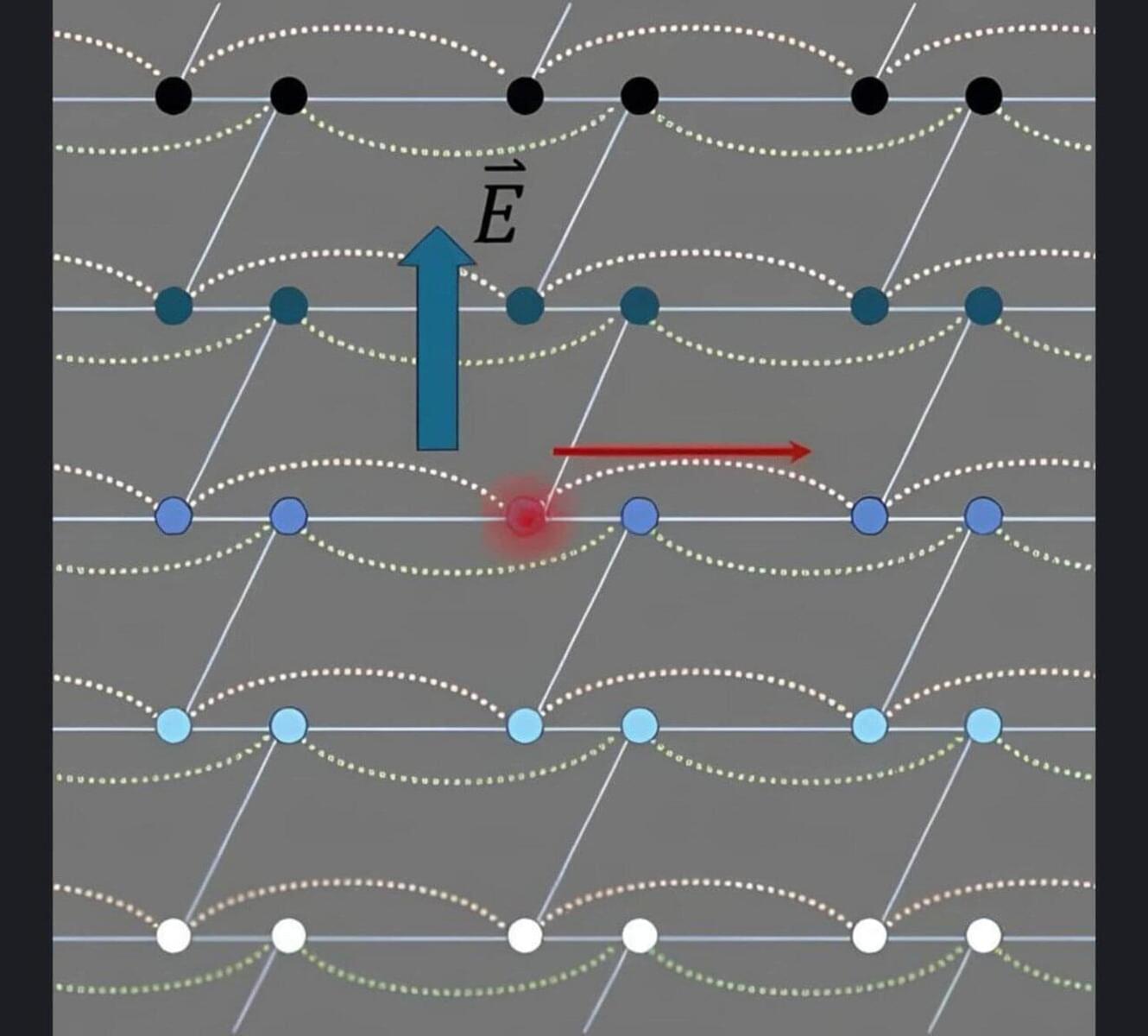
In physics, the classical “Hall effect,” discovered in the late 19th century, describes how a transverse voltage is generated when an electric current is exposed to a perpendicular magnetic field. Simply put, the magnetic field causes the electrons, which are negatively charged, to drift sideways, creating a negative charge on one edge of the conducting strip and a positive charge on the opposite side.

For decades, this voltage difference has been used as a diagnostic tool to measure magnetic fields with precision and characterize material doping levels, that is, the addition of a tiny, controlled amount of impurity to a pure material to change how it conducts electricity.

In the 1980s, experiments at ultra-low temperatures with ultra-thin conductors—imagine a sheet of paper—revealed that under intense magnetic fields, this voltage difference increases not in a straight line but in perfectly defined steps.

Nobel Prize in Physics 1903

The Nobel Prize in Physics 1903 was divided, one half awarded to Antoine Henri Becquerel “in recognition of the extraordinary services he has rendered by his discovery of spontaneous radioactivity”, the other half jointly to Pierre Curie and Marie Curie, née Skłodowska “in recognition of the extraordinary services they have rendered by their joint researches on the radiation phenomena discovered by Professor Henri Becquerel”

Alloy-engineered valleytronics: Microscopic mechanism gives scientists precise control over how excitons behave

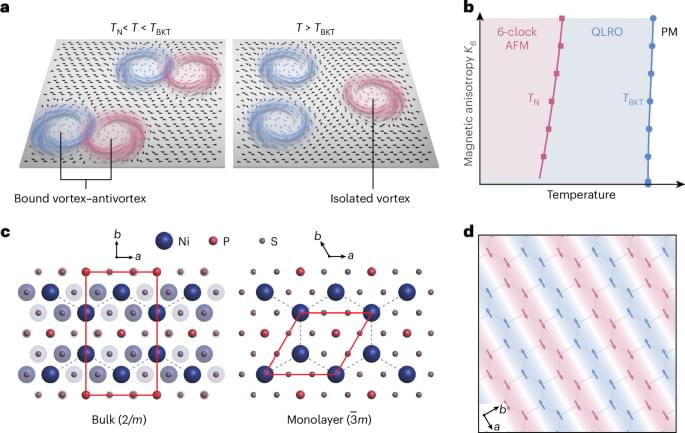
Scientists have observed a new microscopic mechanism enabling precise control of the magneto-optical properties of excitons in alloys of two-dimensional semiconductors. This discovery opens up tangible prospects for technological applications in devices exploiting valleytronics. The research findings were published in the journal Physical Review Letters.

The team includes researchers from the Faculty of Physics at the University of Warsaw, in collaboration with teams from the Wrocław University of Science and Technology, Sapienza University of Rome, University of Central Florida, Laboratoire National des Champs Magnétiques Intenses, National University of Singapore, CNR-IFN, as well as research centers in the Czech Republic (University of Chemistry and Technology, Prague) and Japan (National Institute for Materials Science).

Diamond owl swoops in with new method to keep electronics cool

At Rice University, a research lab’s signature keepsake has helped perfect a method for growing patterned diamond surfaces that could help decrease operating temperatures in electronics by 23 degrees Celsius. The paper is published in the journal Applied Physics Letters.

“In the world of electronics, heat is the enemy,” said Xiang Zhang, assistant research professor of materials science and nanoengineering at Rice and a first author on the study. “A reduction of 23 C is significant—it can extend the lifespan of a device and allow it to run faster without overheating.”

Heat management is one of the major challenges facing today’s high-power technologies, from the gallium nitride transistors used in radar and 5G devices to the processing units powering the data center infrastructure that supports artificial intelligence. Diamond outshines most other materials when it comes to handling heat, but its hardness makes it difficult to work with. Growing diamond in technology-relevant forms is particularly challenging.

Can a chatbot be a co-author? AI helps crack a long-stalled gluon amplitude proof

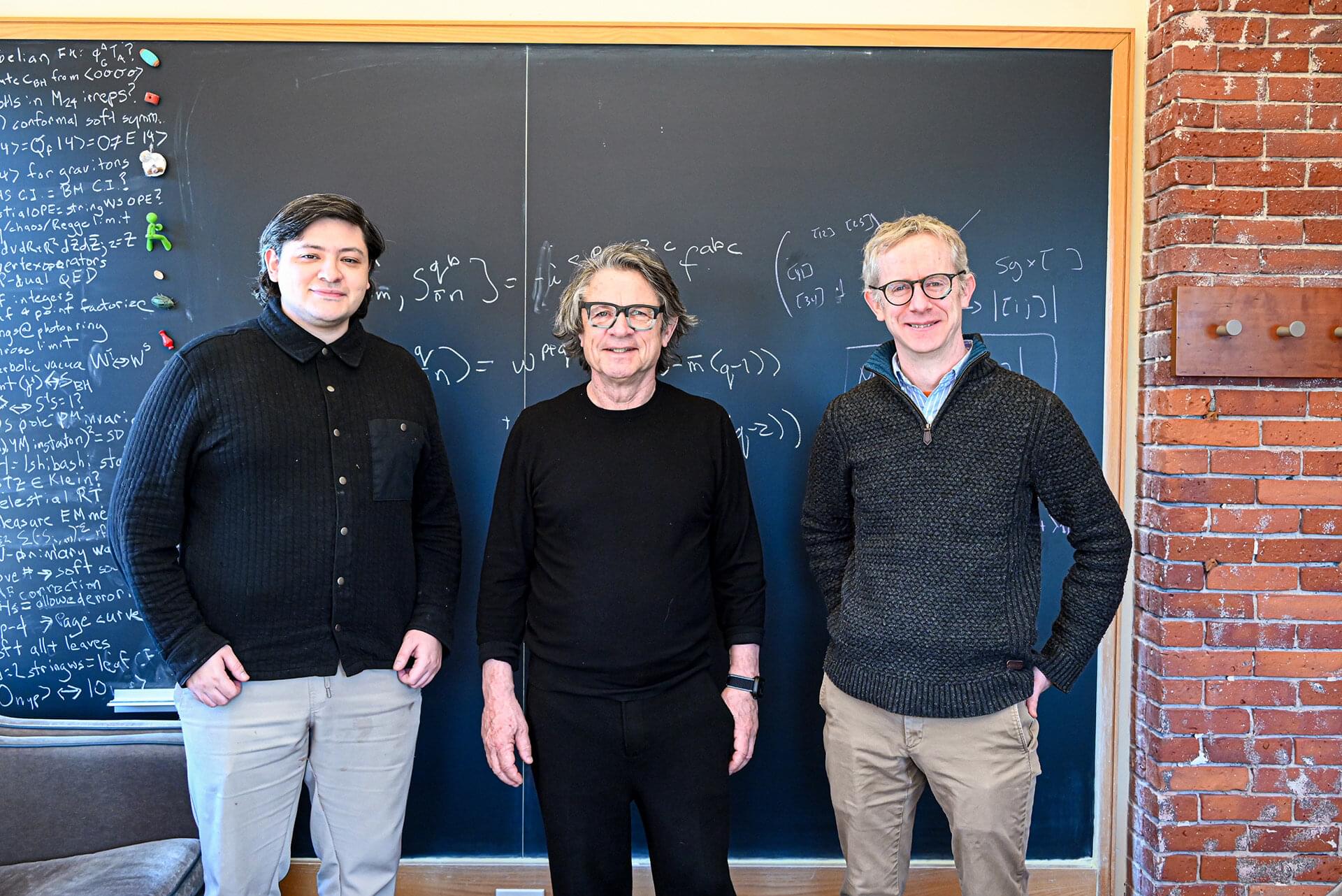
Like many scientists, theoretical physicist Andrew Strominger was unimpressed with early attempts at probing ChatGPT, receiving clever-sounding answers that didn’t stand up to scrutiny. So he was skeptical when a talented former graduate student paused a promising academic career to take a job with OpenAI. Strominger told him physics needed him more than Silicon Valley.

Still, Strominger, the Gwill E. York Professor of Physics, was intrigued enough by AI that he agreed when the former student, Alex Lupsasca, Ph.D., invited him to visit OpenAI last month to pose a thorny problem to the firm’s powerful in-house version of ChatGPT.

Strominger came away with much more than he expected—and the field of theoretical physics appears to have gained a little something too.

Physicists dream up ‘spacetime quasicrystals’ that could underpin the universe

Spacetime obeys a rule known as Lorentz symmetry means that something is unchanged whether you’re sitting still or moving at close to the speed of light. For example, the laws of physics respect Lorentz symmetry: They don’t change for fast moving observers. Lorentz symmetry doesn’t hold for previously known quasicrystals, or for normal crystals either: An ant sitting still would observe a different structure than would a near light-speed ant. In relativity, observers traveling at high speeds observe an apparent shortening of objects, and that distorts the materials’ structure.

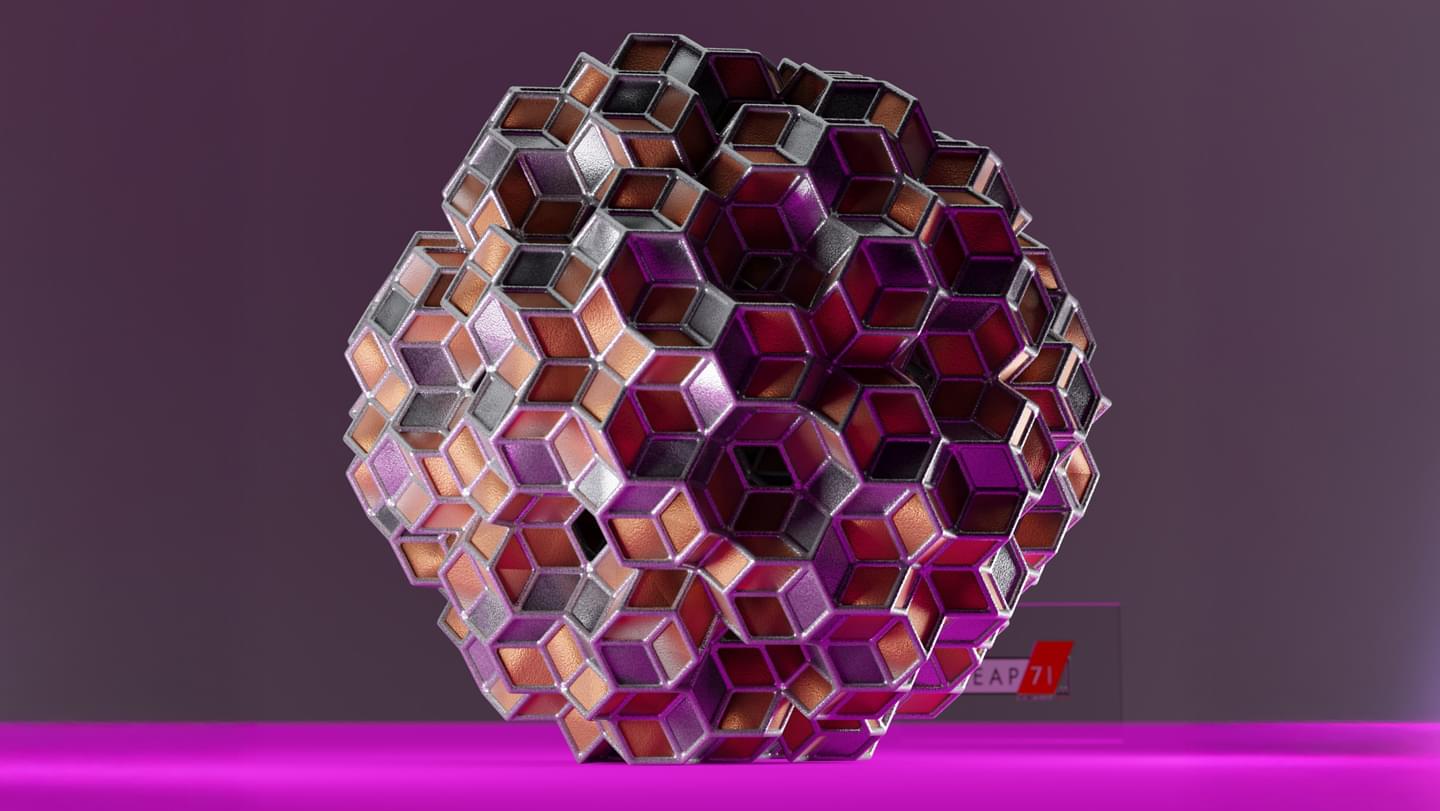
But the new spacetime quasicrystals obey Lorentz symmetry. They would appear the same to an ant sitting still as to one on a speeding rocket. The researchers mathematically formulated their quasicrystals by taking a four-dimensional slice through a grid of points in higher dimensions and projecting those points onto the slice. The slice has a slope that is an irrational number — one that can’t be written as a fraction of two whole numbers, such as pi. The irrational slope means the slice never directly intersects the points on the grid, and that helps produce the structure that never repeats.

Quasicrystals are a mathematical concept that shows up in the structure of real materials, but the concept could appear elsewhere. “The spacetime that we live in could be a quasicrystal,” says Sotiris Mygdalas of the Perimeter Institute in Waterloo, Canada, a coauthor of the study.

/* */