Toggle light / dark theme

The first direct observation of a liquid charge density wave

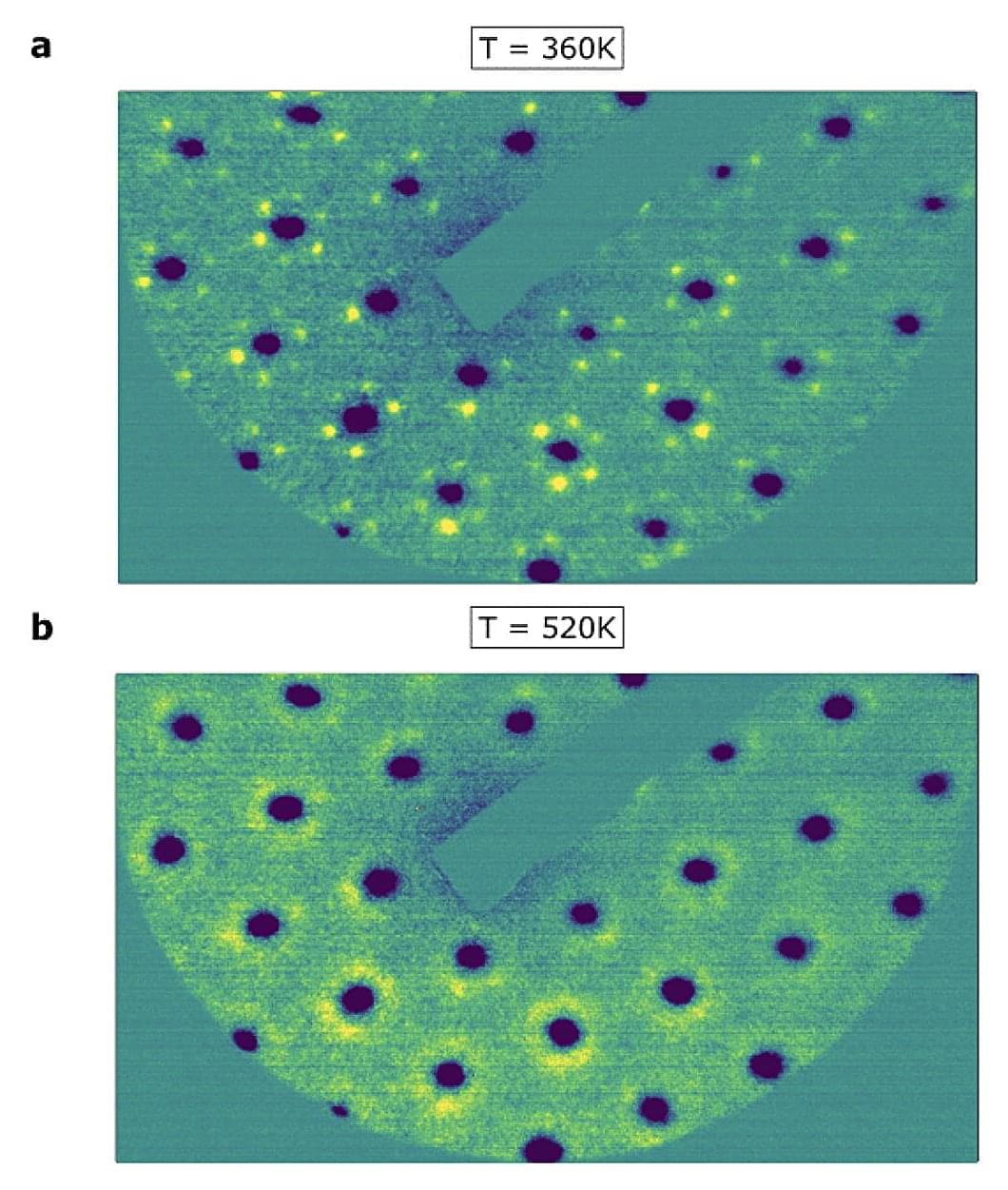
Charge density waves (CDWs) are ordered, crystal-like patterns in the arrangement of electrons that spontaneously form inside some solid materials. These patterns can change how electricity flows through materials, in some cases prompting the emergence of superconductivity or other unusual physical states.

Physics theories suggest that at certain temperatures CDWs “melt,” similarly to how conventional solids transition to a liquid state. So far, however, this transition to a liquid CDW had not yet been observed experimentally.

Researchers at University of California Los Angeles (UCLA) have gathered the first direct evidence of a CDW liquid state in the layered transition metal dichalcogenide 1T-TaS2. Their paper, published in Nature Physics, could open new possibilities for the study of hidden electronic phases in correlated physical systems.
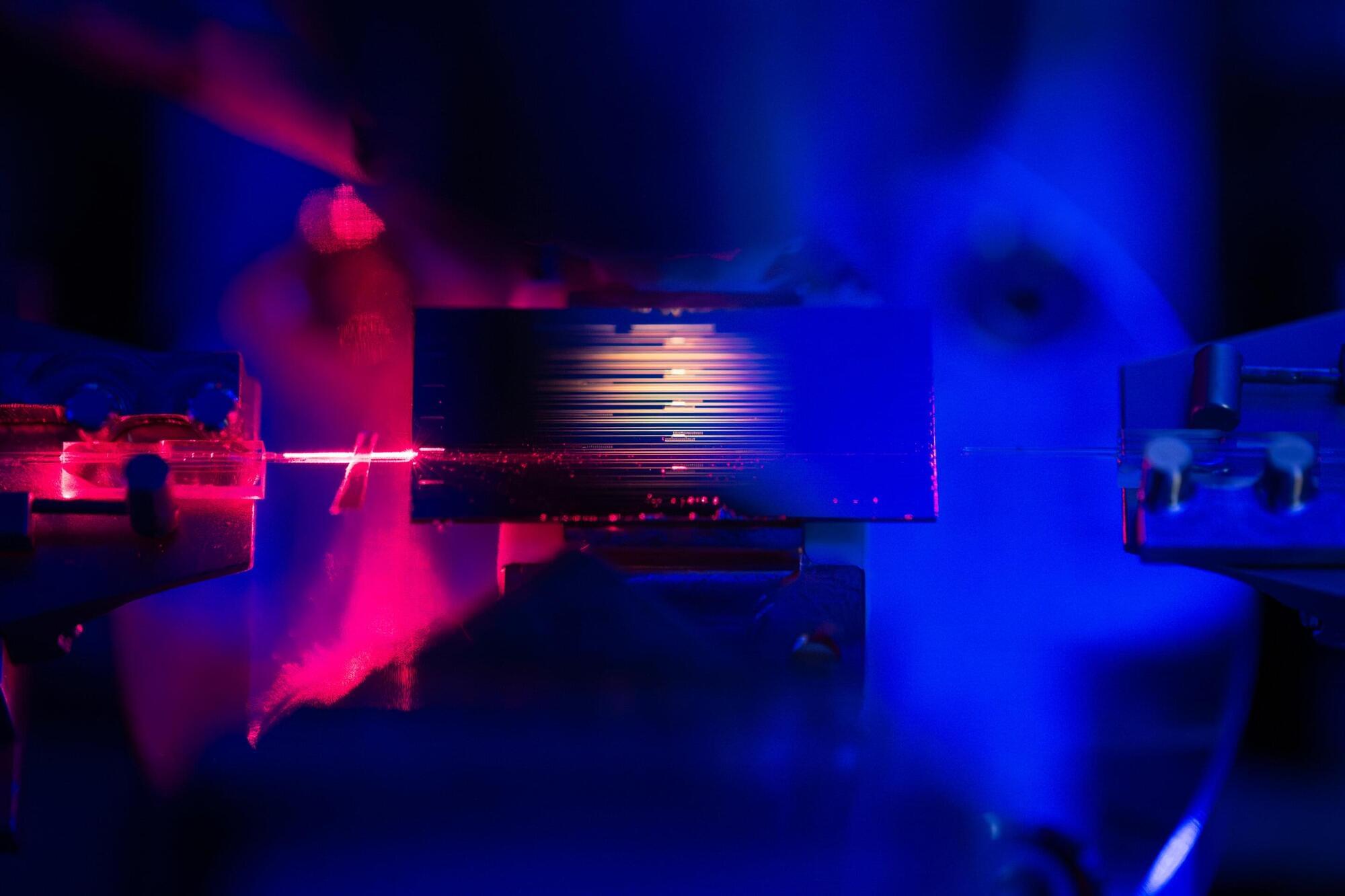
Chip-sized optical amplifier can intensify light 100-fold with minimal energy

Light does a lot of work in the modern world, enabling all types of information technology, from TVs to satellites to fiber-optic cables that carry the internet across oceans. Stanford physicists recently found a way to make that light work even harder with an optical amplifier that requires low amounts of energy without any loss of bandwidth, all on a device the size of a fingertip.

Similar to sound amplifiers, optical amplifiers take a light signal and intensify it. Current small-sized optical amplifiers need a lot of power to function. The new optical amplifier, detailed in the journal Nature, solves this problem by using a method that essentially recycles the energy used to power it.

“We’ve demonstrated, for the first time, a truly versatile, low-power optical amplifier, one that can operate across the optical spectrum and is efficient enough that it can be integrated on a chip,” said Amir Safavi-Naeini, the study’s senior author and associate professor of physics in Stanford’s School of Humanities and Sciences. “That means we can now build much more complex optical systems than were possible before.”

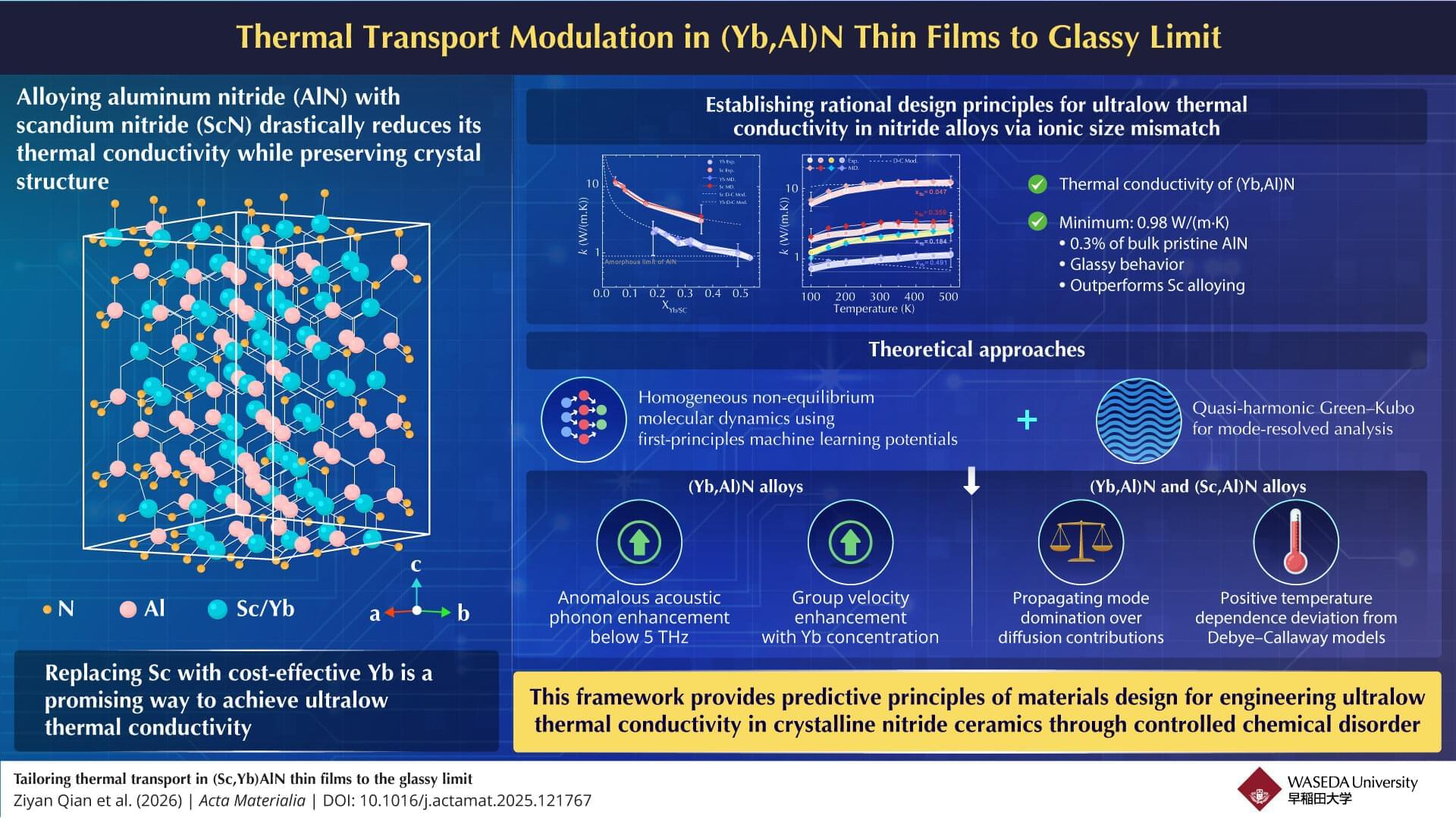
Establishing design principles for achieving ultralow thermal conductivity via controlled chemical disorder

A major challenge in thermal-management and thermal-insulation technologies, across multiple industries, is the lack of materials that simultaneously offer low thermal conductivity, mechanical robustness, and scalable fabrication routes.

Discovering materials that exhibit completely insulating thermal behavior—or, conversely, extraordinarily high thermal conductivity—has long been a dream for researchers in materials physics. Traditionally, amorphous materials are known to possess very low thermal conductivity.

This naturally leads to an important question: Can a crystalline material be engineered to achieve thermal conductivity close to that of an amorphous solid? Such a material would preserve the structural stability of a crystal while achieving exceptionally low thermal conductivity.

Webb pushes boundaries of observable Universe closer to Big Bang

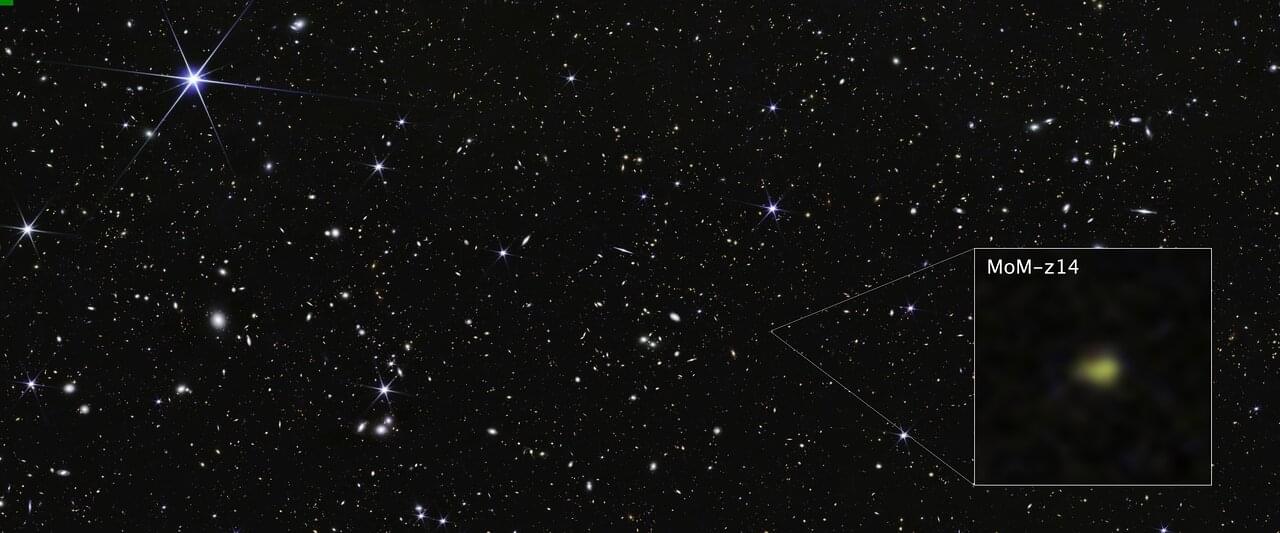
The NASA/ESA/CSA James Webb Space Telescope has topped itself once again, delivering on its promise to push the boundaries of the observable Universe closer to cosmic dawn with the confirmation of a bright galaxy that existed 280 million years after the Big Bang.

By now Webb has established that it will eventually surpass virtually every benchmark it sets in these early years, but the newly confirmed galaxy, MoM-z14, holds intriguing clues to the Universe’s historical timeline and just how different a place the early Universe was than astronomers expected.

“With Webb, we are able to see farther than humans ever have before, and it looks nothing like what we predicted, which is both challenging and exciting,” said Rohan Naidu of the Massachusetts Institute of Technology’s (MIT) Kavli Institute for Astrophysics and Space Research, lead author of a paper on galaxy MoM-z14 published in the Open Journal of Astrophysics.

NASA Webb Pushes Boundaries of Observable Universe Closer to Big Bang

NASA’s James Webb Space Telescope has topped itself once again, delivering on its promise to push the boundaries of the observable universe closer to cosmic dawn with the confirmation of a bright galaxy that existed 280 million years after the big bang. By now Webb has established that it will eventually surpass virtually every benchmark it sets in these early years, but the newly confirmed galaxy, MoM-z14, holds intriguing clues to the universe’s historical timeline and just how different a place the early universe was than astronomers expected.

“With Webb, we are able to see farther than humans ever have before, and it looks nothing like what we predicted, which is both challenging and exciting,” said Rohan Naidu of the Massachusetts Institute of Technology’s (MIT) Kavli Institute for Astrophysics and Space Research, lead author of a paper on galaxy MoM-z14 published in the Open Journal of Astrophysics.

Due to the expansion of the universe that is driven by dark energy, discussion of physical distances and “years ago” becomes tricky when looking this far. Using Webb’s NIRSpec (Near-Infrared Spectrograph) instrument, astronomers confirmed that MoM-z14 has a cosmological redshift of 14.44, meaning that its light has been travelling through (expanding) space, being stretched and “shifted” to longer, redder wavelengths, for about 13.5 of the universe’s estimated 13.8 billion years of existence.

Foundation AI models trained on physics, not words, are driving scientific discovery

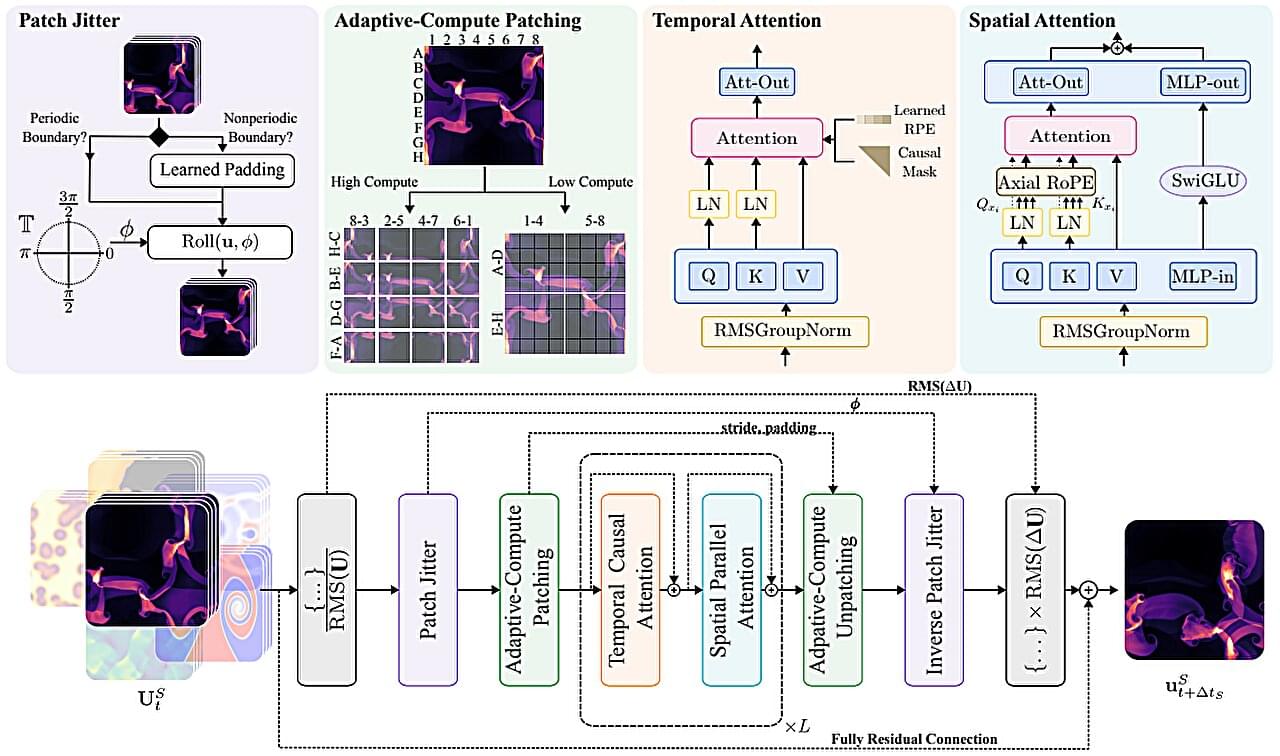
While popular AI models such as ChatGPT are trained on language or photographs, new models created by researchers from the Polymathic AI collaboration are trained using real scientific datasets. The models are already using knowledge from one field to address seemingly completely different problems in another.

While most AI models—including ChatGPT—are trained on text and images, a multidisciplinary team, including researchers from the University of Cambridge, has something different in mind: AI trained on physics.

Physicists eye emerging technology for solar cells in outer space

Solar cells face significant challenges when deployed in outer space, where extremes in the environment decrease the efficiency and longevity they enjoy back on Earth. University of Toledo physicists are taking on these challenges at the Wright Center for Photovoltaics Innovation and Commercialization, in line with a large-scale research project supported by the Air Force Research Laboratory.

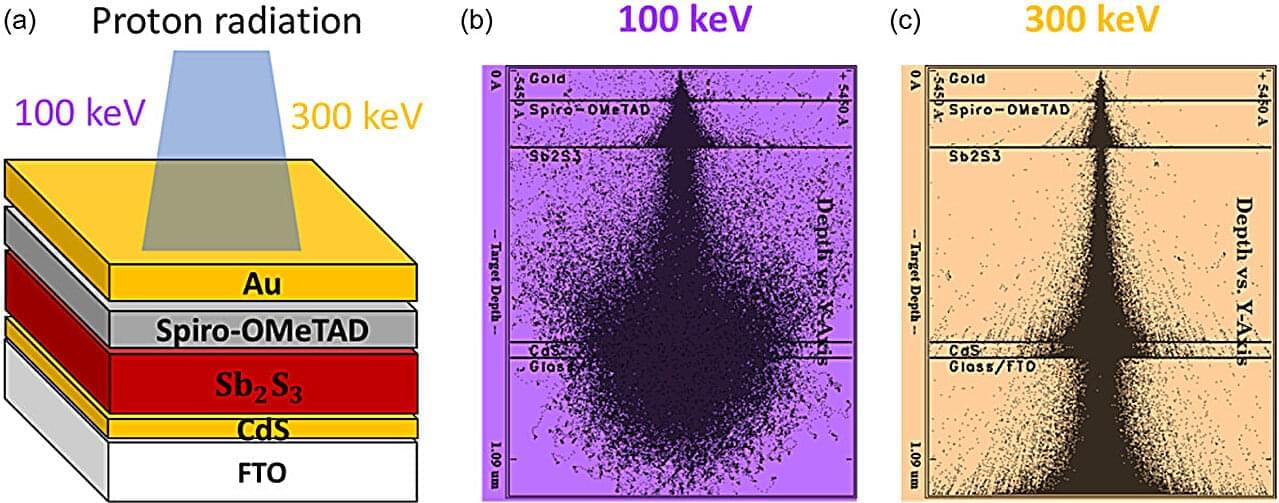
One recent advancement pertains to an emerging technology that utilizes antimony compounds as light-absorbing semiconductors. A group of UToledo faculty and students recently published a first-of-its-kind assessment exploring the promising characteristics of these antimony chalcogenide-based solar cells for space applications in the journal Solar RRL, which highlighted the work on its front cover.

Antimony chalcogenide solar cells exhibit superior radiation robustness compared to the conventional technologies we’re deploying in space,” said Alisha Adhikari, a doctoral student in physics who co-led the team of undergraduate, graduate and faculty researchers at UToledo. “But they’ll need to become much more efficient before they become a competitive alternative for future space missions.”

Enzyme as Maxwell’s Demon: Steady-State Deviation from Chemical Equilibrium by Enhanced Enzyme Diffusion

NoteL This is elegant theoretical physics showing an intriguing possibility, not a confirmed biological mechanism. It’s a “what if” scenario that could change how we view enzymes, but only if the controversial premise (EED) turns out to be real.


Enhanced enzyme diffusion (EED), in which the diffusion coefficient of an enzyme transiently increases during catalysis, has been extensively reported experimentally, although its existence remains under debate. In this Letter, we investigate what macroscopic consequences would arise if EED exists. Through numerical simulations and theoretical analysis, we demonstrate that such enzymes can act as Maxwell’s demons: They use their enhanced diffusion as a memory of the previous catalytic reaction, to gain information and drive steady-state chemical concentrations away from chemical equilibrium. Our theoretical analysis identifies the conditions under which this process could operate and discusses its possible biological relevance.

What babies can teach AI

Researchers at Google DeepMind tried to teach an AI system to have that same sense of “intuitive physics” by training a model that learns how things move by focusing on objects in videos instead of individual pixels. They trained the model on hundreds of thousands of videos to learn how an object behaves. If babies are surprised by something like a ball suddenly flying out of the window, the theory goes, it is because the object is moving in a way that violates the baby’s understanding of physics. The researchers at Google DeepMind managed to get their AI system, too, to show “surprise” when an object moved differently from the way it had learned that objects move.

Yann LeCun, a Turing Prize winner and Meta’s chief AI scientist, has argued that teaching AI systems to observe like children might be the way forward to more intelligent systems. He says humans have a simulation of the world, or a “world model,” in our brains, allowing us to know intuitively that the world is three-dimensional and that objects don’t actually disappear when they go out of view. It lets us predict where a bouncing ball or a speeding bike will be in a few seconds’ time. He’s busy building entirely new architectures for AI that take inspiration from how humans learn. We covered his big bet for the future of AI here.

The AI systems of today excel at narrow tasks, such as playing chess or generating text that sounds like something written by a human. But compared with the human brain—the most powerful machine we know of—these systems are brittle. They lack the sort of common sense that would allow them to operate seamlessly in a messy world, do more sophisticated reasoning, and be more helpful to humans. Studying how babies learn could help us unlock those abilities.

Experiment clarifies cosmic origin of rare proton-rich isotope selenium-74

Researchers have reported new experimental results addressing the origin of rare proton-rich isotopes heavier than iron, called p-nuclei. Led by Artemis Tsantiri, then-graduate student at the Facility for Rare Isotope Beams (FRIB) and current postdoctoral fellow at the University of Regina in Canada, the study presents the first rare isotope beam measurement of proton capture on arsenic-73 to produce selenium-74, providing new constraints on how the lightest p-nucleus is formed and destroyed in the cosmos.

The team published the results in Physical Review Letters in a paper titled “Constraining the Synthesis of the Lightest Nucleus 74 Se”. The work involved more than 45 participants from 20 institutions in the United States, Canada, and Europe.

A central question in nuclear astrophysics concerns how and where chemical elements are formed. The slow and rapid neutron-capture processes account for many intermediate-mass and heavy nuclei beyond iron through repeated neutron captures followed by radioactive decays until stable isotopes are reached.

/* */