Toggle light / dark theme

Claude Opus 4.6 vs GPT 5.3 Codex: Which is better for programming? | Peter Steinberger

Claude Opus 4.6 and GPT 5.3 Codex, two AI models, have different strengths and interaction styles, highlighting the trade-offs between elegance, reliability, and efficiency in their performance ##

## Questions to inspire discussion.

Model Selection Strategy.

🎯 Q: Which AI model should I choose for different programming tasks?

A: Use Opus for interactive roleplay and quick command following with trial-and-error workflows, while Codex excels at delivering elegant solutions when given proper context and reads more code by default.

🔄 Q: How long does it take to effectively switch between AI models?
AI captures particle accelerator behavior to optimize machine performance

Keeping high-power particle accelerators at peak performance requires advanced and precise control systems. For example, the primary research machine at the U.S. Department of Energy’s Thomas Jefferson National Accelerator Facility features hundreds of fine-tuned components that accelerate electrons to 99.999% the speed of light.

The electrons get this boost from radiofrequency waves within a series of resonant structures known as cavities, which become superconducting at temperatures colder than deep space.

These cavities form the backbone of Jefferson Lab’s Continuous Electron Beam Accelerator Facility (CEBAF), a unique DOE Office of Science user facility supporting the research of more than 1,650 nuclear physicists from around the globe. CEBAF also holds the distinction of being the world’s first large-scale installation and application of this superconducting radiofrequency (SRF) technology.

Graham Priest: Dialetheism & the Limits of Classical Logic

For 2,500 years, Western thought has treated contradiction as catastrophic.

From Aristotle’s law of non-contradiction to modern formal systems, logic has operated under one sacred assumption: a statement cannot be both true and false.

But what if that assumption is wrong?

In my latest Singularity. FM conversation, I sit down with Graham Priest — one of the world’s leading philosophers of logic and the foremost defender of *dialetheism* — the view that some contradictions are true.

We explore:

‱ Why the liar paradox still unsettles logicians ‱ How paraconsistent logic blocks “explosion” ‱ Whether classical logic is incomplete rather than universal ‱ What Buddhist philosophy understood about contradiction centuries ago ‱ And whether AI systems may require non-classical logics to model human reasoning.

12 Emerging Innovative Technology Areas for Government Prioritization

By Chuck Brooks

#technology #government #security


By Chuck Brooks, president of Brooks Consulting International

The future of innovation in both government and industry will not be distinguished by singular breakthroughs, but rather by the convergence and meshing of a number of different new technologies. Going forward, industries, national security, economic competitiveness, privacy and almost every aspect of everyday life will all be reshaped as a result of this integrated ecosystem, which encompasses artificial intelligence, quantum computing, improved connectivity, space systems and other areas.

12 Emerging Innovative Technology Areas for Government Prioritization

Twelve crucial technical domains will help propel the federal government toward this convergent transformation.

The Frontier Labs War: Opus 4.6, GPT 5.3 Codex, and the SuperBowl Ads Debacle

Questions to inspire discussion AI Model Performance & Capabilities.

đŸ€– Q: How does Anthropic’s Opus 4.6 compare to GPT-5.2 in performance?

A: Opus 4.6 outperforms GPT-5.2 by 144 ELO points while handling 1M tokens, and is now in production with recursive self-improvement capabilities that allow it to rewrite its entire tech stack.

🔧 Q: What real-world task demonstrates Opus 4.6’s agent swarm capabilities?

A: An agent swarm created a C compiler in Rust for multiple architectures in weeks for **$20K, a task that would take humans decades, demonstrating AI’s ability to collapse timelines and costs.

🐛 Q: How effective is Opus 4.6 at finding security vulnerabilities?

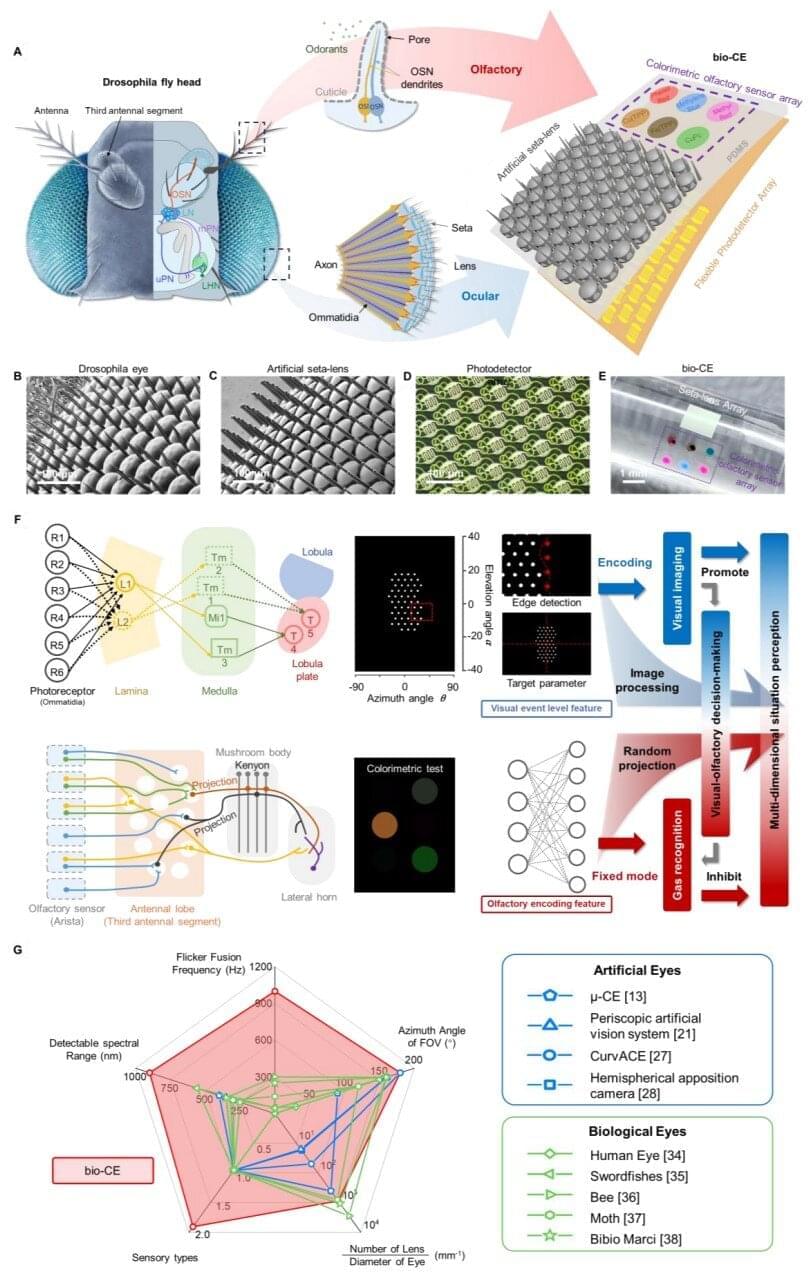
The insect-inspired bionic eye that sees, smells and guides robots

The compound eyes of the humble fruit fly are a marvel of nature. They are wide-angle and can process visual information several times faster than the human eye. Inspired by this biological masterpiece, researchers at the Chinese Academy of Sciences have developed an insect-scale compound eye that can both see and smell, potentially improving how drones and robots navigate complex environments and avoid obstacles.

Traditional cameras on robots and drones may excel at capturing high-definition photos, but struggle with a narrow field of view and limited peripheral vision. They also tend to be bulky and power-hungry.

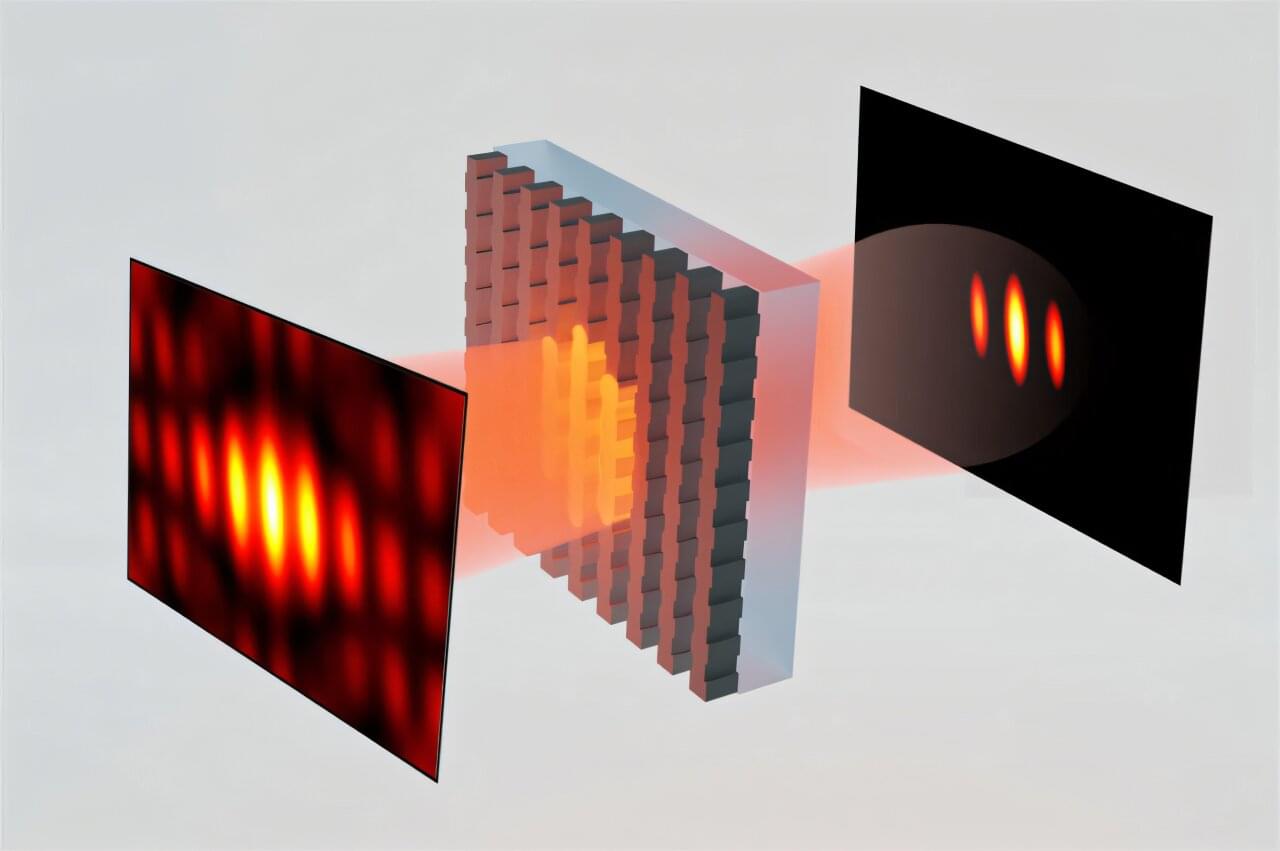
Silicon metasurfaces boost optical image processing with passive intensity-based filtering

Of the many feats achieved by artificial intelligence (AI), the ability to process images quickly and accurately has had an especially impressive impact on science and technology. Now, researchers in the McKelvey School of Engineering at Washington University in St. Louis have found a way to improve the efficiency and capability of machine vision and AI diagnostics using optical systems instead of traditional digital algorithms.

Mark Lawrence, an assistant professor of electrical and systems engineering, and doctoral student Bo Zhao developed this approach to achieve efficient processing performance without high energy consumption. Typically, all-optical image processing is highly constrained by the lack of nonlinearity, which usually requires high light intensities or external power, but the new method uses nanostructured films called metasurfaces to enhance optical nonlinearity passively, making it practical for everyday use.

Their work shows the ability to filter images based on light intensity, potentially making all-optical neural networks more powerful without using additional energy. Results of the research were published online in Nano Letters on Jan. 21, 2026.

Fake AI Chrome extensions with 300K users steal credentials, emails

A set of 30 malicious Chrome extensions that have been installed by more than 300,000 users are masquerading as AI assistants to steal credentials, email content, and browsing information.

Some of the extensions are still present in the Chrome Web Store and have been installed by tens of thousands of users, while others show a small install count.

Researchers at browser security platform LayerX discovered the malicious extension campaign and named it AiFrame. They found that all analyzed extensions are part of the same malicious effort as they communicate with infrastructure under a single domain, tapnetic[.]pro.

/* */