The presence of outliers in a classification or regression dataset can result in a poor fit and lower predictive modeling performance.
Identifying and removing outliers is challenging with simple statistical methods for most machine learning datasets given the large number of input variables. Instead, automatic outlier detection methods can be used in the modeling pipeline and compared, just like other data preparation transforms that may be applied to the dataset.
In this tutorial, you will discover how to use automatic outlier detection and removal to improve machine learning predictive modeling performance.
A team of computer scientists has developed a new AI that can write code and predict software solutions for programmers navigating through numerous application programming interfaces (APIs).
For years, research scientists have been studying how programs can generate instant feedback that coders can address immediately. A wide range of applications has already been created, all of which aim to detect faulty or questionable lines of code. While this has only been minimally integrated into most developers’ software tools, a team of computer scientists from Rice University has recently figured out a way for developers and programmers to receive feedback on their code while suggesting solutions for their programs—all through artificial intelligence (AI).
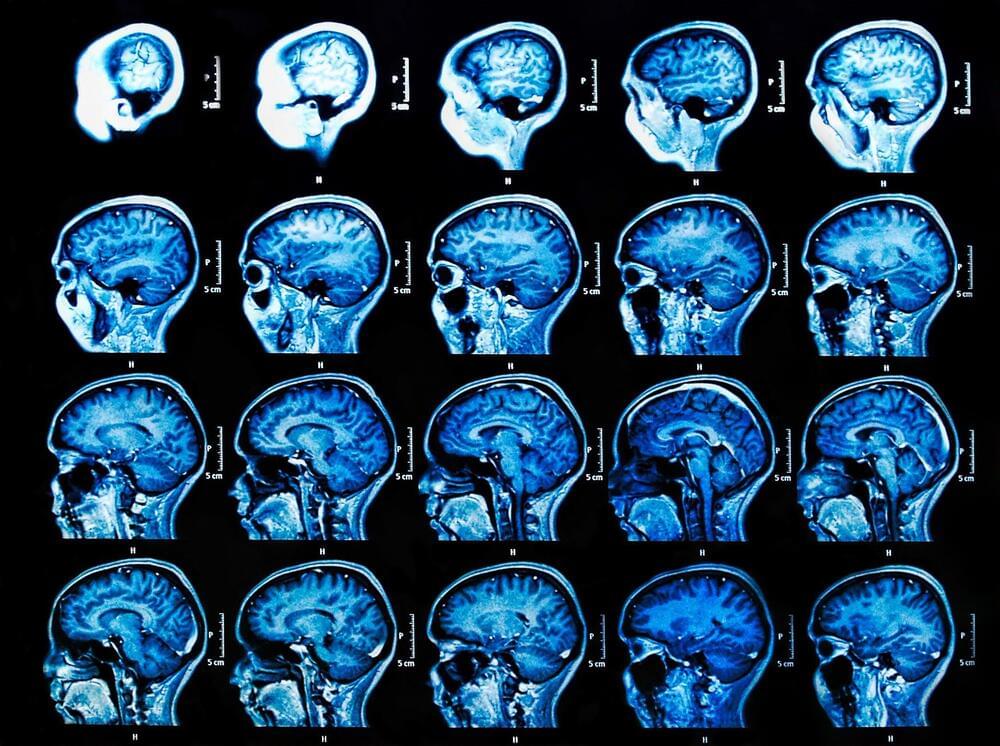
It’s no secret that healthcare costs have risen faster than inflation for decades. Some experts estimate that healthcare will account for over 20% of the US GDP by 2025. Meanwhile, doctors are working harder than ever before to treat patients as the U.S. physician shortage continues to grow. Many medical professionals have their schedules packed so tightly that much of the human element which motivated their pursuit of medicine in the first place is reduced.
In healthcare, artificial intelligence (AI) can seem intimidating. At the birthday party of a radiologist friend, she gently expressed how she felt her job would be threatened by AI in the coming decade. Yet, for most of the medical profession, AI will be an accelerant and enabler, not a threat. It would be good business for AI companies as well to help, rather than attempt to replace, medical professionals.
In a previous article, I expressed three ways in which I consistently see AI adding value: speed, cost and accuracy. In healthcare, it’s no different. Here are three examples of how AI will change healthcare.
A new machine learning program called MISIM can figure out what a snippet of code is meant to do and offer up new code to make it faster or more efficient.
Computer programmers may soon design the ultimate program: A program that designs programs.
Last week, a team led by Justin Gottschlich, director of the machine programming research group at Intel, announced the creation of a new machine learning system that designs its own code. They call the system MISIM, Machine Inferred Code Similarity.
Gottschlich explained, “Intel’s ultimate goal for machine programming is to democratize the creation of software. When fully realized, machine programming will enable everyone to create software by expressing their intention in whatever fashion that’s best for them, whether that’s code, natural language or something else. That’s an audacious goal, and while there’s much more work to be done, MISIM is a solid step toward it.”
Eyeing a launch in 2023, DARPA’s Robotic Servicing of Geosynchronous Satellites (RSGS) program will focus the remainder of this year on completing the elements of the robotic payload. The objective of RSGS is to create an operational dexterous robotic capability to repair satellites in geosynchronous Earth orbit (GEO), extending satellite life spans, enhancing resilience, and improving reliability for the current U.S. space infrastructure.
Earlier this year, DARPA partnered with Space Logistics LLC, a wholly owned subsidiary of Northrop Grumman, to provide the spacecraft bus, launch, and operations of the integrated spacecraft. DARPA will provide the payload that flies on the bus, including the robotic arms, through an agreement with the U.S. Naval Research Laboratory (NRL).
In 2021, NRL will integrate the robotic arms onto the payload structure, and then is expected to begin environmental tests by the end of same year. After launch in 2023, it will take approximately nine months to reach GEO, and the program anticipates servicing satellites in mid-2024.
Despite China’s considerable strides, industry analysts expect America to retain its current AI lead for another decade at least. But this is cold comfort: China is already developing powerful new surveillance tools, and exporting them to dozens of the world’s actual and would-be autocracies. Over the next few years, those technologies will be refined and integrated into all-encompassing surveillance systems that dictators can plug and play.
Xi Jinping is using artificial intelligence to enhance his government’s totalitarian control—and he’s exporting this technology to regimes around the globe.
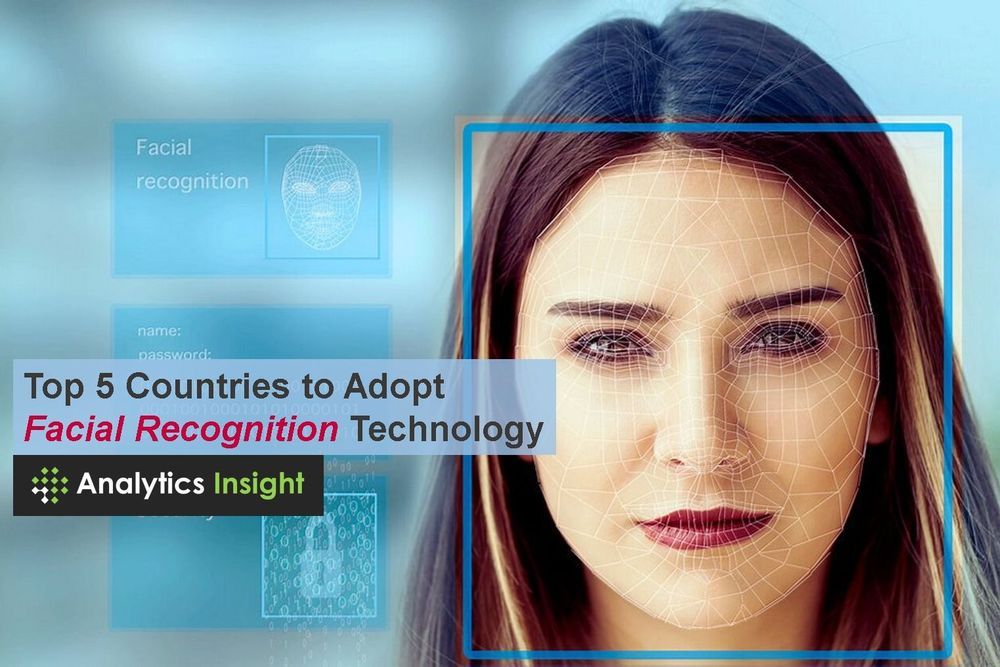
Consumers are ending up increasingly responsive about sharing their data, as data integrity and security has turned into a developing concern. In any case, with the advent of nations teching up with facial recognition, even explorers need to truly begin thinking about what sort of data they could be reluctantly offering to nations, individuals and places.
Facial recognition innovation is a framework that is fit for identifying or confirming an individual from an advanced picture or a video frame. It works by comparing chosen facial highlights and faces inside a database. The technology is utilized in security frameworks and can be compared with different biometrics, for example, fingerprint or iris recognition frameworks. As of late, it has been grabbed and utilized as a business identification and advertising tool. The vast majority have a cell phone camera fit for recognizing features to perform exercises, for example, opening said a cell phone or making payments.
The worldwide market for facial recognition cameras and programming will be worth of an expected $7.8 billion, predicts Markets and Markets. Never again consigned to sci-fi films and books, the technology is being used in various vertical markets, from helping banks recognize clients to empowering governments to look out for criminals. Let’s look at some of the top countries adopting facial recognition technology.
Gravity is no obstacle for this climbing robot. It scales vertical walls—even those made of smooth materials like glass. Jeff Krahn, an engineer from Simon Fraser University in British Columbia, created this gecko-inspired tank of a robot, which he detailed in a paper in the journal Smart Materials and Structures this week.
Like a gecko, which can hang on to sheer glass with just one toe, the climbing bot uses what physicists call Van der Waals forces to stick to the wall. Its tanklike tracks are covered in a dry adhesive, a polymer resembling silicon that allows adhesion without chemicals or added energy. The molecules that make up this substance are temporary dipoles; they have a positively charged side and a negatively charged side. The charged sides of the molecules are attracted to their corresponding opposites on the wall the robot is climbing: negative to positive, positive to negative. Given enough surface area for these attractions to take place, Van der Waals forces can keep a pretty substantial weight stuck to a vertical wall. The climbing bot, for example, weighs in at half a pound.
To boost the climbing bot’s stickiness, Krahn needed to increase the surface area of its tracks, which allows more molecular interactions. So the tracks are covered with small bumps shaped like mushroom caps, each about the size of a human red blood cell. These bumps also allow the bot to cling to microscopic bumps and cracks in the surface of whatever it’s climbing. However, Krahn’s creation can’t scale a surface that’s too rough; the texture of concrete, for example, wouldn’t provide enough surface area for its tracks to get the proper grip, Krahn says.