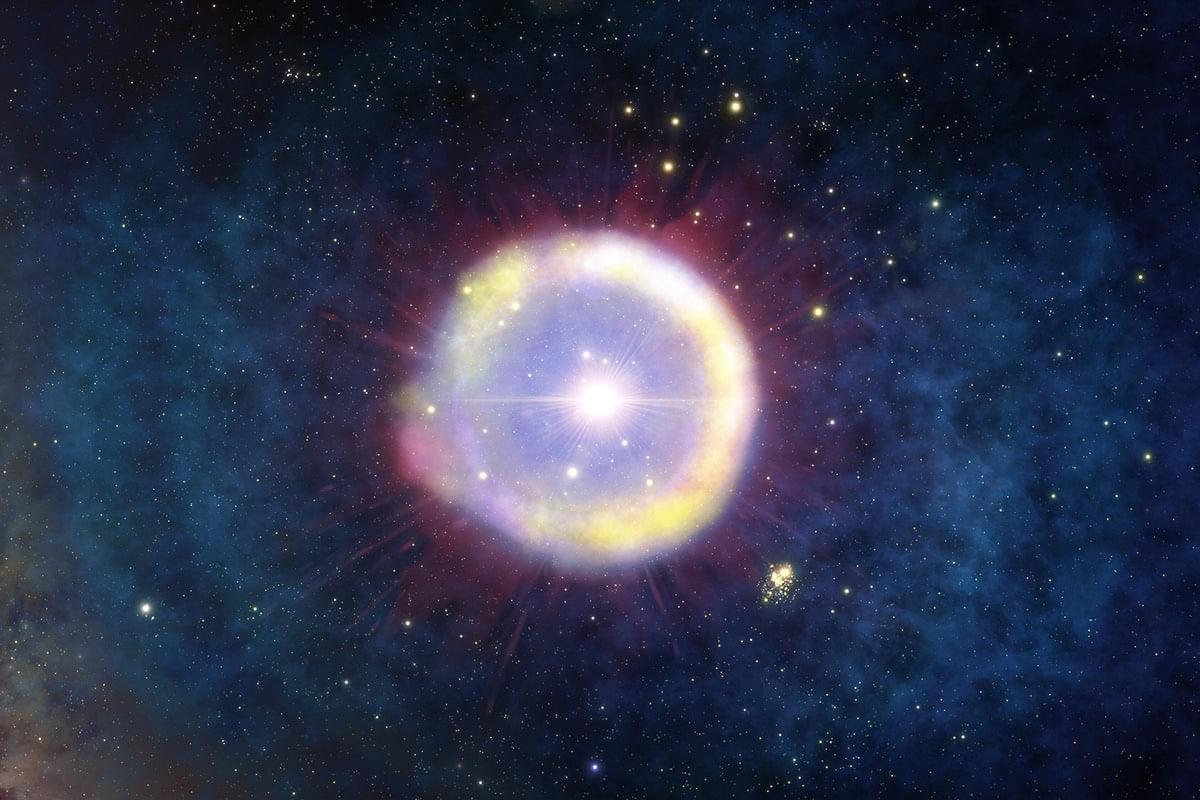
Scientists from the University of Portsmouth have discovered that water was already present in the Universe 100–200 million years after the Big Bang.
The discovery means habitable planets could have started forming much earlier — before the first galaxies formed and billions of years earlier than was previously thought.
Searching for life on other celestial bodies, or at the very least the necessary components to support it, has been fascinating scientists and enthusiasts for centuries. While planets are the obvious choice, their moons can also harbor the chemical ingredients for life.
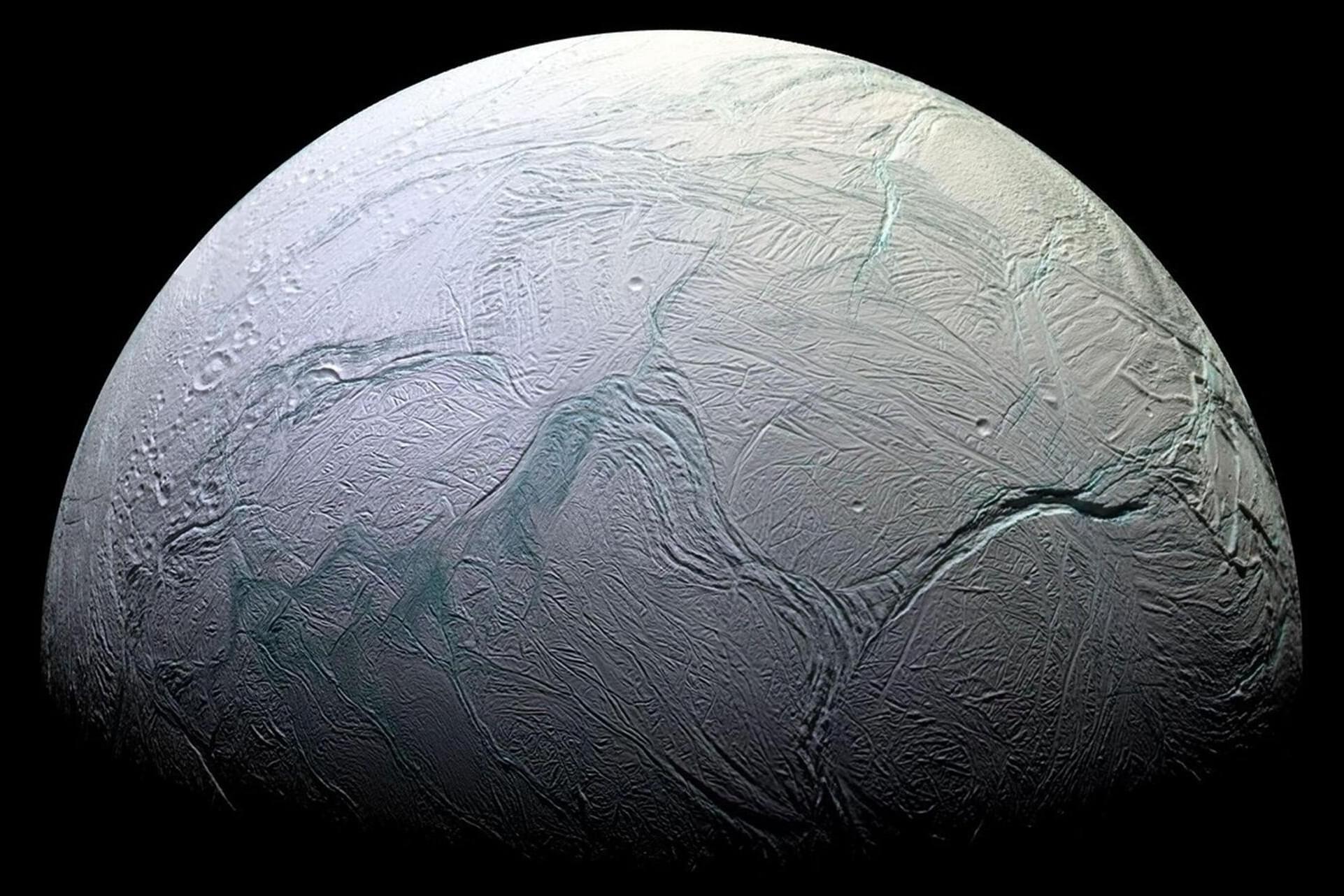
Saturn is orbited by 146 moons, with Enceladus being the sixth largest at approximately 500km in diameter. This small, icy moon is characterized by its highly reflective white surface and geyser-like jets releasing ice and water vapor hundreds of kilometers into space from its south pole.
NASA’s Cassini spacecraft identified these jets in 2005, before going on to sample them in 2008, 2009 and 2015. Consequently, scientists found that the hot mineral-rich waters possess the necessary components for life, despite the moon’s surface reaching extreme temperatures of −201°C.
Scientists have identified a promising new way to detect life on faraway planets, hinging on worlds that look nothing like Earth and gases rarely considered in the search for extraterrestrials.
In a new Astrophysical Journal Letterspaper, researchers from the University of California, Riverside, describe these gases, which could be detected in the atmospheres of exoplanets—planets outside our solar system—with the James Webb Space Telescope, or JWST.
Called methyl halides, the gases comprise a methyl group, which bears a carbon and three hydrogen atoms, attached to a halogen atom such as chlorine or bromine. They’re primarily produced on Earth by bacteria, marine algae, fungi, and some plants.
Cosmologists have a standard set of puzzles they think about: the nature of dark matter and dark energy, whether there was a period of inflation, the evolution of structure, and so on. But there are also even deeper questions, having to do with why there is a universe at all, and why the early universe had low entropy, that most working cosmologists don’t address. Today’s guest, Anthony Aguirre, is an exception. We talk about these deep issues, and how tackling them might lead to a very different way of thinking about our universe. At the end there’s an entertaining detour into AI and existential risk.
Anthony Aguirre received his Ph.D. in Astronomy from Harvard University. He is currently associate professor of physics at the University of California, Santa Cruz, where his research involves cosmology, inflation, and fundamental questions in physics. His new book, Cosmological Koans, is an exploration of the principles of contemporary cosmology illustrated with short stories in the style of Zen Buddhism. He is the co-founder of the Foundational Questions Institute, the Future of Life Institute, and the prediction platform Metaculus.
This is some wild stuff o.o. As much is unknown about this universe I still think this phenomenon is more exterrestial possibly even from the grand architect like god or some alien species that is either moving a black hole spaceship or some sorta wormhole expansion for alien transportation or could be even god due its nature as his vehicle the Ezekiel wheel was spotted near Venus in 2020. Still is an unknown threat whether it is an actual threat is still unknown. If it is a threat theoretically we could evaporate the black hole though but this would require large amounts of energy maybe even Higgs bosons somehow.
A fluffy cluster of stars spilling across the sky may have a secret hidden in its heart: a swarm of over 100 stellar-mass black holes.
The star cluster in question is called Palomar 5. It’s a stellar stream that stretches out across 30,000 light-years, and is located around 80,000 light-years away.
Such globular clusters are often considered ‘fossils’ of the early Universe. They’re very dense and spherical, typically containing roughly 100,000 to 1 million very old stars; some, like NGC 6397, are nearly as old as the Universe itself.
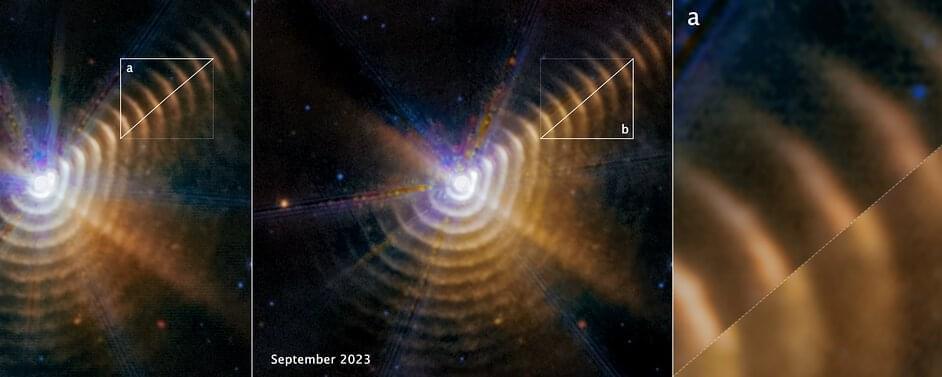
Astronomers using the NASA/ESA/CSA James Webb Space Telescope have identified two stars responsible for generating carbon-rich dust a mere 5,000 light-years away in our own Milky Way galaxy. As the massive stars in Wolf-Rayet 140 swing past one another on their elongated orbits, their winds collide and produce the carbon-rich dust. For a few months every eight years, the stars form a new shell of dust that expands outward — and may eventually go on to become part of stars that form elsewhere in our galaxy.
Astronomers have long tried to track down how elements like carbon, which is essential for life, become widely distributed across the Universe. Now, the James Webb Space Telescope has examined one ongoing source of carbon-rich dust in our own Milky Way galaxy in greater detail: Wolf-Rayet 140 [1], a system of two massive stars that follow a tight, elongated orbit.
As they swing past one another (within the central white dot in the Webb images), the stellar winds from each star slam together, the material compresses, and carbon-rich dust forms. Webb’s latest observations show 17 dust shells shining in mid-infrared light that are expanding at regular intervals into the surrounding space.
In anticipation for my next public lecture, the organizer requested the title of my lecture. I suggested: “Hunting for Aliens.” The organizer expressed concern that some members of the audience might confuse me for a U.S. government employee in search of illegal aliens near the southern border wall. I explained that no two-dimensional wall erected on Earth would protect us from extraterrestrials because they will arrive from above. It is just a matter of time until we notice interstellar travelers arriving without a proper visa. A policy of deporting them back to their home exoplanet will be expensive — over a billion dollars per flight. The trip will also take a long time — over a billion years with conventional chemical propulsion. We will have to learn how to live with these aliens, and promote diversity and inclusion in a Galactic context.
The Sun formed in the last third of cosmic history, so we are relatively late to the party of interstellar travelers. Experienced travelers might have been engaged in their interstellar journeys for billions of years. To properly interpret their recorded diaries and photo albums in terms of the specific stars they visited, we would need to accurately interpret their time measurements.
Imagine an interstellar tourist wearing a mechanical analog watch. Such a timepiece is at best accurate to within 3 seconds per day, or equivalently 30,000 years per billion years. This timing error is comparable to the amount of time it takes to hop from one star to another with chemical propulsion. Interstellar travelers must wear better clocks in order to have a reliable record of time.
Scientists today are quite sure about how long our universe has existed: it’s been 13.8 billion years, give or take 59 million years, since the cosmos burst into being via the big bang. But they’re much less certain about a related question: When could life have first arisen, somewhere out there? Our solar system formed a mere 4.6 billion years ago, after two thirds of cosmic time had already elapsed, and life seems to have happened here almost as soon as Earth cooled down from its fiery birth to harbor oceans of liquid water.
Experience Mars like never before! In this breathtaking AI-generated video, journey to Mars in the year 3,075, where luxury space tourism has transformed the red planet into an elite travel destination. Explore majestic Martian cities under transparent domes, luxurious resorts overlooking breathtaking valleys, and futuristic architecture blending seamlessly with the alien landscape. Mars isn’t just a planet—it’s an exclusive getaway for humanity’s privileged few. Join us and discover the future of luxury space tourism.
🎧 Best experienced with headphones!
✨ Your support is crucial! Like 👍, comment 💬, and subscribe 🔔 for more extraordinary AI-generated journeys! 💎 Support the channel on Patreon for exclusive content: https://www.patreon.com/PintoCreation.
✅ Created with Midjourney V6.1, visualized through advanced animations powered by Hailuo AI, an innovative AI video generator rivaling Sora AI, Luma AI, Runway Gen3, and Kling AI. 🎵 Featuring an immersive, original soundtrack by SUno AI v4.
Are Bacteria the secret to solving one of science’s biggest paradoxes – and discovering why we haven’t seen extraterrestrial life?Please join my mailing list…