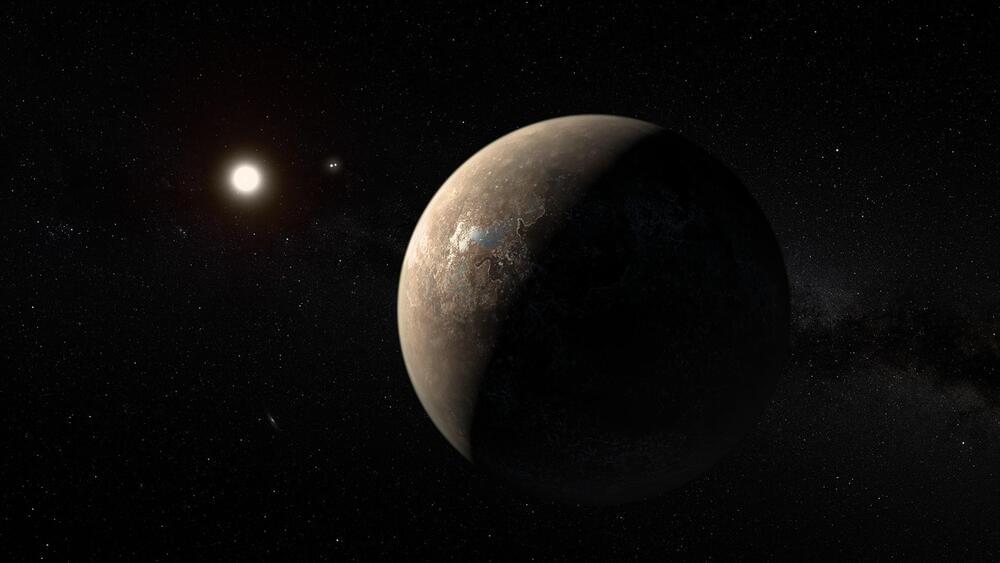
An abundant type of hot ocean exoplanet, despite being decidedly un-Earth-like, could have the right stuff for hosting microbial life.
NASA ’s Roman Space Telescope ’s Coronagraph Instrument, designed to observe distant exoplanets by blocking stellar light, has passed essential tests, marking a significant advancement in space observation technology and the search for extraterrestrial life.
A cutting-edge tool to view planets outside our solar system has passed two key tests ahead of its launch as part of the agency’s Roman Space Telescope by 2027.
The Coronagraph Instrument on NASA’s Nancy Grace Roman Space Telescope will demonstrate new technologies that could vastly increase the number of planets outside our solar system (exoplanets) that scientists can directly observe. Designed and built at the agency’s Jet Propulsion Laboratory in Southern California, it recently passed a series of critical tests ahead of launch. That includes tests to ensure the instrument’s electrical components don’t interfere with those on the rest of the observatory and vice versa.
Science Fiction has long contemplated the idea that alien life not based on carbon chemistry such as silicon might exist on distant and strange worlds, or might be made to exist advanced biological engineering. What would such life be like?
Start listening with a 30-day Audible trial and your first audiobook plus two Audible Originals are free. Visit http://www.audible.com/isaac or text \.
A European Space Agency satellite is expected to reenter and largely burn up in Earth’s atmosphere on Wednesday morning.
The agency’s Space Debris Office, along with an international surveillance network, is monitoring and tracking the Earth-observing ERS-2 satellite, which is predicted to make its reentry at 3:53 p.m. ET Wednesday, with a 7.5-hour window of uncertainty. The ESA is also providing live updates on its website.
“As the spacecraft’s reentry is ‘natural’, without the possibility to perform manoeuvers, it is impossible to know exactly where and when it will reenter the atmosphere and begin to burn up,” according to a statement from the agency.
As we search the heavens for signs of alien life, is it possible that the easiest place to find aliens is to look in the mirror?
Try Cell to Singularity, free to play: https://l.linklyhq.com/l/1uNoF
Visit our Website: http://www.isaacarthur.net.
Join Nebula: https://go.nebula.tv/isaacarthur.
Support us on Patreon: / isaacarthur.
Support us on Subscribestar: https://www.subscribestar.com/isaac-a…
Facebook Group: / 1583992725237264
Reddit: / isaacarthur.
Twitter: / isaac_a_arthur on Twitter and RT our future content.
SFIA Discord Server: / discord.
Credits: Human Aliens.
Episode 420a; November 12, 2023
Written, Produced \& Narrated by:
Isaac Arthur.
Editors:
Donagh Broderick.
Graphics by:
Does life appear independently on different planets in the galaxy? Or does it spread from world to world? Or does it do both?
New research shows how life could spread via a basic, simple pathway: cosmic dust.
One thing scientists have learned in the past few decades is that life on Earth might have had an early start.
“New surveys of the sky provide groundbreaking opportunities to search for technosignatures coordinated with supernovae.” said Bárbara Cabrales.
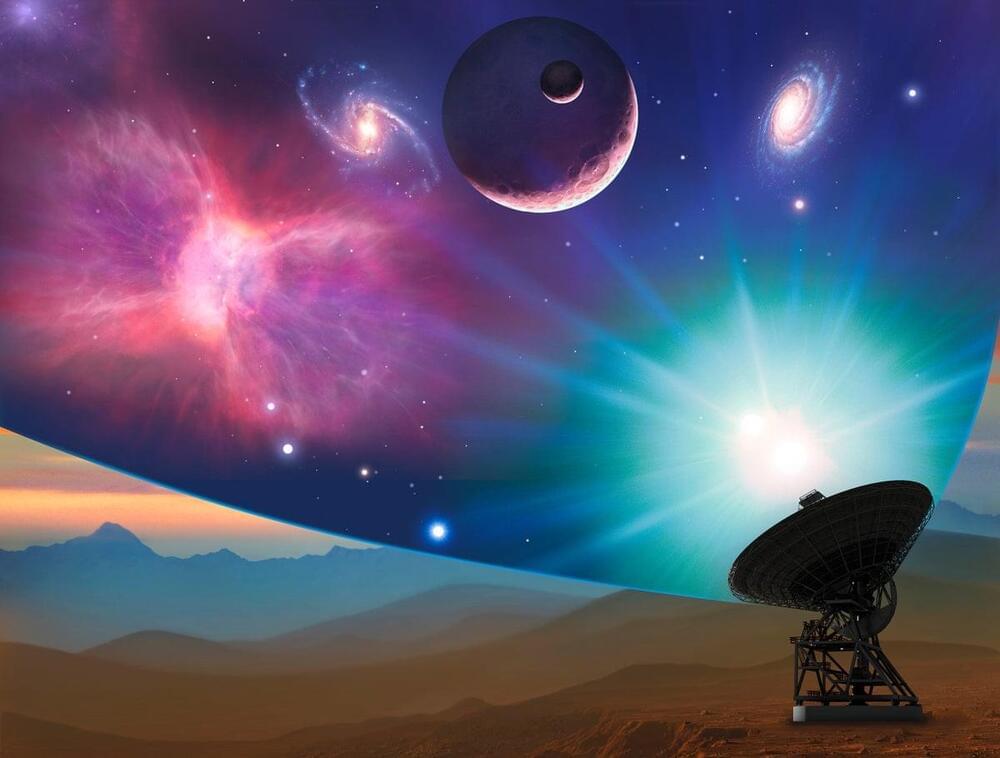
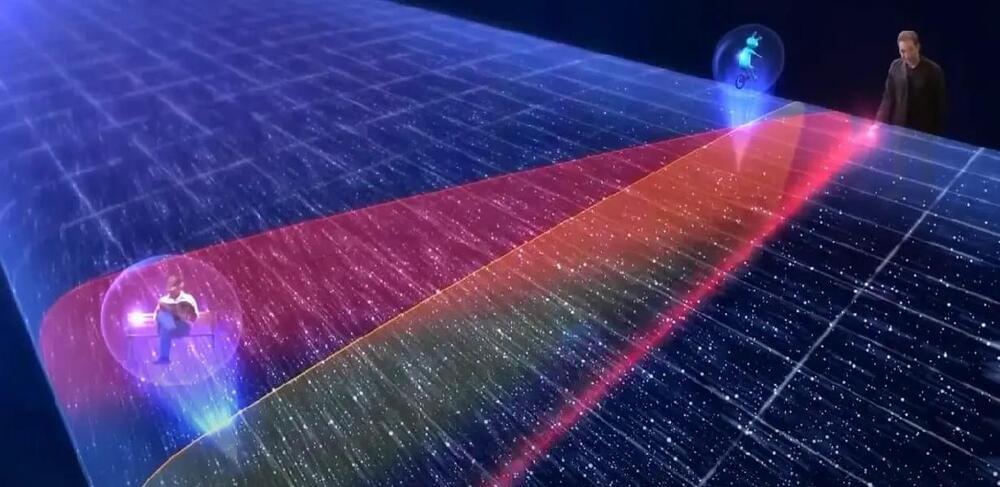
Are we alone in the universe? This longstanding question is what the SETI (Search for Extraterrestrial Intelligence) Institute has been trying to answer for decades as its vast array of radio telescopes continues to scan the heavens for signs of intelligent life beyond Earth, also known as technsigatures. Now, a team of researchers led by the Berkeley SETI Research Center have developed the SETI Ellipsoid with the hope it will offer greater opportunities for identifying technsigatures from intelligent civilizations throughout the cosmos. These findings were recently published in The Astronomical Journal and hold the potential to help scientists better understand the necessary criterion for finding intelligent life beyond Earth.
For the study, the researchers began by hypothesizing that intelligent civilizations could use what’s known as a Schelling point (more commonly called a focal point) during supernovae events as an opportunity to broadcast coordinated signals announcing their existence to the cosmos. The researchers then compared this criterion to data from NASA’s TESS (Transiting Exoplanet Survey Satellite) spacecraft, finding the criterion matched 5 percent of TESS data. After searching through the data using their new SETI Ellipsoid method, the team identified zero technosignatures, but noted this new method could provide unique opportunities for identifying technosignatures in the future.

Animation of the SETI ellipsoid with Earth at the far right and a potential technosignature civilization at the upper left. (Credit: Zayna Sheikh)