Scientists identify protein snippets made by extinct hominins.

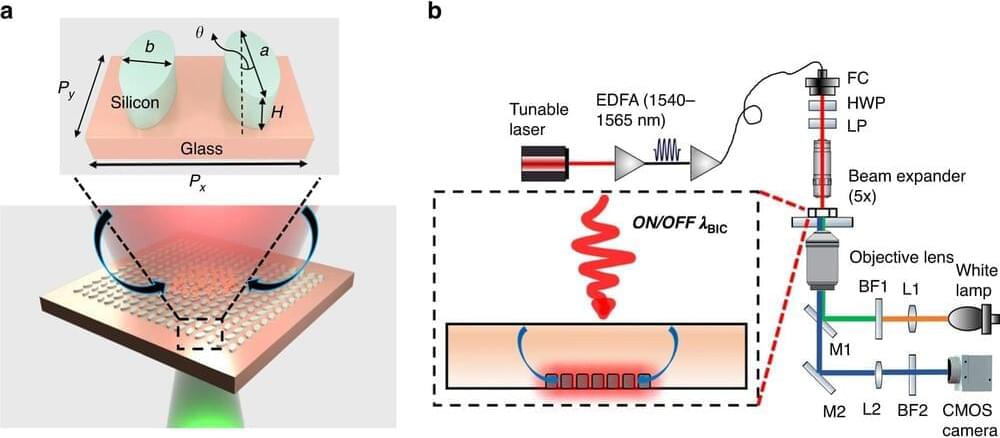
A cutting-edge practice by two Vanderbilt researchers that enhances light in nanoscale structures could help in the detection of diseases like cancer.
The work by Justus Ndukaife, assistant professor of electrical engineering, and Sen Yang, a recent Ph.D. graduate from Ndukaife’s lab in Interdisciplinary Materials Science under Ndukaife, was published in Light: Science & Applications.
In their paper, they show how an engineered nanostructured surface—quasi-BIC dielectric metasurface—can be used to trap micro and sub-micron particles within seconds, which they say helps in the transport of analytes to biosensing surfaces. The metasurface can also serve as a sensor to detect the aggregated particles or molecules, and can be used to enhance fluorescence or Raman signals from the molecules, thereby boosting detection sensitivity, according to the researchers.

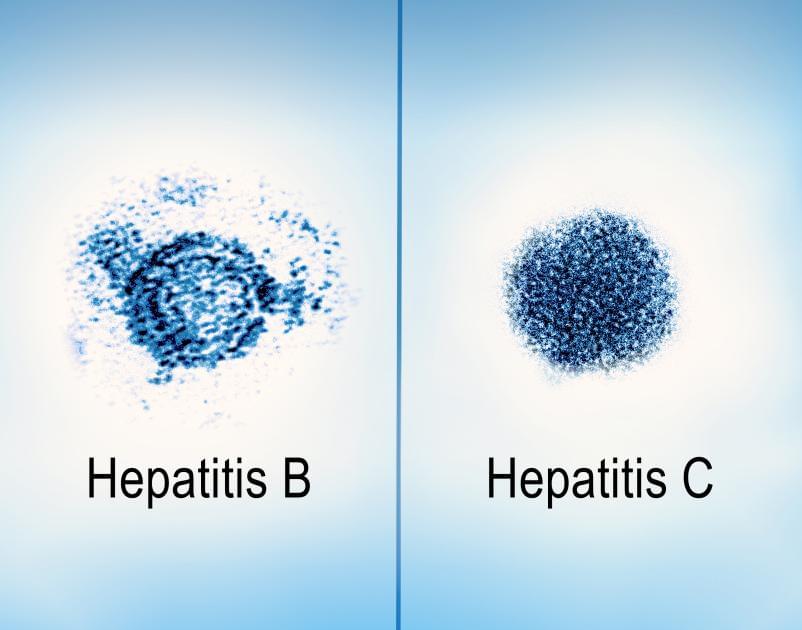
Viral hepatitis is an inflammatory liver disease caused by infection with any of the known hepatitis viruses—A, B, C, D, and E. Most of the global viral hepatitis burden is from hepatitis B and C, which affect 354 million people and result in 1.1 million deaths annually. The Centers for Disease Control and Prevention estimates that in 2020 there were 14,000 and 50,300 new acute infections of hepatitis B and C in the United States, respectively, while at least 880,000 people in the country were living with chronic (long-term) hepatitis B and 2.4 million people had chronic hepatitis C. About half of those with viral hepatitis are unaware of their infection. Chronic and persistent inflammation from the disease can lead to liver failure, cirrhosis, or liver cancer. Viral hepatitis affects all ages and there are pronounced inequities in disease outcomes in the United States. Hepatitis B and C disproportionately affect people living with HIV, and HIV increases the rate of complications and death in people with viral hepatitis.
On this World Hepatitis Day, the National Institute of Allergy and Infectious Diseases (NIAID), part of the National Institutes of Health, shares a snapshot of its investments in basic (laboratory), preclinical (laboratory/animal), and clinical (human) research to improve screening, prevention and treatment for hepatitis B and C. Scientists in the Hepatic Pathogenesis and Structural Virology sections of NIAID’s Laboratory of Infectious Diseases conduct basic and translational research to better understand hepatitis B and C disease progression, clarify the role of hepatitis viruses in liver cancer, and inform discovery of new vaccines, medicine and technologies. Both NIAID’s Division of AIDS (DAIDS) and the Division of Microbiology and Infectious Disease (DMID) support scientific programs focused on hepatitis B and C research and curative strategies, reflecting the widespread impact of viral hepatitis and the urgent need for safe and effective interventions.
Finding a hepatitis B cure.

In this episode, I interview Dr. Robert Sapolsky, Ph.D., Professor of Biology, Neurology & Neurosurgery at Stanford University. We discuss stress, what defines short-term versus long-term stress, and how stress can be beneficial or detrimental, depending on the context. We also discuss stress mitigation and how our sense of control over stress mitigation techniques, including exercise, determine health outcomes. Dr. Sapolsky explains some of the key effects of the hormone testosterone — how it can amplify pre-existing tendencies for aggression or sexual behavior, but that it does not produce those behaviors per se. He also explains how testosterone impacts our social hierarchies, sense of confidence, and willingness to embrace challenges of different kinds. He also explains how our behaviors and perceptions shape testosterone levels. And we discuss estrogen and the powerful role it plays in brain development, health and longevity. Finally, we discuss free will, what it means to have free will, and if we have any free will, including how knowledge alone might allow us to make better decisions for ourselves and society.
#HubermanLab #Testosterone #Stress.
Thank you to our sponsors:
ROKA — https://roka.com — use code “huberman“
InsideTracker — https://insidetracker.com/huberman.
Our Patreon page:
https://www.patreon.com/andrewhuberman.
Supplements from Thorne:
http://www.thorne.com/u/huberman.
Social:
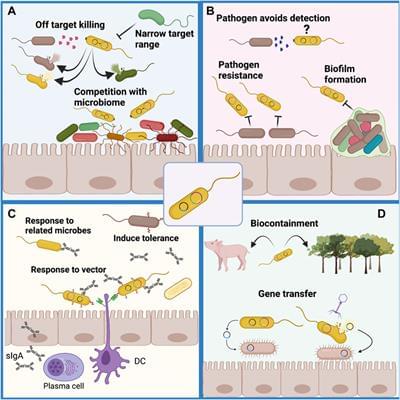
The rising prevalence of antibiotic resistant microbial pathogens presents an ominous health and economic challenge to modern society. The discovery and large-scale development of antibiotic drugs in previous decades was transformational, providing cheap, effective treatment for what would previously have been a lethal infection. As microbial strains resistant to many or even all antibiotic drug treatments have evolved, there is an urgent need for new drugs or antimicrobial treatments to control these pathogens. The ability to sequence and mine the genomes of an increasing number of microbial strains from previously unexplored environments has the potential to identify new natural product antibiotic biosynthesis pathways. This coupled with the power of synthetic biology to generate new production chassis, biosensors and “weaponized” live cell therapeutics may provide new means to combat the rapidly evolving threat of drug resistant microbial pathogens. This review focuses on the application of synthetic biology to construct probiotic strains that have been endowed with functionalities allowing them to identify, compete with and in some cases kill microbial pathogens as well as stimulate host immunity. Weaponized probiotics may have the greatest potential for use against pathogens that infect the gastrointestinal tract: Vibrio cholerae, Staphylococcus aureus, Clostridium perfringens and Clostridioides difficile. The potential benefits of engineered probiotics are highlighted along with the challenges that must still be met before these intriguing and exciting new therapeutic tools can be widely deployed.
The discovery and application of antibiotic drugs is among the most significant accomplishments of medical science. Alexander Fleming’s discovery of penicillin (Fleming, 1929) and subsequent discovery and development of multiple classes of natural product antibiotics have been transformational to modern society. These compounds have yielded cheap and effective treatments for diseases caused by common bacterial infections that would previously have proven fatal. The advent of effective antibiotic drugs has made it possible to survive complex surgical procedures like open heart surgery and organ transplants and extended the average human life-span (Riley, 2005; Kaviani et al., 2020). The benefits of readily available antibiotic drugs have extended into agriculture and aquaculture, making it possible to increase productivity of farmed animals (Park et al., 1994; Patel et al., 2020).
QUT researchers have developed a new approach for designing molecular ON-OFF switches based on proteins which can be used in a multitude of biotechnological, biomedical and bioengineering applications.
The research team demonstrated that this novel approach allows them to design and build faster and more accurate diagnostic tests for detecting diseases, monitoring water quality and detecting environmental pollutants.
Professor Kirill Alexandrov, of the QUT School of Biology and Environmental Science, lead scientist on the CSIRO-QUT Synthetic Biology Alliance and a researcher with the ARC Centre of Excellence in Synthetic Biology, said that the new technique published in the prestigious scientific journal Nature Nanotechnology demonstrated that protein switches could be engineered in a predictable way.