An extra membrane that once had digestive functions let marine microbes boost their yield from photosynthesis. Today, they’re responsible for locking carbon in the ocean and putting oxygen in the air.
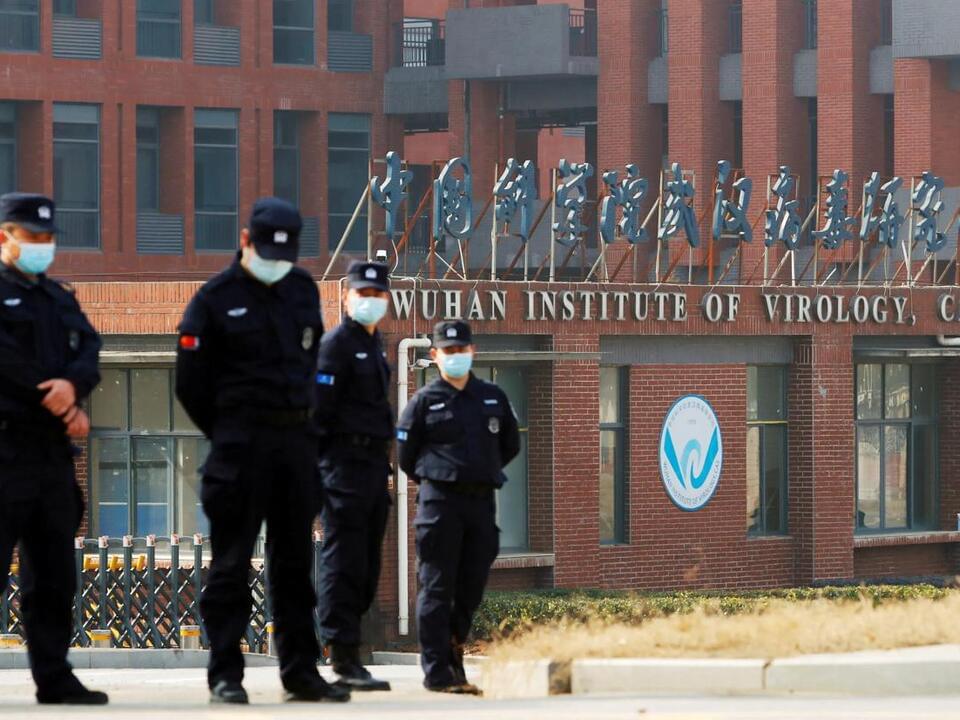
US spies are probing whether Covid was created by a Chinese military scientist before it leaked from a Wuhan lab, according to reports.
Zhou Yusen, who worked for the People’s Liberation Army, filed a patent for a Covid vaccine before the pandemic was declared — and mysteriously died just weeks later.
Zhou, 54, worked alongside researchers at the under-fire Wuhan Institute of Virology — the lab at the centre of the storm over a possible lab leak.

In a recent study published in the journal Nature Medicine, researchers pursued one-time cures for hypertrophic cardiomyopathy (HCM). They used a previously constructed murine model of HCM, designated as R403Q-129SvEv, to evaluate two different genetic therapies, as follows:
I) an adenine base editor (ABE8e)
Ii) a potent Cas9 nuclease delivered by an adeno-associated virus (AAV) vector.
Oliver Zolman, best known for leading tech CEO Bryan Johnson’s anti-aging process, reportedly charges up to $1,000 per hour.

Reducing reliance of aninmal experimentation. 🐀
According to the team, this new unparalleled technology facilitates the precise manipulation of biological materials, enabling the creation of highly sophisticated and realistic organoids that closely mimic the complexity of the corresponding human organs.
The cutting-edge magnetic and acoustic levitation will bioprint heart models to improve protection against radiation both in space and on Earth.
After being awarded nearly 4 million euros by the European Innovation Council’s Pathfinder Open, PULSE is aiming to foster technological innovations to improve human health and pave the way for safer and more sustainable space exploration.
Multi-Levitation bioprinting and creating realistic organoids
The device, designed by PULSE, combines magnetic and acoustic levitation into an innovative bioprinting platform capable spatiotemporal control of cell deposition.
When the scaffold is treated with a steroid called fluocinolone acetonide, which protects against inflammation, the resilience of the cells appears to increase, promoting growth of eye cells. These findings are important in the future development of ocular tissue for transplantation into the patient’s eye.
Scientists have found a way to use nanotechnology to create a 3D ‘scaffold’ to grow cells from the retina-paving the way for potential new ways of treating a common cause of blindness.
Researchers, led by Professor Barbara Pierscionek from Anglia Ruskin University (ARU), have been working on a way to successfully grow retinal pigment epithelial (RPE) cells that stay healthy and viable for up to 150 days. RPE cells sit just outside the neural part of the retina and, when damaged, can cause vision to deteriorate.
It is the first time this technology, called ‘electrospinning’, has been used to create a scaffold on which the RPE cells could grow, and could revolutionise treatment for one of age-related macular degeneration, one of the world’s most common vision complaints.
Living without gravity spells disaster for the human body. Even a few weeks in microgravity can lead to issues with circulation and vision; over the longer term, the complications compound even further. The heart begins to degenerate and atrophy. Bones turn thin and brittle.
But what about Martian gravity, which is around 0.38 that of Earth? Or somewhere in-between — 0.16 G on the moon, or 0.91 on Venus? How do these gravity levels affect the body, plants and other organisms, even manufacturing processes? We have astonishingly few answers to these questions.
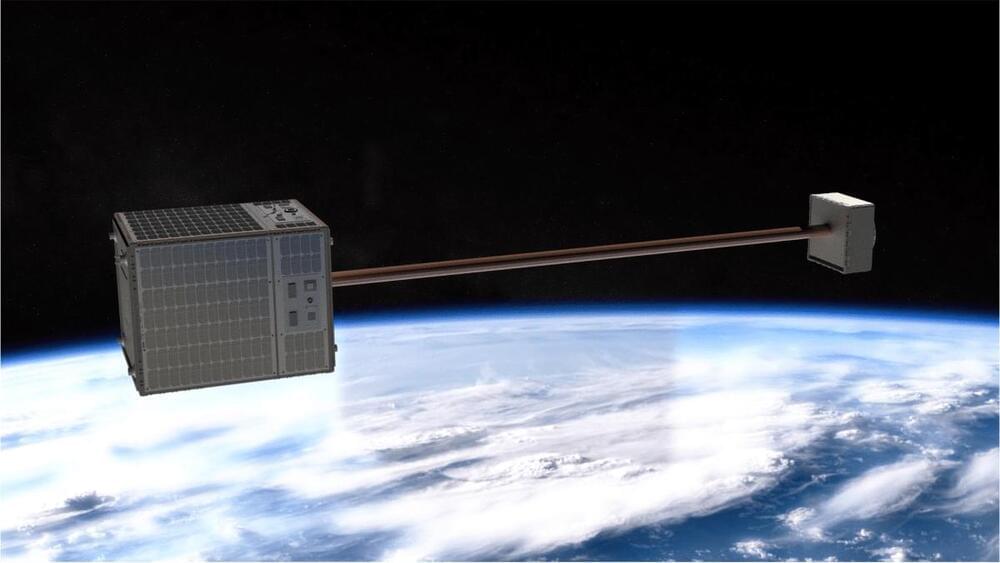
gravityLab wants to find some. The company is developing a spinning spacecraft that will be able to generate what co-founder and CEO Grant Bonin calls “programmable gravity.” The spacecraft will be equipped with a motorized boom that can extend and retract a counterweight. By dynamically varying the length of the boom and the rotation rate, the company says it will be able to control the acceleration of gravity inside the spacecraft.

The plant hormone ethylene, in its gaseous state, has long been recognized for its ability to hasten fruit ripening and has a notable impact on shelf-life. In a recent study, scientists used the CRISPR/Cas9 system for gene editing to modify the ethylene production pathway in the luxury Japanese melon (Cucumis melo var. reticulatus “Harukei-3”) to increase its shelf-life.
Their findings were recently published in the journal Frontiers in Genome Editing.
The enzyme 1-aminocyclopropane-1-carboxylic acid.
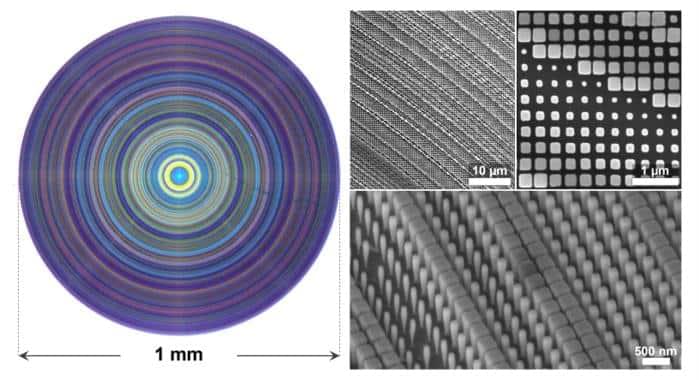
Ultrathin optical elements known as meta-optics can reduce the tip length of endoscopes, which is one of the limiting factors of these medical devices. That’s the latest finding from researchers at the University of Washington, who used an inverse design approach to downsize the tip length by a third. They also demonstrate that the endoscope can capture video in real time over the full visible spectrum, something that has proved difficult with previous approaches.
Endoscopy involves inserting a long, flexible tube (consisting of a camera and a light guide) into the body to obtain images of internal tissues. In existing devices, the tube is tipped with a rigid optical component, the length of which is a fundamental limitation to the device being able to travel through small convoluted ducts such as arteries.
In principle, this problem can be solved by making an endoscope from just a single optical fibre or a bundle of fibres, but the snag here is that some of the light travelling down the fibres is scattered by defects and gets distorted beyond recognition. It cannot therefore be reconstructed to obtain an accurate image. Such devices are also limited to short working distances.