Toggle light / dark theme

Autistic children born preterm often show more complex needs—but share similar genetic background

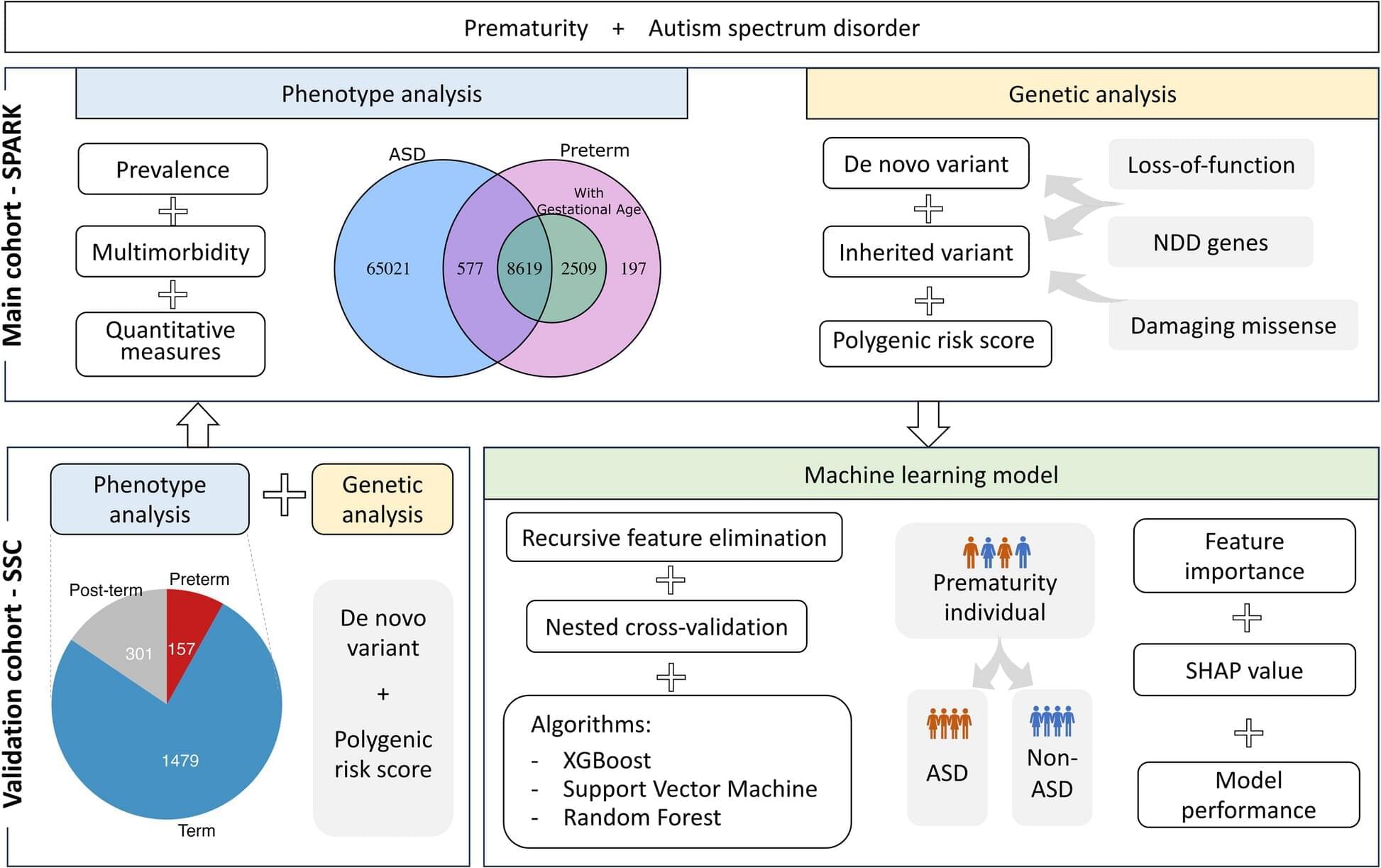
A new study shows that children born preterm who are later diagnosed with autism often present with more extensive support needs and a higher number of co-occurring conditions than autistic children born at full term. Surprisingly, however, the researchers found no differences in genetic variants across the genome, nor in specific genes already linked to autism, between the groups—a result that contradicted their initial hypothesis.

The study was conducted at KIND (Center of Neurodevelopmental Disorders at Karolinska Institutet) and published in October 2025 in the journal Genome Medicine.

“We did not observe any genetic differences between preterm and full-term autistic children, which was unexpected. We initially thought that preterm children might show fewer of the genetic factors associated with autism, as their early birth can be viewed as an environmental factor,” says Yali Zhang, doctoral student at Tammimies research group at KIND and first author of the study.
Human hair grows through ‘pulling’ not pushing, study shows

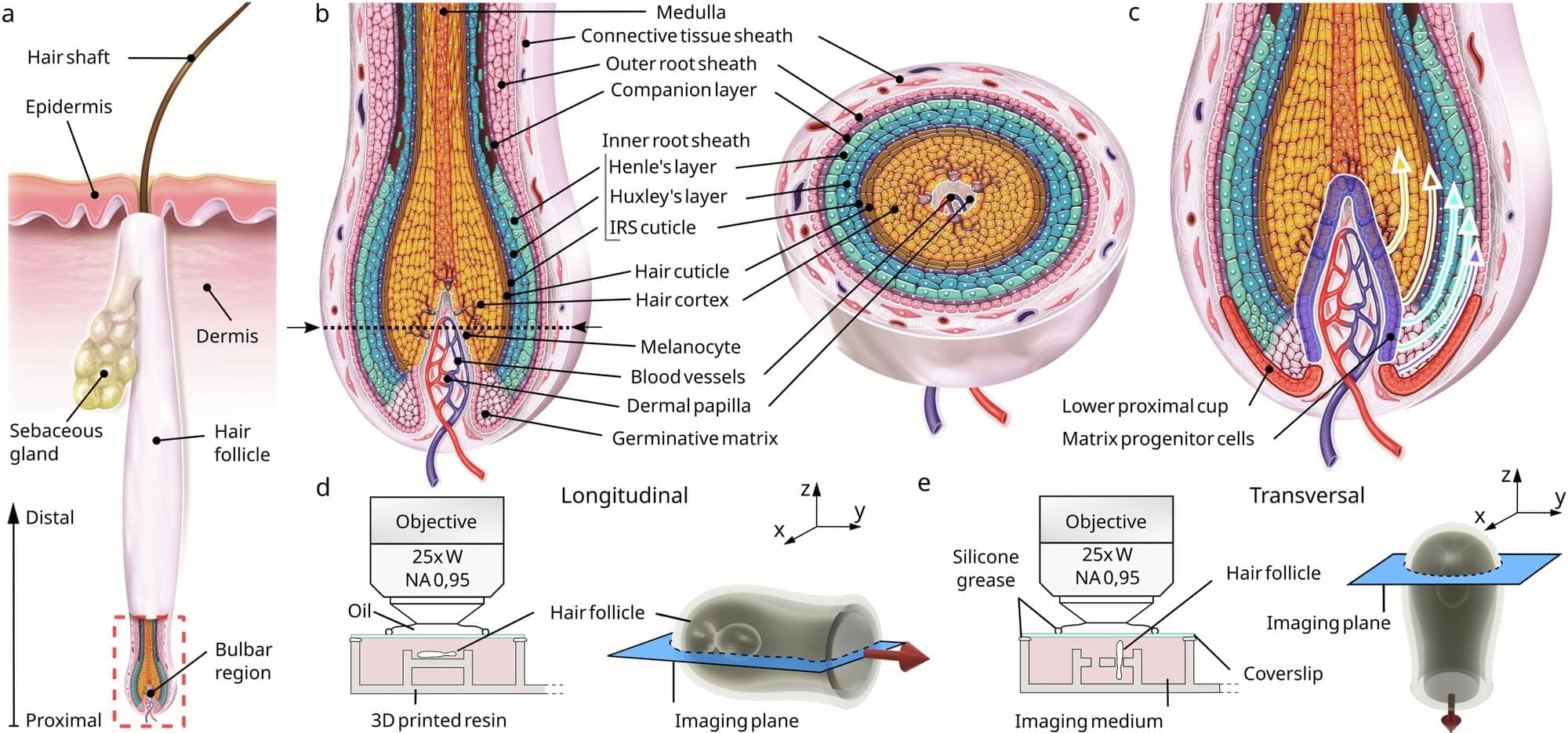
Scientists have found that human hair growth does not grow by being pushed out of the root; it’s actually pulled upward by a force associated with a hidden network of moving cells. The findings challenge decades of textbook biology and could reshape how researchers think about hair loss and regeneration.

The team, from L’Oréal Research & Innovation and Queen Mary University of London, used advanced 3D live imaging to track individual cells within living human hair follicles kept alive in culture. The study, published in Nature Communications, shows that cells in the outer root sheath—a layer encasing the hair shaft—move in a spiral downward path within the same region from where the upward pulling force originates.

Dr. Inês Sequeira, Reader in Oral and Skin Biology at Queen Mary and one of the lead authors, said, “Our results reveal a fascinating choreography inside the hair follicle. For decades, it was assumed that hair was pushed out by the dividing cells in the hair bulb. We found that instead that it’s actively being pulled upwards by surrounding tissue acting almost like a tiny motor.”

Catalyst insight may unlock safer, on-demand ozone water disinfection

University of Pittsburgh researchers have made an important step toward providing hospitals and water treatment facilities with a safer, greener alternative to chlorine-based disinfection.

The team, which includes scientists from Drexel University and Brookhaven National Laboratory, uncovered key design principles for catalysts that can generate ozone, a disinfecting agent, on demand. The research is published in the journal ACS Catalysis.

This breakthrough addresses a critical challenge in water sanitation. Chlorine, commonly used to kill bacteria on surfaces and in water—including most municipal drinking water—is hazardous to transport and store, and its byproducts can be carcinogenic. These risks limit its use and motivate the search for safer disinfectants.

Tiny Earthquakes Spark a Microbial Awakening Beneath Yellowstone

Researchers studying Yellowstone’s depths discovered that small earthquakes can recharge underground microbial life.

The quakes exposed new rock and fluids, creating bursts of chemical energy that microbes can use. Both the water chemistry and the microbial communities shifted dramatically in response. This dynamic may help explain how life survives in deep, dark environments.

A large portion of earth’s life lives underground.

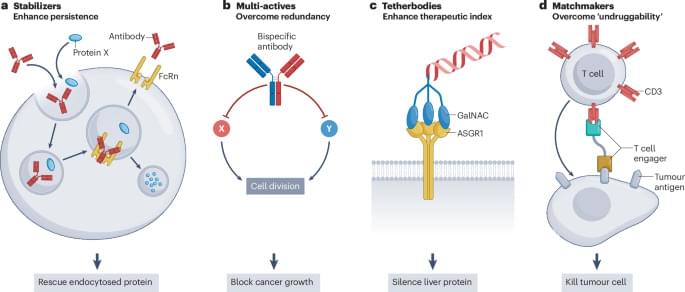
How multispecific molecules are transforming pharmacotherapy

Multispecific drugs are designed to engage two or more entities to exert their pharmacological effect. This Perspective discusses how a new wave of FDA-approved multispecific molecules have been transformative in overcoming barriers to drug development such as toxicity, rapid clearance, undruggable protein features, and functional redundancy.

A phenotypic brain organoid atlas and biobank for neurodevelopmental disorders

Wang and colleagues present a phenotypic brain organoid atlas for neurodevelopmental disorders, revealing disease-specific cellular and molecular alterations that illuminate NDD pathogenesis. Integrating patient brain organoids, imaging, and exome sequencing, this resource provides a powerful platform to advance research and therapeutic discovery.

Glucagon-Like Peptide-1 Receptor Agonists and Chronic Cough

Use of glucagon-like peptide-1 receptor agonists (GLP1RA) in adults with type 2 diabetes was associated with an increased risk of new chronic cough compared with other second-line diabetes medications.


Question Is the use of glucagon-like peptide-1 receptor agonists (GLP-1RAs) associated with increased risk of chronic cough?

Findings In this cohort study of 427 555 individuals who were prescribed a GLP-1RA and 1 614 495 matched individuals who were prescribed a different second-line diabetes medication, GLP-1RA treatment was associated with a higher adjusted hazard ratio of new chronic cough. This association was independent of gastroesophageal reflux disease diagnosis.

Meaning The study findings suggest that patients who use GLP-1RAs have an increased risk of chronic cough, suggesting further exploration of the strength of this association and pharmacologic mechanisms.

Total Synthesis and Anticancer Study of (+)-Verticillin AClick to copy article linkArticle link copied!

For the first time, MIT chemists have synthesized a fungal compound known as verticillin A, which was discovered more than 50 years ago and has shown potential as an anticancer agent.

The compound has a complex structure that made it more difficult to synthesize than related compounds, even though it differed by only a couple of atoms.

“We have a much better appreciation for how those subtle structural changes can significantly increase the synthetic challenge,” says Mohammad Movassaghi, an MIT professor of chemistry. “Now we have the technology where we can not only access them for the first time, more than 50 years after they were isolated, but also we can make many designed variants, which can enable further detailed studies.”

In tests in human cancer cells, a derivative of verticillin A showed particular promise against a type of pediatric brain cancer called diffuse midline glioma. More tests will be needed to evaluate its potential for clinical use, the researchers say.

Movassaghi and Jun Qi, an associate professor of medicine at Dana-Farber Cancer Institute/Boston Children’s Cancer and Blood Disorders Center and Harvard Medical School, are the senior authors of the study, which appears today in the Journal of the American Chemical Society. Walker Knauss PhD ’24 is the lead author of the paper. Xiuqi Wang, a medicinal chemist and chemical biologist at Dana-Farber, and Mariella Filbin, research director in the Pediatric Neurology-Oncology Program at Dana-Farber/Boston Children’s Cancer and Blood Disorders Center, are also authors of the study.


/* */