Toggle light / dark theme

Genetic roots of three mitochondrial diseases identified via new approach

When something goes wrong in mitochondria, the tiny organelles that power cells, it can cause a bewildering variety of symptoms such as poor growth, fatigue and weakness, seizures, developmental and cognitive disabilities, and vision problems. The culprit could be a defect in any of the 1,300 or so proteins that make up mitochondria, but scientists have very little idea what many of those proteins do, making it difficult to identify the faulty protein and treat the condition.

Researchers at Washington University School of Medicine in St. Louis and the University of Wisconsin–Madison systematically analyzed dozens of mitochondrial proteins of unknown function and suggested functions for many of them. Using these data as a starting point, they identified the genetic causes of three and proposed another 20 possibilities for further investigation. The findings, published May 25 in Nature, indicate that understanding how mitochondria’s hundreds of proteins work together to generate power and perform the organelles’ other functions could be a promising path to finding better ways to diagnose and treat such conditions.

“We have a parts list for mitochondria, but we don’t know what many of the parts do,” said co-senior author David J. Pagliarini, Ph.D., the Hugo F. and Ina C. Urbauer Professor and a BJC Investigator at Washington University. “It’s similar to if you had a problem with your car, and you brought it to a mechanic, and upon opening the hood they said, ‘We’ve never seen half of these parts before.’ They wouldn’t know how to fix it. This study is an attempt to define the functions of as many of those mitochondrial parts as we can so we have a better understanding of what happens when they don’t work and, ultimately, a better chance at devising therapeutics to rectify those problems.”

Breast Cancer Spreads More Aggressively at Night, Startling New Study Finds

When people with metastatic breast cancer close their eyes at night, their cancer awakes and starts to spread.

That’s the striking finding from a paper published in Nature this week that overturns the assumption that breast cancer metastasis happens at the same rate around the clock.

The result may change the way that doctors collect blood samples from people with cancer in the future, the researchers say.

A prostate cancer breakthrough could speed up research by 10 years

Prostate cancer growth is driven by male sex hormones called androgens. And so, lowering levels of these hormones can help slow the growth of cancer.

Hormone therapy has been successful in keeping metastatic, or advanced prostate cancer, under control. Patients with metastatic prostate cancer often receive treatment with anti-hormonal therapy, which inhibits the signal sent out by testosterone that stimulates tumor growth.

But eventually, the tumor cells could become resistant to it. An international team of researchers led by the Netherlands Cancer Institute has now unveiled an “unexpected potential” solution, not designed to fight cancer but to target proteins that regulate a cell’s circadian rhythm.

New DNA Technology Is Shaking Up The Branches of The Evolutionary Tree

If you look different to your close relatives, you may have felt separate from your family. As a child, during particularly stormy fall outs you might have even hoped it was a sign that you were adopted.

As our new research shows, appearances can be deceptive when it comes to family. New DNA technology is shaking up the family trees of many plants and animals.

The primates, to which humans belong, were once thought to be close relatives of bats because of some similarities in our skeletons and brains. However, DNA data now places us in a group that includes rodents (rats and mice) and rabbits. Astonishingly, bats turn out to be more closely related to cows, horses, and even rhinoceroses than they are to us.

Epilepsy drug found to thwart nervous system tumor growth

What if an already-Food and Drug Administration-approved drug could help treat a particularly troublesome disorder? Researchers at Washington University School of Medicine in St. Louis have found just such a use for one drug, according to a press release by the institution published earlier this month.

An old drug with a new purpose

The condition is neurofibromatosis type 1 (Nf1) and the drug is lamotrigine, an epilepsy drug. People suffering from Nf1 develop tumors on nerves throughout their bodies that are usually benign but can still cause serious medical issues such as blindness.

The Origins of Our Blood May Not Be What We Thought

‘Barcoding’ studies discovered two independent sources for blood cells in mice. If confirmed in humans, our understanding of blood cancers, bone marrow transplants, and the aging immune system will change.

The origins of our blood may not be quite what we thought. Using cellular “barcoding” in mice, groundbreaking research finds that blood cells originate not from one type of mother cell, but two, with potential implications for blood cancers, bone marrow transplant, and immunology. Fernando Camargo, PhD, of the Stem Cell Program at Boston Children’s Hospital led the study, published in the journal Nature on June 15, 2022.

“Historically, people have believed that most of our blood comes from a very small number of cells that eventually become blood stem cells, also known as hematopoietic stem cells,” says Camargo, who is also a member of the Harvard Stem Cell Institute and a professor at Harvard University. “We were surprised to find another group of progenitor cells that do not come from stem cells. They make most of the blood in fetal life until young adulthood, and then gradually start decreasing.”

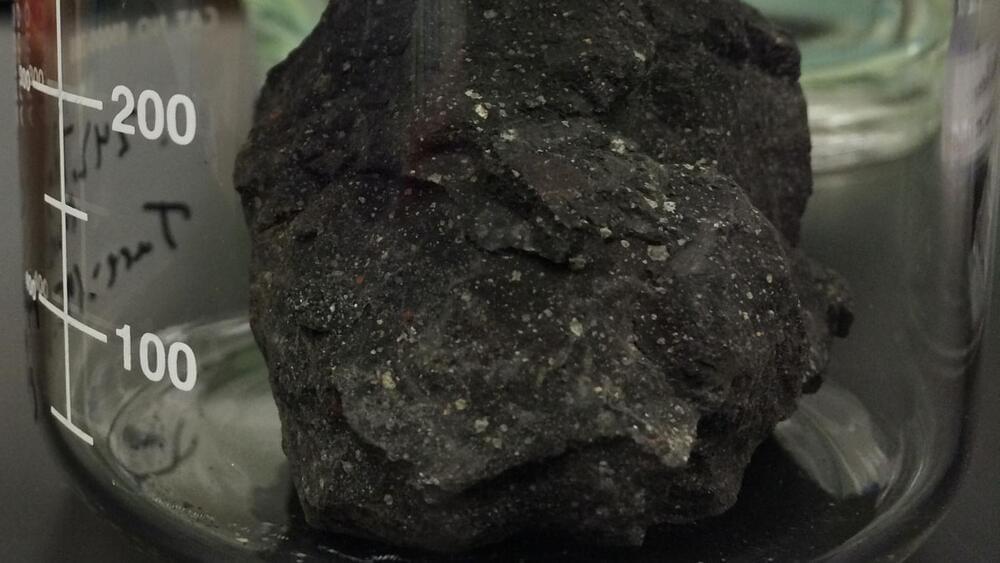
Scientists Find One of the Most Massive Black Holes With 34 Billion Times The Mass of Our Sun

Merging COVID-19 + MonkeyFox +????

Martin Chartrand https://www.nbcnews.com/…/who-monkeypox-public-health…


Scientists have recently reported discovering what they believe is the most massive black hole ever discovered in the early Universe.

It is 34 billion times the mass of our Sun, and it eats the equivalent of one Sun every day.

Armored Cadillac Escalade doubles as a leather-lined, bulletproof, rolling safe room

The latest in the company’s series of AddArmor vehicles, the 2022 B6 Escalade features lightweight B6 AR 500 bullet-resistant material in every body panel that offers B6-level protection, plus B6-level reinforced glass that can sustain prolonged strikes from rocks, bats, or other blunt objects, the company claims. A PA siren system (to disperse crowds) and run-flat tires also help prepare the Escalade for dangerous situations. B6 protection is the highest level of civilian pr… See more.


The 2022 B6 Cadillac Escalade will let drug kingpins travel with the peace of mind that shots from an assault rifle can’t penetrate their luxury SUV.

Monkeypox Has Evolved at an ‘Accelerated’ And Unexpected Rate, Study Finds

The monkeypox virus has mutated at a far faster rate than would normally be expected and likely underwent a period of “accelerated evolution,” a new study suggests.

The virus, which has infected more than 3,500 people in 48 countries since its detection outside Africa in May, may be more infectious due to dozens of new mutations. In all, the virus carries 50 new mutations not seen in previous strains detected from 2018 to 2019, according to a new study published June 24 in the journal Nature Medicine.

Scientists usually don’t expect viruses like monkeypox to gain more than one or two mutations each year, the study authors noted.

/* */