Toggle light / dark theme

The newest meatless meat is made from air

San Mateo, California — A California startup is doing its part to cut down on greenhouse gas emissions by creating a new kind of “meat” that’s made from air.

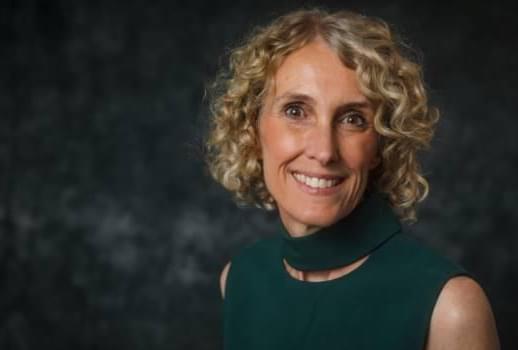
CBS News was given an exclusive sneak peak at a product that physicist Lisa Dyson says has the taste and texture of meat, but does not come from animals. It’s created using a fermentation process, similar to making yogurt. But instead of using microbes that consume milk and sugar, it’s made from microbes that eat oxygen, nitrogen and carbon dioxide.

How does it work?

Planet-scale MRI: High resolution illumination of Earth’s interior down to the planet’s core

Earthquakes do more than buckle streets and topple buildings. Seismic waves generated by earthquakes pass through the Earth, acting like a giant MRI machine and providing clues to what lies inside the planet.

Seismologists have developed methods to take wave signals from the networks of seismometers at the Earth’s surface and reverse engineer features and characteristics of the medium they pass through, a process known as seismic tomography.

For decades, was based on ray theory, and seismic waves were treated like light rays. This served as a pretty good approximation and led to major discoveries about the Earth’s interior. But to improve the resolution of current seismic tomographic models, seismologists need to take into account the full complexity of wave propagation using numerical simulations, known as full-waveform inversion, says Ebru Bozdag, assistant professor in the Geophysics Department at the Colorado School of Mines.

Death-Bringing ‘Brain Tsunamis’ Have Been Observed in Humans

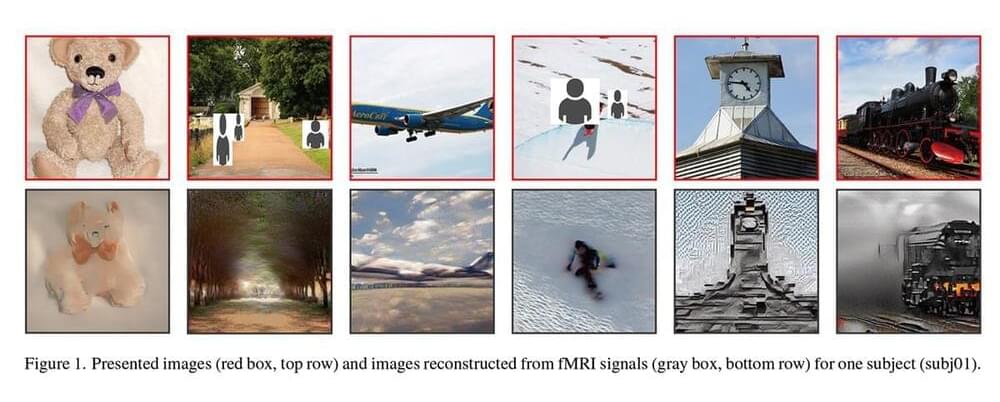
Back in 2018, researchers were able to study the moment brain death becomes irreversible in the human body for the first time, observing the phenomenon in several Do Not Resuscitate patients as they died in hospital.

For years, scientists have researched what happens to your brain when you die, but despite everything we’ve found out, progress has been stymied by an inability to easily monitor human death – since physicians are conventionally obliged to prevent death if they can, not monitor it as it takes hold.

What this means is most of our understanding of the processes involved in brain death come from animal experiments, strengthened with what we can glean from the accounts of resuscitated patients disclosing their near-death experiences.

A new technique to delete single atoms can speed up molecule design

Every time a new cancer drug is announced, it represents hundreds of researchers spending years behind the scenes working to design and test a new molecule. The drug has to be not only effective, but also as safe as possible and easy to manufacture—and these researchers have to choose among thousands of possible options for its chemical structure.

But building each possible molecular structure for testing is a laborious process, even if researchers simply want to change a single carbon atom.

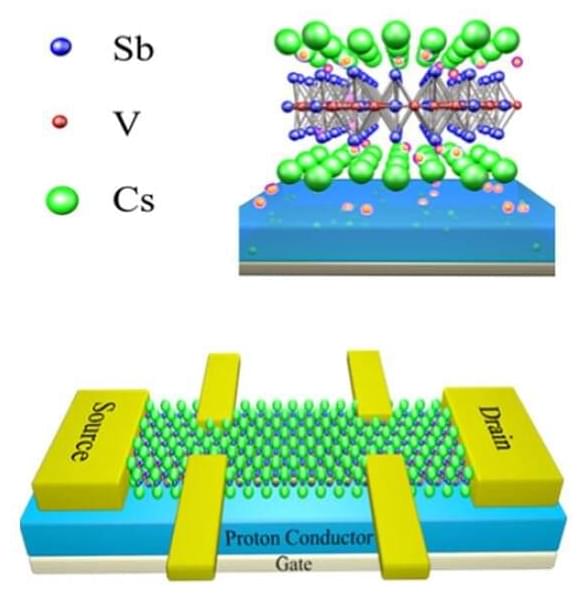
A new technique published by University of Chicago chemists and the pharmaceutical company Merck & Co. in the journal Science offers a way to leapfrog that process, allowing scientists to quickly and easily produce new molecules of interest.

Termination Shock: Trying To Cool the Earth

A group of 60 scientists called for a moratorium on solar geoengineering last month, including technologies such as stratospheric aerosol injection (SAI). This involves a fleet of aeroplanes releasing aerosol particles – which reflect sunlight back to outer space – into the atmosphere, cooling down the Earth.

SAI might make the sky slightly whiter. But this is the least of our concerns. SAI could pose grave dangers, potentially worse than the warming it seeks to remedy. To understand the risks, we’ve undertaken a risk assessment of this controversial technology.

A cooler Earth means less water would be evaporating from its surfaces into the atmosphere, changing rainfall patterns. This could produce ripple effects across the world’s ecosystems – but the exact nature of these effects depends on how SAI is used. Poor coordination of aerosol release could lead to extreme rainfall in some places and blistering drought in others, further triggering the spread of diseases.

/* */