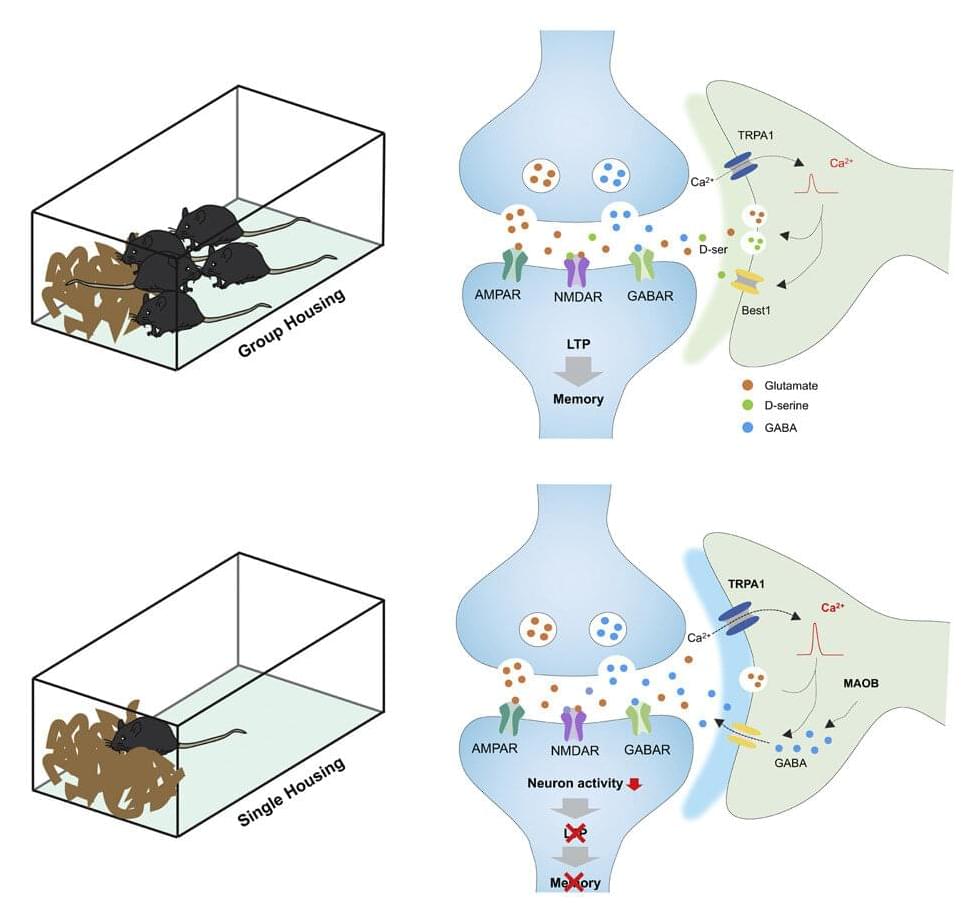
Here is an important reason to stay in touch with friends and family: social isolation causes memory and learning deficits and other behavioral changes. Many brain studies have focused on the effects social deprivation has on neurons, but little is known about the consequences for the most abundant brain cell, the astrocyte.
Researchers at Baylor College of Medicine working with animal models report in the journal Neuron that during social isolation, astrocytes become hyperactive, which in turn suppresses brain circuit function and memory formation. Importantly, inhibiting astrocyte hyperactivity reversed the cognitive deficits associated with social deprivation.
“One thing we have learned during the COVID pandemic is that social isolation can influence cognitive functions, as previous studies suggested,” said co-first author, Yi-Ting Cheng, graduate student in Dr. Benjamin Deneen’s lab at Baylor. “This motivated co-first author Dr. Junsung Woo and me to further investigate the effects of social isolation in the brain, specifically in astrocytes.”
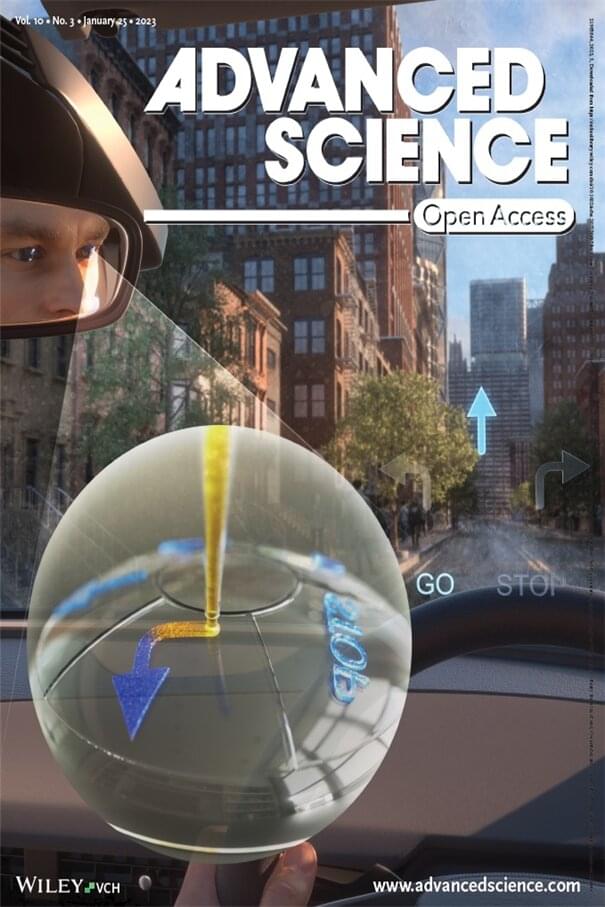
Dr. Seol Seung-Kwon’s Smart 3D Printing Research Team at KERI and Professor Lim-Doo Jeong’s team at Ulsan National Institute of Science and Technology (UNIST) developed core technology for smart contact lenses that can implement augmented reality (AR)-based navigation, with a 3D printing process.
A smart contact lens is a product attached to the human eye like a normal lens that provides various information. Research on these lenses is currently focused mainly on diagnosing and treating health problems. Recently, Google and others are developing smart contact lenses for displays that can implement AR. Yet many obstacles to commercialization exist due to several technical challenges.
In implementing AR with smart contact lenses, electrochromic displays that can be driven with low power are necessary, and a “pure Prussian blue” color, with cost competitiveness and quick contrast and transition between colors, is attracting attention as the lens’ material. In the past, the color was coated on the substrate in the form of a film using the electric plating method, which limited the production of advanced displays that can express various information (letters, numbers, images).
An artificial intelligence program may enable the first simple production of customizable proteins called zinc fingers to treat diseases by turning genes on and off.
The researchers at NYU Grossman School of Medicine and the University of Toronto who designed the tool say it promises to accelerate the development of gene therapies on a large scale.
Illnesses including cystic fibrosis, Tay-Sachs disease, and sickle cell anemia are caused by errors in the order of DNA letters that encode the operating instructions for every human cell. Scientists can in some cases correct these mistakes with gene editing methods that rearrange these letters.
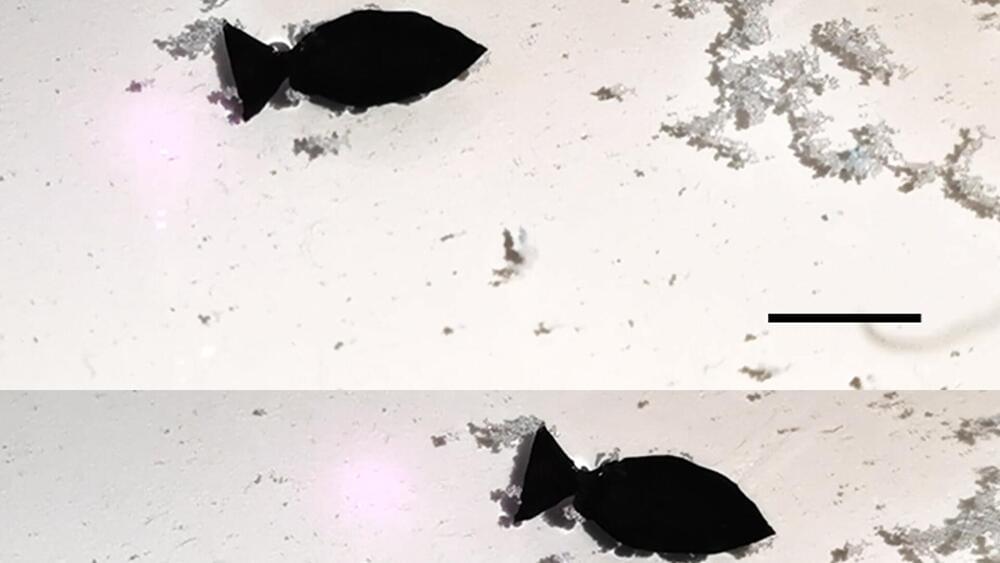
Last week, it was revealed that microplastics were found for the first time in fresh Antarctic snow. They were discovered high in the Alps, bottled water, and human blood.
They can be harmful to animals if ingested. But the growing menace is difficult to remove — considering their size — especially once they settle into nooks and crannies at the bottom of waterways.
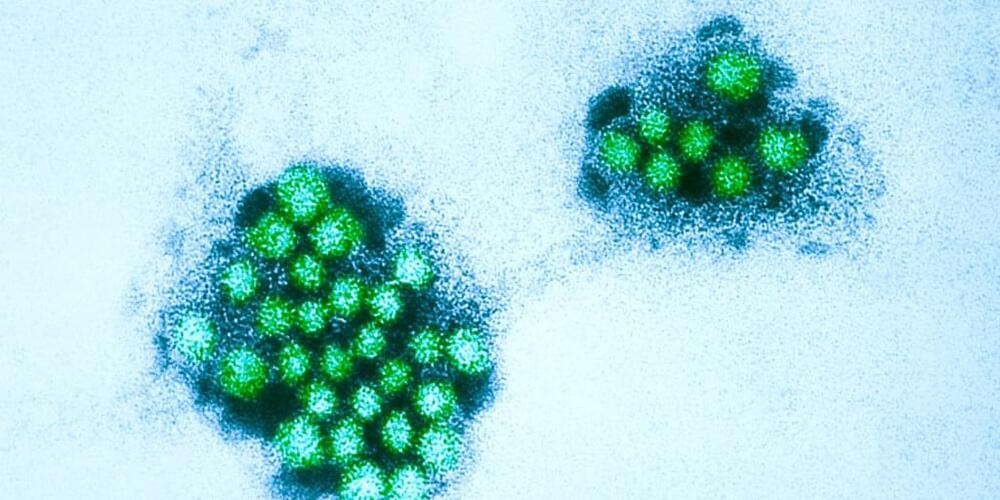
Norovirus is sometimes referred to as the stomach flu, but it is not related to the influenza virus. Rather, it is a highly contagious virus that typically causes gastrointestinal symptoms like diarrhea, vomiting, nausea and stomach pain. Mild fever and aches are possible, too.
Just a few virus particles are enough to make someone sick, and they spread easily via hands, surfaces, food and water. An infected person can transmit the virus for days after they’re feeling better, potentially even up to two weeks, according to the CDC.
Illustrated is the power of combined interference with different DNA damage response processes to combat cancer: Homologous recombination, which is selectively deficient in the tumour due to the BRCA defect, and base excision repair of single strand breaks, which is blocked by the administration of PARP inhibitors.
These animations show cellular biology on the molecular scale. The structure of chromatin, the processes of transcription, translation, DNA replication, and cell division are shown. All animations are scientifically accurate and derived from molecular biology and crystallography research. I have composed this video from multiple animations under fair use for non-profit, educational purposes. I do not claim copyright on this video or its contents, with the exception of the cell image. Most credit goes to Drew Berry and the Walter and Eliza Hall Institute of Medical Research (WEHI TV) for the animations. Full credits are at the end of the video.
These are the molecular machines inside your body that make cell division possible. Animation by Drew Berry at the Walter and Eliza Hall Institute of Medical Research. http://wehi.tv.
Special thanks to Patreon supporters: Joshua Abenir, Tony Fadell, Donal Botkin, Jeff Straathof, Zach Mueller, Ron Neal, Nathan Hansen.
Every day in an adult human roughly 50–70 billion of your cells die. They may be damaged, stressed, or just plain old — this is normal, in fact it’s called programmed cell death.
To make up for that loss, right now, inside your body, billions of cells are dividing, creating new cells.
And cell division, also called mitosis, requires an army of tiny molecular machines. DNA is a good place to start — the double helix molecule that we always talk about.
In this video students of the Maastricht Science Program NanoBiology Course 2020, show their explanation of the SARS-CoV-2 viral budding. Using CellPAINT, UCFS Chimera and their creativity they explain the nanobiology of how the SARS-CoV-2 virion can bud and leave the cell.
Viruses are not living things. They are just complicated assemblies of molecules, in particular macromolecules such as proteins, oligonucleotides, combined with lipids and carbohydrates. A virus cannot function or reproduce by itself. It needs a host cell.
When a virus enters the host cell, a series of chemical reactions occur that lead to the production of new viruses. A virus needs to find a host cell, attach to it, enter it, and reprogram it such that it will replicate its genome and produce new proteins that allow the assembly of a new virus. Once new viruses have been assembled, they need to get out of the original host cell, on their way to the next host cell they can exhaust. Some viruses have an easy way out: they use up all the resource of the host cells until it dies and lyse. This would only work for naked viruses such as polyomavirus and adenovirus, which lacks a lipid membrane.
Washing hands has been a standard measure since the start of this COVID-19 pandemic. The soap will disintegrate the lipid envelop of the SARS-CoV2 viral particles, as this is an enveloped virus. Enveloped viruses need envelopment, a process in which the capsids become surrounded by a lipid bilayer. This process takes place prior to release. Two mechanisms for envelopment exist. First, envelopment can proceed sequentially after the completion of capsid assembly. The fully assembled capsids are recruited to the membrane by interaction of the viral capsids with viral envelope glycoprotein. Examples of this include herpesvirus and hepatitis B virus. Secondly, the envelopment can occur simultaneously with the capsid assembly. Retrovirus is the representative of this coupled mechanism.
Where does the membrane for the envelopment come from? Some viruses, such as retrovirus and influenza virus, using the plasma membrane as the site of envelopment, whereas others, such as herpesvirus and hepatitis B, use the endoplasmic reticulum (ER) and Golgi bodies as the site of envelopment.
Enveloped viruses are released from the infected cell via exocytosis, a process which is often also called budding. Viruses exploit cellular mechanisms to produce their own progeny extracellularly. For example, the budding of retroviral Gag is facilitated by ESCRT complexes, which are normally involved in the multi-vesicular bodies (MVB) pathway. How does SARS-CoV2 release its offspring from the infected cell? Can we interfere with these steps such that we attack the virus at each step of its life cycle?