Toggle light / dark theme

NIH SenNet Consortium to map senescent cells throughout the human lifespan to understand physiological health Aging

TMCs are responsible for all aspects of data generation from tissue collection and analysis to data integration and interpretation. We anticipate that TMCs will acquire and integrate imaging and omics data to benchmark, standardize and validate SnC maps at single-cell resolution for their assigned tissues. The TDA sites are responsible for development of innovative, new approaches and tools necessary to deeply phenotype SnCs in human tissues and model systems. Examples include multi-omics characterization of the 4D nucleome in SnCs, high-throughput quantification of telomere-associated foci, and in vivo detection of SnCs via positron emission tomography imaging. Once developed, these new technologies are expected to be applied broadly and collaboratively across multiple tissues by the TMCs. The CODCC will collect, store and curate all data and metadata generated by the TMCs and TDA sites. The CODCC is responsible for generating the computational models, and final atlas products as well as the tools to visualize and disseminate the data as a resource for the broad scientific community.

It is expected that SenNet will interface with other cell mapping programs such as Human Bimolecular Atlas Program (HuBMAP), Human Cell Atlas (HCA) and the Kidney Precision Medicine Project (KPMP). HuBMAP is an NIH Common Fund Initiative to develop the resources and framework to map the 30 trillion cells that make up the human body using protein identifiers of cell lineage. HCA is using single-cell and spatial transcriptomics to create cell reference maps defining the position, function and characteristics of all cells in the human body. The KPMP is an initiative of the National Institute of Diabetes and Digestive and Kidney Diseases (NIDDK) aimed at using state-of-the-art and emerging technologies to characterize renal biopsies from participants with acute kidney injury or chronic kidney disease to enable personalized approaches to their treatment.

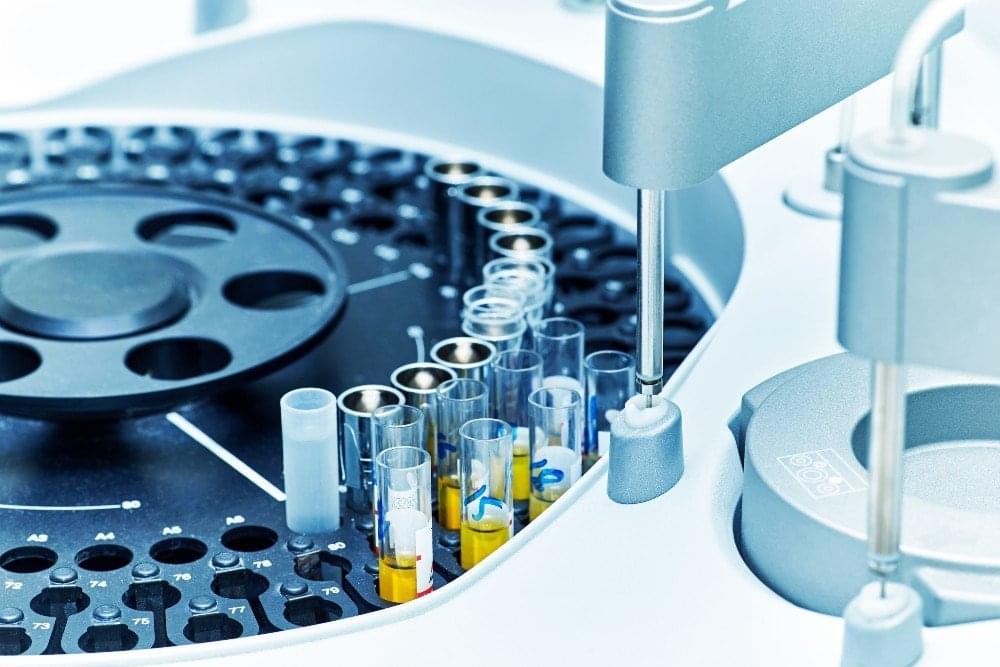
Breakthrough Test for Alzheimer’s: New Biomarker Can Detect Neurodegeneration in Blood

A group of neuroscientists developed a test to detect a novel marker of Alzheimer’s.

Alzheimer’s disease is a disease that attacks the brain, causing a decline in mental ability that worsens over time. It is the most common form of dementia and accounts for 60 to 80 percent of dementia cases. There is no current cure for Alzheimer’s disease, but there are medications that can help ease the symptoms.

Researchers discovered a microscopic organism that eats viruses

Oto_feja/iStock.

John DeLong and his colleagues at the University of Nebraska have discovered that a species of Halteria—microscopic ciliates prevalent in freshwater habitats worldwide—can consume a sizable number of infectious chloroviruses. For the first time, the team’s laboratory tests have also demonstrated that a virus-only diet, or “virovory,” can support an organism’s physiological growth and even population increase.

Max Tegmark — Transhuman Brains?

Transhuman brains are the melding of hyper-advanced electronics and super-artificial intelligence (AI) with neurobiological tissue. The goal is not only to repair injury and mitigate disease, but also to enhance brain capacity and boost mental function. What is the big vision, the end goal — how far can transhuman brains go? What does it mean for individual consciousness and personal identity? Is virtual immortality possible? What are the ethics, the morality, of transhuman brains? What are the dangers?

Free access to Closer to Truth’s library of 5,000 videos: http://bit.ly/376lkKN

Support the show with Closer To Truth merchandise: https://bit.ly/3P2ogje.

Watch more interviews on transhuman brains: https://bit.ly/3Wb7yRm.

Max Tegmark is Professor of Physics at Massachusetts Institute of Technology. He holds a BS in Physics and a BA in Economics from the Royal Institute of Technology in Sweden. He also earned a MA and PhD in physics from University of California, Berkeley.

Register for free at CTT.com for subscriber-only exclusives: http://bit.ly/2GXmFsP

India’s first human space flight, ‘Gaganyaan’ scheduled for 2024

India’s space program is still in its early stages but has been making global headlines in recent years after ISRO’s launch vehicle launched a record-breaking 104 satellites in one go a few years ago. More recently, a private space tech company test-fired the world’s first 3D-printed rocket engine, which has a turnaround of just four days.

The next phase of the country’s space story includes human space flight, which was announced in 2018 and expected to be launched this year, coinciding with the 75th year of Indian independence. However, the COVID-19 pandemic threw a spanner in the works delaying the project by two years.

Good and bad feelings for brain stem serotonin

New insights into the opposing actions of serotonin-producing nerve fibers in mice could lead to drugs for treating addiction and major depression.

Scientists in Japan have identified a nerve pathway involved in the processing of rewarding and distressing stimuli and situations in mice.

The new pathway, originating in a bundle of stem nerve fibers called the median raphe , acts in opposition to a previously identified reward/aversion pathway that originates in the nearby dorsal raphe nucleus. The findings, published by scientists at Hokkaido University and Kyoto University with their colleagues in the journal Nature Communications, could have implications for developing drug treatments for various mental disorders, including addiction and .

Scientists uncover a novel cellular mechanism that regulates aging and fertility

Research at the Institute of Molecular Biology and Biotechnology (IMBB) of the Foundation for Research and Technology-Hellas (FORTH), published today in the journal Nature Aging, reveals a fundamental quality control mechanism that operates in cells to safeguard the integrity and function of the nucleus. By maintaining nuclear homeostasis, this molecular mechanism contributes critically to promote longevity and fertility.

IMBB researchers Dr. Margarita-Elena Papandreou and Dr. Georgios Konstantinidis, headed by Dr. Nektarios Tavernarakis (Professor at the Medical School, University of Crete, and Chairman of the Board at FORTH), discovered that recycling of nuclear and nucleolar components via autophagy delays aging of , and sustains the immortality of germ cells, which are required for reproduction.

The nucleus is the central organelle of all eukaryotic cells that contains the (DNA), which determines cellular identity and function. During aging and in cancer cells, the ultrastructure of the nucleus is dramatically altered. Moreover, progressive and pronounced deterioration of the nuclear architecture is a common and conserved feature of progeria and numerous other disorders associated with aging.

Graphene oxide elicits microbiome-dependent type 2 immune responses via the aryl hydrocarbon receptor Nanotechnology

Although the toxicity of graphene‐based nanomaterials on human health has been extensively studied, their impact on the microbiome remains poorly understood. Using zebrafish as a model, we show that graphene oxide modulates the immune system in a microbiome‐dependent manner through a mechanism mediated by the aryl hydrocarbon receptor. The study suggests an interplay among graphene‐based nanomaterials, microbiome and innate immune system.

Surprise Kilonova Discovery Shakes Up Long Gamma-Ray Burst Theory

For nearly two decades, astrophysicists have believed that long gamma-ray bursts (GRBs) resulted solely from the collapse of massive stars. Now, a new study upends that long-established and long-accepted belief.

Led by Northwestern University.

Established in 1,851, Northwestern University (NU) is a private research university based in Evanston, Illinois, United States. Northwestern is known for its McCormick School of Engineering and Applied Science, Kellogg School of Management, Feinberg School of Medicine, Pritzker School of Law, Bienen School of Music, and Medill School of Journalism.

/* */