Toggle light / dark theme

Genome editing for Duchenne muscular dystrophy: a glimpse of the future?

Circa 2021


As described above, molecular therapeutics enabling expression of a truncated dystrophin have been far developed. However, an unprecedented opportunity to correct the disease-causing mutation has arisen with the advent of Crispr-Cas9 technology (Fig. 1).

Since the generation of a Cas9-transgenic mouse [28], which allowed for pinpoint gene alterations specifically in organs targeted by AAVs encoding for the corresponding guide RNAs (gRNAs), it became clear that the inevitable course of inherited diseases might be altered by Cas9-mediated correction. Although certain limitations were unmasked early on, such as the preference of non-homologous end-joining (NHEJ) over homology-directed repair (HDR) upon enzymatic cleavage of the double stranded DNA by Cas9, or the packaging capacity of AAVs, muscular dystrophies seemed an ideal target for genome editing. DMD mutations inducing Duchenne muscular dystrophy (DMD) seemed particularly well suited, since internal truncations of the protein may lead to a shortened but stable protein with partial functional restitution and a milder disease progression, as seen in the allelic Becker muscular dystrophy (BMD).

The group of E. Olson was first in showing that correction of the loss-of-function mutation on exon 23 in mdx mouse zygotes is possible [29]. Notably, Cas9 combined with a single gRNA was used to inflict a cut in the vicinity of the mutation, accompanied by a single-stranded oligodeoxynucleotide, was efficient in providing HDR in 7 and NHEJ in 4 of the 11 reported corrected mdx mice. Whereas HDR correction of 41% of genomes in the mosaic mice sufficed for a full restoration of dystrophin expression in the muscles examined, a 17% HDR correction level yielded a 47–60% of muscle fibers expressing dystrophin, indicating a selection advantage of the corrected muscle and satellite cells. Moving DMD correction into the postnatal arena, the same group [30] and others [31,32,33] demonstrated feasibility of an AAV-based systemic Cas9 treatment, albeit in different flavors.

The Hottest Temperature on Earth Was Recorded in Death Valley Last Year

Death Valley brings the heat, but there are other hot spots on this sweltering planet.


Summers can be hot in Death Valley, California. In fact, it is likely the hottest place on Earth—ever. Especially on Sunday, August 16 and—again—on June 17, 2021. The mercury spiked to a sweltering 130 degrees Fahrenheit in the national park, drawing crowds of tourists who flocked to take pictures with the park’s digital thermometer.

Study shows simple, computationally-light model can simulate complex brain cell responses

The brain is inarguably the single most important organ in the human body. It controls how we move, react, think and feel, and enables us to have complex emotions and memories. The brain is composed of approximately 86 billion neurons that form a complex network. These neurons receive, process, and transfer information using chemical and electrical signals.

Learning how respond to different signals can further the understanding of cognition and development and improve the management of disorders of the brain. But experimentally studying neuronal networks is a complex and occasionally invasive procedure. Mathematical models provide a non-invasive means to accomplish the task of understanding , but most current models are either too computationally intensive, or they cannot adequately simulate the different types of complex neuronal responses. In a recent study, published in Nonlinear Theory and Its Applications, IEICE, a research team led by Prof. Tohru Ikeguchi of Tokyo University of Science, has analyzed some of the complex responses of neurons in a computationally simple neuron model, the Izhikevich neuron model.

“My laboratory is engaged in research on neuroscience and this study analyzes the basic mathematical properties of a neuron model. While we analyzed a single neuron model in this study, this model is often used in computational neuroscience, and not all of its properties have been clarified. Our study fills that gap,” explains Prof. Ikeguchi. The research team also comprised Mr. Yota Tsukamoto and Ph.D. student Ms. Honami Tsushima, also from Tokyo University of Science.

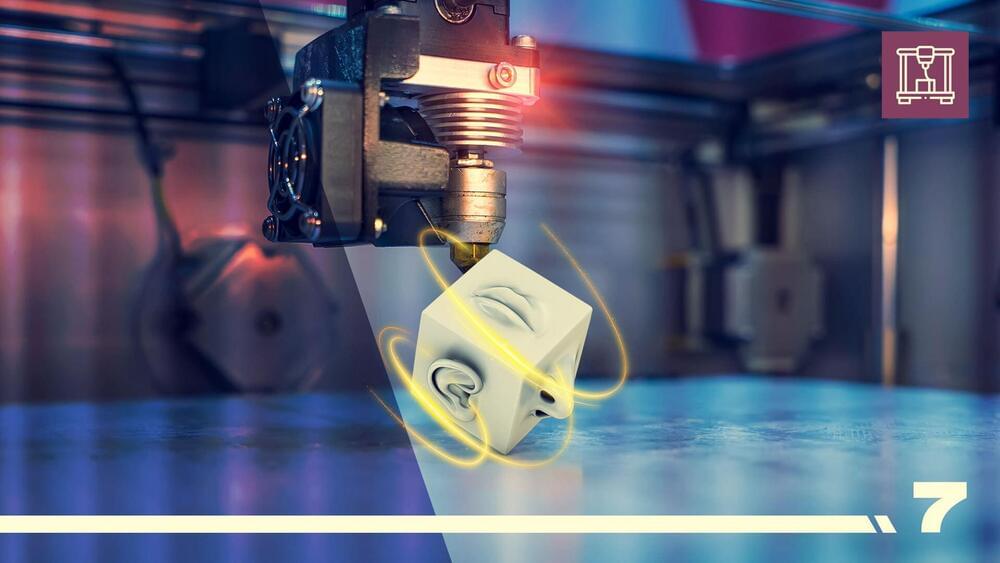
How to print a robot from scratch: Combining liquids, solids could lead to faster, more flexible 3D creations

Imagine a future in which you could 3D-print an entire robot or stretchy, electronic medical device with the press of a button—no tedious hours spent assembling parts by hand.

That possibility may be closer than ever thanks to a recent advancement in 3D-printing technology led by engineers at CU Boulder. In a new study, the team lays out a strategy for using currently-available printers to create materials that meld solid and liquid components—a tricky feat if you don’t want your robot to collapse.

“I think there’s a future where we could, for example, fabricate a complete system like a robot using this process,” said Robert MacCurdy, senior author of the study and assistant professor in the Paul M. Rady Department of Mechanical Engineering.

Simple, Computationally-Light Model Can Simulate Complex Brain Cell Responses

Summary: The Izhikevich neuron model allows the simulation of both periodic and quasi-periodic responses in neurons at lower computational cost.

Source: Tokyo University of Science.

The brain is inarguably the single most important organ in the human body. It controls how we move, react, think and feel, and enables us to have complex emotions and memories. The brain is composed of approximately 86 billion neurons that form a complex network. These neurons receive, process, and transfer information using chemical and electrical signals.

Hologram doctors beamed to space station to visit astronauts

You read that right, a hologram doctor.


It’s not science fiction: Hologram doctors beamed to space to visit astronauts.

In 2021, a team of hologram doctors was “holoported” to space to visit astronauts living aboard the International Space Station, NASA has revealed in a new post. The hologram teams, led by NASA flight surgeon Dr. Josef Schmid and Fernando De La Peña Llaca, CEO of software provider Aexa Aerospace, were the first humans to ever be “holoported” from Earth to space.

MIT engineers built a robot for emergency stroke surgeries

Remote robotic-assisted surgery is far from new, with various educational and research institutions developing machines doctors can control from other locations over the years. There hasn’t been a lot of movement on that front when it comes to endovascular treatments for stroke patients, which is why a team of MIT engineers has been developing a telerobotic system surgeons can use over the past few years. The team, which has published its paper in Science Robotics, has now presented a robotic arm that doctors can control remotely using a modified joystick to treat stroke patients.

That arm has a magnet attached to its wrist, and surgeons can adjust its orientation to guide a magnetic wire through the patient’s arteries and vessels in order to remove blood clots in their brain. Similar to in-person procedures, surgeons will have to rely on live imaging to get to the blood clot, except the machine will allow them to treat patients not physically in the room with them.

There’s a critical window of time after a stroke’s onset during which endovascular treatment should be administered to save a patient’s life or to preserve their brain function. Problem is, the procedure is quite complex and takes years to master. It involves guiding a thin wire through vessels and arteries without damaging any of them, after all. Neurosurgeons trained in the procedure are usually found in major hospitals, and patients in remote locations that have to be transported to these larger centers might miss that critical time window. With this machine, surgeons can be anywhere and still perform the procedure. Another upside? It minimizes the doctos’ exposure to radiation from X-ray imaging.

A Message from the SRF Board of Directors

The SENS Research Foundation Board of Directors has a singular focus – to help the Foundation develop, promote, and ensure widespread access to therapies that cure and prevent the diseases and disabilities of aging. As the body responsible for ensuring the organization’s alignment with its mission, it is important our Board comprise leaders within the longevity field – visionaries dedicated to defeating the effects of aging permanently.

Many supporters have followed with interest our recent separation from our co-Founder Dr. Aubrey de Grey, and some have expressed concern regarding the possibility of our mission focus drifting off course. We remain firmly on-mission and continue to make real progress in our field, however, we acknowledge that we are the foundation we are today because of Dr. de Grey’s vision and leadership within the longevity movement. With this in mind, we have formally offered Dr. de Grey a Directorship within the Board of Directors.

His installment as a Director will be effective immediately upon the successful completion of the recommendations made by the accredited professional he has personally engaged, with a subsequent letter of recommendation to the Board of Directors supporting Dr. de Grey’s ability to fulfill the duties of Directorship. In this capacity, Dr. de Grey would lend his expertise to help steer the vision of the Foundation. Consistent with good governance and past practices, Dr. de Grey and the other members of the Board will approve the annual budget, review the annual audit, interview and hire executives, act as advocates for SRF, and largely ensure that the mission is being adhered to by the organization.

Eurolink Systems to launch multi-mission ready Beluga mini drone

Italian company EuroLink Systems, a technology solutions manufacturer with decades of industry experience, will launch the Beluga mini drone, a dual-use aircraft ready to deploy anywhere from the desert to the arctic, at next week’s Xponential 2022 in Orlando.

The new state-of-the-art multirotor drone blends a bio-inspired design with high-performance features that make it suitable for a wide variety of tasks – from military or public safety applications like short-range reconnaissance, search & rescue, or security applications to commercial use in 3D terrain mapping, urban logistics support applications, threat detections, and urgent medical transportation.

Beluga has been in development for three years and combines Eurolink Systems’ technical experience with mother nature shapes, resulting in an elegant design and rich technical functionality – that represents the best of art and science. The drone can fly fast, with a maximum cruising speed of up to 112 km/h (69 mph), for up to 60 minutes with a 3.3 lbs. (1.5 kg) payload.

/* */