Toggle light / dark theme

One in 13 US adults report long COVID symptoms

One in five U.S. adults (19 percent) who report having had COVID-19 say they have long COVID symptoms, according to a report from the U.S. Centers for Disease Control and Prevention National Center for Health Statistics.

Beginning June 1, the Household Pulse Survey, administered in partnership between the U.S. Census Bureau and the National Center for Health Statistics, began asking questions to assess the prevalence of post-COVID-19 conditions. Data were collected from June 1 to June 13, 2022.

The newly collected data show that one in 13 U.S. adults overall (7.5 percent) have long COVID symptoms, defined as symptoms not present prior to COVID-19 infection and lasting three or more months after first contracting the virus. Long COVID is less likely among than younger adults, with nearly three times as many adults ages 50 to 59 years reporting long COVID than those aged 80 years or older. Long COVID is more likely among women than men (9.4 versus 5.5 percent), and it is highest among Hispanic adults (9 percent) versus non-Hispanic White (7.5 percent) or Black (6.8 percent) adults.


13 percent of U.S. adults report serious psychological distress during COVID-19

Serious psychological distress among U.S. adults remained fairly steady between April and July 2020, according to a research letter published online Nov. 23 in the Journal of the American Medical Association.

Emma E. McGinty, Ph.D., from the Johns Hopkins Bloomberg School of Public Health in Baltimore, and colleagues conducted two waves of the Johns Hopkins COVID-19 Civic Life and Public Health Survey (April 7 to April 13, 2020, and July 7 to July 22, 2020). Changes in during the COVID-19 pandemic was evaluated among 1,337 U.S. adults.

The researchers found that 13 percent of respondents reported serious in July 2020 versus 14.2 percent in April 2020, with 72 percent of adults reporting serious distress in both waves. The prevalence of serious distress was highest among adults aged 18 to 29 years (25.4 percent in April versus 26.5 percent in July), those with income less than $35,000 (20.2 percent in April versus 21.2 percent in July), and Hispanic individuals (17.9 percent in April versus 19.2 percent in July) at both time points. Among those with serious distress, the most common stressors were concerns about contracting COVID-19 (65.9 percent) and pandemic effects on employment (65.1 percent) and finances (60.6 percent). Educational interruptions were a stressor among adults with serious distress attending college and/or with (69 percent).

Millennial mental health toll spikes during COVID

There has been a spike in severe psychological distress in young Australian adults under 35, according to new analysis from The Australian National University (ANU).

The study—which tracked 3,155 Australians—is the first-of-its-kind to compare mental health data before and during the COVID-19 pandemic.

“Young Australians aged 18 to 24 and those aged 25 to 34 are significantly worse off in terms of mental health than those who are older,” Associate Professor Ben Edwards, from the ANU Centre for Social Research and Methods, said.

New study shows staggering effect of coronavirus pandemic on America’s mental health

When the novel coronavirus roared into the U.S., mental health took a back seat to physical health. The number one priority was making sure hospitals wouldn’t be overwhelmed and that as many lives as possible could be saved.

Schools closed, remote work became the norm, restaurants shuttered and getting together with friends was no longer possible. The news cycle spun with story after story highlighting the ever-increasing number of cases and deaths, while unemployment soared to levels not seen since the Great Depression.

Any one of these shifts could be expected to cause an increase in issues. Put together, they created a a perfect storm for a crisis.

Coronavirus lockdown made many of us anxious. But for some people, returning to ‘normal’ might be scarier

Many Australians have welcomed the gradual easing of coronavirus restrictions. We can now catch up with friends and family in small numbers, and get out and about a little more than we’ve been able to for a couple of months.

All being well, restrictions will continue to be lifted in the weeks and months to come, allowing us slowly to return to some kind of “normal”.

This is good news for the economy and employment, and will hopefully help ease the high levels of distress and mental health problems our community has been experiencing during the pandemic.

Mindfulness meditation reduces pain by separating it from the self

For centuries, people have been using mindfulness meditation to try to relieve their pain, but neuroscientists have only recently been able to test if and how this actually works. In the latest of these efforts, researchers at University of California San Diego School of Medicine measured the effects of mindfulness on pain perception and brain activity.

The study, published July 7, 2022 in Pain, showed that interrupted the communication between brain areas involved in sensation and those that produce the sense of self. In the proposed mechanism, still move from the body to the brain, but the individual does not feel as much ownership over those pain sensations, so their pain and suffering are reduced.

“One of the central tenets of mindfulness is the principle that you are not your experiences,” said senior author Fadel Zeidan, Ph.D., associate professor of anesthesiology at UC San Diego School of Medicine. “You train yourself to experience thoughts and sensations without attaching your ego or sense of self to them, and we’re now finally seeing how this plays out in the brain during the experience of acute pain.”

AI for biomedicine: Deepmind enters new partnership

Deepmind enters into a partnership with the renowned British research institute “The Crick”. Together, the organizations aim to advance the use of artificial intelligence in biology and biomedicine.

Artificial intelligence is already having a direct impact on our everyday lives, for example in autonomous driving, through generative AI systems such as DALL-E 2 and Alphacode or hand tracking for VR headsets.

Beyond these direct application scenarios, AI can be a tool that accelerates science – indirectly impacting our future, but possibly on a much larger scale.

Scientists discover the function and connections of three cell types in the brain

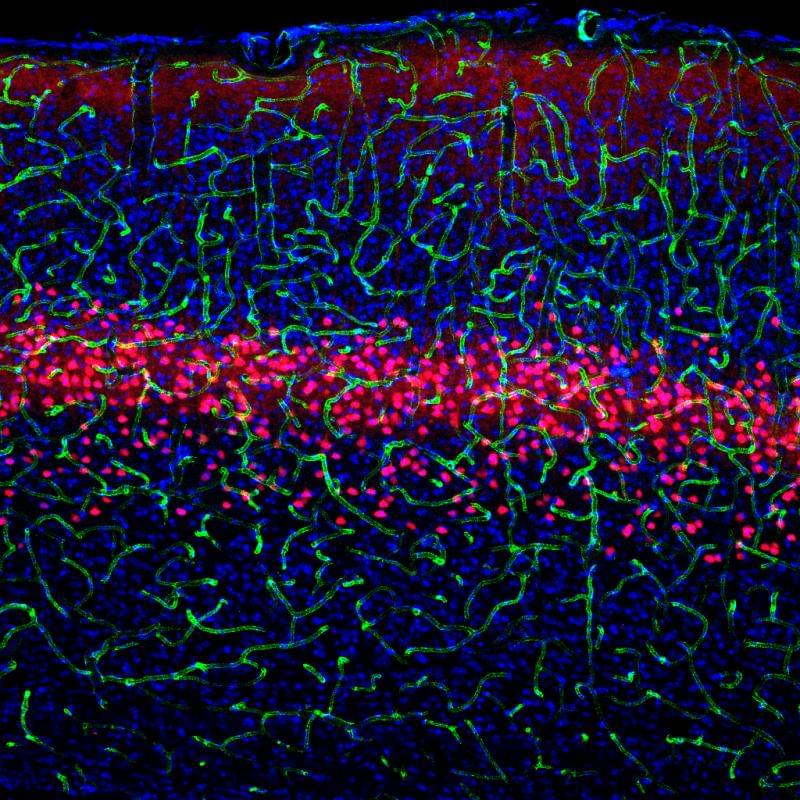
How the brain functions is still a black box: scientists aren’t even sure how many kinds of nerve cells exist in the brain. To know how the brain works, they need to know not only what types of nerve cells exist, but also how they work together. Researchers at the Salk Institute have gotten one step closer to unlocking this black box.

Using cutting-edge visualization and genetic techniques, the team uncovered a new subtype of nerve cell, or neuron, in the visual cortex. The group also detailed how the new cell and two similar neurons process images and connect to other parts of the . Learning how the brain analyzes visual information at such a detailed level may one day help doctors understand elements of disorders like schizophrenia and autism.

“Understanding these contributes another piece to the puzzle uncovering neural circuits in the brain, circuits that will ultimately have implications for neurological disorders,” says Edward Callaway, Salk professor and senior author of the paper published December 6 in the journal Neuron.

Alzheimer’s disease biomarkers can predict postoperative delirium

Clinical studies have demonstrated a strong association between Alzheimer’s disease (AD) and delirium. A change to the Tau protein, which can lead to the formation of tangles in brain, is one of the hallmarks of AD pathology, and Tau phosphorylation at threonine 217 (Tau-PT217) and threonine 181 (Tau-PT181) are new plasma biomarkers that can detect early-stage AD. A clinical study led by investigators at Massachusetts General Hospital (MGH) has shown that plasma Tau-PT217 and Tau-PT181 are associated with incidence and severity of postoperative delirium. The findings are published in Annals of Surgery.

Early studies from the same research group at MGH have shown that the ratio of beta amyloid (which causes AD’s signature plaques) to Tau in cerebrospinal fluid is associated with . Recent studies in other labs have reported that plasma Tau-PT181 concentration distinguishes AD dementia from other neurological disorders. Plasma levels of Tau-PT217 are associated with the changes in levels of Tau-PT217 and AD development.

In this current study, the team at MGH developed a novel method to measure Tau-PT217 and Tau-PT181 concentrations in plasma of patients, called nanoneedle technology, in collaboration with NanoMosaic (Woburn, MA). “The nanoneedle technology is ultrasensitive, requires a small volume, and can measure low concentrations of molecules, including Tau-PT217 and Tau-PT181,” says lead author Feng Liang, MD, Ph.D., in the Department of Anesthesia, Critical Care and Pain Medicine at MGH. “More than 20,000 nanoneedles are integrated on a silicon substrate assigned to detect one analyte. Each nanoneedle is a single molecule biosensor functionalized with antibodies,” says Liang.

/* */