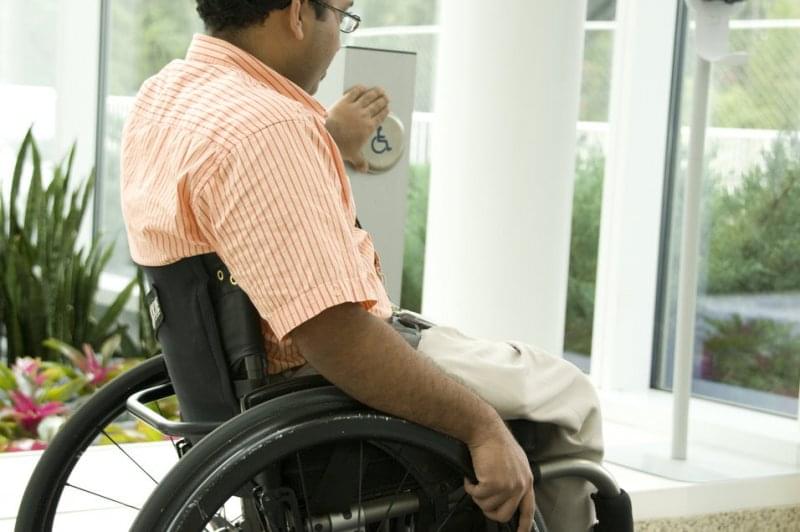
A brighter future could be in store for people with a spinal cord injury if new animal research pans out in humans.
Mice that were paralyzed due to severe spinal cord damage regained the ability to walk within four weeks of receiving an experimental injectable therapy, say researchers led by Samuel Stupp of Northwestern University in Chicago.
The research team plans to seek U.S. Food and Drug Administration approval for the treatment to be used in people.
The condition stays with you for life once diagnosed, but treatments and specialists can help to manage the condition and its symptoms.
Experts are still unsure exactly what triggers the condition that affects more than 130,000 people in the UK.
According to the MS Society, people are most likely to find out they have MS in their thirties, forties and fifties in Britain, and the condition affects almost three times as many women as men.
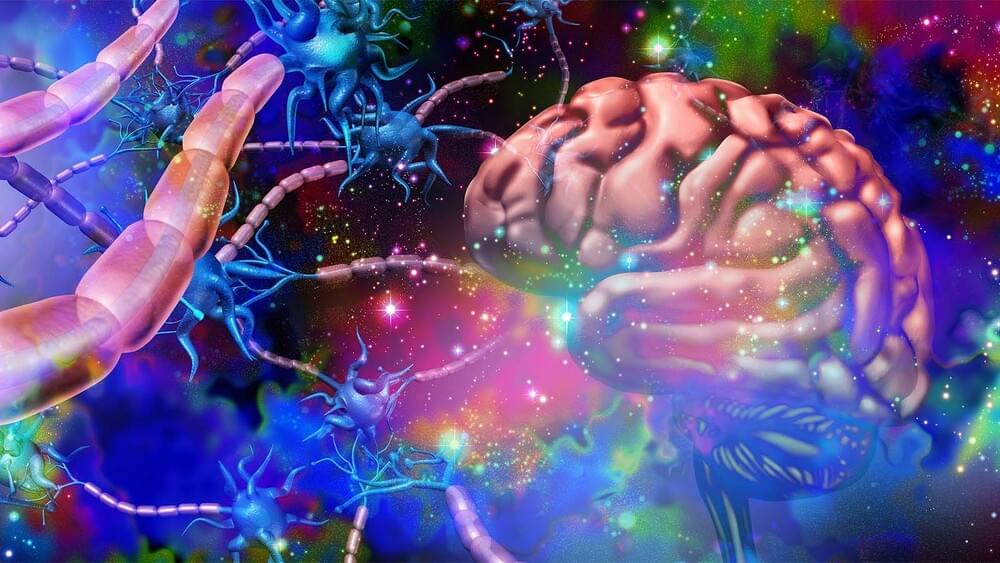
California-based startup Bionaut Labs announces a unique robot. They are planning to send miniature robots deep inside into human skull to treat brain disorders. They will be using magnetic energy to propel the robots rather than optical or ultrasonic techniques.
#Miniaturerobot #Braindisorder #WION
About Channel:
WION-The World is One News, examines global issues with in-depth analysis. We provide much more than the news of the day. Our aim to empower people to explore their world. With our Global headquarters in New Delhi, we bring you news on the hour, by the hour. We deliver information that is not biased. We are journalists who are neutral to the core and non-partisan when it comes to the politics of the world. People are tired of biased reportage and we stand for a globalised united world. So for us the World is truly One.
Please keep discussions on this channel clean and respectful and refrain from using racist or sexist slurs as well as personal insults.
Understanding how we use our brain to make decisions is a daunting task, given our brain’s extensive webs of neural wiring and circuitry. Now, JAX researchers Erik Bloss and Kourtney Graham are using a surprising tool to investigate goal-directed behaviors: the rabies virus.
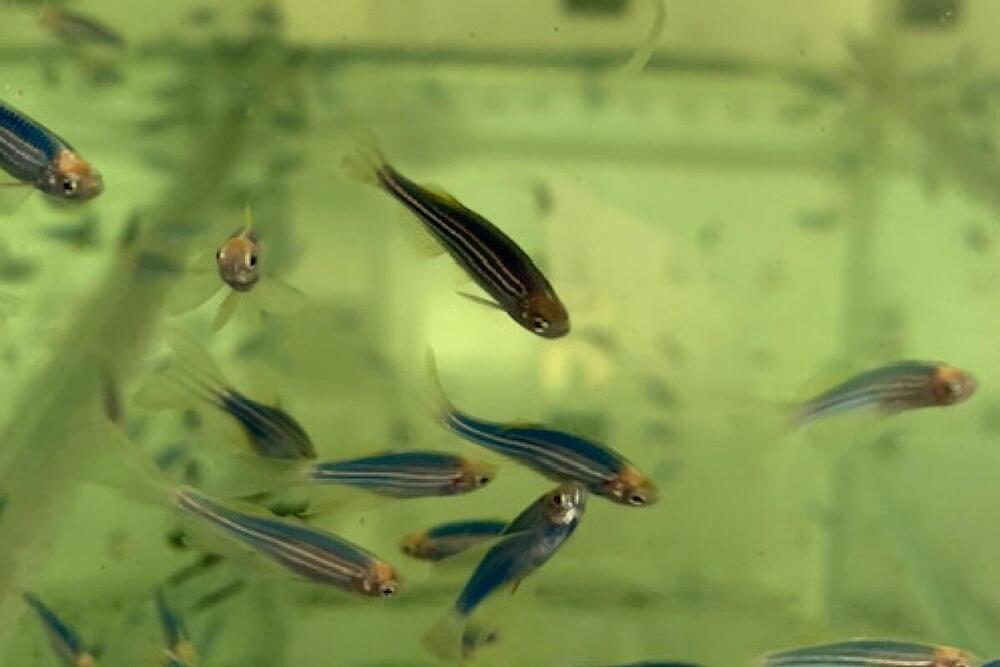
Neuroscientists from St. Petersburg University, led by Professor Allan V. Kalueff, in collaboration with an international team of IT specialists, have become the first in the world to apply the artificial intelligence (AI) algorithms to phenotype zebrafish psychoactive drug responses. They managed to train AI to determine—by fish response—which psychotropic agents were used in the experiment.
The research findings are published in the journal Progress in Neuro-Psychopharmacology and Biological Psychiatry.
The zebrafish (Danio rerio) is a freshwater bony fish that is presently the second-most (after mice) used model organism in biomedical research. The advantages for utilizing zebrafish as a model biological system are numerous, including low maintenance costs and high genetic and physiological similarity to humans. Zebrafish share 70% of genes with us. Furthermore, the simplicity of the zebrafish nervous system enables researchers to achieve more explicit and accurate results, as compared to studies with more complex organisms.
A new study, led by researchers from the University of California, Irvine, identifies a reason for why older adults are significantly more susceptible.
Small clinical trial suggests new, simple twist on cell therapies for cancer.
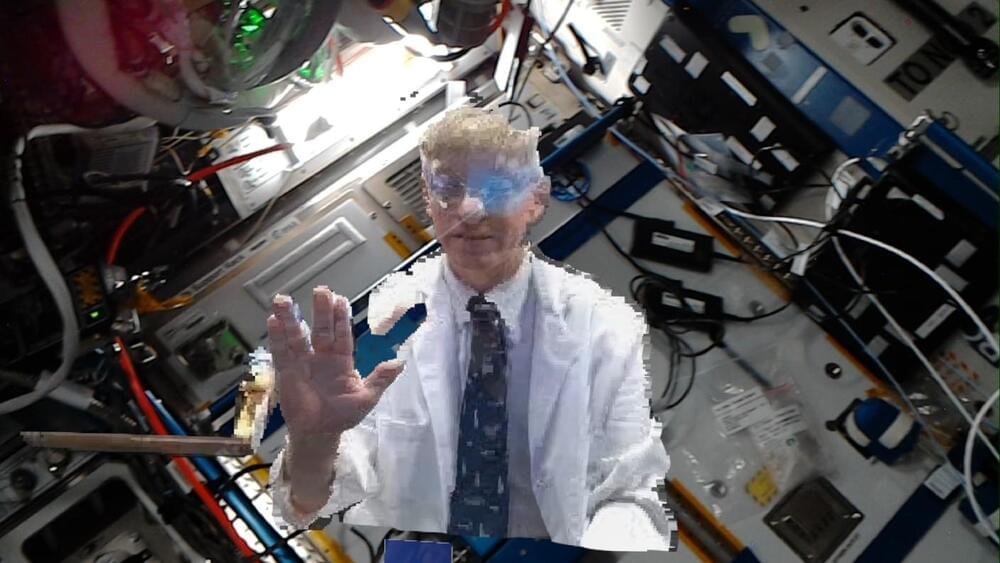
In a remarkable development, the National Aeronautics and Space Administration (NASA) ‘holoported’ the first human being into space late last year. Holoportation is the process through which a three dimensional holographic representation of an individual is created, in a combination of a ‘hologram’ and ‘teleportation’. NASA revealed the development late last week, as it announced that it had transported flight surgeon Dr. Josef Schmid, mixed and virtual reality firm AEXA Aerospance’s chief executive officer Dr. Fernando De La Pena Llaca and others to the International Space Station (ISS) during October 2021 while the ISS was orbiting the Earth at an altitude of 250 miles above the Earth’s surface.
NASA Uses Microsoft’s Hololens Konnect Camera To Create Live Hologram of Flight Surgeon In Space
The event place last year when NASA’s Crew 2 astronauts were present on the ISS. The astronauts took to the skies in April last year and returned in November, soon after Dr. Schmid and others were holoportated to the orbiting space laboratory.
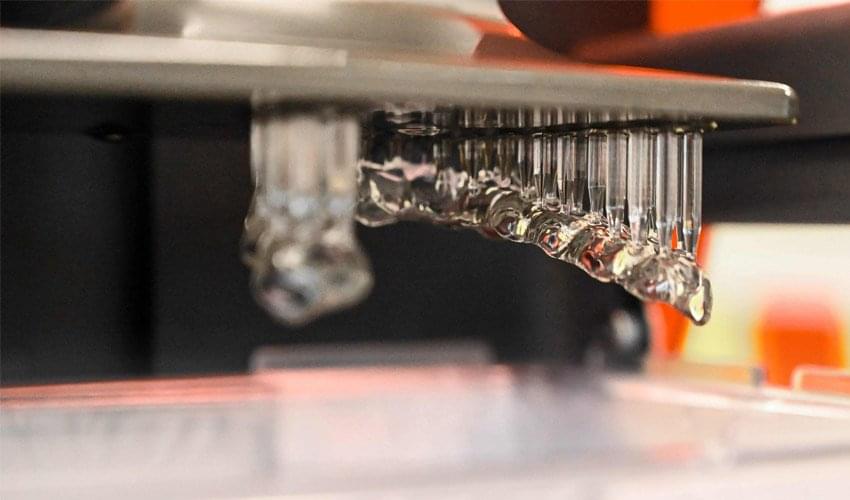
At the Technical University of Denmark (DTU), a team of researchers have developed a new kind of 3D printer whose technology combines a CT scanner and light. By reversing the principle of CT scanning, they could create all types of parts in record time from different polymer resins and play on their hardness. They would thus be able to reproduce the appearance of blood vessels or muscle tissue.
Today’s CT scans allow us to make slice images of our body parts and to visualize tissues of different densities. This X-ray machine is therefore used in the medical sector to establish a diagnosis. In this case, it was used to design a new, faster resin 3D printer.
The Force was strong in him. One of Enzo Romero’s favorite activities is playing the guitar, which he effortlessly does with his bright blue hand. Initially, it used to hurt, as he used his handless right arm to press down on chords. But now, with fingers on the end, he can play music painlessly.
Though controversial upon release, the film has proved to be the most popular film in the series among fans and critics and is now widely regarded as one of the best sequel films of all time, as well as one of the greatest films of all time. It was re-released with changes in 1997 and on DVD in 2004. The film was re-released on Blu-ray format in September of 2011. A radio adaptation was broadcast on National Public Radio in the U.S.A. in 1983. The film was selected in 2010 to be preserved by the Library of Congress as part of its National Film Registry.