Toggle light / dark theme

Improving prosthetic control using magnetomicrometry

Why do so many people get frustrated with their “high-tech” prostheses? Though sophisticated robotics allow for prosthetic joints that can do everything a human can and more, the way we control robotic machines right now doesn’t allow us to operate them as naturally as you would a biological hand. Most robotic prostheses are controlled via metal pads on the skin that indirectly measure muscle action and then make some assumptions to determine what the person wants to do. Whil… See More.


We plan to use MM to provide natural control over prosthetic limbs by leveraging the human body’s proprioception. When you wiggle one of your fingers, your brain senses muscle lengths, speeds, and forces, and it uses these to figure out the position of that finger. This is called body awareness, or proprioception. When someone receives an amputation, if their muscle connections are maintained with what is called the “AMI technique,” their brain still perceives muscle flexion as it relates to joint movement, as if their limb was still present. In other words, they are sensing movement of a phantom limb. To give an amputee intuitive control over a robotic prosthesis, we plan to directly measure the muscle lengths and speeds involved in this phantom limb experience and have the robot copy what the brain expects, so that the brain experiences awareness of the robot’s current state. We see this technique as an important next step in the embodiment of the prosthetic limb (the feeling that it is truly part of one’s body).

Notably, the tracking of magnetic beads is minimally invasive, not requiring wires to run through the skin boundary or electronics to be implanted inside the body, and these magnetic beads can be made safe to implant by coating them in a biocompatible material. In addition, for muscles that are close to the skin, MM can be performed with very high accuracy. We found that by increasing the number of compass sensors we used, we could track live muscle lengths close to the surface of the skin with better than millimeter accuracy, and we found that our measurements were consistent to within the width of a human hair (about 37 thousandths of a millimeter).

The concept of tracking magnets through human tissue is not a new concept. This is the first time, however, that magnets have been tracked at sufficiently high speed for intuitive, reflexive control of a prosthesis. To reach this sufficiently high tracking speed, we had to improve upon traditional magnet tracking algorithms; these improvements are outlined in our previous work on tracking multiple magnets with low time delay, which also describes how we can account for the earth’s magnetic field during portable muscle-length tracking. This is also the first time that a pair of magnets has been used as a distance sensor. MM extends the capabilities we currently have with wired-ultrasound-crystal distance sensing (sonomicrometry, SM) and tantalum-bead-based distance sensing via multiple-perspective X-ray video (fluoromicrometry, FM), enabling us to now wirelessly sense distances in the body while a person moves about in a natural environment.

Northwestern scientists discover remarkable longevity in a subset of mitochondrial proteins

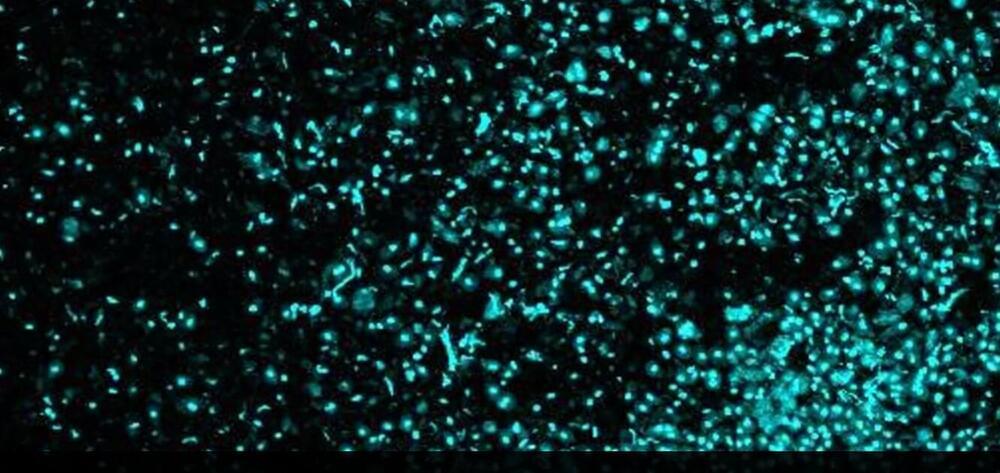
Northwestern Medicine investigators have discovered that a subset of proteins in mitochondria of brain and heart cells are long-lived, supporting the long-term stability of mitochondrial complex architecture.

The study, published in the Journal of Cell Biology, was led by Jeffrey Savas, PhD, assistant professor in the Ken & Ruth Davee Department of Neurology’s Division of Behavioral Neurology, of Medicine the in Division of Nephrology and Hypertension, and of Pharmacology.

Previous work led by Savas discovered that nuclear pore complex proteins in post-mitotic neurons are exceptionally long-lived and persist for months in mouse and rat brains. These proteins, termed long-lived proteins, or LLPs, provide long-term stability and structure to the nuclear pore and subsequently to the nuclear envelope of neurons; however, this concept had never been considered for other intracellular organelles, until now.

Aaron Schacht — EVP, Innovation, Regulatory + BD, Elanco — Well-Being Of Animals, People And Planet

Advancing the well-being of animals, people and the planet — aaron schacht — executive vice president, innovation, regulatory & business development, elanco.


Aaron Schacht is Executive Vice President: Innovation, Regulatory + Business Development at Elanco (https://www.elanco.com/), an American pharmaceutical company which produces medicines and vaccinations for pets and livestock, and which until 2,019 was a subsidiary of Eli Lilly and Company.

Prior to this, Mr. Schacht held a role of Global Brand Development Leader – Pain in Lilly Biomedicines. He was the global leader for product development and commercialization activities for Lilly’s novel CGRP neutralizing antibody – a new potential treatment for prevention of Migraine and Cluster Headache.

In 2,012 Mr. Schacht joined Lilly Biomedicines as Senior Advisor – Strategy & Business Development for Lilly BioMedicines. His responsibilities included oversight of Therapeutic Strategy development, R&D Portfolio Management, and Business Development for Lilly BioMedicines – Lilly’s largest business unit. Past roles included serving as Executive Director, Global External R&D, at Eli Lilly and Company, where he was responsible for implementation of strategies which aim to leverage novel approaches to external partnerships to augment Lilly’s access to pharmaceutical innovation as well as Executive Director of LRL (Lilly Research Labs) Strategy, Portfolio Management and Project Management where he was responsible for strategic planning, R&D portfolio and project management. Prior to these roles, he was Director, Innovation Center in the eLilly organization where he focused on the exploration, incubation and implementation of new business models and capabilities relevant to the strategic evolution of the pharmaceutical industry.

In 2,002 during a short leave from Lilly, Mr. Schacht was co-founder, President and CEO of Artesian Therapeutics, a Gaithersburg, MD cardiovascular drug discovery start-up.

The U.S. could be on the verge of a productivity boom, a game-changer for the economy

Economists have learned that new technological breakthroughs usually don’t cause a jump in productivity right away. The technology needs time to marinate so companies can test how best to deploy it in their industry. Brynjolfsson argues artificial intelligence and machine learning have now simmered long enough to make a dramatic difference. Others are not as convinced.


Rapid adoption of robots and artificial intelligence during the pandemic combined with a rebound in government investment is making some economists optimistic about a return of a 1990s economy with widespread benefits.

Neural Network Models of the Future – The Key to Unlocking How Our Brain Works

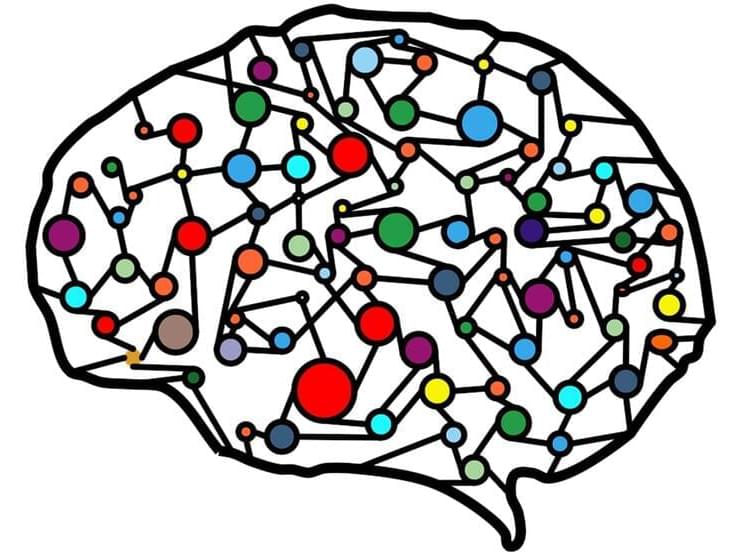
Summary: Researchers discuss different current neural network models and consider the steps that need to be taken to make them more realistic, and thus more useful, as possible.

Source: University of Plymouth.

Neuroscience is a field most obviously associated with medicine and/or psychology. However, my background in physics and computer science enables me to explore, and further understand, how the brain computes and stores information, identifying the underlying physical mechanisms and the interplay between them.

These sniffer dogs are learning to smell the coronavirus

As the disease swept the globe and scientists deployed tools such as polymerase chain reaction tests to detect the novel coronavirus in people, a team of researchers at the University of Pennsylvania’s School of Veterinary Medicine worked to determine if dogs could also be trained to find infections.

The proof-of-concept study, published in April in the journal PLOS ONE, showed that the virus has an odor that trained dogs can identify in urine and saliva. Now, the researchers—with the help of Tuuka, Griz, Toby, Rico, and Roxie—are examining whether canines can sniff out coronavirus’ scent in sweaty T-shirts.

If the dogs can accurately detect it on clothing, they could patrol places such as airports and stadiums to sniff out the virus in public settings.

/* */