Toggle light / dark theme

Lisa Esch & Dr. Michael Petersen, M.D. — NTT Data Services — Re-Imagining Health and Wellbeing

Re-Imagining Health and Wellbeing — Lisa Esch & Dr. Michael Petersen, M.D., NTT.


The Nippon Telegraph and Telephone Corporation (https://hello.global.ntt/en-us/), commonly known as NTT, is a Japanese telecommunications company headquartered in Tokyo, Japan.

NTT DATA Services (https://www.nttdata.com/global/en), is a global digital business and IT services leader focused on a range of business services, including cloud, data and applications, and which has recently embarked on an ambitious new initiative, as part of their goal “To Change The Future For Good”, towards Re-Imagining Health and Well-Being, towards what NTT defines as a more human-empowered, knowledge-driven and technology-enabled approach (https://www.global.ntt/healthandwellbeing/).

Lisa Esch is Senior Vice President-Healthcare Provider, Digital Health, Innovation, & Industry Offerings, at NTT DATA Services, where she oversees solutions and offering development, as well as their Go-To-Market strategy within the vertical and serves as the subject matter expert in the client engagements.

Lisa has an extensive background in disruptive technologies, healthcare innovation, strategic planning, and business process improvement.
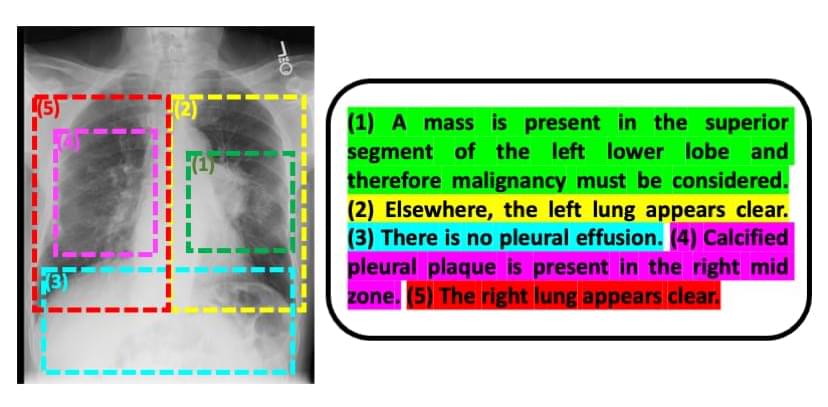

Using AI and old reports to understand new medical images

Getting a quick and accurate reading of an X-ray or some other medical images can be vital to a patient’s health and might even save a life. Obtaining such an assessment depends on the availability of a skilled radiologist and, consequently, a rapid response is not always possible. For that reason, says Ruizhi “Ray” Liao, a postdoc and a recent Ph.D. graduate at MIT’s Computer Science and Artificial Intelligence Laboratory (CSAIL), “we want to train machines that are capable of reproducing what radiologists do every day.” Liao is the first author of a new paper, written with other researchers at MIT and Boston-area hospitals, that is being presented this fall at MICCAI 2,021 an international conference on medical image computing.

WHO and partners call for urgent action on meningitis

Today, the World Health Organization (WHO) and partners launched the first ever global strategy to defeat meningitis — a debilitating disease that kills hundreds of thousands of people each year. By 2,030 the goals are to eliminate epidemics of bacterial meningitis – the most deadly form of the disease – and to reduce deaths by 70% and halve the number of cases. The organizations estimate that in total, the strategy could save more.

Than 200,000 lives annually and significantly reduce disability caused by the disease. This strategy, the Global Roadmap to Defeat Meningitis by 2,030 was launched by a broad coalition of partners involved in meningitis prevention and control at a virtual event, hosted by WHO in Geneva. Its focus is on preventing infections and improving.

Care and diagnosis for those affected.“Wherever it occurs, meningitis can be deadly and debilitating; it strikes quickly, has serious health, economic and social consequences, and causes devastating outbreaks,” said Dr Tedros Adhanom Ghebreyesus, WHO Director-General.

New clues hint that young boys who get serious viral infections might be more likely to develop autism

The mouse study even offers a possible explanation as to why: Childhood infections may cause the body to over-express genes that code for microglia, the central nervous system’s primary immune cells. That, in turn, can affect brain development, which could be at play in some traits commonly associated with autism, such as difficulty communicating verbally or recognizing familiar faces.

So the researchers experimented with drugs that target microglia, and found that they not only prevented those social issues in adult mice — they might have reversed them.


Among boys genetically predisposed to autism, a severe childhood infection could make that diagnosis more likely.

Liquid metal coating creates effective antiviral, antimicrobial fabric

An international team of researchers has used liquid gallium to create an antiviral and antimicrobial coating and tested it on a range of fabrics, including facemasks. The coating adhered more strongly to fabric than some conventional metal coatings, and eradicated 99% of several common pathogens within five minutes.

“Microbes can survive on the fabrics hospitals use for bedding, clothing and face masks for a long time,” says Michael Dickey, co-corresponding author of a paper on the work and Camille & Henry Dreyfus Professor of Chemical and Biomolecular Engineering at North Carolina State University. “Metallic surface coatings such as copper or silver are an effective way to eradicate these pathogens, but many metal particle coating technologies have issues such as non-uniformity, processing complexity, or poor .”

Dickey and colleagues from NC State, Sungkyunkwan University (SKKU) in Korea and RMIT University in Australia set out to develop a simple, cost-effective way to deposit metal coatings on fabric.

A Gene-Editing Experiment Let These Patients With Vision Loss See Color Again

On Wednesday, researchers revealed the first evidence that the approach appears to be working — improving vision for at least some patients with the condition, known as Leber congenital amaurosis, or LCA, a severe form of vision impairment.


So doctors genetically modified a harmless virus to ferry the CRISPR gene editor and infused billions of the modified viruses into the retinas of Knight’s left eye and Kalberer’s right eye, as well as one eye of five other patients. The procedure was done on only one eye just in case something went wrong. The doctors hope to treat the patients’ other eye after the research is complete.

Once the CRISPR was inside the cells of the retinas, the hope was that it would cut out the genetic mutation causing the disease, restoring vision by reactivating the dormant cells.

“We’re thrilled about this,” says Dr. Eric Pierce, director of the ocular genomics institute at Massachusetts Eye & Ear and professor of ophthalmology at Harvard Medical School who’s helping run the experiment testing the approach.

A potent SARS-CoV-2 neutralising nanobody shows therapeutic efficacy in the Syrian golden hamster model of COVID-19

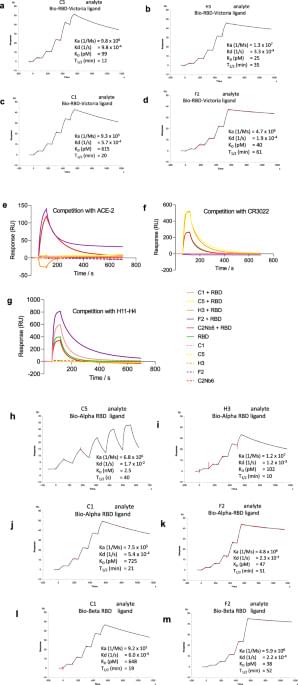
SARS-CoV-2 remains a global threat to human health particularly as escape mutants emerge. There is an unmet need for effective treatments against COVID-19 for which neutralizing single domain antibodies (nanobodies) have significant potential. Their small size and stability mean that nanobodies are compatible with respiratory administration. We report four nanobodies (C5, H3, C1, F2) engineered as homotrimers with pmolar affinity for the receptor binding domain (RBD) of the SARS-CoV-2 spike protein. Crystal structures show C5 and H3 overlap the ACE2 epitope, whilst C1 and F2 bind to a different epitope. Cryo Electron Microscopy shows C5 binding results in an all down arrangement of the Spike protein. C1, H3 and C5 all neutralize the Victoria strain, and the highly transmissible Alpha (B.1.1.7 first identified in Kent, UK) strain and C1 also neutralizes the Beta (B.1.35, first identified in South Africa). Administration of C5-trimer via the respiratory route showed potent therapeutic efficacy in the Syrian hamster model of COVID-19 and separately, effective prophylaxis. The molecule was similarly potent by intraperitoneal injection.


Neutralizing nanobodies bind SARS-CoV-2 spike RBD and block interaction with ACE2. Nat. Struct. Mol. Biol. 27 846–854 (2020).

/* */