Toggle light / dark theme

Bill Gates is spending $150 million to try to make a coronavirus vaccine as cheap as $3

Gates has been among the foremost leaders on vaccine production over the last two decades, spending $4 billion on the global vaccine development effort known as Gavi. And for months, the billionaire has expressed profound worries that while rich countries may fare okay at surviving the coronavirus, that the pandemic will devastate poor countries that can’t afford to administer the treatment, whenever it arrives.


Pay more attention to what Gates is doing overseas than what he’s saying about the United States.

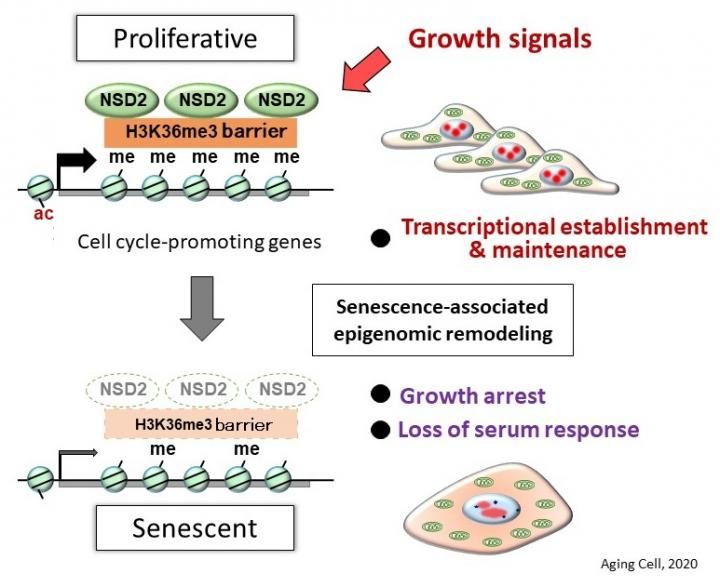
NSD2 shapes the program of cell senescence [image] Science News

NSD2 is the fourth protective factor of cellular senescence that our team has identified,” said Professor Mitsuyoshi Nakao. “With the discovery that NSD2 protects against cellular senescence, this study clarifies a basic mechanism of aging.


Researchers from Kumamoto University in Japan have used comprehensive genetic analysis to find that the enzyme NSD2, which is known to regulate the actions of many genes, also works to block cell aging. Their experiments revealed 1) inhibition of NSD2 function in normal cells leads to rapid senescence and 2) that there is a marked decrease in the amount of NSD2 in senescent cells. The researchers believe their findings will help clarify the mechanisms of aging, the development of control methods for maintaining NSD2 functionality, and age-related pathophysiology.

As the cells of the body continue to divide (cell reproduction), their function eventually declines and they stop growing. This cellular senescence is an important factor in health and longevity. Cell aging can also be stimulated when genomic DNA is damaged by physical stress, such as radiation or ultraviolet rays, or by chemical stress that occurs with certain drugs. However, the detailed mechanisms of aging are still unknown. Cell aging can be beneficial when a cell becomes cancerous; it prevents malignant changes by causing cellular senescence. On the other hand, it makes many diseases more likely with age. It is therefore important that cell aging is properly controlled.

Although senescent cells lose their proliferative ability, it has recently become clear that senescent cells secrete various proteins that act on surrounding cells to promote chronic inflammation and cancer development. Since senescent cells are more active than expected, cellular aging is thought to be responsible for whole body aging. This idea has been supported by reports of systemic aging suppression in aged mice after removal of accumulated senescent cells. In other words, if you can control cell aging, you may be able to control the progression of aging throughout the body.

Doctors experiment with stem cell therapy on COVID-19 patients

Doctors are hoping stem cell therapy could be a weapon in the fight against coronavirus. On Friday, regenerative medicine company Mesoblast announced a 300-person trial to determine whether stem cell treatments will work in COVID-19 patients suffering from severe lung inflammation.

One hospital in New York tried it as an experiment with 12 patients, 10 of whom were able to come off of ventilators.

“What we saw in the very first patient was that within four hours of getting the cells, a lot of her parameters started to get better,” Dr. Karen Osman, who led the team at Mount Sinai, told CBS News’ Adriana Diaz.

Programmable synthetic materials

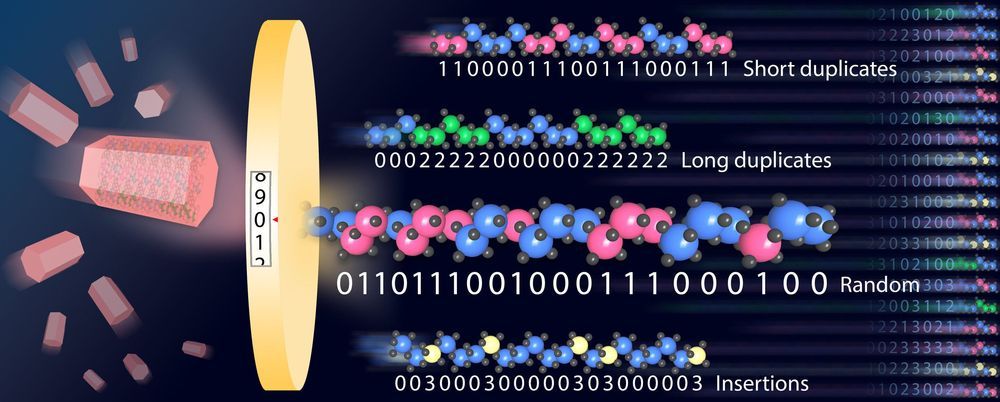
Artificial molecules could one day form the information unit of a new type of computer or be the basis for programmable substances. The information would be encoded in the spatial arrangement of the individual atoms—similar to how the sequence of base pairs determines the information content of DNA, or sequences of zeros and ones form the memory of computers.

Researchers at the University of California, Berkeley, and Ruhr-Universität Bochum (RUB) have taken a step towards this vision. They showed that atom probe tomography can be used to read a complex spatial arrangement of ions in multivariate metal-organic frameworks.

Metal-organic frameworks (MOFs) are crystalline porous networks of multi-metal nodes linked together by organic units to form a well-defined structure. To encode information using a sequence of metals, it is essential to be first able to read the metal arrangement. However, reading the arrangement was extremely challenging. Recently, the interest in characterizing metal sequences is growing because of the extensive information such multivariate structures would be able to offer.

4 Palliative Canadians approved for end of life psilocybin therapy through section 56(1) ; First legal medical exemptions for psilocybin in Canada since 1970’s

Four Canadians battling incurable cancer have been approved by the Minister of Health, Patty Hajdu, to use psilocybin therapy in the treatment of their end-of-life distress. These 4 patients mark the first publicly-known individuals to receive a legal exemption from the Canadian Drugs and Substances Act to access psychedelic therapy, and the first known patients to legally use psilocybin since the compound became illegal in Canada in 1974. The decision comes after over 100 days of waiting for a response.

I would like to personally thank the Hon. Minister Hajdu and the team at the Office of Controlled Substances for the approval of my section 56 exemption. This is the positive result that is possible when good people show genuine compassion. I’m so grateful that I can move forward with the next step of healing” says Thomas Hartle, one the section 56 applicants battling cancer, from Saskatoon Saskatchewan.

Laurie Brooks, another applicant from British Columbia facing end-of-life distress states: “I want to thank the Health Minister and Health Canada for approving my request for psilocybin use. The acknowledgement of the pain and anxiety that I have been suffering with means a lot to me, and I am feeling quite emotional today as a result. I hope this is just the beginning and that soon all Canadians will be able to access psilocybin, for therapeutic use, to help with the pain they are experiencing, without having to petition the government for months to gain permission. Thanks also to TheraPsil for helping the four of us in this fight. To Thomas Hartel and the other two patients – I think of you often and wish you only good things, especially good health!”

Millions of Americans Have Lost Jobs in the Pandemic — And Robots and AI Are Replacing Them Faster Than Ever

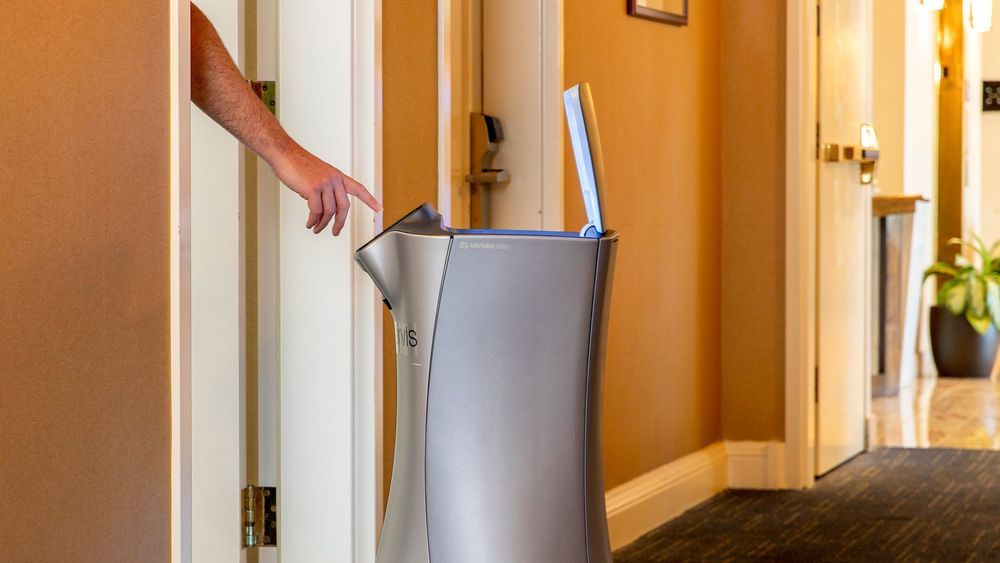
Many organizations will likely look to technology as they face budget cuts and need to reduce staff. “I don’t see us going back to the staffing levels we were at prior to COVID,” says Brian Pokorny, the director of information technologies for Otsego County in New York State, who has cut 10% of his staff because of pandemic-related budget issues. “So we need to look at things like AI to streamline government services and make us more efficient.”


For 23 years, Larry Collins worked in a booth on the Carquinez Bridge in the San Francisco Bay Area, collecting tolls. The fare changed over time, from a few bucks to $6, but the basics of the job stayed the same: Collins would make change, answer questions, give directions and greet commuters. “Sometimes, you’re the first person that people see in the morning,” says Collins, “and that human interaction can spark a lot of conversation.”

But one day in mid-March, as confirmed cases of the coronavirus were skyrocketing, Collins’ supervisor called and told him not to come into work the next day. The tollbooths were closing to protect the health of drivers and of toll collectors. Going forward, drivers would pay bridge tolls automatically via FasTrak tags mounted on their windshields or would receive bills sent to the address linked to their license plate. Collins’ job was disappearing, as were the jobs of around 185 other toll collectors at bridges in Northern California, all to be replaced by technology.

Machines have made jobs obsolete for centuries. The spinning jenny replaced weavers, buttons displaced elevator operators, and the Internet drove travel agencies out of business. One study estimates that about 400,000 jobs were lost to automation in U.S. factories from 1990 to 2007. But the drive to replace humans with machinery is accelerating as companies struggle to avoid workplace infections of COVID-19 and to keep operating costs low. The U.S. shed around 40 million jobs at the peak of the pandemic, and while some have come back, some will never return. One group of economists estimates that 42% of the jobs lost are gone forever.

Researchers tease out the unique chemical fingerprint of the most aggressive free radical in living things

Free radicals—atoms and molecules with unpaired electrons—can wreak havoc on the body. They are like jilted paramours, destined to wander about in search of another electron, leaving broken cells, proteins and DNA in their wakes.

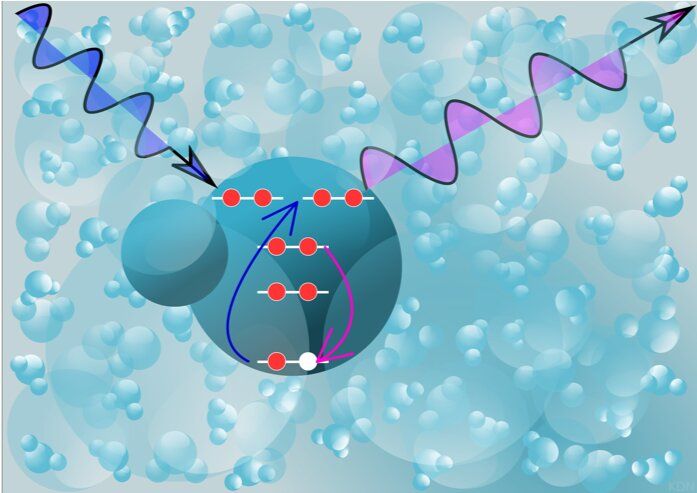
Hydroxyl radicals are the most chemically aggressive of the free radicals, surviving for only trillionths of a second. They form when water, the most abundant molecule in cells, is hit with radiation, causing it to lose an electron. In previous research, a team led by Linda Young, a scientist at the Department of Energy’s Argonne National Laboratory, observed the ultrafast birth of these , a process with great significance in fields such as sunlight-induced biological damage, , , and space travel.

Now her team, including researchers from DOE’s SLAC National Accelerator Laboratory, has teased out a unique chemical fingerprint of the hydroxyl, which will help scientists track chemical reactions it instigates in complex biological environments. They published their results in Physical Review Letters in June.

This Japanese face mask translates into eight languages

When the Covid-19 pandemic made face masks an everyday essential, Japanese startup Donut Robotics spotted an opportunity. They created a smart mask — a high-tech upgrade to standard face coverings, designed to make communication and social distancing easier.

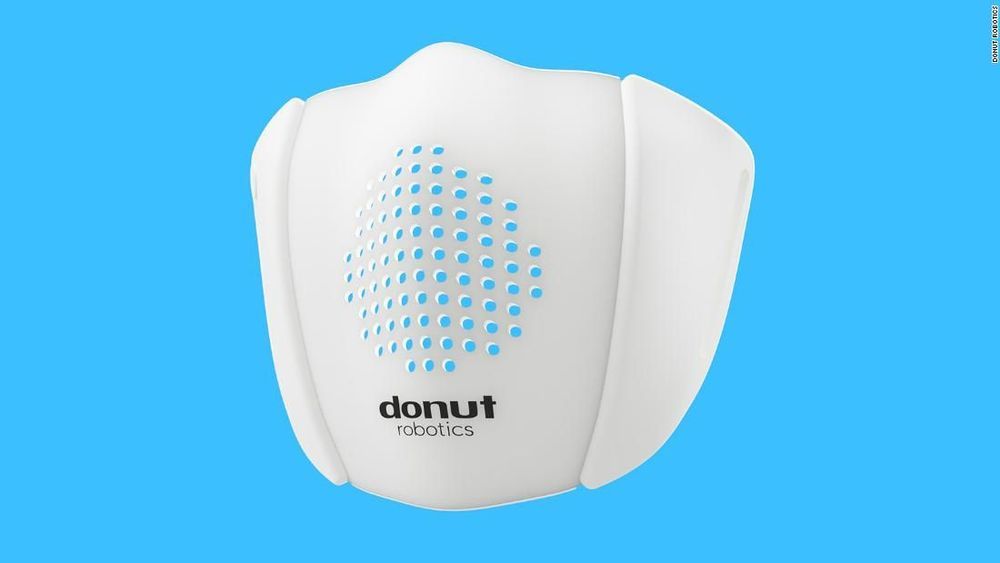
In conjunction with an app, the C-Face Smart mask can transcribe dictation, amplify the wearer’s voice, and translate speech into eight different languages.

The cutouts on the front are vital for breathability, so the smart mask doesn’t offer protection against the coronavirus. Instead, it is designed to be worn over a standard face mask, explains Donut Robotics CEO Taisuke Ono. Made of white plastic and silicone, it has an embedded microphone that connects to the wearer’s smartphone via Bluetooth. The system can translate between Japanese and Chinese, Korean, Vietnamese, Indonesian, English, Spanish and French.

/* */