Toggle light / dark theme

Israeli researchers at Hebrew U develop faster, cheaper COVID-19 test

Researchers at the Hebrew University of Jerusalem announced on Sunday that they have developed a new method of testing for COVID-19 which is not only 4–10 times faster than the tests most commonly used today, but also significantly cheaper, while supplying the same level of accuracy. Moreover, most of the materials required to perform the new test are already available in Israel, easing significantly both the country’s dire shortage of testing materials and its heavy economic dependence on foreign commercial markets. The method was developed in the labs of Prof. Nir Friedman of the Institute of Life Sciences and the School of Engineering and Computer Sciences and Dr. Naomi Haviv of Hebrew University’s Neuroscience Research Center, and is based on materials which are not affected by global shortages and can be recycled for repeated used on future tests. The method commonly used today for COVID-19 testing involves extracting RNA molecules from a patient’s sample to determine if the molecules produced have viral RNA within them, which confirms the presence of the coronavirus. The new test developed by the researchers performs the same action, but is made from more commonly attainable materials, that produce results at a much higher speed. Dr. Naomi Haviv said that “We have an efficient RNA extraction method, 4–10 times faster than the current method. It is based on magnetic beads and can be performed both robotically and manually.”

Other than the magnetic beads, all of the other materials needed to perform the tests are available for purchase in Israel. The beads themselves are recyclable and can be reused to perform future tests. “The robotic method has already undergone a series of tests at Hadassah Hospital, using hundreds of samples from patients — and is now becoming operational.”


The new test would supply results 4–10 times faster than the current method, and is made almost entirely from materials which are easily available for purchase within the country.
At Least 70 Coronavirus Vaccines Are Already in Development, WHO Report Shows

At least 70 potential coronavirus vaccines are currently in development, with 3 already in clinical trials, according to the World Health Organisation.

WHO published an updated list of vaccine efforts on April 11, showing a vast array of companies pursuing shots that could halt the coronavirus. Bloomberg News reported on the document earlier.

As the virus continues to spread, infecting more than 1.9 million people and killing more than 110,000 worldwide, researchers have been racing to develop vaccines.

Switching on a key cancer gene could provide first curative treatment for heart disease

This is huge news… heart disease is the number one killer globally.

“They found that Myc-driven activity in heart muscle cells is critically dependent on the level of another protein called Cyclin T1, made by a gene called Ccnt1, within the cells. When the Ccnt1 and Myc genes are expressed together, the heart switches into a regenerative state and its cells start to replicate. The results are published today in the journal Nature Communications.”


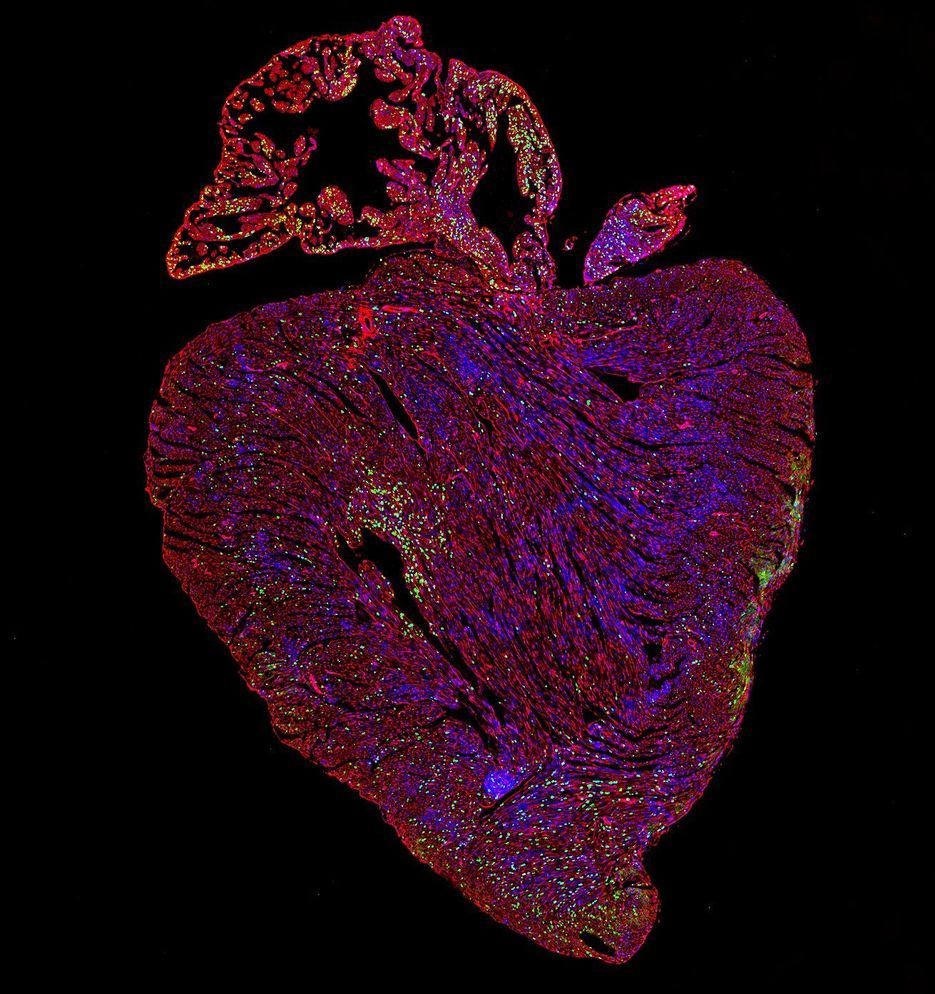
Researchers trying to turn off a gene that allows cancers to spread have made a surprising U-turn. By making the gene overactive and functional in the hearts of mice, they have triggered heart cell regeneration. Since adult hearts cannot usually repair themselves once damaged, harnessing the power of this gene represents major progress towards the first curative treatment for heart disease.

“This is really exciting because scientists have been trying to make cells proliferate for a long time. None of the current treatments are able to reverse degeneration of the heart tissue—they only slow progression of the disease. Now we’ve found a way to do it in a ,” said Dr. Catherine Wilson, a researcher in the University of Cambridge’s Department of Pharmacology, who led the study.

The cell cycle—through which cells make copies of themselves—is tightly controlled in . Cancer develops when cells start to replicate themselves uncontrollably, and the Myc gene plays a key role in the process. Myc is known to be overactive in the vast majority of cancers, so targeting this gene is one of the highest priorities in cancer research. Much recent research has focused on trying to take control of Myc as a means of cancer therapy.

Hyperbaric Application to COVID-19 Pulmonary Infection

In the midst of the coronavirus epidemic/pandemic it bears remembering the application of hyperbaric oxygen therapy to the last major pandemic that impacted the United States in 1918, the Spanish Flu Pandemic. Death was primarily by pulmonary infection and its attendant hypoxemia and respiratory failure. The first application of hyperbaric medicine to a Spanish Flu victim was likely also the first application to a human being in the United States. In 1918 Dr. Orval Cunningham of Kansas City was brought a dying friend of a fellow physician. The patient was moribund and blue. Before Cunningham could perform his planned animal experiments he was asked to treat this dying patient. With just a one-hour treatment with compressed air at 1.68 atmospheres absolute the patient experienced improvement. Combined with additional hyperbaric treatments over the next 3 days this patient’s life was saved. Others followed.

Today’s coronavirus’ mortality is due to pulmonary infection and respiratory failure. While there are differences between the Spanish Flu and coronavirus the primary pathology is in the lungs, the first organ of contact with hyperbaric therapy beyond the skin. The ability of hyperbaric oxygen to penetrate inflammatory pulmonary secretions allows adequate oxygen to reach the blood while inhibiting the inflammatory process. Applied correctly, hyperbaric therapy may have utility in coronavirus patients similar to its life-saving history with the Spanish Flu. Harch Hyperbarics Inc 504 309‑4948 www.hbot.com

Doctors Suspect Mystery COVID-19 Lung Problems, Plea for New Approach

Some doctors are questioning the way ventilators are being used for people with serious cases of COVID-19. Why? More data shows a high death rate for patients treated under current ventilator practices.

At the same time, these doctors are saying their patients behave more like they have high altitude sickness than a viral infection. They talk about two different types of COVID-19 patients with differing severe lung problems.

While some patients respond to treatment as expected, doctors also describe patients whose lungs seem relatively fine, but who still can’t get enough oxygen into their blood. These patients may make up the majority with severe infections.

Adaptive Biotech’s deal with Amgen influenced by belief that COVID-19 may return seasonally, like flu

Despite a potential vaccine, the novel coronavirus could return on a seasonal basis, much like the flu, according to Seattle-based company Adaptive Biotechnologies.

That’s one of the reasons Adaptive is teaming up with pharmaceutical giant Amgen, which plans to use Adaptive’s proprietary technology platform to develop therapies to treat the virus.

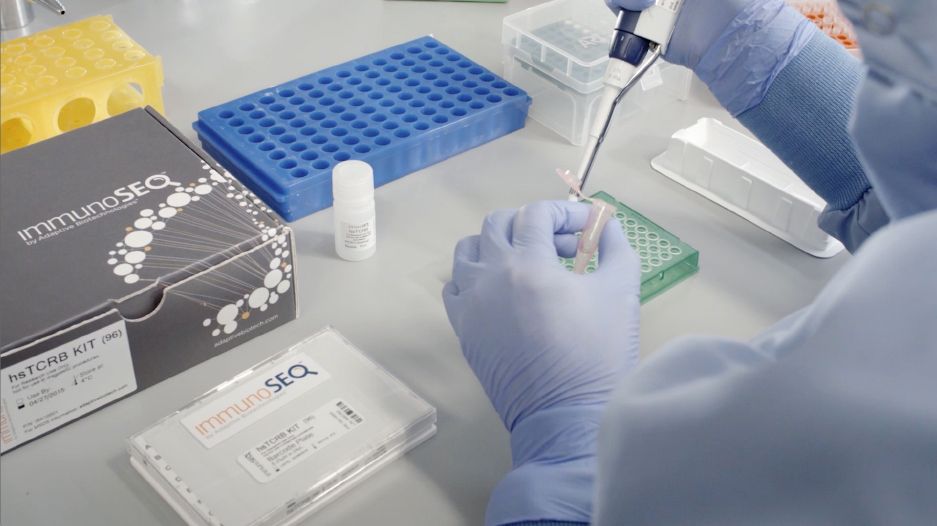
Adaptive’s CEO Chad Robins says it’s the next big thing in the field of immune sequencing. They will screen blood samples of COVID-19 survivors, then identify which naturally occurring antibodies in the immune system can be used to neutralize the SARS-CoV-2 virus which causes the disease.

Hokkaido declares new state of emergency amid ‘second wave’ of coronavirus infections

While Hokkaido was not covered in the state’s declaration of an emergency, the prefectural government and the municipal government of Sapporo, the prefectural capital, issued a joint emergency declaration following reports of double-digit increases in infections for the fifth straight day.

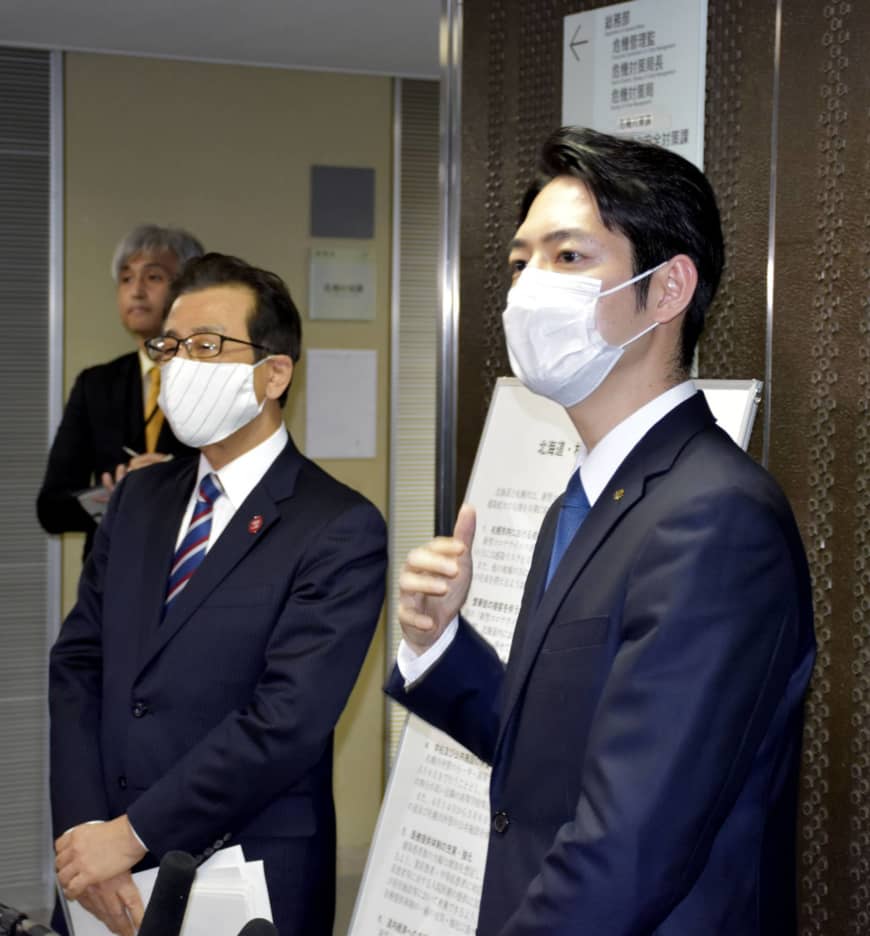
“We are facing a crisis of a second wave in the spread of (the coronavirus) infections,” Hokkaido Gov. Naomichi Suzuki told reporters, asking residents to refrain from making nonessential outings.

Hokkaido had declared its own state of emergency on Feb. 28 ahead of the government and lifted it on March 19, citing signs that the coronavirus spread was abating in the prefecture, a popular area for both Japanese and foreign tourists.

Pope Francis: ‘This may be the time to consider a universal basic wage’

Talk of a universal basic income (UBI), or regular cash payments with minimal or no requirements for receiving the money, has been brought to the forefront as social distancing and economic concerns have put millions of people out of work.


Amid the COVID-19 pandemic Pope Francis says it might be time for some sort of universal basic income.

“This may be the time to consider a universal basic wage” to “acknowledge and dignify the noble, essential tasks” and to “achieve the ideal … of no worker without rights,” Pope Francis said in a letter to the World Meeting of Popular Movements, an organization representing global grassroots organizations, published on Sunday via the Vatican.

The Pope acknowledged that for many workers, the COVID-19 pandemic lockdowns are making it difficult, if not impossible, for people to earn money.

/* */