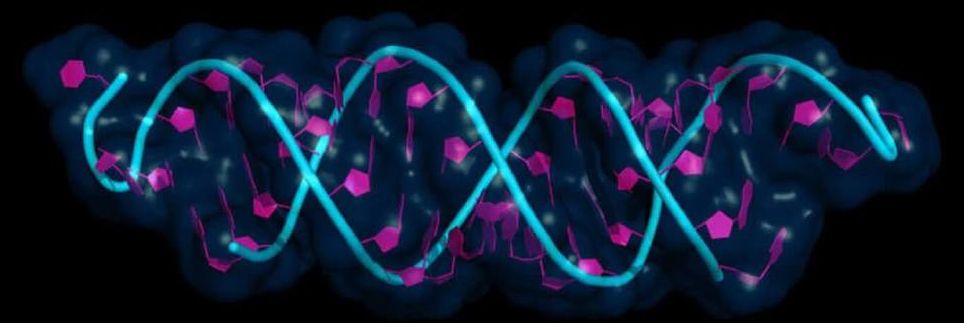
Prime editing can change individual DNA letters, delete letters, or insert blocks of new letters into the genome, with minimal damage to the DNA strand.
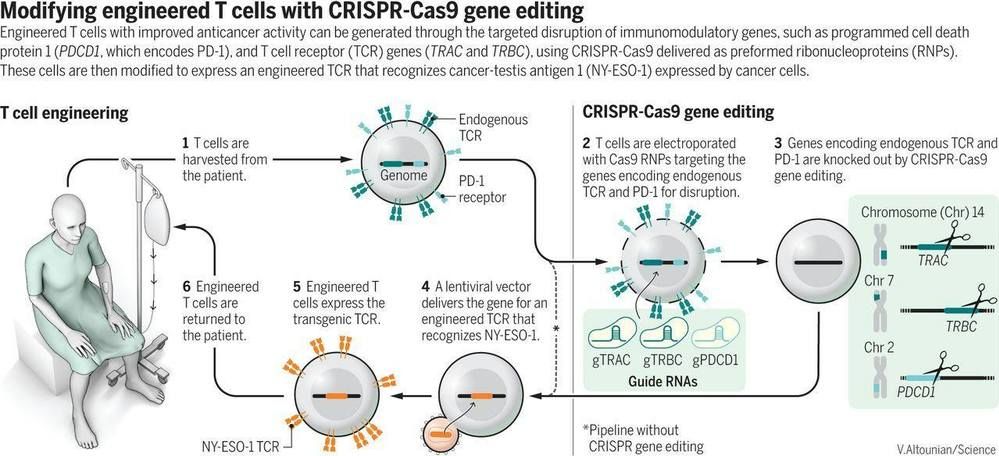
Following the first U.S. test of CRISPR gene editing in patients with advanced cancer, researchers report findings in Science that represent an important step toward the ultimate goal of using gene editing to help a patient’s immune system attack cancer. Read the research: https://fcld.ly/y1nst2o
Circa 2015
A researcher at Ransselaer Polytechnic Institute in the US has given three Nao robots an updated version of the classic ‘wise men puzzle’ self-awareness test… and one of them has managed to pass.
In the classic test, a hypothetical King calls forward the three wisest men in the country and puts either a white or a blue hat on their heads. They can all see each other’s hats, but not their own, and they’re not allowed to talk to each other. The King promises that at least one of them is wearing a blue hat, and that the contest is fair, meaning that none of them have access to any information that the others don’t. Whoever is smart enough to work out which colour hat they’re wearing using that limited information will become the King’s new advisor.
In this updated AI version, the robots are each given a ‘pill’ (which is actually a tap on the head, because, you know, robots can’t swallow). Two of the pills will render the robots silent, and one is a placebo. The tester, Selmer Bringsjord, chair of Rensselaer’s cognitive science department, then asks the robots which pill they received.
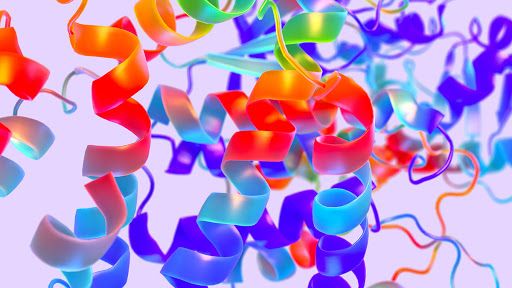
Could automatically find the coronavirus vaccine.
We research and build safe AI systems that learn how to solve problems and advance scientific discovery for all. Explore our work: deepmind.com/research

Wow… hmmm.
Scientists at Sanford Burnham Prebys Medical Discovery Institute have shown that two prebiotics, mucin and inulin, slowed the growth of melanoma in mice by boosting the immune system’s ability to fight cancer. In contrast to probiotics, which are live bacterial strains, prebiotics are “food” for bacteria and stimulate the growth of diverse beneficial populations. The study, published today in Cell Reports, provides further evidence that gut microbes have a role in shaping the immune response to cancer, and supports efforts to target the gut microbiome to enhance the efficacy of cancer therapy.
The research specifically opens new avenues to address important unmet clinical needs in melanoma, as it highlights the possible impact of prebiotics on tumor growth control and therapy resistance.
“Earlier studies have demonstrated that prebiotics limit tumor growth, but until now the mechanism by which they do so has been unclear,” says Ze’ev Ronai, Ph.D., professor in Sanford Burnham Prebys’ Tumor Initiation and Maintenance Program and senior author of the study. “Our study shows for the first time that prebiotics limit cancer growth by enhancing anti-tumor immunity. The study supports further exploration of the potential benefits of prebiotics in treating cancer or augmenting current therapies.”
Congratulations to Osinakachi Gabriel for his launch of the first publication the TAFFD’s “Magazine of the Future” — Also thanks for the Bioquark (page 37) and Regenerage (page 72) profiles — https://issuu.com/taffds/docs/taffd_s_magazine_2019 #Futurism #Longevity #Transhumanism #Biotechnology #Health #Wellness #Regeneration #LifeExtension #Aging #Immortality #IraPastor #Bioquark #Regenerage #Ideaxme #Singularity #Consciousness #AI #JasonSilva #ArtificiaIIntelligence #SENS
In this first issue by Trandisciplinary Agora For Future Discussions, we approach reality from a transdisciplinary perspective in order to find unity and greater understanding of the world as we enter a new paradigm in technological advancements that will lead us to transcending our own biology while enhancing our mental and physical limitations. We explore all topics that relate to transhumanism, cybernetic singularity, energy, consciousness, international policy, electromagnetic forces, language, AI, digitalization, ethics, philosophy, biotechnology, futurism and more.
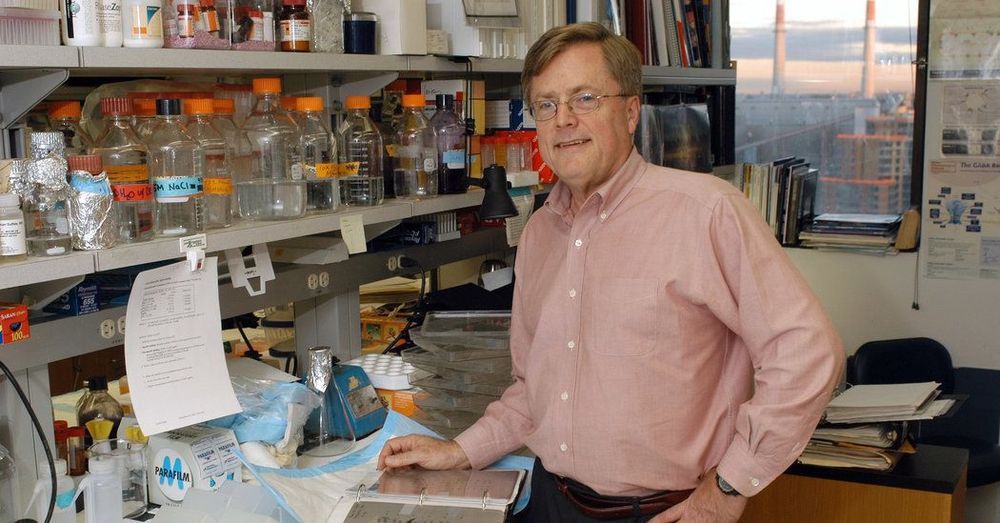
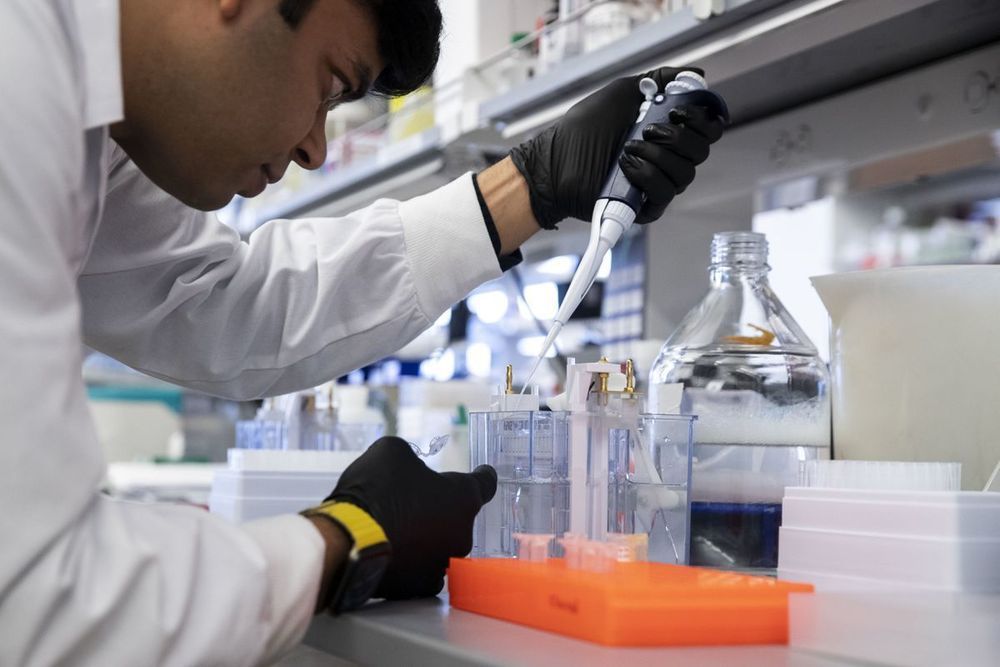
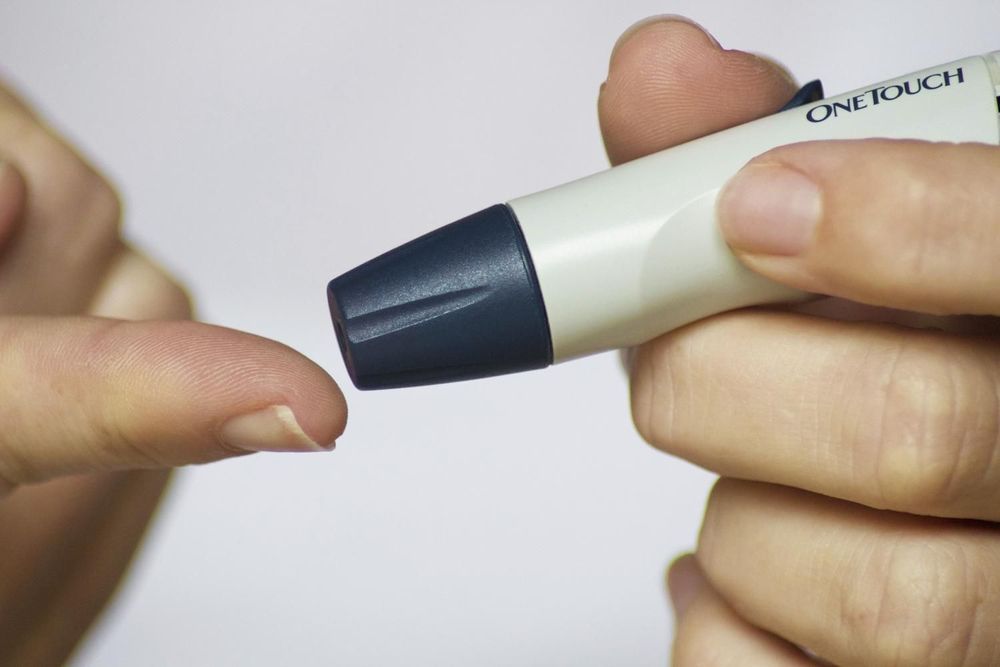
In a surprising study, Oregon State University researchers found that no matter how much stress they placed on mice from either a high-fat diet or strenuous exercise, the animals’ mitochondria were able to adapt and continue their normal processes.
The findings could have major implications for the study of diseases like diabetes, Parkinson’s and Alzheimer’s, all of which are associated with an impairment in the breaking-down and clearance of damaged mitochondria.
Mitochondria are the structures that house cellular respiration, the process used to turn nutrients into energy. Dysfunction in mitochondria may lead to lower energy production, greater inflammation and tissue damage. Yet as central as mitochondria are to living organisms, scientists still don’t know exactly what keeps them healthy—or makes them unhealthy.