Toggle light / dark theme

Light-based Ising computer runs at room temperature and stays stable for hours

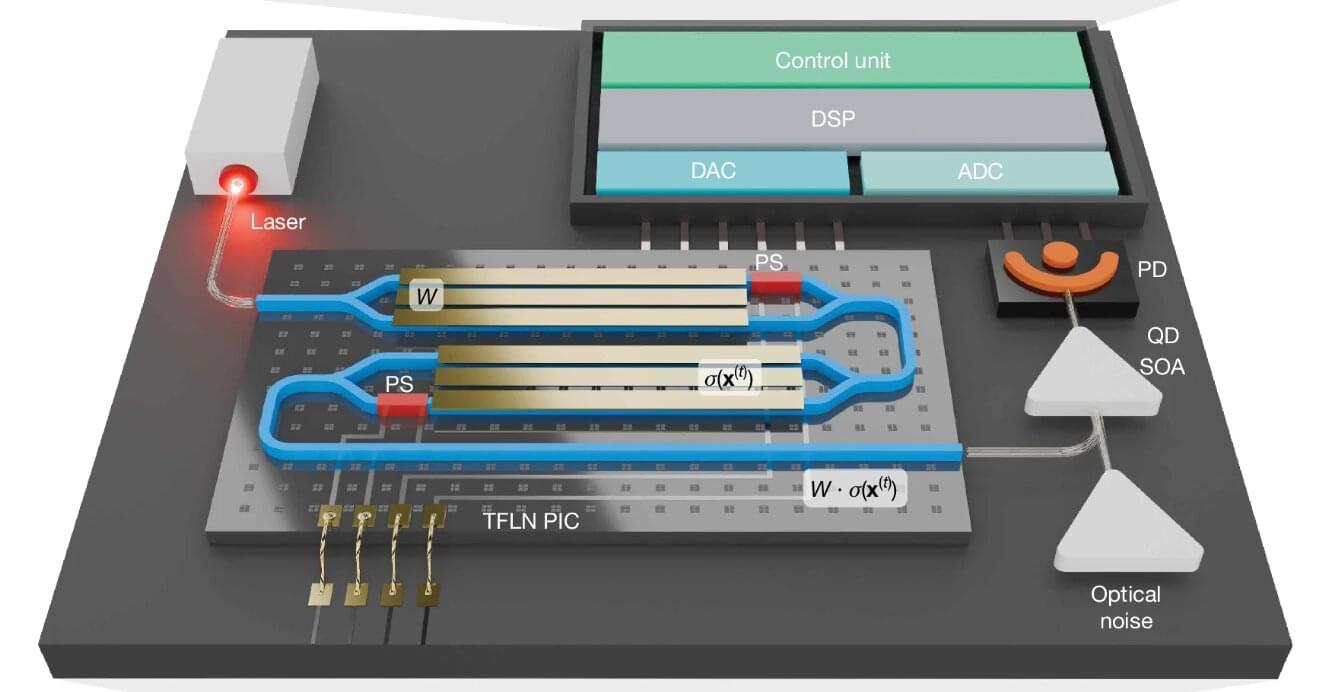
A team of researchers at Queen’s University has developed a powerful new kind of computing machine that uses light to take on complex problems such as protein folding (for drug discovery) and number partitioning (for cryptography). Built from off-the-shelf components, it also operates at room temperature and remains remarkably stable while performing billions of operations per second. The research was published in Nature.

The breakthrough shows that it is possible to build a practical and scalable machine that can tackle extremely difficult problems.

The project, led by Bhavin Shastri, Canada Research Chair in Neuromorphic Photonic Computing and professor in the Department of Physics, Engineering Physics, and Astronomy, with a team of his graduate students including Nayem Al Kayed and Hugh Morison, uses commercially available lasers, fiber optics, and modulators—the same technology that powers today’s internet infrastructure. The team partnered with McGill University researcher David Plant and his graduate student Charles St-Arnault.

The STAT3-VDAC1 axis modulates mitochondrial function and plays a critical role in the survival of acute myeloid leukemia cells

New insights into the role of signal transducer and activator of transcription (STAT)-3 in regulating mitochondrial function in acute myeloid leukemia (AML): by linking STAT3 signaling to mitochondrial metabolism and apoptosis control, this study provides new mechanistic insight into how AML cells maintain their energy balance and resist cell death. These findings highlight mitochondrial regulation as a potential therapeutic vulnerability in AML.


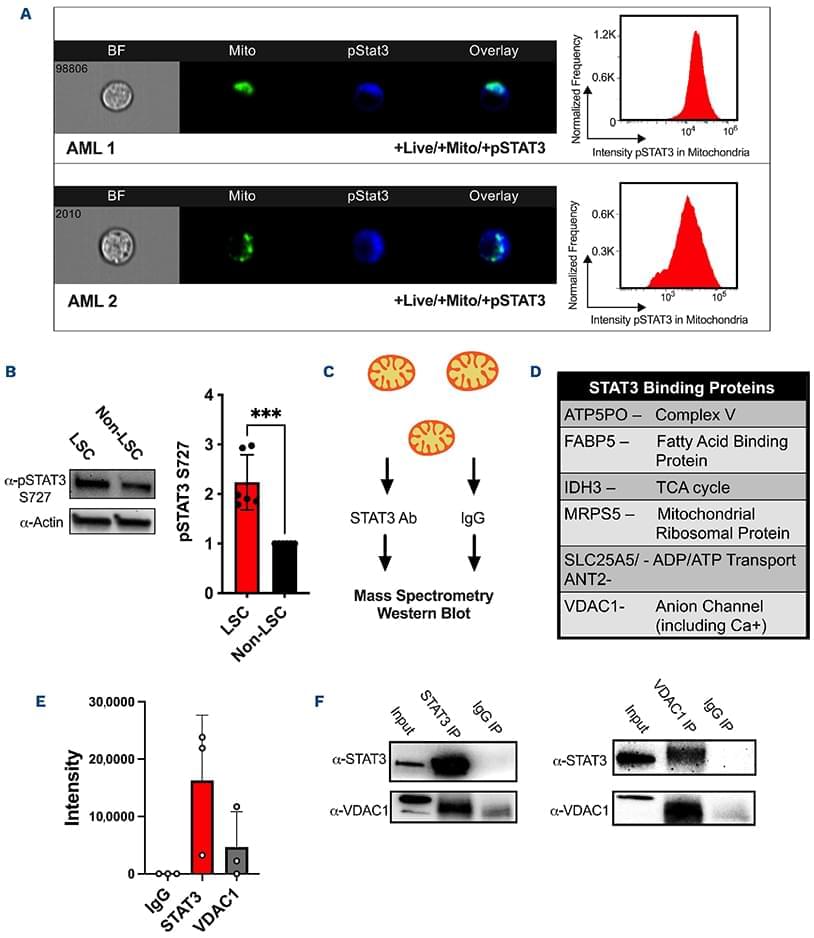
Signal transducer and activator of transcription 3 (STAT3) is a well-described transcription factor that mediates oxidative phosphorylation and glutamine uptake in bulk acute myeloid leukemia cells and leukemic stem cells. STAT3 has also been shown to translocate to the mitochondria in acute myeloid leukemia cells, and phosphorylation at the serine 727 (pSTAT3 S727) residue has been shown to be especially important for the mitochondrial functions of STAT3. We demonstrate that inhibition of STAT3 results in impaired mitochondrial function and decreased leukemia cell viability. We discovered a novel interaction of STAT3 with voltage-dependent anion channel 1 (VDAC1) in the mitochondria which provides a mechanism through which STAT3 modulates mitochondrial function and cell survival. Through VDAC1, STAT3 regulates calcium and oxidative phosphorylation in the mitochondria. STAT3 and VDAC1 inhibition also results in significantly reduced engraftment potential of leukemia stem cells, including primary samples resistant to venetoclax. These results implicate STAT3 as a therapeutic target in acute myeloid leukemia.

Acute myeloid leukemia (AML) is a genetically heterogenous and highly aggressive myeloid neoplasm with poor prognosis.1,2 Standard therapy for AML has historically consisted of induction chemotherapy with an anthracycline and cytarabine, followed by consolidation with either hematopoietic stem cell transplant or high-dose cytarabine.3 Recently, therapeutic options have broadened with the advent of novel targeted therapies.4–7 However, despite high response rates, relapse is common.6 Relapsed disease is believed to originate from a quiescent subpopulation of therapy-resistant leukemic stem cells (LSC)8 which are found in greater abundance at the time of relapse than at diagnosis,9–12 and negatively correlate with survival.10,11 LSC demonstrate a unique vulnerability in their preferential reliance on mitochondrial activity and oxidative phosphorylation (OXPHOS).12–14 While Bcl-2 inhibition with venetoclax in combination with the hypomethylating agent azacitidine has demonstrated selectivity for LSC through inhibition of OXPHOS,13 resistance frequently develops via alterations in mitochondrial metabolism or activation of alternative anti-apoptotic pathways.15–19 Furthermore, prior studies of patients who progress after frontline hypomethylating agent/venetoclax have shown very poor outcomes, with a median survival following failure of this combination of 3 months or less.20–22 New strategies targeting LSC via their reliance on OXPHOS are of significant interest and have been described in several reports,7,13,23 however, further research is needed to elucidate the mechanisms underlying the observations.

Signal transducer and activator of transcription 3 (STAT3) has been shown to be important for leukemogenesis and is known to be highly expressed in many AML patients’ samples and cell lines.24–27 Canonically, STAT3 is known to undergo phosphorylation at residue Tyr705 leading to dimerization and translocation to the nucleus where it functions as a transcription factor regulating cell development, renewal, proliferation, and cell death.25,28–30 Our previous work additionally established that the transcriptional activity of STAT3 regulates mitochondrial function via a MYC-SLC1A5-mediated pathway.27 Despite its well-described nuclear role as a transcription factor, STAT3 has also been discovered to localize to the mitochondria.31,32 Prior work has suggested a variety of functions in the mitochondria, including modulation of electron transport chain activity,31–33 regulation of mitochondrial genes,34 and regulation of mitochondrial calcium flux.35,36 While phosphorylation of STAT3 at both Tyr705 (pSTAT3 Y705) and Ser727 (pSTAT3 S727) sites have been found in the mitochondria,31–33,36,37 Ser727 phosphorylation is critical for modulation of mitochondrial functions such as electron transport chain activities.31,32 These data suggest that STAT3 plays a critical role in mitochondria, although this role in AML is not well characterized.
Lung Sparing Surgery Is Possible for Patients With COPD

Patients with COPD may be especially hesitant about lung surgery when facing lung cancer, but surgery remains the most effective treatment for non–small cell lung cancer when feasible, according to experts. For those who are not surgical candidates, less invasive options exist, with stereotactic body radiation therapy (SBRT) the standard noninvasive treatment for early-stage disease, delivering targeted high-dose radiation over three to five sessions while sparing healthy tissue.


Some individuals with COPD and lung cancer may be eligible for less invasive options.

The role of the immune tumor microenvironment in shaping metastatic dissemination, dormancy, and outgrowth

Immune and stromal orchestration of the pre-metastatic niche👇

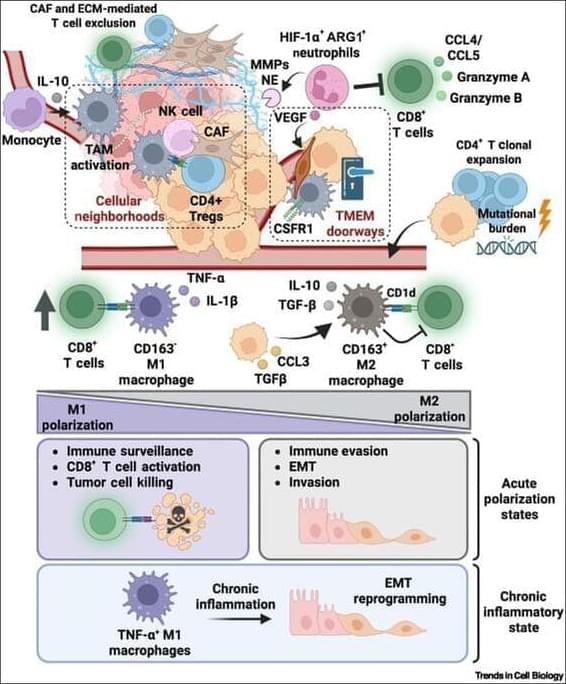
✅Priming distant organs before tumor cell arrival Primary tumors actively condition distant organs by releasing soluble factors, cytokines, and tumor-derived exosomes. These signals recruit monocytes and neutrophils and reprogram resident immune and stromal cells, initiating the formation of a pre-metastatic niche (PMN) that becomes permissive to future metastatic seeding.

✅Role of monocytes and macrophages Recruited monocytes differentiate into inflammatory or immunosuppressive macrophages depending on the local context. In organs such as the lung and liver, these cells promote extracellular matrix (ECM) remodeling, fibrotic deposition, and secretion of growth factors, creating a supportive scaffold for disseminated tumor cells (DTCs).

✅Neutrophils as niche architects Neutrophils contribute to PMN formation through the release of matrix metalloproteinases (MMPs), inflammatory cytokines, and neutrophil extracellular traps (NETs). These processes alter tissue architecture, enhance inflammation, and support tumor cell survival and reactivation.

✅Organ-specific niche specialization Different organs develop distinct PMNs. In the lung, inflammatory macrophages and neutrophils drive ECM remodeling and leukotriene signaling. In the liver, fibrosis, granulins, and chemokine-driven immune cell recruitment promote an immunosuppressive environment favorable for metastatic colonization.

✅Fate of disseminated tumor cells Once DTCs arrive, they face multiple outcomes. Some are eliminated by immune surveillance, others enter long-term dormancy, and a subset evades immunity to initiate metastatic outgrowth. ECM composition, immune pressure, and stromal signaling critically determine these divergent fates.

✅Dormancy and reawakening Dormant DTCs can persist in a latent state for prolonged periods. Changes in ECM remodeling, inflammatory signaling, or immune suppression can trigger their reawakening, leading to renewed proliferation and metastatic progression.

Tumor-derived aminopeptidase N promotes early stages of brain metastatic colonization

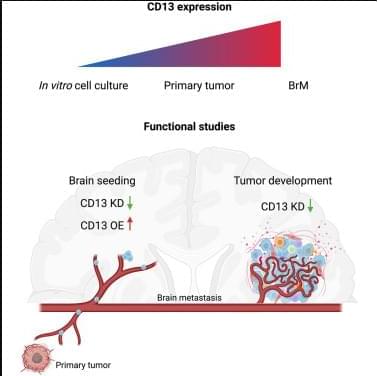
In this study, we identified the aminopeptidase CD13 as a key mediator in a subset of human BrMs originating from breast and lung cancers, with approximately 30% of samples exhibiting cancer cell-specific CD13 expression. Notably, this prevalence aligns with previous reports in breast and lung primary tumors. In BC, CD13 cancer cell expression was documented in 36% of patient samples analyzed, with higher rates in invasive ductal carcinoma,31 while in lung cancer, 35% of patients analyzed were positive for cancer cell CD13 expression.32 These observations suggest that CD13 expression is maintained during metastatic progression to the brain, underscoring its potential as a therapeutic target. Importantly, CD13 expression in primary lung cancer is associated with significantly reduced survival, with a similar trend in BC.31,32 Consistent with these data, we show here that patients with HER2+ BC with CD13high tumors have significantly poorer clinical outcomes. These findings emphasize the importance of stratifying patients by CD13 status to better assess both its prognostic significance and therapeutic potential.

To gain mechanistic insight into CD13 function, we employed murine BrM models from three primary origins (breast, lung, and melanoma) that recapitulate distinct stages of the metastatic cascade. Notably, only the breast-BrM model exhibited robust CD13 expression, suggesting that lung cancer and melanoma may rely on alternative, CD13-independent mechanisms to colonize the brain. CD13 knockdown in breast-BrM cells significantly prolonged survival and reduced metastatic seeding following intracardiac injection. This effect was less pronounced when cancer cells were introduced directly into the brain parenchyma (intracranial injection) or implanted at the primary site (MFP), underscoring CD13’s predominant role during the initial colonization phase of metastasis.

Both gain-and loss-of-function experiments confirmed CD13’s functional importance in metastatic seeding. CD13 has been described as a moonlighting enzyme with diverse cellular functions relevant to regulating metastasis,16,17 including β1 integrin recycling,21 cell migration,21 and activation of the MAPK and PI3K pathways.33 Based on our RNA-seq analysis, CD13 overexpression may further enhance metastatic efficiency through activation of Rho family GTPases and effectors that orchestrate cytoskeletal remodeling, endothelial cell adhesion, and transendothelial migration.34 These features position CD13 as a compelling anti-cancer target; indeed, CD13 inhibition has been explored in several therapeutic development efforts. However, no brain-permeable CD13 inhibitor has yet been approved worldwide for clinical use,16 representing a critical gap in the translational landscape.

Beta-2-Microglobulin Is Bad For Neurogenesis: What’s My Data? (6-Test Analysis)

Join us on Patreon! https://www.patreon.com/MichaelLustgartenPhD

Discount Links/Affiliates:
Blood testing (where I get the majority of my labs): https://www.ultalabtests.com/partners/michaellustgarten.

Blood testing with LifeExtension.com: https://www.anrdoezrs.net/click-101614996-15750394

At-Home Metabolomics: https://www.iollo.com?ref=michael-lustgarten.
Use Code: CONQUERAGING At Checkout.

Clearly Filtered Water Filter: https://get.aspr.app/SHoPY

Epigenetic, Telomere Testing: https://trudiagnostic.com/?irclickid=U-s3Ii2r7xyIU-LSYLyQdQ6…M0&irgwc=1

China’s ‘Ethnic Specific’ Bio-Weapons Target Specific Races Based on DNA

🥔 Ready to give MASA a try? Get 25% off your first order: https://MASAChips.com/ROMAN

☕ Hunter’s Blend Coffee: https://ept.ms/Hunters.

🎬 Primetime: https://youtu.be/smbrx3iuUr0

Episode Resources:

🔵 Chinese 5-Year Plan:

https://ept.ms/3FFc6cq.

/* */