Toggle light / dark theme

Early ancestral bottleneck could’ve spelled the end for modern humans

Humanity came close to extinction 800,000 years ago. Only 1,280 of our ancestors survived.

A recent study published in Science suggests that a catastrophic “ancestral bottleneck” reduced the global population to just 1,280 breeding individuals, wiping out 98.7% of the early human lineage.

This population crash, lasting about 117,000 years, likely resulted from extreme climate shifts, prolonged droughts, and dwindling food sources.

Using a groundbreaking genetic analysis method called FitCoal, researchers analyzed modern human genomes to trace this dramatic decline, potentially explaining a gap in the African and Eurasian fossil record.

Despite the near-extinction, this bottleneck may have played a crucial role in shaping modern humans. Scientists believe it contributed to a key evolutionary event—chromosome fusion—which may have set Homo sapiens apart from earlier hominin species, including Neanderthals and Denisovans. The study raises intriguing questions about how this small population survived, possibly through early fire use and adaptive intelligence. Understanding this ancient crisis helps scientists piece together the story of human evolution and the resilience that allowed our species to thrive against all odds.

Learn more.

What’s The Best Way To Optimize NAD? Jin-Xiong She, PhD

Join us on Patreon! https://www.patreon.com/MichaelLustgartenPhD

Discount Links/Affiliates:
NAD+ Quantification: https://www.jinfiniti.com/intracellular-nad-test/
Use Code: ConquerAging At Checkout.

Blood testing (where I get the majority of my labs): https://www.ultalabtests.com/partners/michaellustgarten.

At-Home Metabolomics: https://www.iollo.com?ref=michael-lustgarten.
Use Code: CONQUERAGING At Checkout.

Epigenetic, Telomere Testing: https://trudiagnostic.com/?irclickid=U-s3Ii2r7xyIU-LSYLyQdQ6…M0&irgwc=1
Use Code: CONQUERAGING

Oral Microbiome: https://www.bristlehealth.com/?ref=michaellustgarten.

Sunita Williams and Butch Wilmore’s Return to Earth Confirmed: Know How and When NASA Astronauts Will Return After 9 Month Extended Stay in Space; Here’s Details

NASA has confirmed that Sunita Williams and Barry Wilmore will return to Earth in late March 2025 after spending over nine months aboard the ISS. Their return is scheduled to take place once the Crew-10 mission successfully arrives at the space station. Crew-10, carrying four new astronauts, will launch on March 12, 2025, at 7:48 PM EDT and undergo a week-long handover process before Williams and Wilmore begin their journey back. The decision to return them aboard a SpaceX Crew Dragon capsule was made due to ongoing technical issues with Boeing’s Starliner. NASA has assured that all necessary preparations are in place to facilitate a safe return. Sunita Williams Health Update: NASA Astronaut’s Mother Bonnie Pandya Dismisses Health Concerns Surrounding Her Daughter, Says ‘Space Is As Safe as Anywhere Else’ (Watch Video).

Williams and Wilmore’s return capsule, the SpaceX Crew Dragon, will follow a carefully planned re-entry trajectory before making a splashdown in designated waters. NASA has shortlisted landing sites in the Atlantic Ocean and the Gulf of Mexico, with the final decision depending on weather and oceanic conditions at the time of descent. SpaceX recovery teams will be stationed near the landing zone, ready to retrieve the capsule and transport the astronauts back to shore. After landing, Williams and Wilmore will undergo a thorough medical assessment before heading to NASA’s facilities for debriefing.

Sunita Williams’ return to Earth marks the end of an unexpectedly extended mission that was originally planned for just ten days but stretched to over nine months. The delay was primarily due to technical issues with Boeing’s Starliner, which faced multiple failures, including propulsion system malfunctions and propellant leaks. NASA, prioritising astronaut safety, decided to postpone their return until a reliable alternative was arranged.

Revolutionary 3D Bioprinter Creates Human Tissue Structures in Seconds

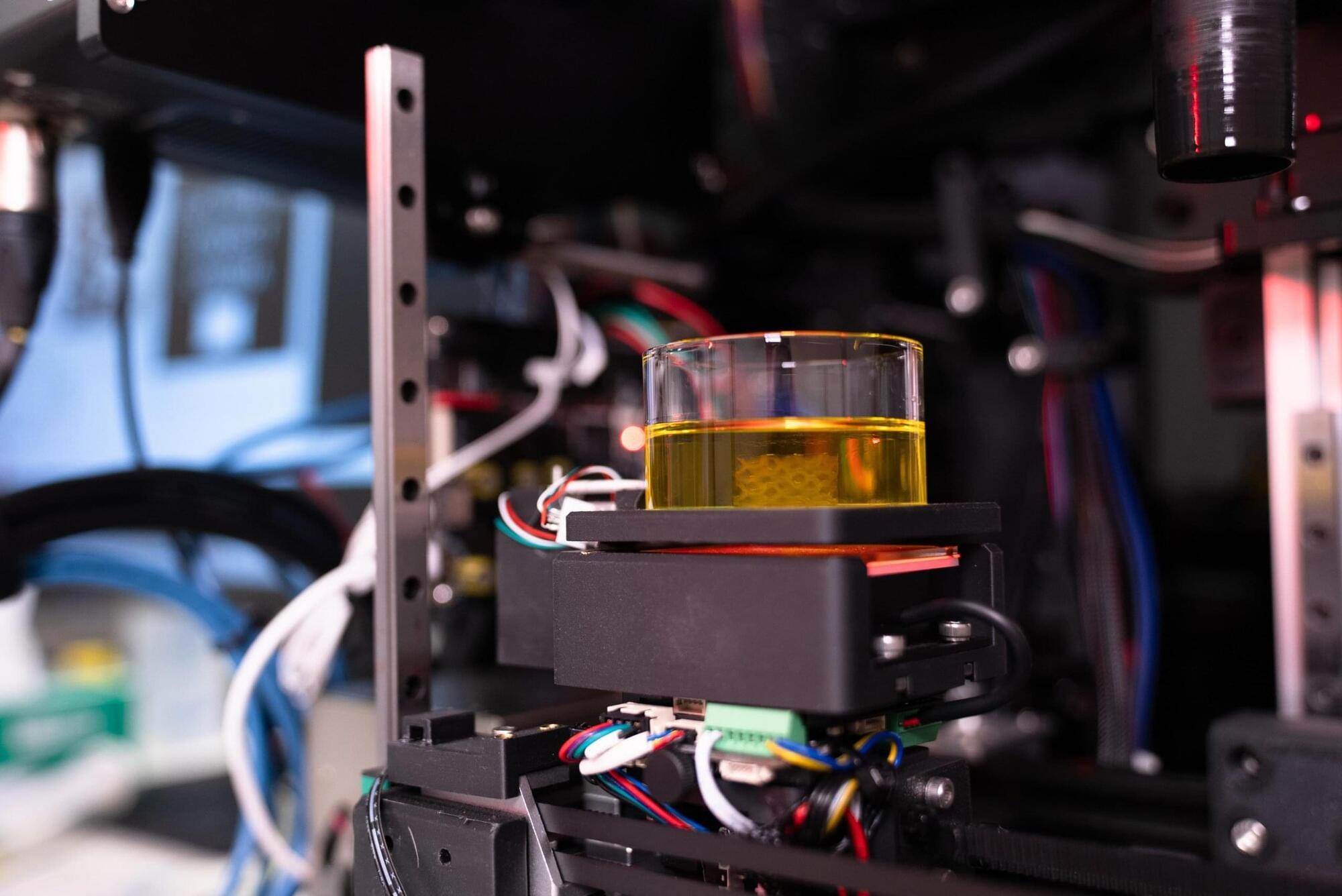
Biomedical engineers at the University of Melbourne have developed a 3D bioprinting system capable of creating structures that closely replicate various human tissues, ranging from soft brain tissue to more rigid materials like cartilage and bone.

This innovative technology provides cancer researchers with a powerful tool for replicating specific organs and tissues, enhancing their ability to predict drug responses and develop new treatments. By offering a more accurate and ethical approach to drug discovery, it also has the potential to reduce reliance on animal testing.

Head of the Collins BioMicrosystems Laboratory at the University of Melbourne, Associate Professor David Collins said: In addition to drastically improving print speed, our approach enables a degree of cell positioning within printed tissues. Incorrect cell positioning is a big reason most 3D bioprinters fail to produce structures that accurately represent human tissue.

Breakthrough Discovery: Scientists Identify Key Protein Linked to Parkinson’s Onset

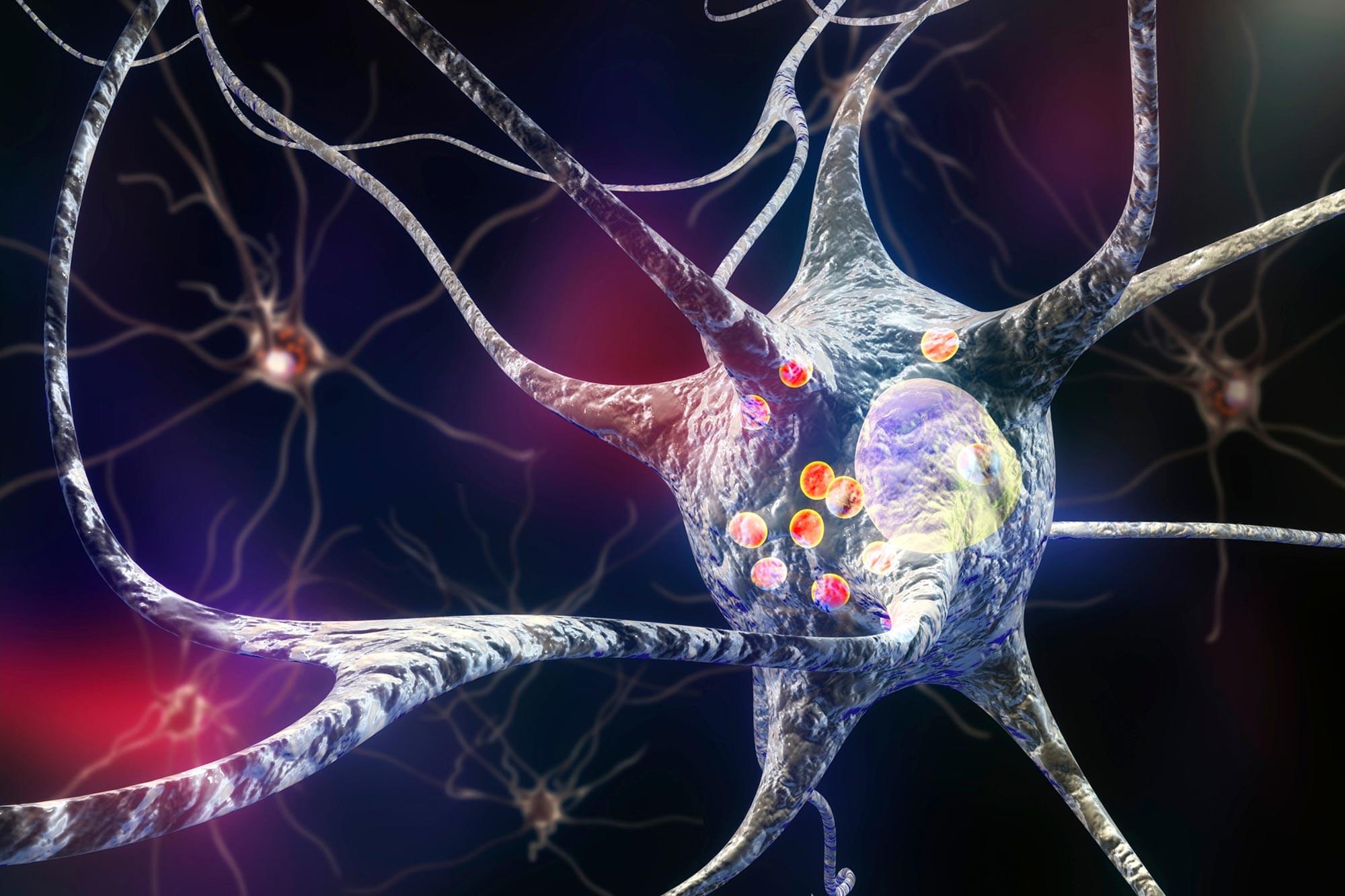
Scientists at the La Jolla Institute for Immunology (LJI) have identified a potential new target for Parkinson’s disease treatment. Their research highlights the role of a specific brain cell protein in triggering the disease and may explain why Parkinson’s is more prevalent in men.

Recent studies from LJI suggest that autoimmunity plays a key role in Parkinson’s onset. Their latest findings, published in The Journal of Clinical Investigation, reveal that the protein PINK1 may label certain brain cells for attack by the immune system, contributing to disease progression.

“This research allows us to better understand the role of the immune system in Parkinson’s disease,” says LJI Professor Alessandro Sette, Dr. Biol. Sci., senior author of the recent study.

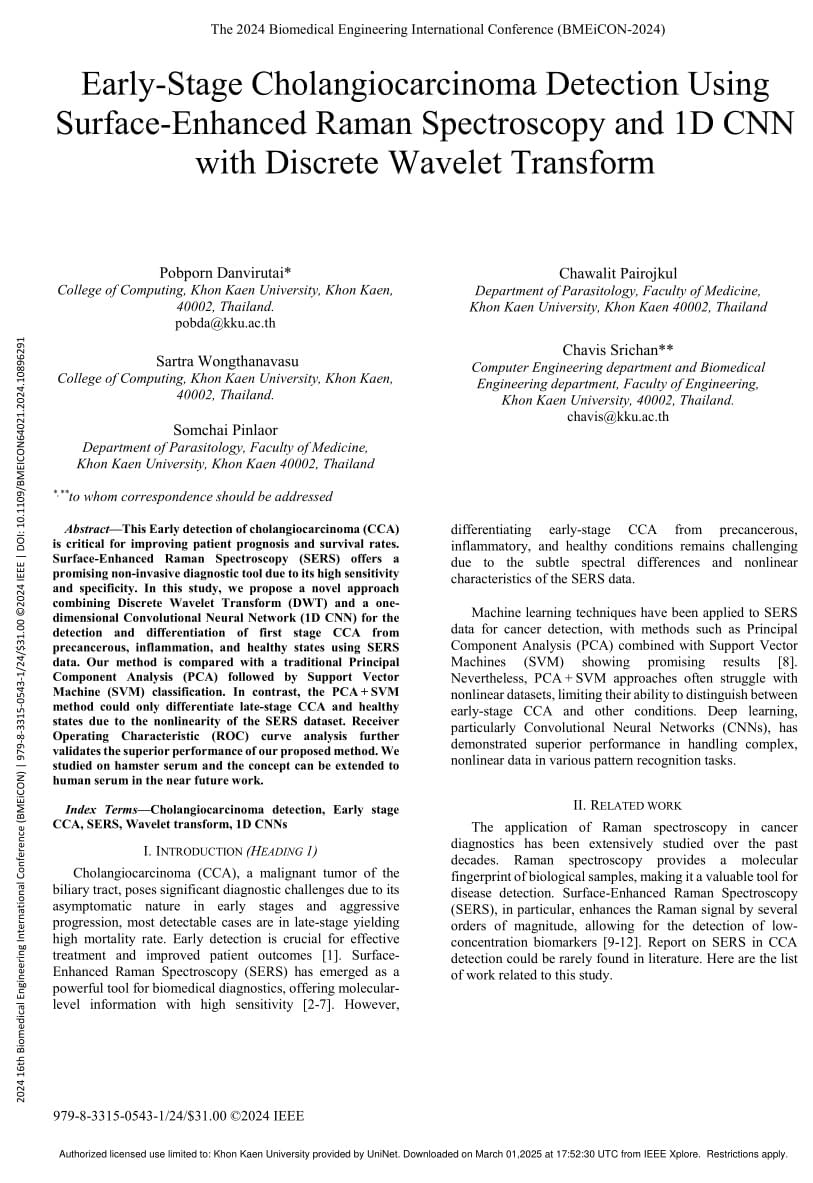
Early-Stage Cholangiocarcinoma Detection Using Surface-Enhanced Raman Spectroscopy and 1D CNN with Discrete Wavelet Transform

Breakthrough in early detection of cholangiocarcinoma using ai-powered spectroscopy.

In a major advancement for cholangiocarcinoma (CCA) detection, researchers have developed a cutting-edge AI-driven diagnostic method that could revolutionize early cancer screening. Utilizing Surface-Enhanced Raman Spectroscopy (SERS), a powerful non-invasive technique, the team introduced a novel approach combining Discrete Wavelet Transform (DWT) with a one-dimensional Convolutional Neural Network (1D CNN) to distinguish early-stage CCA from precancerous, inflammatory, and healthy conditions.

Unlike traditional Principal Component Analysis (PCA) with Support Vector Machine (SVM), which struggles with nonlinear SERS data and only differentiates late-stage CCA, the new AI-enhanced method provides greater accuracy in detecting early-stage cancer, a crucial factor in improving survival rates. Receiver Operating Characteristic (ROC) curve analysis confirmed its superior performance.

The study, conducted on hamster serum, opens the door for future applications in human diagnostics, potentially transforming cancer detection and treatment. This breakthrough underscores the potential of AI and advanced signal processing in enhancing precision medicine and saving lives through early intervention.


This Early detection of cholangiocarcinoma (CCA) is critical for improving patient prognosis and survival rates. Surface-Enhanced Raman Spectroscopy (SERS) offers a promising non-invasive diagnostic tool due to its high sensitivity and specificity. In this study, we propose a novel approach combining Discrete Wavelet Transform (DWT) and a onedimensional Convolutional Neural Network (1D CNN) for the detection and differentiation of first stage CCA from precancerous, inflammation, and healthy states using SERS data. Our method is compared with a traditional Principal Component Analysis (PCA) followed by Support Vector Machine (SVM) classification. In contrast, the PCA + SVM method could only differentiate late-stage CCA and healthy states due to the nonlinearity of the SERS dataset. Receiver Operating Characteristic (ROC) curve analysis further validates the superior performance of our proposed method. We studied on hamster serum and the concept can be extended to human serum in the near future work.

A breakthrough in bioprinting may soon lead to 3D-printed blood vessels and human organs

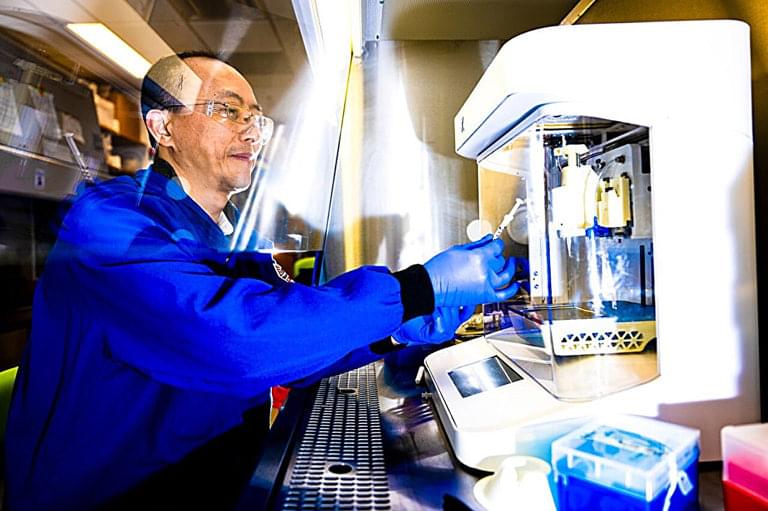
A workshop led by scientists at the Department of Energy’s Oak Ridge National Laboratory sketched a road map toward a longtime goal: development of autonomous, or self-driving, next-generation research laboratories.

Download the report of the “Shaping the Future of Self-Driving Autonomous Laboratories” workshop.

Scientists have dreamed for generations of high-tech laboratories operated via robotics at the push of a button. Recent advancements in artificial intelligence bring those dreams closer to reality than ever before, said Rafael Ferreira da Silva, an ORNL senior research scientist and lead author of the workshop’s report.

Scientists Find Never-Before-Seen Fat Cell Types That May Hold the Key to Fighting Obesity

A groundbreaking international study, led by scientists from Ben-Gurion University of the Negev, has mapped the diverse populations of fat cells across different human fat tissues. Using advanced technology, researchers identified distinct subpopulations of fat cells with more complex functions than previously understood. They also discovered variations in how fat tissues communicate at the cellular level.

Published in Nature Genetics, these findings lay the foundation for future research aimed at advancing personalized medicine for obesity.

The research team, led by Prof. Esti Yeger-Lotem and Prof. Assaf Rudich from the Department of Clinical Biochemistry and Pharmacology at the Faculty of Health Sciences at Ben-Gurion University of the Negev, in collaboration with Prof. Naomi Habib from the Hebrew University of Jerusalem, Profs. Matthias Bluher, Antje Korner and Martin Gericke from the University of Leipzig, Germany, and Prof. Rinki Murphy from the University of Auckland, New Zealand, studied the diversity of fat cells in subcutaneous and intra-abdominal (visceral) fat tissues in humans.

Research Rewrites Striatum’s Role in Action and Movement

Summary: A new study challenges the long-held belief that the striatum is responsible for selecting actions. Researchers found that instead of making decisions, the striatum and motor cortex work together to specify movement details, such as how to reach for an object.

Using a novel “reach-to-pull” system, they recorded neural activity in mice and found that both regions were active during movement execution, not decision-making. These findings could reshape our understanding of motor control and help improve treatments for movement disorders like Parkinson’s and Huntington’s disease.

/* */