Toggle light / dark theme

Calorie Restriction And Fasting Extend Lifespan

Join us on Patreon! https://www.patreon.com/MichaelLustgartenPhD

Discount Links/Affiliates:
Blood testing (where I get the majority of my labs): https://www.ultalabtests.com/partners/michaellustgarten.

At-Home Metabolomics: https://www.iollo.com?ref=michael-lustgarten.
Use Code: CONQUERAGING At Checkout.

Clearly Filtered Water Filter: https://get.aspr.app/SHoPY

Epigenetic, Telomere Testing: https://trudiagnostic.com/?irclickid=U-s3Ii2r7xyIU-LSYLyQdQ6…M0&irgwc=1
Use Code: CONQUERAGING

NAD+ Quantification: https://www.jinfiniti.com/intracellular-nad-test/

5D memory crystal can store the entire human genome for billions of years

A groundbreaking data storage technology could preserve an entire human genome in a tiny 5D memory crystal. Developed by researchers at the University of Southampton, this innovation has the potential to last billions of years, offering an unprecedented solution for long-term data preservation.

Beyond human genetics, the technology could safeguard the genomes of endangered species. If future science enables species revival, these stored genetic blueprints might help restore lost biodiversity. The crystals could also serve as an indestructible archive of human knowledge.

Unlike conventional storage methods —hard drives, magnetic tapes, or optical discs—the 5D crystal doesn’t degrade over time. Standard formats fail within decades, but this breakthrough resists extreme conditions without data loss. It could endure for billions of years, even in the harshest environments.

Your Heart’s Secret: It Has Its Own Nervous System

Summary: New research reveals the heart has its own complex nervous system, or “mini-brain,” capable of regulating the heartbeat independently of the brain. Conducted on zebrafish, the study identified specialized neurons within the heart, including some with pacemaker properties, challenging traditional views of heartbeat control.

This discovery provides new insights into heart diseases and potential treatments for conditions like arrhythmias. Researchers aim to explore how this cardiac nervous system interacts with the brain during stress, exercise, or disease to identify novel therapeutic targets.

The Seeds of Schizophrenia May Be Planted in The Earliest Moments of Life

There’s a window of time in our lives we’ve all passed through yet still know so little about: early gestation. Researchers have found a pair of genetic deletions associated with schizophrenia that likely occur in that formative period.

The discovery comes from a team of researchers led by Harvard Medical School clinician-scientist Eduardo Maury, who combed through genetic data from blood samples of nearly 25,000 people with or without schizophrenia.

While the two genetic alterations need further validation, the findings strengthen an emerging idea that the seeds of schizophrenia aren’t always inherited, yet still may be acquired long before someone meets the world.

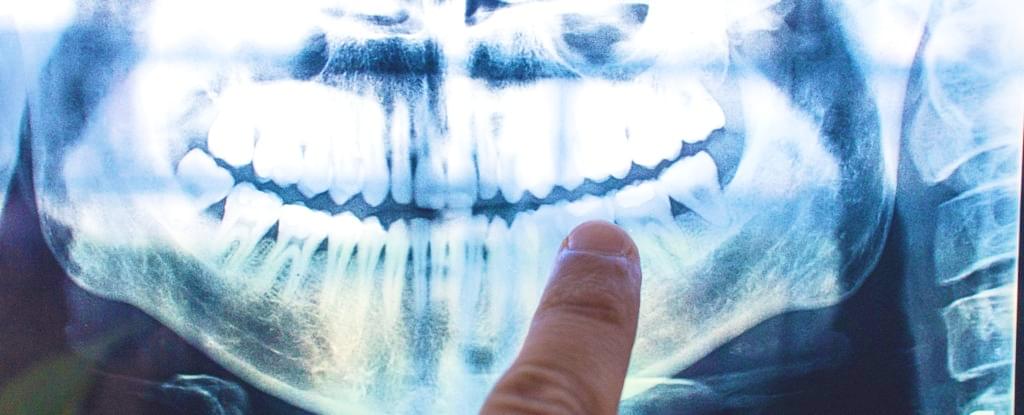
The Cause of Alzheimer’s Might Be Coming From Inside Your Mouth

In recent years, a growing number of scientific studies have backed an alarming hypothesis: Alzheimer’s disease isn’t just a disease, it’s an infection.

While the exact mechanisms of this infection are something researchers are still trying to isolate, numerous studies suggest the deadly spread of Alzheimer’s goes way beyond what we used to think.

One such study, published in 2019, suggested what could be one of the most definitive leads yet for a bacterial culprit behind Alzheimer’s, and it comes from a somewhat unexpected quarter: gum disease.

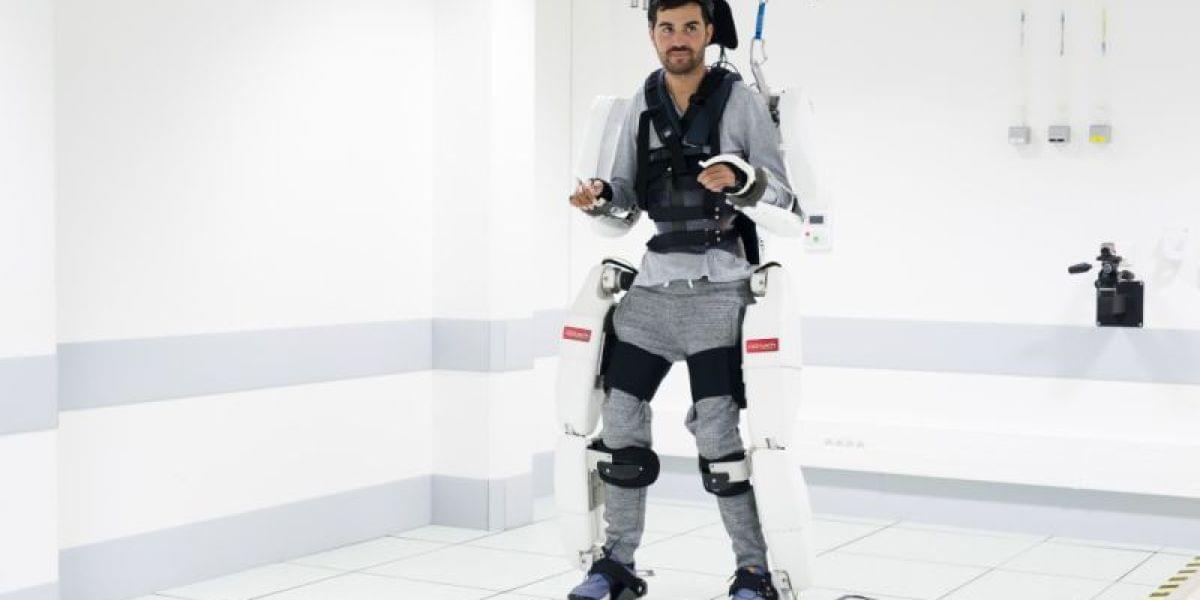
A brain-controlled exoskeleton has let a paralyzed man walk in the lab

The news: A paralyzed man has walked again thanks to a brain-controlled exoskeleton suit. Within the safety of a lab setting, he was also able to control the suit’s arms and hands, using two sensors on his brain. The patient was a man from Lyon named Thibault, who fell 40 feet (12 meters) from a balcony four years ago, leaving him paralyzed from the shoulders down.

How it worked: Thibault had surgery to place two implants, each containing 64 electrodes, on the parts of the brain that control movement. Software then translated the brain waves read by these implants into instructions for movement. The development of the exoskeleton, by Clinatec and the University of Grenoble, is described in a paper in The Lancet this week.

Overview: Mind uploading is my favorite!

The Carboncopies Foundation is starting The Brain Emulation Challenge.


With the availability of high throughput electron microscopy (EM), expansion microscopy (ExM), Calcium and voltage imaging, co-registered combinations of these techniques and further advancements, high resolution data sets that span multiple brain regions or entire small animal brains such as the fruit-fly Drosophila melanogaster may now offer inroads to expansive neuronal circuit analysis. Results of such analysis represent a paradigm change in the conduct of neuroscience.

So far, almost all investigations in neuroscience have relied on correlational studies, in which a modicum of insight gleaned from observational data leads to the formulation of mechanistic hypotheses, corresponding computational modeling, and predictions made using those models, so that experimental testing of the predictions offers support or modification of hypotheses. These are indirect methods for the study of a black box system of highly complex internal structure, methods that have received published critique as being unlikely to lead to a full understanding of brain function (Jonas and Kording, 2017).

Large scale, high resolution reconstruction of brain circuitry may instead lead to mechanistic explanations and predictions of cognitive function with meaningful descriptions of representations and their transformation along the full trajectory of stages in neural processing. Insights that come from circuit reconstructions of this kind, a reverse engineering of cognitive processes, will lead to valuable advances in neuroprosthetic medicine, understanding of the causes and effects of neurodegenerative disease, possible implementations of similar processes in artificial intelligence, and in-silico emulations of brain function, known as whole-brain emulation (WBE).


New Gene Interaction Discovery Could Help Improve Alopecia Treatment

Alopecia refers to hair loss and can affect the scalp, eyebrows, eyelashes, and other areas of the body. There are different types of alopecia including androgenetic alopecia, alopecia areata, anagen effluvium, and frontal fibrosing alopecia (FFA). Each form of disease refers to where and how hair is lost. This type of categorization helps physicians best diagnose and treat patients. Frontal fibrosing alopecia was first recognized in the early 1990s and still puzzles scientists and physicians. It is characterized by progressive loss with hair follicles becoming inflamed and destroyed. Eyebrow thinning is also a common symptom along with skin redness and scaling, and wrinkling.

Unfortunately, the cause of FFA is unknown and is a type of scarring hair loss, which means that the hair cannot grow back. This particularly distressing condition is thought to be the result of an autoimmune disorder. Many scientists believe FFA is caused by hormonal imbalances or genetic predispositions. Scientists are currently trying to find ways to cure or permanently treat FFA. Treatment options to date include topical corticosteroids, oral medication, light therapy, and hair transplantation. However, all of these treatments work to relieve symptoms, delay hair loss, or replace hair loss. Since FFA is a chronic condition, symptoms can progress over time and with early intervention, patients can significantly delay hair loss. The lack of sufficient treatment is still a concern, and many researchers are investigating how to overcome this disease and avoid hair loss.

A recent paper in JAMA Dermatology, by Dr. Christos Tziotzios and others, reported a change in two areas of the human genome that can influence alopecia risk. This is a major advance in the field of alopecia and can be used to enhance treatment. Tziotzios is a Consultant Dermatologist and Senior Lecturer at St. John’s Institute of Dermatology in the United Kingdom (UK). He specializes in general dermatology and hair and scalp disorders including FFA in both biological males and females.

Gene therapy experiment treats rare childhood blindness

Science and Technology: Gene Therapy apparently Cure Blindness in Children.

S eye, very early in life, to treat a severe form of the condition.‘.


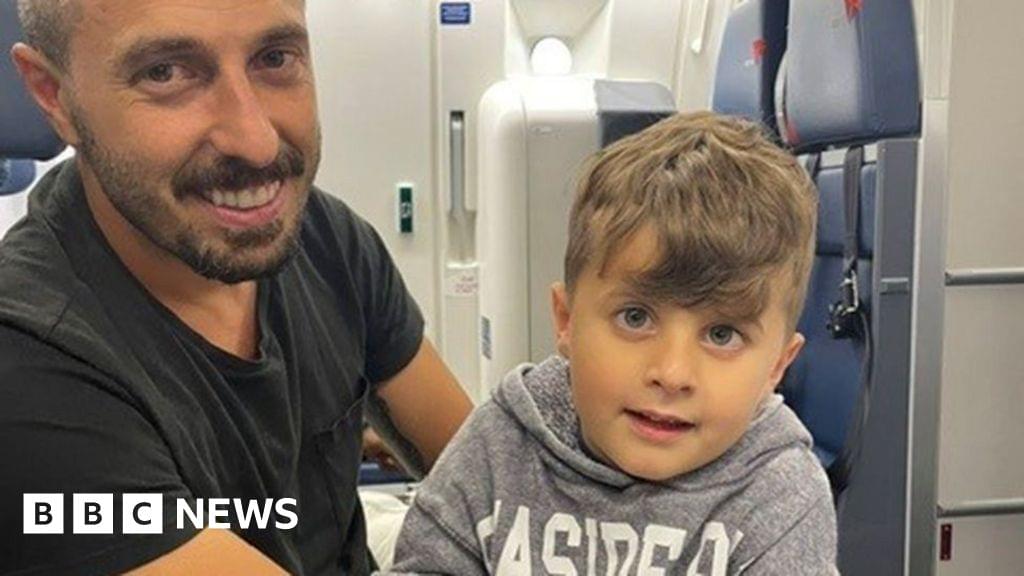
An experimental trial of gene therapy has helped four toddlers — born with one of the most severe forms of childhood blindness — gain “life-changing improvements” to their sight, according to doctors at Moorfields Eye Hospital in London.

The rare genetic condition means the babies’ vision deteriorated very rapidly from birth.

Before the therapy, they were registered legally blind and only just able to distinguish between dark and light. After the infusion, all parents reported improvements — with some of their young children now able to begin to draw and write.

/* */