Toggle light / dark theme

The Z-Bell℠ Test: A Breakthrough in Eye-Ear Testing

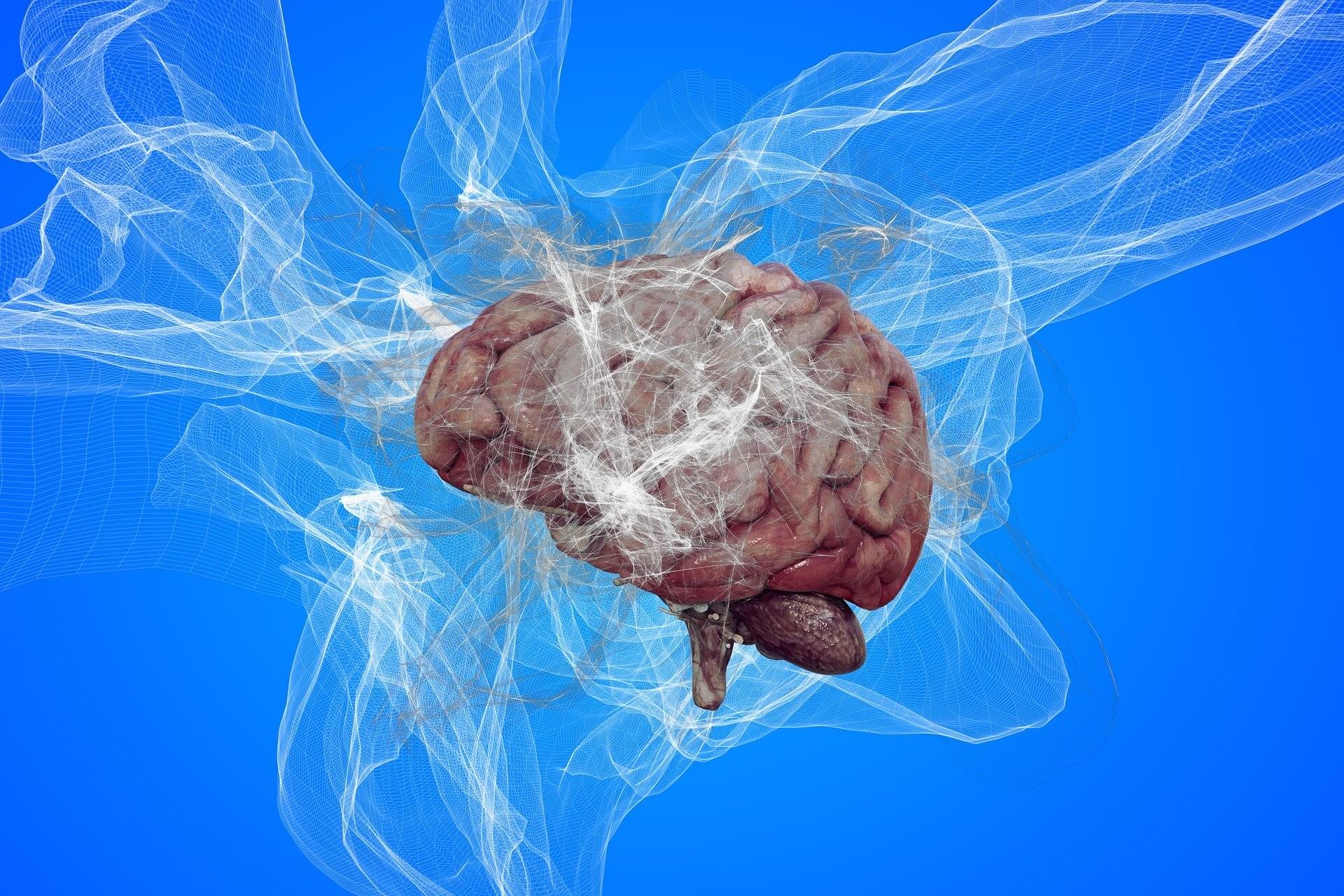
🧠 Neuromodulation through the eyes 👀

Neuroplasticity, also known as neural plasticity or brain plasticity, is a process that involves adaptive structural and functional changes to the brain.

Founded and directed by Deborah Zelinsky, O.D., F.N.O.R.A., F.C.O.V.D.


Just as with eye-hand coordination, integration of vision and sound – eye-ear connection – must be developed. If the two senses are out of sync, a person can experience difficulties in academics, social situations and activities such as sports.

Balance between vision and hearing is necessary for a person to learn letter sounds, for example, while applying those sounds to the words they see on a page. In social situations, a person can better understand what another is saying – and meaning — by watching body language and facial expression. Autistic patients cannot discern the nuances of a joke because they simply listen. They do not connect sound and vision, because the environment around them is too confusing.

A student whose eyesight is more sensitive than his or her hearing may be easily distracted by activities and moving objects in the environment and unable to concentrate on what the teacher is saying. People whose peripheral vision is not sufficiently “tuned in” may have to turn their head before finding what is causing a certain sound.

Vision loss: Is gene therapy the answer?

Diseases that affect the retina, the light-sensitive layer at the back of the eye, are a significant cause of visual impairment and blindness. Gene therapy holds promise for treating some of these conditions, and current research advances may soon shift the therapeutic landscape for eye health. However, many obstacles remain in place, as this Special Feature discusses.

Gene therapy uses genetic material, either DNA or RNA, to treat or prevent the progression of a disease. It often involves the introduction of genetic material into a person’s cells to replace a defective or missing gene.

Although early attempts at gene therapy have been effective in achieving the expression of the therapeutic gene in the target tissue, they have also been accompanied by severe adverse effects.

Purr-suing feline longevity with data-driven research

Last week we reported that The Cat Health Company had closed its pre-seed round and is now moving towards identifying and developing new therapeutics for age-related diseases in cats. As the pet longevity field continues to gather momentum, The Cat Health Company aims to join companies like Loyal and Arterra at the forefront of this movement. Founded by Alex Bacita and Alex Voda, the Bucharest-based company is not only focused on improving the lifespan of our feline friends but also on enhancing their overall quality of life by targeting the underlying mechanisms of aging.

Longevity. Technology: Pet longevity is becoming a growing area of interest for both researchers and consumers; as owners increasingly seek solutions to extend the healthspan of their pets, demand for scientifically backed innovations has grown, and it is a trend that mirrors the rising popularity of similar human-focused longevity research, signaling a shift in how we approach aging across species.

We sat down with Alex Voda, cofounder of The Cat Health Company, to discuss the future of feline longevity and how TCHC plans to turn cutting-edge research into practical treatments for the cats we cherish.

Scientists Engineer Yellow-seeded Camelina with High Oil Output

UPTON, N.Y. — Efforts to achieve net-zero carbon emissions from transportation fuels are increasing demand for oil produced by nonfood crops. These plants use sunlight to power the conversion of atmospheric carbon dioxide into oil, which accumulates in seeds. Crop breeders interested in selecting plants that produce a lot of oil look for yellow seeds. In oilseed crops like canola, yellow-seeded varieties generally produce more oil than their brown-seeded counterparts. The reason: The protein responsible for brown seed color — which yellow-seeded plants lack — also plays a key role in oil production.

Now, plant biochemists at the U.S. Department of Energy’s (DOE) Brookhaven National Laboratory — who are interested in increasing plant oil synthesis for the sustainable production of biofuels and other bioproducts — have harnessed this knowledge to create a new high-yielding oilseed crop variety. In a paper just published in The Plant Biotechnology Journal, they describe how they used tools of modern genetics to produce a yellow-seeded variety of Camelina sativa, a close relative of canola, that accumulates 21.4% more oil than ordinary camelina.

“If breeders can get a few percent increase in oil production, they regard it as significant, because even small increases in yield can lead to large increases in oil production when you’re planting millions of acres,” said Brookhaven Lab biochemist John Shanklin, chair of the Lab’s Biology Department and leader of its plant oil research program. “Our nearly 22% increase was unexpected and could potentially result in a dramatic increase in production,” he said.

AI Innovations in Diagnosing Myopic Maculopathy

What methods can be developed to help identify symptoms of myopia and its more serious version, myopic maculopathy? This is what a recent study published in JAMA Ophthalmology hopes to address as an international team of researchers investigated how artificial intelligence (AI) algorithms can be used to identify early signs of myopic maculopathy, as left untreated it can lead to irreversible damage to a person’s eyes. This study holds the potential to help researchers develop more effective options for identifying this worldwide disease, as it is estimated that approximately 50 percent of the global population will suffer from myopia by 2050.

“AI is ushering in a revolution that leverages global knowledge to improves diagnosis accuracy, especially in its earliest stage of the disease,” said Dr. Yalin Wang, who is a professor in the School of Computing and Augmented Intelligence at Arizona State University and a co-author on the study. “These advancements will reduce medical costs and improve the quality of life for entire societies.”

For the study, the researchers used a novel AI algorithm known as NN-MobileNet to scan retinal images and classify the severity of myopic maculopathy, which currently has five levels of severity in the medical field. The team then used deep neural networks to determine what’s known as the spherical equivalent, which is how eye doctors prescribe glasses and contacts to their patients. Combining these two methods enabled researchers to create a new AI algorithm capable of identifying early signs of myopic maculopathy.

Synchron Brain Implant Achieves New Milestone in Controlling Amazon, Apple Technology

With this success, Synchon is looking to take its experiments to the next level by adding more participants in a larger study. CEO Tom Oxley claims that their future study would focus more on ‘gathering brain data to improve the BCI.

Are Brain-Computer Interfaces the Future of Technology?

Different companies have already begun their developments and clinical trials of their brain-computer interfaces (BCIs) which need to be implanted on human test subjects, centering mostly on paraplegic patients. One of the most famous companies behind this is Elon Musk’s Neuralink, and their first patient, Noland Arbaugh, testified how the implant can help in controlling technology, and in his case, gaming.

A breakthrough by UChicago scientists enables greener microfabrication

Imagine being able to create incredibly tiny structures with the same ease and sustainability as printing on paper.

This is the frontier of microfabrication—the process of making microscopic structures that are crucial for the operation of everything from computer chips to medical devices.


New, more sustainable process uses water instead of harmful chemicals.

Denis Noble — Why The Last 80 Years of Biology was Wrong

We’re joined by Dr. Denis Noble, Professor Emeritus of Cardiovascular Physiology at the University of Oxford, and the father of ‘systems biology’. He is known for his groundbreaking creation of the first mathematical model of the heart’s electrical activity in the 1960s which radically transformed our understanding of the heart.

Dr. Noble’s contributions have revolutionized our understanding of cardiac function and the broader field of biology. His work continues to challenge long-standing biological concepts, including gene-centric views like Neo-Darwinism.

In this episode, Dr. Noble discusses his critiques of fundamental biological theories that have shaped science for over 80 years, such as the gene self-replication model and the Weissmann barrier. He advocates for a more holistic, systems-based approach to biology, where genes, cells, and their environments interact in complex networks rather than a one-way deterministic process.

We dive deep into Dr. Noble’s argument that biology needs to move beyond reductionist views, emphasizing that life is more than just the sum of its genetic code. He explains how AI struggles to replicate even simple biological systems, and how biology’s complexity suggests that life’s logic lies not in DNA alone but in the entire organism.

The conversation covers his thoughts on the flaws of Neo-Darwinism, the influence of environmental factors on evolution, and the future of biology as a field that recognizes the interaction between nature and nurture. We also explore the implications of his work for health and longevity, and how common perspectives on genetics might need rethinking.

All the topics we covered in the episode:

/* */