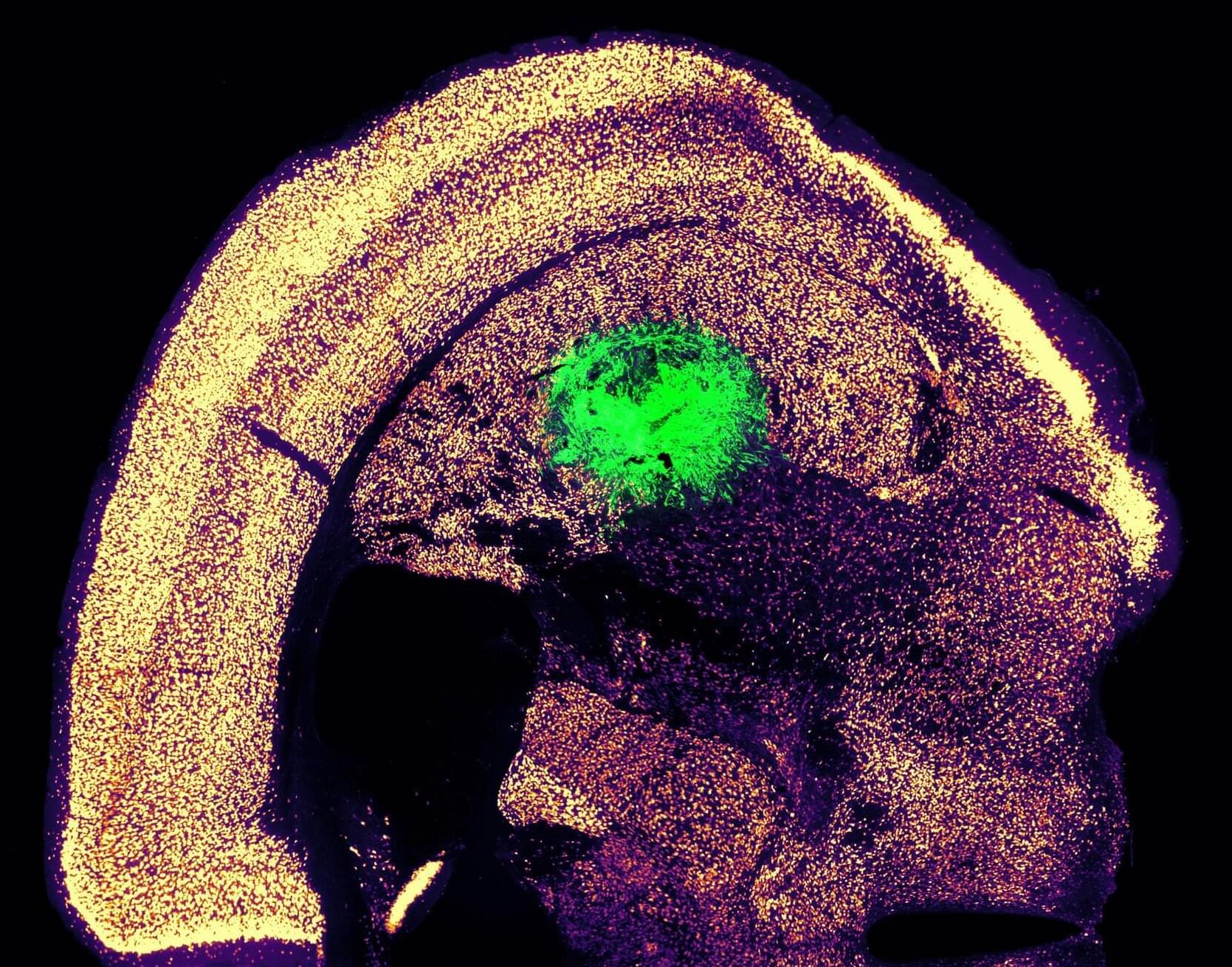
Converting one type of cell to another — for example, a skin cell to a neuron — can be done through a process that requires the skin cell to be induced into a “pluripotent” stem cell, then differentiated into a neuron. Researchers at MIT have now devised a simplified process that bypasses the stem cell stage, converting a skin cell directly into a neuron.
MIT researchers devised a process to convert a skin cell directly into a neuron, eliminating the need to generate induced pluripotent stem cells. Such neurons could be used to treat spinal cord injuries or diseases such as ALS.
Awesome that Colossal is doing so well — and this is from before they announced their wooly mice accomplishment!
Colossal Biosciences, the company that’s famously on a mission to bring back the woolly mammoth and two other extinct species, has raised a $200 million Series C at a $10.2 billion valuation from TWG Global, the investment company of Guggenheim Partners co-founder Mark Walter and the billionaire Thomas Tull. The funding comes two years after the company closed its previous round at a reported valuation of $1.5 billion.
Why did investors pour so much capital at an eye-popping valuation for a company that has yet to generate any revenue and whose flagship projects, resurrecting an extinct mammoth and Tasmanian tiger, are not expected to be completed until 2028?
“The investor base has been very impressed with the speed at which we’ve created new technologies,” Ben Lamm, Colossal Biosciences’ co-founder and CEO, told TechCrunch.
Dialysis is a medical treatment for individuals with kidney failure. This JAMA Patient Page describes dialysis options for people with kidney failure and the potential complications of dialysis.
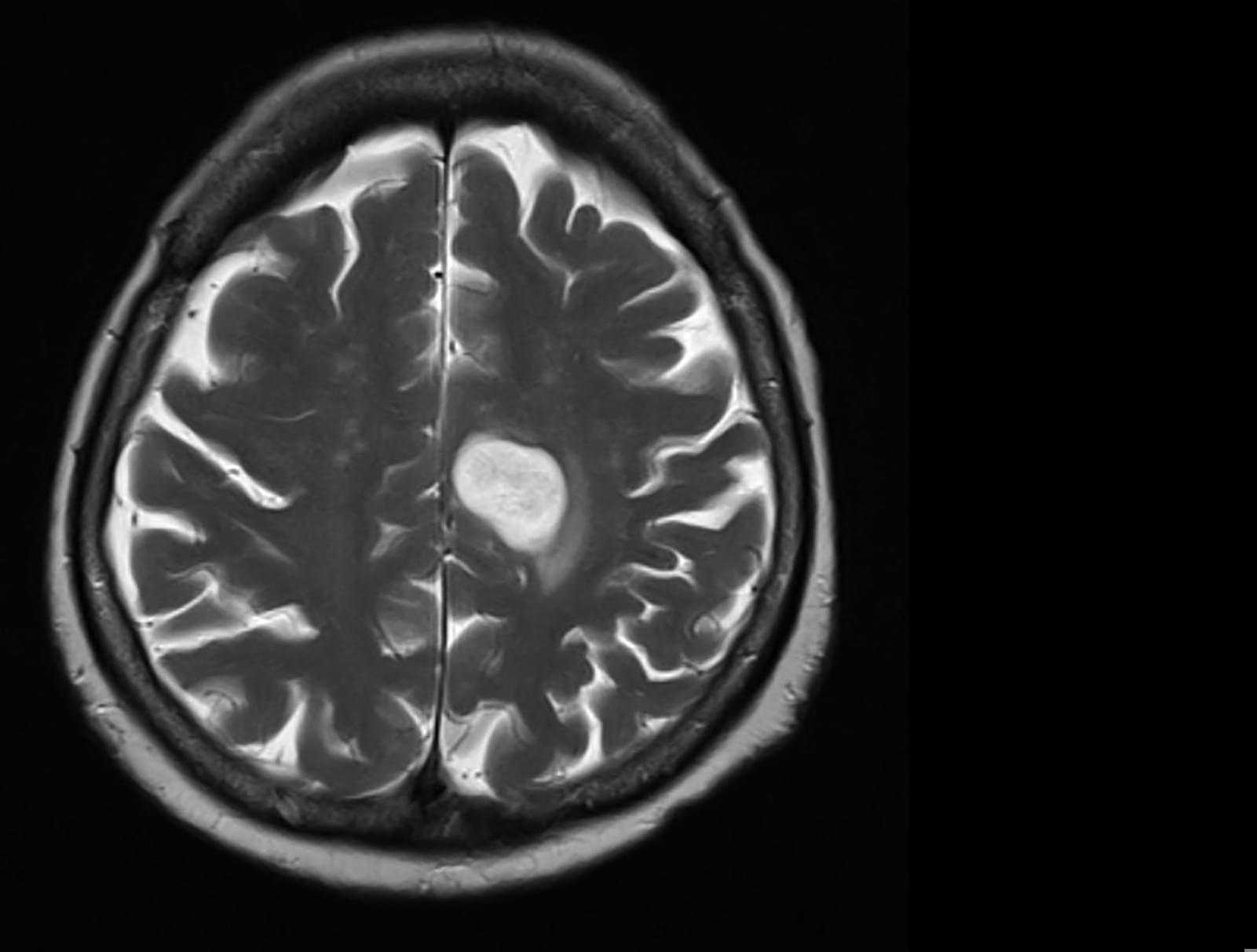
Firefighters show higher rates of glioma-linked SBS42 mutational signatures associated with haloalkane exposure, suggesting occupational risk. The study highlights a clear link between firefighting, chemical exposure, and brain cancer mutations.
DNA holds the key to understanding life itself… From genetics and the human genome to gene editing, it shapes our health, evolution, and future… Discover how CRISPR, forensic science, and genetic engineering are transforming medicine… Explore the mysteries of ancient DNA, the role of the microbiome, and the promise of gene therapy… Personalized medicine is revolutionizing healthcare, allowing treatments tailored to our genetic code… Learn how hereditary diseases are being decoded and cured through biotechnology and DNA sequencing… The future of medicine depends on genetic research, but genetic ethics raise profound questions… The genome project has paved the way for DNA fingerprinting, cloning, and synthetic biology… With genetic modification, we are reshaping evolution itself… Will genetic testing lead to designer babies or eliminate genetic disorders? As gene therapy advancements push the limits of precision medicine, are we ready for these medical breakthroughs and DNA discoveries?
Sources. Watson, J. D., & Crick, F. H. C. (1953). Nature, 171(4356), 737–738. Collins, F. S., & McKusick, V. A. (2001). Science, 291(5507), 1215–1220. Jinek, M., Chylinski, K., Fonfara, I., Hauer, M., Doudna, J. A., & Charpentier, E. (2012). Science, 337(6096), 816–821. Pääbo, S. (2014). Annual Review of Genetics, 38, 645–679. Lander, E. S., Linton, L. M., Birren, B., et al. (2001). Nature, 409(6822), 860–921.
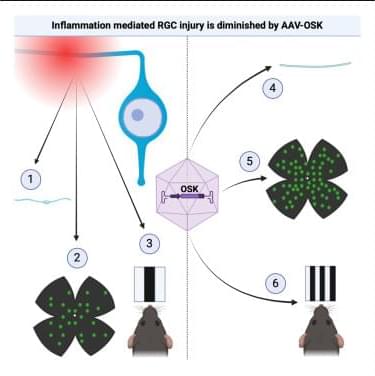
Reviewing a Canadian study which uses cellular rejuvenation to protect retinal neurons in a mouse model of multiple sclerosis, preserving the vision of the mice.
Study reviewed:
In this manuscript, Drake et al. describe an aging-like transcriptional signature in retinal ganglion cells during experimental autoimmune encephalomyelitis (EAE) like that of cortical neurons in patients with multiple sclerosis. Partial reprogramming with AAV2-Oct4-Sox2-Kl4 to rejuvenate the transcriptome results in improved RGC survival and visual acuity during EAE.
Biotech incubator Flagship Pioneering has uncorked its latest company. Lila Sciences is looking to use $200 million in seed funding to develop new advanced artificial intelligence that can power fully autonomous research labs, according to a March 10 press release.
In addition to Flagship, the financing comes from General Catalyst, March Capital, the ARK Venture Fund, Altitude Life Science Ventures, Blue Horizon Advisors, the State of Michigan Retirement System, Modi Ventures and a wholly owned subsidiary of the Abu Dhabi Investment Authority, according to the release.
Scientists have made a potentially “life-changing” discovery that could pave the way for new drugs to treat Parkinson’s disease.
Experts have known for several decades that the PINK1 protein is directly linked to Parkinson’s disease – the fastest growing neurodegenerative condition in the world.
Until now, no one has seen what human PINK1 looks like, how PINK1 attaches to the surface of damaged mitochondria inside of cells, or how it is activated.
A hospital that wants to use a cloud computing service to perform artificial intelligence data analysis on sensitive patient records needs a guarantee those data will remain private during computation. Homomorphic encryption is a special type of security scheme that can provide this assurance.
The technique encrypts data in a way that anyone can perform computations without decrypting the data, preventing others from learning anything about underlying patient records. However, there are only a few ways to achieve homomorphic encryption, and they are so computationally intensive that it is often infeasible to deploy them in the real world.
MIT researchers have developed a new theoretical approach to building homomorphic encryption schemes that is simple and relies on computationally lightweight cryptographic tools. Their technique combines two tools so they become more powerful than either would be on its own. The researchers leverage this to construct a “somewhat homomorphic” encryption scheme—that is, it enables users to perform a limited number of operations on encrypted data without decrypting it, as opposed to fully homomorphic encryption that can allow more complex computations.