Toggle light / dark theme

Adipose tissue retains an epigenetic memory of obesity after weight loss

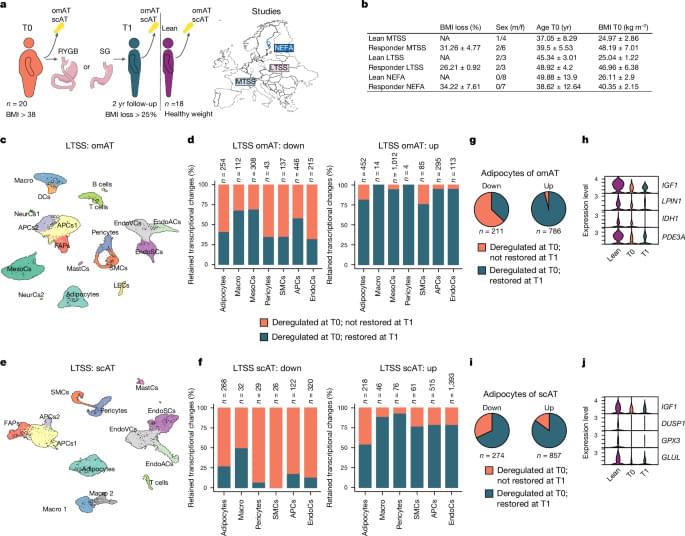
We termed enhancers that gained (and maintained) H3K4me1 in obesity and WL ‘new enhancers’. Most of these ‘new enhancers’ were also active (that is, marked by H3K27ac) during obesity and/or WL (Fig. 4D). We then annotated the enhancers to their closest gene and performed a GSEA. In agreement with the promoter GSEA above, we found that the ‘new active enhancers’ were related to inflammatory signalling, lysosome activity and extracellular matrix remodelling (Fig. 4e and Extended Data Fig. 9i), indicating a persistent shift of adipocytes towards a more inflammatory and less adipogenic identity. Corroborating these results, Roh et al. had analysed H3K27ac in adipocytes of obese mice and reported impaired identity maintenance during obesity25.

To combine our findings regarding retained translational changes and epigenetic memory, we investigated whether epigenetic mechanisms, such as differentially marked promoters or enhancers, could explain the persistent translational obesity-associated changes after WL. Notably, 57–62% of downregulated and 68–75% of upregulated persistent translational DEGs after WL could be accounted for by one or more of the analysed epigenetic modalities (Fig. 4f). Overall, these results strongly suggest the presence of stable cellular, epigenetic and transcriptional memory in mouse adipocytes that persists after WL.
Study traces Ebola’s route to the skin surface

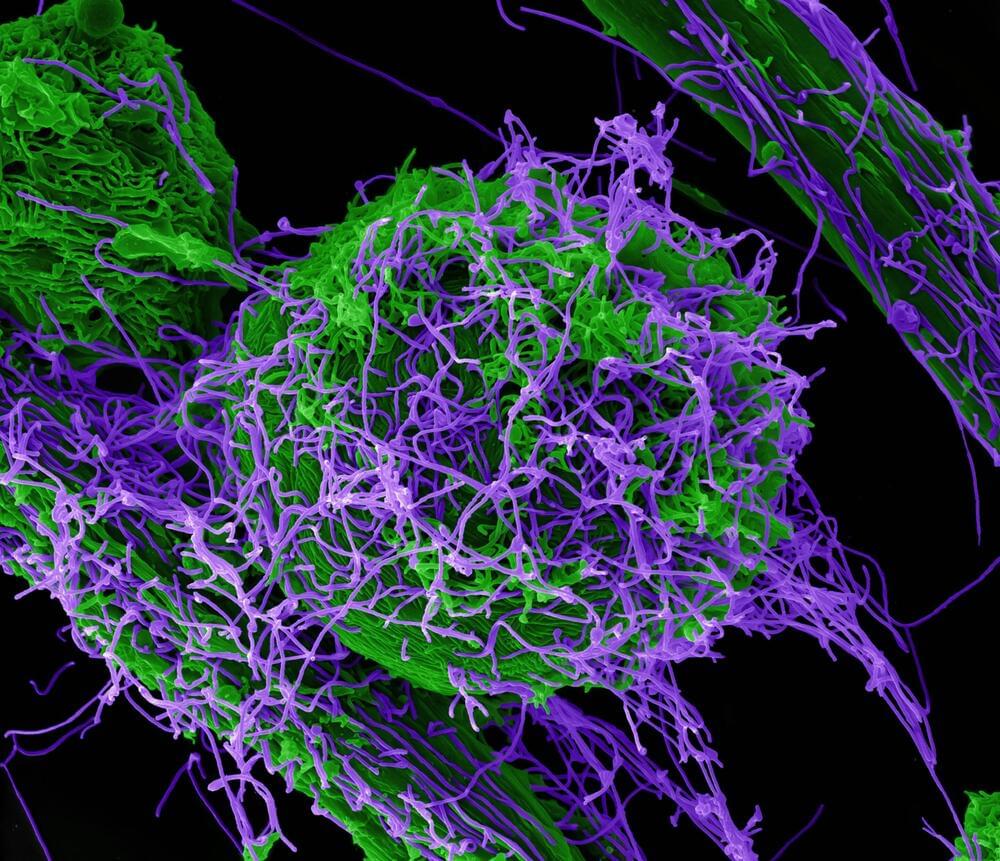
Ebola is a deadly hemorrhagic disease caused by a virus that is endemic in parts of East-Central and West Africa. Most people are aware that a primary route for person-to-person transmission is through contact with bodily fluids from an infected person. But more recent outbreaks, including the 2013–2016 Ebola epidemic in West Africa, demonstrated that infectious Ebola virus (EBOV) is also found on the skin’s surface of those who have succumbed to infection or at late times during infection.

Although evidence suggests that EBOV can be passed on from skin contact with a person in the later stages of the disease, very little is known about how the virus makes its way out of the body and onto the skin’s surface.

Researchers at University of Iowa Health Care and colleagues at Texas Biomedical Research Institute and Boston University have traced a cellular route the virus uses to traverse the inner and outer layers of skin and emerge onto the skin’s surface.

Towards Tissue Regeneration: Scientists Engineer Self —Organizing Cells

Researchers have developed a method to direct stem cells to form specific structures. By triggering the expression of specific genes in mouse embryonic stem cells, synthetic organizer cells were created, which can assemble in specific ways and carry out various phsyiological functions. This work is an important step on the road to eventually using synthetic cells to repair damaged tissues or regenerate organs. The research has been reported in Cell.

The researchers created synthetic organizer cells that could generate a structure like a mouse body, from head to tail, that underwent processes that were similar to those in mouse embryonic development. Another type of synthetic organizer cell was used to produce a structure that was similar to a heart, and featured a central chamber. This synthetic, heart-like structure also had a network of blood vessels and beat regularly.

Can We Stop Brain Aging? Scientists Uncover Mitochondrial Key

New research identifies E-TCmito as a key link between neuronal activity and mitochondrial function, highlighting its potential to address cognitive decline in aging and diseases like Alzheimer’s.

New research in mice has identified a critical mechanism that connects neuronal activity with mitochondrial function, offering insight into potential strategies to address age-related cognitive decline. Mitochondria, essential for meeting the energy needs of active neurons, generate adenosine triphosphate (ATP) primarily through oxidative phosphorylation (OXPHOS).

As mammals age, the efficiency of mitochondrial metabolism in the brain declines, significantly impacting neuronal and network function. The disruption of the OXPHOS pathway contributes to oxidative stress and mitochondrial dysfunction, exacerbating these challenges.

Donald Cram, Nobel Laureate and UCLA Chemist, Dies at 82

Donald J. Cram, a Nobel Prize-winning chemist who taught andconducted research at UCLA for more than 50 years and is remembered bythousands of undergraduates for singing and playing guitar in class, died ofcancer June 17 at his home in Palm Desert. He was 82.

A renowned scientist who was as comfortable riding the waveswith friends in the San Onofre Surfing Club as he was in his lab at UCLAconstructing complex molecular models, Cram won the Nobel Prize in 1987 and theNational Medal of Science in 1993 for his work in host-guest chemistry, a fieldhe helped to create. In 1998, he wasranked among the 75 most important chemists of the past 75 years byChemical and Engineering News.

“DonaldCram stands alone in the incredible variety, beauty and depth of hisaccomplishments,” read the citation for Cram’s National Medal of Science. “His investigations have helped give thisscience its form and sophistication. Hetruly brought art to science by making his science an art.”

Modified Nanoparticles Cross the Blood–Brain Barrier To Target Neurons

Penn Engineers have modified lipid nanoparticles (LNPs) — the revolutionary technology behind the COVID-19 mRNA vaccines — to not only cross the blood-brain barrier (BBB) but also to target specific types of cells, including neurons. This breakthrough marks a significant step toward potential next-generation treatments for neurological diseases like Alzheimer’s and Parkinson’s.

In a new paper in Nano Letters, the researchers demonstrate how peptides — short strings of amino acids — can serve as precise targeting molecules, enabling LNPs to deliver mRNA specifically to the endothelial cells that line the blood vessels of the brain, as well as neurons.

This represents an important advance in delivering mRNA to the cell types that would be key in treating neurodegenerative diseases; any such treatments will need to ensure that mRNA arrives at the correct location. Previous work by the same researchers proved that LNPs can cross the BBB and deliver mRNA to the brain, but did not attempt to control which cells the LNPs targeted.

Dasatinib + Quercetin: Longevity Biohacker Kenneth Scott’s Experience

Join us on Patreon! https://www.patreon.com/MichaelLustgartenPhD

Discount Links/Affiliates:
Blood testing (where I get the majority of my labs): https://www.ultalabtests.com/partners/michaellustgarten.

At-Home Metabolomics: https://www.iollo.com?ref=michael-lustgarten.
Use Code: CONQUERAGING At Checkout.

Clearly Filtered Water Filter: https://get.aspr.app/SHoPY

Epigenetic, Telomere Testing: https://trudiagnostic.com/?irclickid=U-s3Ii2r7xyIU-LSYLyQdQ6…M0&irgwc=1
Use Code: CONQUERAGING

NAD+ Quantification: https://www.jinfiniti.com/intracellular-nad-test/

Bird flu outbreak grows in Michigan with three more sites exposed to virus

(FOX 2) — Three more cases of bird flu have been detected in Michigan after officials confirmed the presence of highly pathogenic avian influenza across two counties.

The Michigan Department of Agriculture and Rural Development is monitoring outbreaks at two commercial poultry facilities in Ottawa County as well as an outbreak at a backyard flock in Jackson County.

This is the first case of HPAI in Jackson since the outbreak was first reported in Michigan in 2022.

Bedbugs Are Stronger Than Ever and Scientists Just Found Out Why

Link :


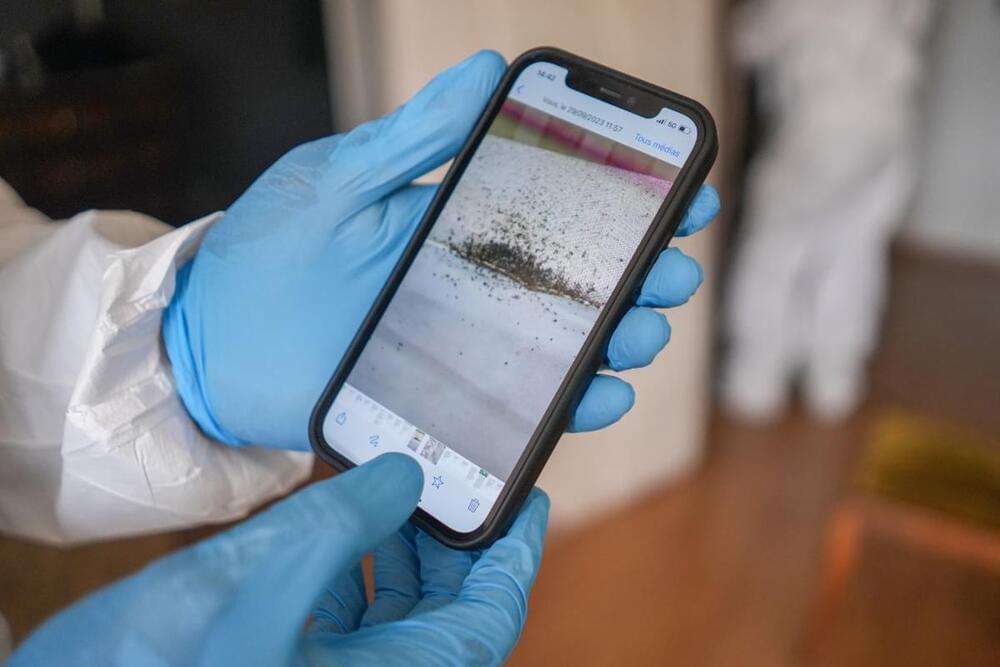
Ever since then, researchers have marveled at the bedbug’s resilience. No matter what kind of chemical insecticide we throw at it, they manage to survive. This is due in large part to its development of insecticide resistance. Recent research conducted by Hidemasa Bono at Hiroshima University found that a series of genetic mutations explain the bedbug’s resistance to insecticides.

To figure that out, Bono and his team took a peek at the genome of an insecticide-resistant bedbug. They then compared it to bedbug samples collected in 2010 from a hotel in Hiroshima, along with wild bedbugs dating back to the 1950s. They used a technique called long-read sequencing to create nearly free and nearly error-free genomic maps to compare the various bedbugs across time. This allowed them to see several different mutations across the three types of bedbugs.

They found that the bedbug that came from the hotel had 19,895 times more resistance to one of the most common types of insecticide, pyrethroids, than the nonresistant genome. All told, they identified 729 resistant specific mutations. Some of these mutations are related directly to DNA damage response, cell cycle regulation, and insulin metabolism.

/* */