Toggle light / dark theme

Toyota tempers expectations for solid-state battery adoption

It really is impressive how many unknowns there are about the next decade in transportation. Sure, there have always been innovations and surprises, but to be unsure what most vehicles will even be powered by in 10 years, nor who — or what — will be in the driver’s seat, is astounding. Battery-electric vehicles are the leading contender to usurp internal combustion, eventually, though the road to that outcome is full of hurdles. Solid-state batteries (SSB) are seen as one of the key innovations to get there, various makers saying they’ll have at least one product with a solid-state battery on the market by the end of the decade. The overall numbers of SSB-powered vehicles might remain surprisingly low well into the 2030s, though. In Toyota’s internal news outlet, Toyota Times, the automaker wrote, “In the [SSB] mass production phase anticipated for 2030 and beyond, the companies are looking to boost capacity to several thousand tonnes (several tens of thousands of vehicles) in line with Toyota’s product plans.”

The “companies” referred to are Toyota and Japan’s petrochemical conglomerate Idemitsu Kosan, which formalized collaboration on SSBs this year. Right now, Toyota and Idemitsu are working on the development times for solid electrolyte and resulting quality and cost. When those are locked in, the firms will work on a pilot facility for commercialization. Initial commercial effort will take two years of testing and validation before wider production commences in 2030.

The “several tens of thousands of vehicles” appears to have gone through at least one revision after publication. In Jalopnik’s writeup, the capacity was quoted as “over ten thousand vehicles.” Even at the larger sum, that’s considerably less than onlookers expected, but that might be because onlookers expected too much, not because Toyota overpromised. The automaker’s talked big numbers for BEV sales, but has talked just as bigly about what kinds of electrified powertrains those sales will entail: At least four kinds of battery technologies, plus hydrogen, and hybrids. In 2021, Toyota said it expected to have an SSB ready by 2025. In 2022, a Toyota engineer said the first product to get an SSB would be a hybrid on go on sale in the first half of the decade.
‘Teenage Galaxies’ are Unusually Hot, Glowing with Unexpected Elements

Similar to human teenagers, teenage galaxies are awkward, experience growth spurts and enjoy heavy metal — nickel, that is.

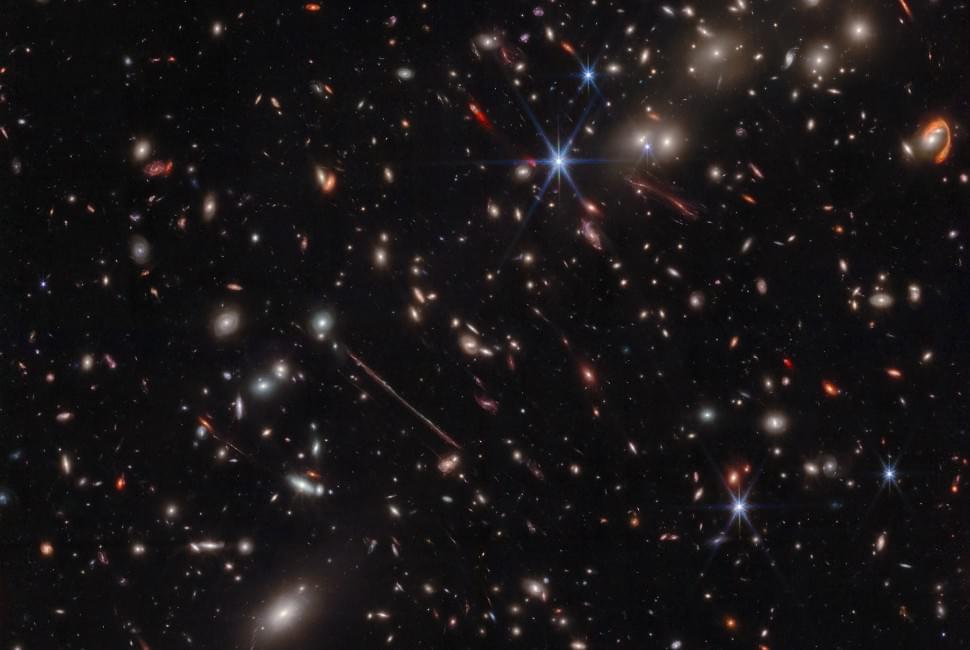
A Northwestern University-led team of astrophysicists has just analyzed the first results from the CECILIA (Chemical Evolution Constrained using Ionized Lines in Interstellar Aurorae) Survey, a program that uses NASA’s James Webb Space Telescope (JWST) to study the chemistry of distant galaxies.

According to the early results, so-called “teenage galaxies” — which formed two-to-three billion years after the Big Bang — are unusually hot and contain unexpected elements, like nickel, which are notoriously difficult to observe.

Researchers triple carbon nanotube yield for LEDs, solar cells, flexible and transparent electronics

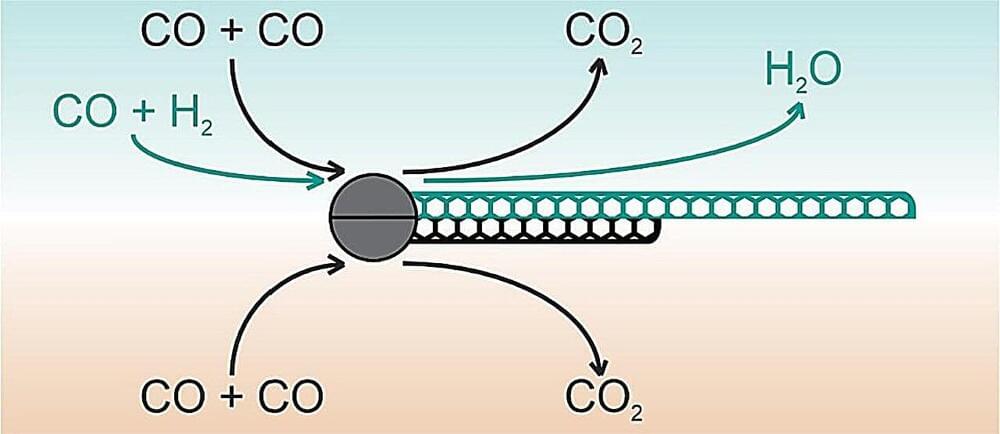
Skoltech scientists have found a way to improve the most widely used technology for producing single-walled carbon nanotube films—a promising material for solar cells, LEDs, flexible and transparent electronics, smart textiles, medical imaging, toxic gas detectors, filtration systems, and more. By adding hydrogen gas along with carbon monoxide to the reaction chamber, the team managed to almost triple carbon nanotube yield compared with when other growth promoters are used, without compromising quality.

Until now, low yield has been the bottleneck limiting the potential of that manufacturing technology, otherwise known for high product quality. The study has been published in the Chemical Engineering Journal.

Although that is not how they’re really made, conceptually, nanotubes are a form of carbon where sheets of atoms in a honeycomb arrangement—known as graphene—are seamlessly rolled into hollow cylinders.

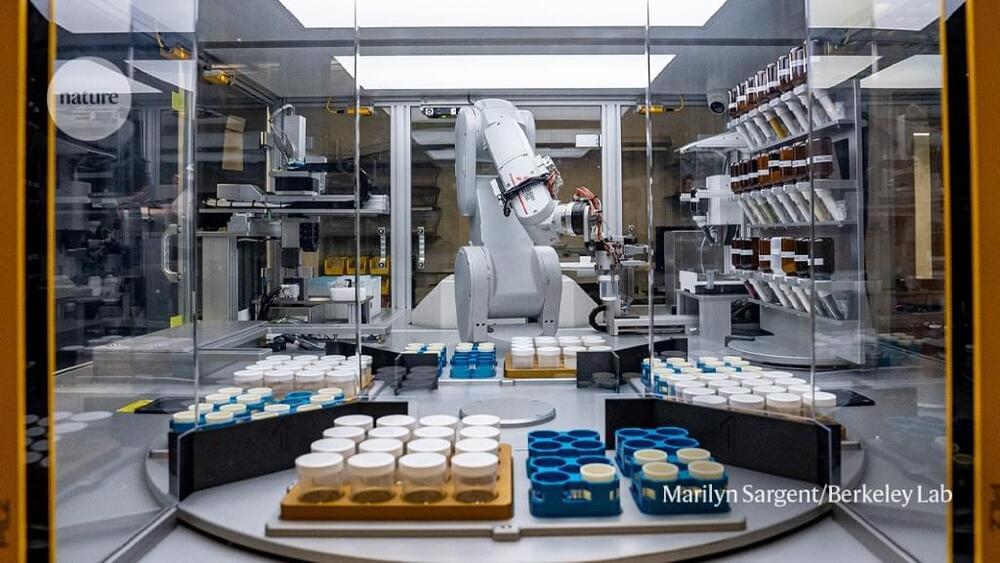
ChatGPT for chemistry: AI and robots join forces to build new materials

Over centuries of painstaking laboratory work, chemists have synthesized several hundred thousand inorganic compounds — generally speaking, materials not based on the chains of carbon atoms that are characteristic of organic chemistry. Yet studies suggest that billions of relatively simple inorganic materials are still waiting to be discovered3. So where to start looking?

Many projects have tried to cut down on time spent in the lab tinkering with various materials by computationally simulating new inorganic materials and calculating properties such as how their atoms would pack together in a crystal. These efforts — including the Materials Project based at the Lawrence Berkeley National Laboratory (LBNL) in Berkeley, California — have collectively come up with about 48,000 materials that they predict will be stable.

Google DeepMind has now supersized this approach with an AI system called graph networks for materials exploration (GNoME). After training on data scraped from the Materials Project and similar databases, GNoME tweaked the composition of known materials to come up with 2.2 million potential compounds. After calculating whether these materials would be stable, and predicting their crystal structures, the system produced a final tally of 381,000 new inorganic compounds to add to the Materials Project database1.

Electrochemical C–N Bond Formation within Boron Imidazolate Cages Featuring Single Copper Sites

Electrocatalysis expands the ability to generate industrially relevant chemicals locally and on-demand with intermittent renewable energy, thereby improving grid resiliency and reducing supply logistics. Herein, we report the feasibility of using molecular copper boron-imidazolate cages, BIF-29(Cu), to enable coupling between the electroreduction reaction of CO2 (CO2RR) with NO3– reduction (NO3RR) to produce urea with high selectivity of 68.5% and activity of 424 μA cm–2. Remarkably, BIF-29(Cu) is among the most selective systems for this multistep C–N coupling to-date, despite possessing isolated single-metal sites. The mechanism for C–N bond formation was probed with a combination of electrochemical analysis, in situ spectroscopy, and atomic-scale simulations. We found that NO3RR and CO2RR occur in tandem at separate copper sites with the most favorable C–N coupling pathway following the condensation between *CO and NH2OH to produce urea. This work highlights the utility of supramolecular metal–organic cages with atomically discrete active sites to enable highly efficient coupling reactions.

Durable, inexpensive electrocatalyst generates clean hydrogen and oxygen from water

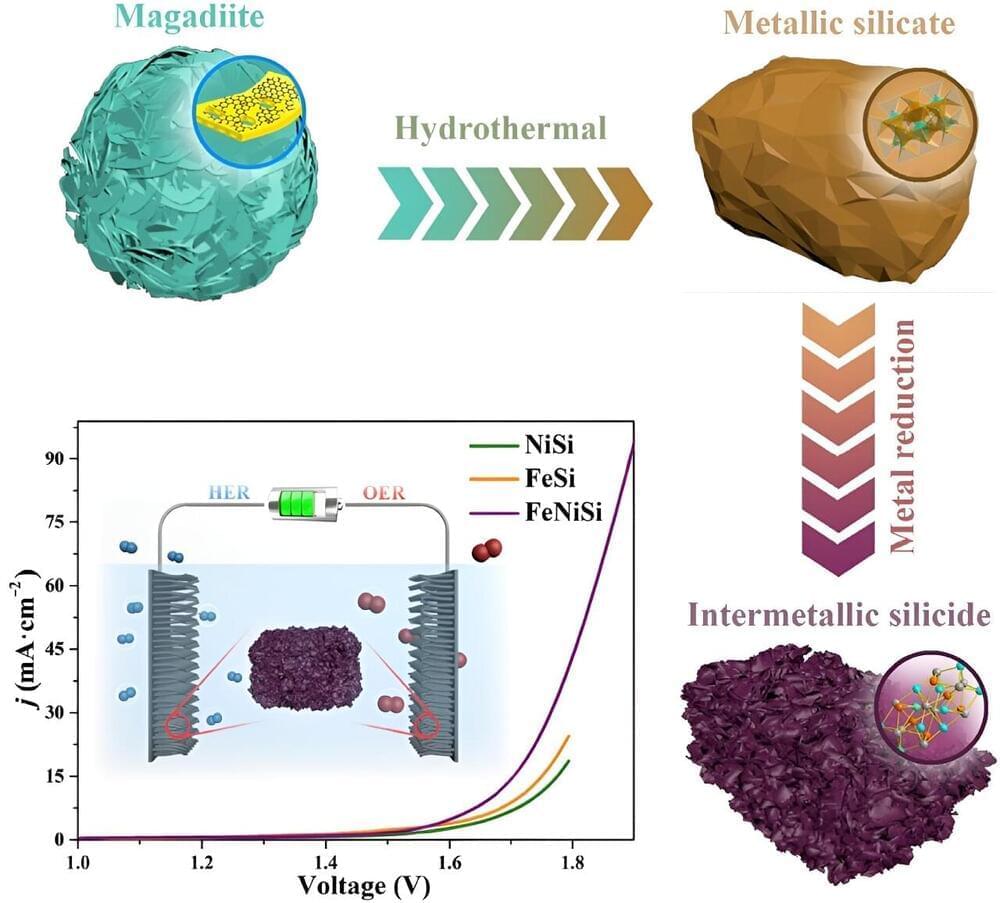
A new electrocatalyst made of nickel (Ni), iron (Fe) and silicon (Si) that decreases the amount of energy required to synthesize H2 from water has been manufactured in a simple and cost-effective way, increasing the practicality of H2 as a clean and renewable energy of the future.

Hydrogen is a highly combustible gas that can help the world achieve its clean energy goals if manufactured in an environmentally responsible way. The primary hurdle to creating hydrogen gas from water is the large amount of energy required for the electrolysis of water, or splitting into hydrogen gas (H2) and oxygen (O2).

Most H2 produced today is derived from fossil fuels, which contributes to global warming. Manufacturing H2 from water through the (HER) requires the use of a catalyst, or agent that lowers the amount of energy required for a chemical reaction. Until recently, these catalysts were made up of , like platinum, reducing the cost-efficiency and practicality of clean hydrogen production.

James Webb Space Telescope detects Water Vapor, Sulfur Dioxide and Sand Clouds in the Atmosphere of a nearby Exoplanet

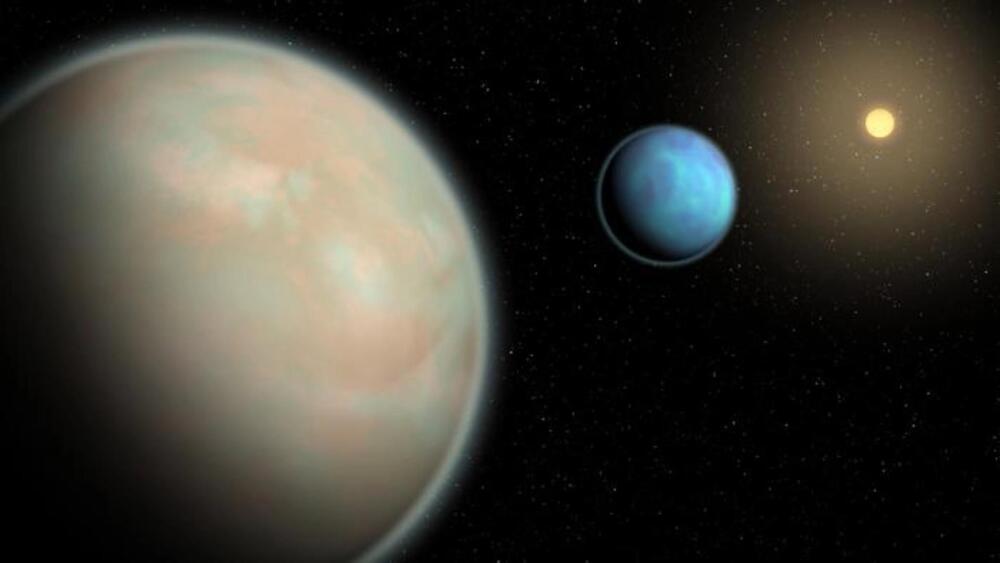
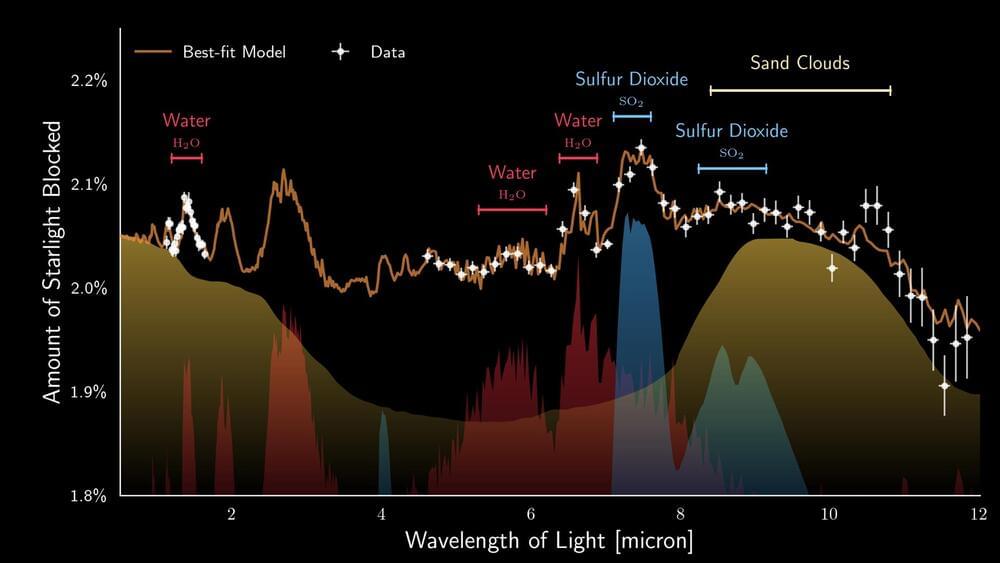
European astronomers, co-led by researchers from the Institute of Astronomy, KU Leuven, used recent observations made with the James Webb Space Telescope to study the atmosphere of the nearby exoplanet WASP-107b. Peering deep into the fluffy atmosphere of WASP-107b they discovered not only water vapour and sulfur dioxide, but even silicate sand clouds. These particles reside within a dynamic atmosphere that exhibits vigorous transport of material.

Astronomers worldwide are harnessing the advanced capabilities of the Mid-Infrared Instrument (MIRI) aboard the James Webb Space Telescope (JWST) to conduct groundbreaking observations of exoplanets – planets orbiting stars other than our own Sun. One of these fascinating worlds is WASP-107b, a unique gaseous exoplanet that orbits a star slightly cooler and less massive than our Sun. The mass of the planet is similar to that of Neptune but its size is much larger than that of Neptune, almost approaching the size of Jupiter. This characteristic renders WASP-107b rather ‘fluffy’ when compared to the gas giant planets within our solar system. The fluffiness of this exoplanet enables astronomers to look roughly 50 times deeper into its atmosphere compared to the depth of exploration achieved for a solar-system giant like Jupiter.

The team of European astronomers took full advantage of the remarkable fluffiness of this exoplanet, enabling them to look deep into its atmosphere. This opportunity opened a window into unravelling the complex chemical composition of its atmosphere. The reason behind this is quite straightforward: the signals, or spectral features, are far more prominent in a less dense atmosphere compared to a more compact one. Their recent study, now published in Nature, reveals the presence of water vapour, sulfur dioxide (SO2), and silicate clouds, but notably, there is no trace of the greenhouse gas methane (CH4).

/* */