Toggle light / dark theme

Volcanic Eruption in the Philippines Forces Mass Evacuation

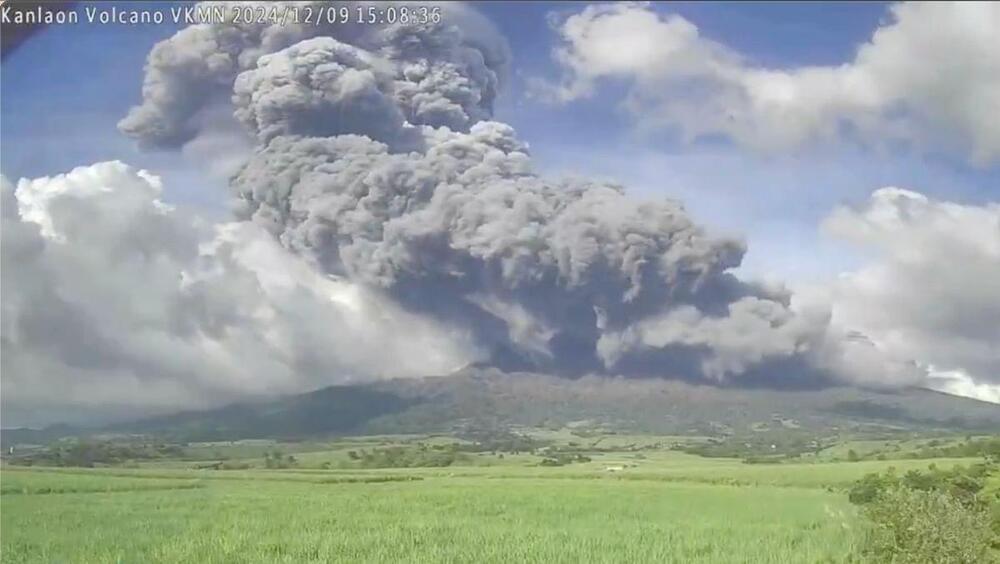
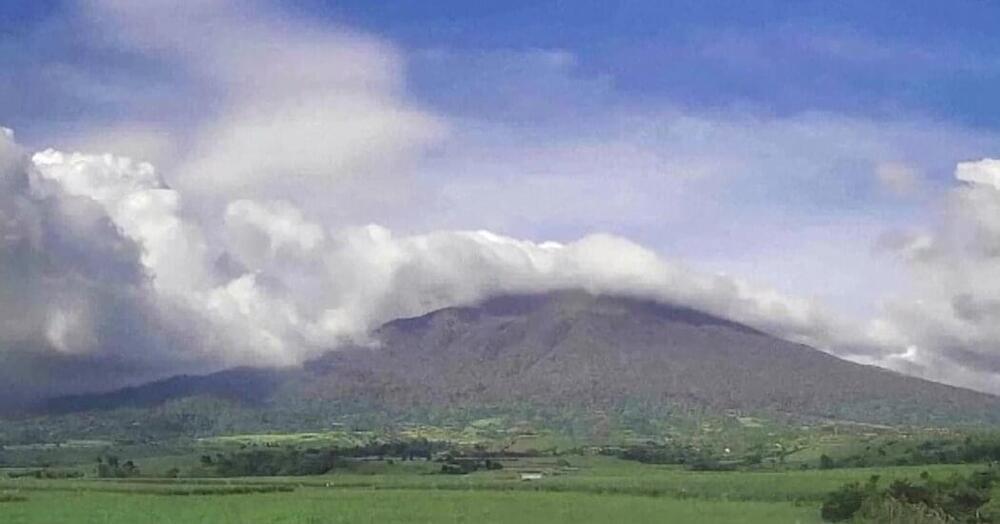
The Philippine authorities ordered nearly 90,000 people to evacuate after a volcano on the central island of Negros erupted, spewing a two-mile-high plume of deadly ash, lava and large rocks.

The volcano, Mount Kanlaon, erupted on Monday afternoon, and the authorities warned that it could happen again in the coming days.

“This is very destructive and it can burn everything in its path, including vegetation, buildings and humans,” said Teresito Bacolcol, the head of seismology at the Philippine Institute of Volcanology and Seismology. “This can kill.”

‘Climatopias’: Researchers evaluate effectiveness of climate-inspired urban designs

A pair of new studies by scientists at the University of Miami Rosenstiel School of Marine, Atmospheric, and Earth Science and the School of Architecture, shed new light on the potential of climate-inspired architectural and urban design proposals, termed “climatopias,” to effectively address climate change challenges. These studies analyze both specific high-profile projects and a broader range of proposals, providing valuable frameworks for evaluating their effectiveness, feasibility, and social justice implications.

The first paper focuses on a detailed analysis of four prominent climatopic design projects. Utilizing a novel evaluation approach, the researchers assessed each project on its effectiveness, justice, and feasibility.

Key findings indicate that for climatopias to serve as viable climate solutions, they must prioritize their embodied , feature affordable and participatory designs, and possess the potential for actual implementation or stimulate critical discourse around decarbonization and adaptation strategies, enriching in climate resilience. The findings are published in the journal One Earth.

AI Supercharging Crop Breeding to Protect Farmers from Climate

Avalo, a crop development company based in North Carolina, is using machine learning models to accelerate the creation of new and resilient crop varieties.

The traditional way to select for favorable traits in crops is to identify individual plants that exhibit the trait – such as drought resistance – and use those plants to pollinate others, before planting those seeds in fields to see how they perform. But that process requires growing a plant through its entire life cycle to see the result, which can take many years.

Avalo uses an algorithm to identify the genetic basis of complex traits like drought, or pest resistance in hundreds of crop varieties. Plants are cross-pollinated in the conventional way, but the algorithm can predict the performance of a seed without needing to grow it – speeding up the process by as much as 70%, according to Avalo chief technology officer Mariano Alvarez.

In PICS: 10 Best Earth Images Captured From Space In 2024

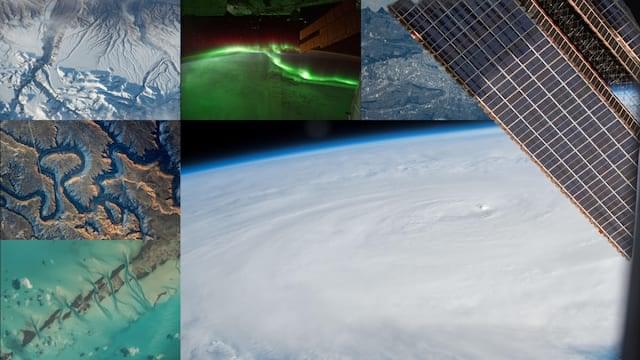
Earth In 2024: The International Space Station (ISS) has captured more than 825,000 images of Earth so far in 2024, documenting our planet’s changing landscapes. NASA has shared that over 5.3 million photos have been taken from the space station since it began operations, contributing significantly to studies of urban light patterns, lightning activity, and natural disasters. In 2024 alone, these images were instrumental in analysing 14 major natural disaster events, from hurricanes and floods to volcanic eruptions.

Expedition 71, one of the most prolific missions in the ISS’s history, contributed over 630,000 images, marking the highest number of photographs taken during a single mission.

According to NASA, the Crew Earth Observations (CEO) program is at the heart of this effort. Equipped with digital handheld cameras, astronauts photograph Earth from their vantage point 200 miles above the surface. The program focuses on documenting both human-induced changes — such as urban expansion and reservoir construction — and natural phenomena, including hurricanes and wildfires.

Huge Experiment Gives First Glimpse of The Internal Structure of a Neutron

An experiment more than 10 years in the making has delivered its first glimpse of the hurricane of particles whirring inside subatomic particles called neutrons, laying the groundwork to solve a mystery deep in the heart of matter.

Data from the Central Neutron Detector at the US Department of Energy’s Thomas Jefferson National Accelerator Facility (TJNAF) is already playing a role in describing the quantum map of the neutron’s engine.

“It’s a quite important result for the study of nucleons,” says Silvia Niccolai, a research director at the French National Centre for Scientific Research.

Less is more: Why an economical iridium catalyst works so well

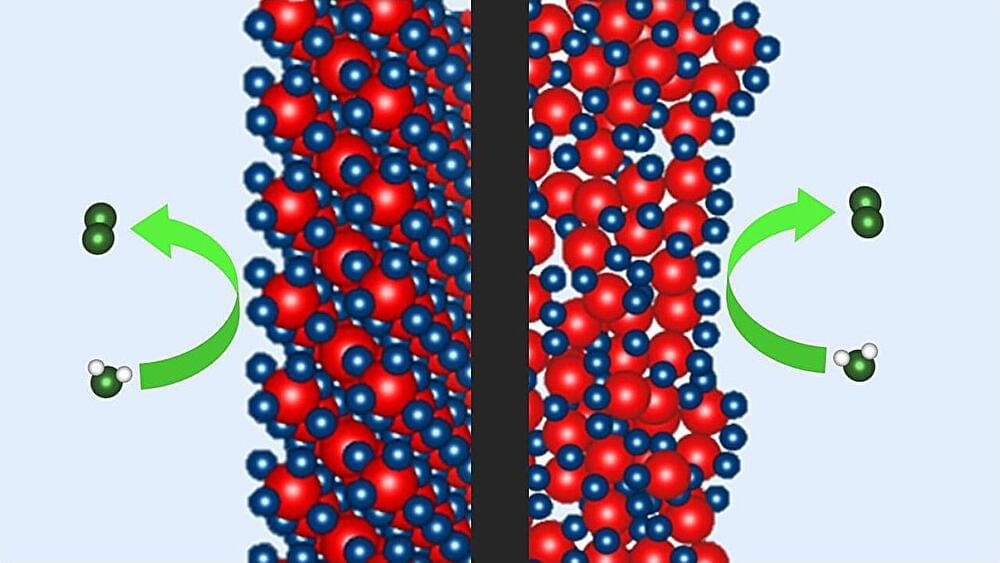
Iridium-based catalysts are needed to produce hydrogen using water electrolysis. Now, a team at HZB has shown that the newly developed P2X catalyst, which requires only a quarter of the iridium, is as efficient and stable over time as the best commercial catalyst. Measurements at BESSY II have now revealed how the special chemical environment in the P2X catalyst during electrolysis promotes the oxygen evolution reaction during water splitting.

In the future, hydrogen will be needed in a climate-neutral energy system to store energy, as a fuel, and a raw material for the chemical industry. Ideally, it should be produced in a climate-neutral way, using electricity generated from harnessing the sun’s or wind energy, via the electrolysis of water.

In that respect, Proton Exchange Membrane Water Electrolysis (PEM-WE) is currently considered a key technology. Both electrodes are coated with special electrocatalysts to accelerate the desired reaction. Iridium-based catalysts are best suited for the anode, where the sluggish oxygen evolution reaction occurs. However, iridium is one of the rarest elements on earth, and one of the major challenges is to significantly reduce the demand for this precious metal.
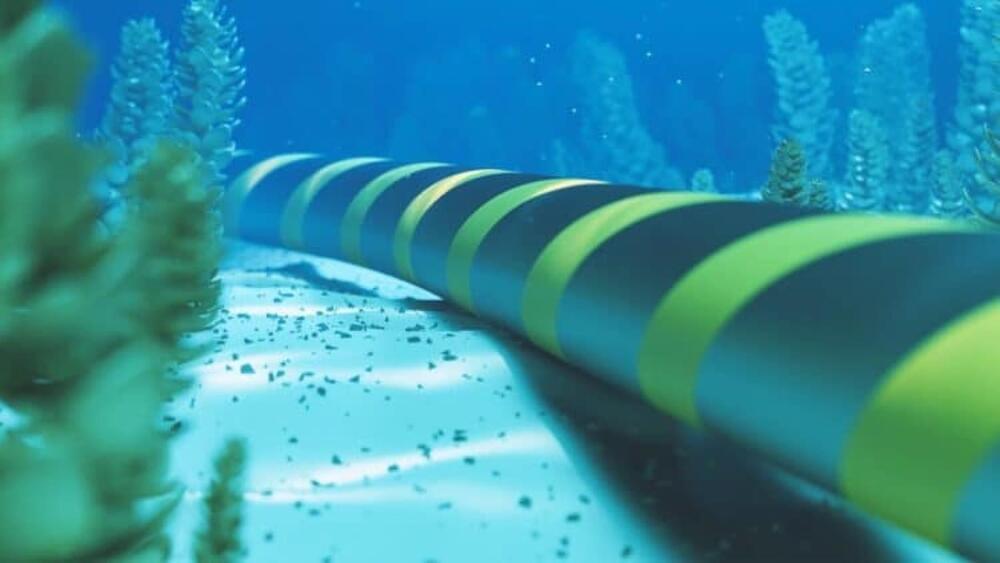
The largest project in history, under the ocean: 5,000km and two continents linked by this

Envision a settlement where the sunlight that beams across Australia buoy on its vast outback powers millions of homes and industries across Southeast Asia. This is how the Australia-Asia PowerLink (AAPowerLink) is being realized: the longest sub-sea cable in the world, linking northern Australia to Singapore, presently is one of the all-time break-through renewable energy developments. By virtue of this mammoth solar farm with its advanced energy transmission technology, this ambitious vision will shape the future energy systems around the world while addressing some critical climate issues.

Taking enormous advantage from its plentiful sunlight, northern Australia houses the world’s biggest Solar Precinct in its Northern Territory gathering between 17–20 GW peak electricity, a size surpassing that of Australia’s largest coal-fired power station.

The project incorporates advanced storage of 36–42 GWh, supplying 800 MW to Darwin and 1.75 GW to Singapore. In addition to reducing emissions and electricity prices for the Darwin region, it creates a renewable energy export marketplace for the region and demonstrates the use of the solar-rich area to meet 15 percent of Singapore’s electricity demand.

/* */