Toggle light / dark theme

‘Magic-wavelength optical tweezers’ achieve quantum entanglement of molecules

Harnessing molecular connections: unlocking long-lasting quantum entanglement.

Quantum entanglement—the mysterious connection that links particles no matter the distance between them—is a cornerstone for developing advanced technologies like quantum computing and precision measurement tools. While significant strides have been made in controlling simpler particles such as atoms, extending this control to more complex systems like molecules has remained challenging due to their intricate structures and sensitivity to their surroundings.

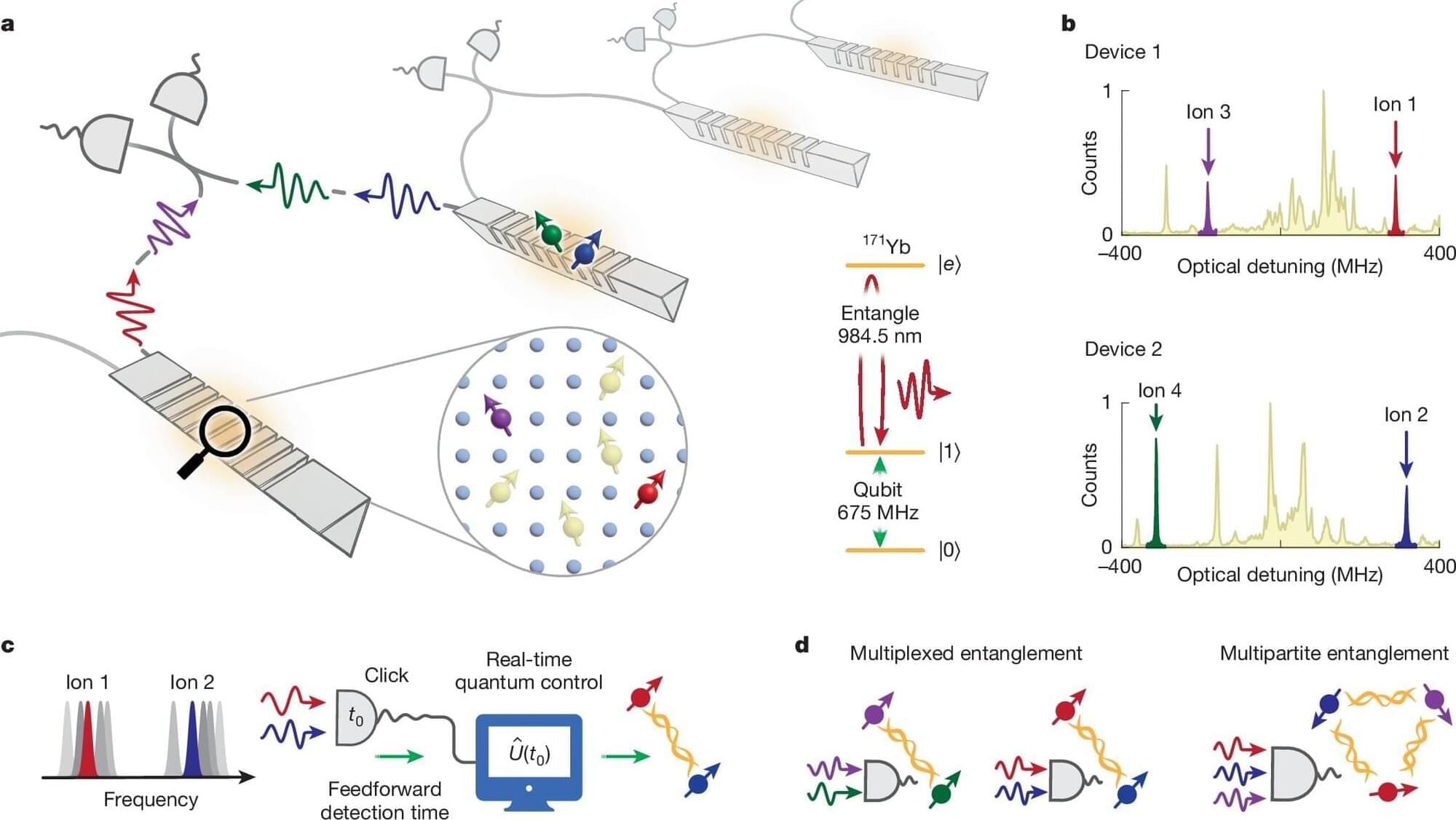
In a groundbreaking study, researchers have achieved long-lived quantum entanglement between pairs of ultracold polar molecules using a highly controlled environment known as “magic-wavelength optical tweezers.” These tweezers manipulate molecules with extraordinary precision, stabilizing their complex internal states, such as vibrations and rotations, while enabling detectable, fine-scale interactions.

The team successfully created a “Bell state,” a hallmark of quantum entanglement, with pairs of molecules. While some minor errors reduced the initial fidelity of the entangled state, correcting for these issues revealed that the entanglement could persist for remarkably long times—measured in seconds. This is a significant achievement, as second-scale lifetimes are exceptional in the quantum realm.

This breakthrough has far-reaching implications. Long-lived molecular entanglement could enhance quantum sensing technologies, provide new avenues for exploring chemical reactions at ultracold temperatures, and expand the potential of molecules as quantum bits (qubits) in simulations and memory storage for quantum computing. By unlocking the ability to precisely control and entangle molecules, scientists are paving the way for novel applications across quantum science, leveraging the rich internal dynamics of molecular systems.


Researchers at Durham University have successfully demonstrated long-lasting quantum entanglement between molecules, opening new doors for future advancements in quantum computing, sensing, and fundamental physics. The paper is published in the journal Nature.

Silicon Photonics Breakthrough: The “Last Missing Piece” Now a Reality

International research team unveils the first electrically pumped continuous-wave semiconductor laser designed for seamless integration with silicon.

Scientists from Forschungszentrum Jülich (FZJ), the University of Stuttgart, the Leibniz Institute for High Performance Microelectronics (IHP), and their French partner CEA-Leti have successfully developed the first electrically pumped continuous-wave semiconductor laser made entirely from group IV elements, commonly referred to as the “silicon group” in the periodic table.

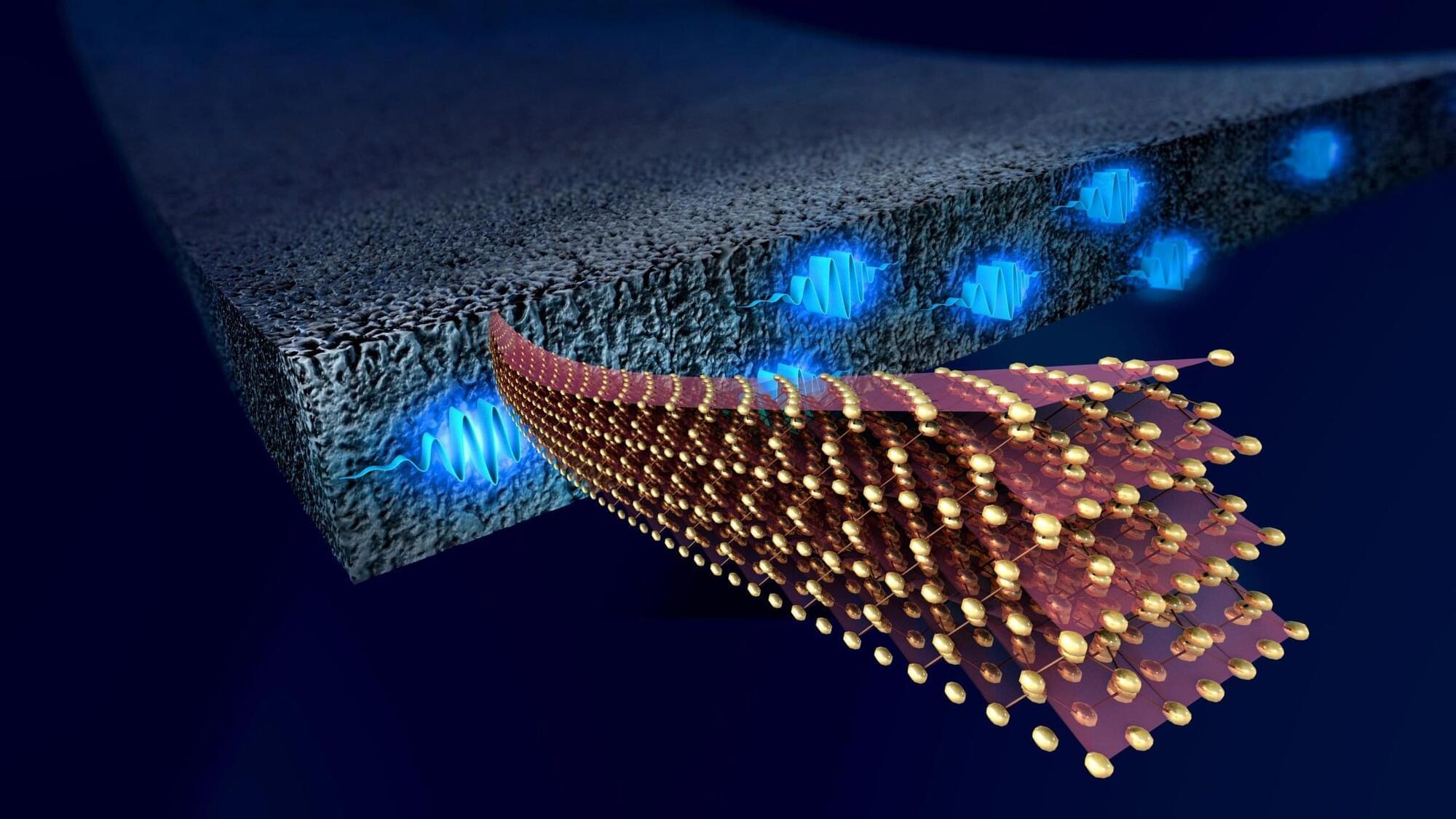
This innovative laser is constructed from stacked ultrathin layers of silicon-germanium-tin and germanium-tin. Remarkably, it is the first laser of its type to be directly grown on a silicon wafer, paving the way for advancements in on-chip integrated photonics. The research findings have been published in the prestigious journal Nature Communications.

Digital Resurrection: Advanced Simulations Reveal Secrets of Human Evolution

Lucy, an early human ancestor, could run upright but much slower than modern humans. New simulations show that muscle and tendon evolution, not just skeletal changes, were key to improving human running speed.

The University of Liverpool has led an international team of scientists in a new investigation into the running abilities of Australopithecus afarensis, the early human ancestor best known through the famous fossil “Lucy.”

Professor Karl Bates, an expert in Musculoskeletal Biology, brought together specialists from institutions in the UK and the Netherlands. Using advanced computer simulations and a digital reconstruction of Lucy’s skeleton, the team explored how this ancient species.

Orderly State of Electrons Melts on Camera

A cryogenic microscope reveals the atomic-scale processes that disrupt the charge-ordered state in a material as the temperature rises.

Many of the exotic materials being investigated for next-generation technologies exhibit charge order, a state in which the electrons arrange themselves into a periodic pattern, such as stripes of high and low electron density. Researchers have now shown that they can track the evolution of this state as it warms up and melts away by using a cryogenic electron microscope [1]. Their experimental approach offers a new way to explore the interactions between different phases of quantum materials, which could inform the development of future electronic and data storage devices.

In certain materials with strongly interacting electrons, charge order appears—usually below room temperature—as an electron density that varies periodically in a pattern of stripes, a checkerboard, or a more complicated 3D structure. Researchers want to understand this phase because it coexists and interacts with other states and properties of the material, many of which are useful for novel devices and technologies. In high-temperature superconductors, for example, charge order is known to suppress the material’s superconducting behavior. In other materials, strong coupling between charge order and ferromagnetism can trigger colossal magnetoresistance, a property that could be exploited in magnetic storage devices.

Scientists achieve direct experimental realization of dual-type entangling gates

To develop scalable and reliable quantum computers, engineers and physicists will need to devise effective strategies to mitigate errors in their quantum systems without adding complex additional components. A promising strategy to reduce errors entails the use of so-called dual-type qubits.

These are qubits that can encode in a system across two different types of quantum states. These qubits could increase the flexibility of quantum computing architectures, while also reducing undesirable crosstalk between qubits and enhancing a system’s operational fidelity.

Researchers at Tsinghua University and other research institutes in China recently realized an entangling gate between dual-type qubits in an experimental setting.

Fighting Antibiotic Resistance with Computer-Driven Precision Medicine

How can computer models help medical professionals combat antibiotic resistance? This is what a recent study published in PLOS Biology hopes to address as a team of researchers from the University of Virginia (UVA) developed computer models that can be used to target specific genes in bacteria to combat antimicrobial resistant (AMR) bacteria. This study has the potential to help scientists, medical professionals, and the public better understand innovative methods that can be used to combat AMR with bacterial diseases constantly posing a risk to global human health.

For the study, the researchers used computer models to produce an assemblage of genome-scale metabolic network reconstructions (GENREs) diseases to identify key genes in stomach diseases that can be targeted with antibiotics to circumvent AMR in these bacterial diseases. The researchers validated their findings with laboratory experiments involving microbial samples and found that a specific gene was responsible for producing stomach diseases, thus strengthening the argument for using targeted antibiotics to combat AMR.

“Using our computer models we found that the bacteria living in the stomach had unique properties,” said Emma Glass, who is a PhD Candidate in Biomedical Engineering at UVA and lead author of the study. “These properties can be used to guide design of targeted antibiotics, which could hopefully one day slow the emergence of resistant infections.”

/* */