Toggle light / dark theme

Advancing unidirectional heat flow: The next era of quantum thermal diodes

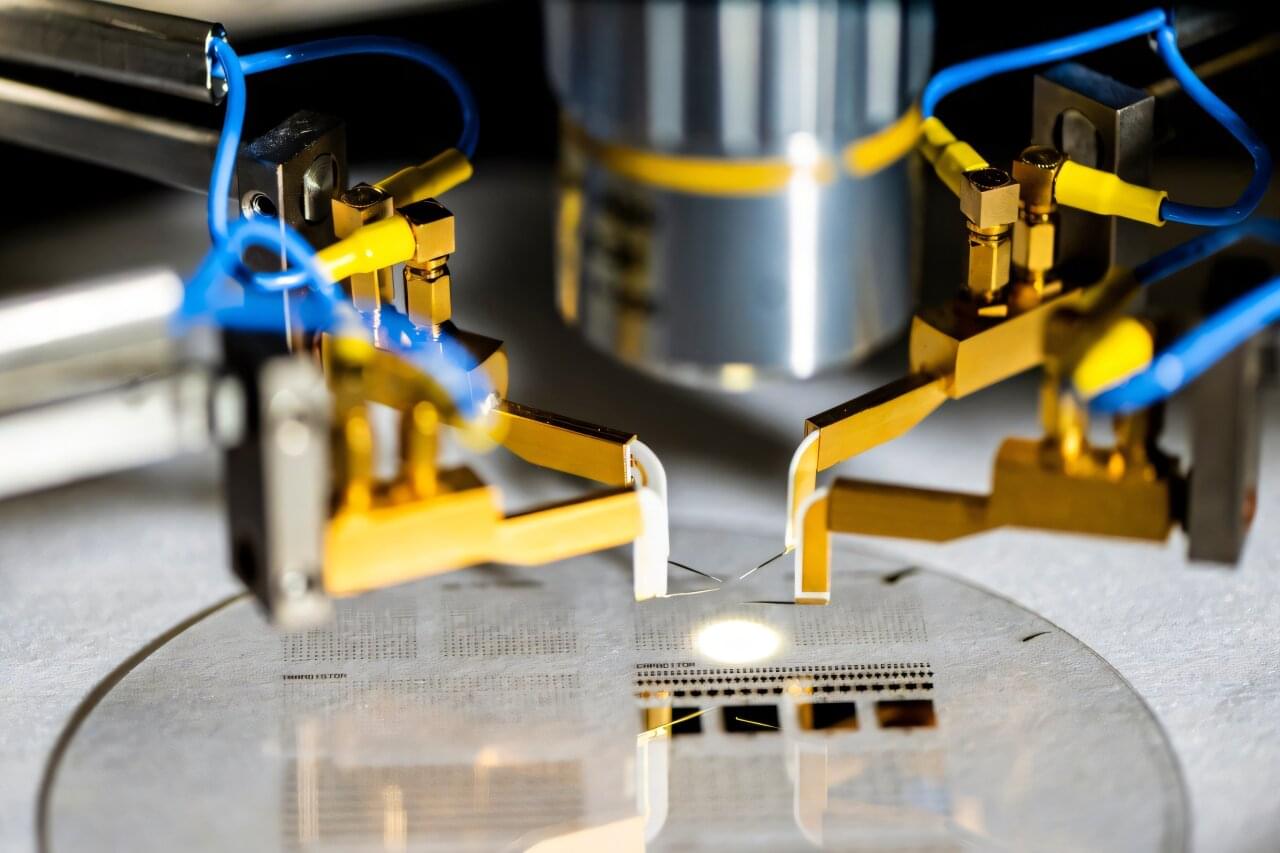
Heat management at the nanoscale has long been a cornerstone of advanced technological applications, ranging from high-performance electronics to quantum computing. Addressing this critical challenge, we have been deeply intrigued by the emerging field of thermotronics, which focuses on manipulating heat flux in ways analogous to how electronics control electric energy. Among its most promising advancements are quantum thermal diodes, which enable directional heat control, and quantum thermal transistors, which regulate heat flow with precision.

Thermal diodes, much like their electrical counterparts, provide unidirectional heat transfer, allowing heat to flow in one direction while blocking it in the reverse. We find this capability revolutionary for heat management, as it has the potential to transform numerous fields.

For instance, thermal diodes can significantly improve the cooling of high-performance electronics, where is a major bottleneck. They could also enable more efficient energy harvesting by converting into usable energy, contributing to sustainability efforts.

Scientists Unveil Shape of a Single Photon for the First Time!

A team of researchers at the University of Birmingham in the United Kingdom has made a significant breakthrough in physics by visualizing the shape of a single photon for the first time. This achievement was facilitated by an innovative computer model that simplifies the complex interaction between light and matter, a major challenge in the fields of physics and quantum mechanics.

Photons, the particles of light, have long captivated scientists. Since their discovery, it has been proven that light behaves both as a wave and a particle, a phenomenon known as wave-particle duality. This concept, which took centuries to be accepted, has been pivotal for the advancement of quantum mechanics, the branch of physics that studies subatomic interactions.

Photons are central to many phenomena, including lighting, telecommunications, and even touchscreen technology. However, despite their significance, the precise nature of their shape remained unknown until this team of researchers discovered a new way to visualize them.

Startup’s Universal Processor combines CPU, GPU, DSP, and FPGA into a single chip

Ubitium doesn’t just envision a single Universal Processor; they’re aiming to build an entire lineup, ranging from tiny embedded devices to high-performance computing systems that could potentially compete with the largest chips from Nvidia, AMD, and Intel.

The potential upsides are tantalizing. For one, Ubitium claims its Universal Processor can deliver 10 to 100 times better performance per cost compared to today’s dedicated chips.

Northwestern Engineers Achieve Quantum Teleportation Over Existing Internet Cable

Northwestern University engineers have achieved quantum teleportation over fiber optic cables already carrying Internet traffic, an advance that could simplify the infrastructure needed for quantum computing and advanced sensing technologies, the university is reporting.

The study, published in Optica, demonstrates that quantum communication can coexist with classical Internet signals in the same cable.

“This is incredibly exciting because nobody thought it was possible,” said Prem Kumar, an electrical engineering professor at Northwestern and the study’s lead researcher. “Our work shows a path towards next-generation quantum and classical networks sharing a unified fiber optic infrastructure. Basically, it opens the door to pushing quantum communications to the next level.”

A Neuralink Rival Says Its Eye Implant Restored Vision in Blind People

For years, they had been losing their central vision—what allows people to see letters, faces, and details clearly. The light-receiving cells in their eyes had been deteriorating, gradually blurring their sight.

But after receiving an experimental eye implant as part of a clinical trial, some study participants can now see well enough to read from a book, play cards, and fill in a crossword puzzle despite being legally blind. Science Corporation, the California-based brain-computer interface company developing the implant, announced the preliminary results this week.

When Max Hodak, CEO of Science and former president of Neuralink, first saw a video of a blind patient reading while using the implant, he was stunned. It led his company, which he founded in 2021 after leaving Neuralink, to acquire the technology from Pixium Vision earlier this year.

Breakthrough Brings Body-Heat Powered Wearable Devices Closer to Reality

A QUT-led research team has developed an ultra-thin, flexible film that could power next-generation wearable devices using body heat, eliminating the need for batteries.

This technology could also be used to cool electronic chips, helping smartphones and computers run more efficiently.

Professor Zhi-Gang Chen, whose team’s new research was published in the prestigious journal Science , said the breakthrough tackled a major challenge in creating flexible thermoelectric devices that converted body heat into power.

Quantum teleportation has begun to change the world

Quantum teleportation, once confined to the pages of science fiction, is steadily becoming a tangible scientific achievement. Advances in quantum mechanics over the last decade have transformed teleportation from a theoretical concept into an experimental reality.

These breakthroughs have revealed innovative methods for transmitting information instantaneously over vast distances, offering transformative possibilities for computing, communication, and cryptography. Scientists are now closer than ever to bridging the gap between imagination and reality in this cutting-edge field.

At its core, teleportation in the quantum world isn’t about physically transporting objects or people, as popularized by franchises like Star Trek. Instead, it involves transmitting quantum states—essentially the fundamental properties of particles like electrons or photons—without physical movement of the particles themselves.

MIT’s light-activated antiferromagnetic memory could replace today’s ferromagnets

The research team, led by physics professor Nuh Gedik, concentrated on a material called FePS₃, a type of antiferromagnet that transitions to a non-magnetic state at around −247°F. They hypothesized that precisely exciting the vibrations of FePS₃’s atoms with lasers could disrupt its typical antiferromagnetic alignment and induce a new magnetic state.

In conventional magnets (ferromagnets), all atomic spins align in the same direction, making their magnetic field easy to control. In contrast, antiferromagnets have a more complex up-down-up-down spin pattern that cancels out, resulting in zero net magnetization. While this property makes antiferromagnets highly resistant to stray magnetic influences – an advantage for secure data storage – it also creates challenges in intentionally switching them between “0” and “1” states for computing.

Gedik’s innovative laser-driven approach seeks to overcome this obstacle, potentially unlocking antiferromagnets for future high-performance memory and computational technologies.

/* */