Toggle light / dark theme

A fresh approach to quantum computers based on atoms and photons

From the article:

“Somewhere between one and ten million qubits are needed for a fault-tolerant quantum computer, whereas IBM has only just realized a 1,200-qubit computer,” says Aoki.


While this approach isn’t limited to any specific platform for quantum computers, it does lend itself to trapped ions and neutral atoms since they don’t need to be cooled to cryogenic temperatures, which makes them much easier to connect.

A hybrid approach

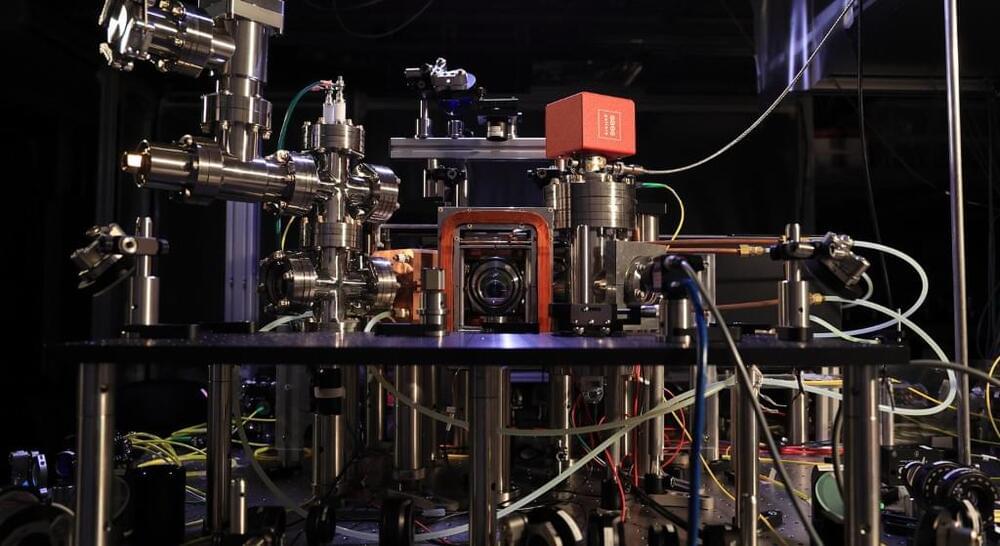
Aoki and his team are investigating the possibility of using a hybrid quantum system of atoms and photons known as a cavity quantum electrodynamics (QED) system as a promising way to connect units. “Cavity QED provides an ideal interface between optical qubits and atomic qubits for distributed quantum computing,” says Aoki. “Recently, key building blocks for realizing quantum computers based on cavity QED, such as single-photon sources and various quantum gates, have been demonstrated using free-space cavities.”
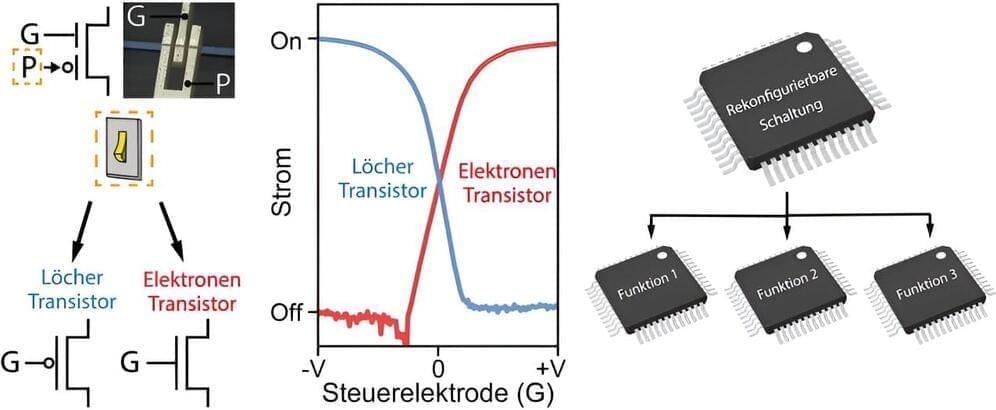

Reconfigurable electronics: More functionality on less chip area

Even the most complicated data processing on a computer can be broken down into small, simple logical steps: You can add individual bits together, you can reverse logical states, you can use combinations such as “AND” or “OR.” Such operations are realized on the computer by very specific sets of transistors. These sets then form larger circuit blocks that carry out more complex data manipulations.

Next-Gen Electronics Transformed: MIT’s 2D Integration Breakthrough

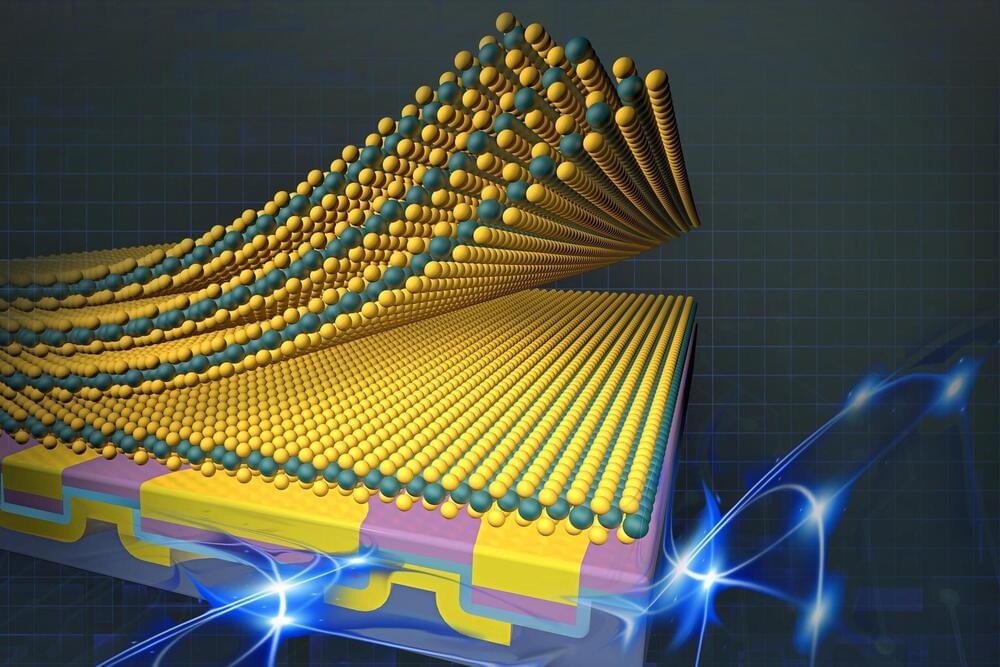
MIT ’s breakthrough in integrating 2D materials into devices paves the way for next-generation devices with unique optical and electronic properties.

Two-dimensional materials, which are only a few atoms thick, can exhibit some incredible properties, such as the ability to carry electric charge extremely efficiently, which could boost the performance of next-generation electronic devices.

But integrating 2D materials into devices and systems like computer chips is notoriously difficult. These ultrathin structures can be damaged by conventional fabrication techniques, which often rely on the use of chemicals, high temperatures, or destructive processes like etching.

What You Need to Know to Build a Quantum Implementation Roadmap with the Arrival of Quantum Error Correction

Excitement about the era of Quantum Error Correction is reaching a fever pitch.


By Prof Michael J Biercuk, CEO and Founder, Q-CTRL

Excitement about the era of Quantum Error Correction (QEC) is reaching a fever pitch. This has been a topic under development for many years by academics and government agencies as QEC is a foundational concept in quantum computing.

More recently, industry roadmaps have not only openly embraced QEC, but hardware teams have also started to show convincing demonstrations that it can really be implemented to address the fundamental roadblock for quantum computing – hardware noise and error. This rapid progress has upended notions that the sector could be stagnating in so-called NISQ era, and reset expectations among observers.

New light-to-microwave converting tech could revolutionize GPS, radars

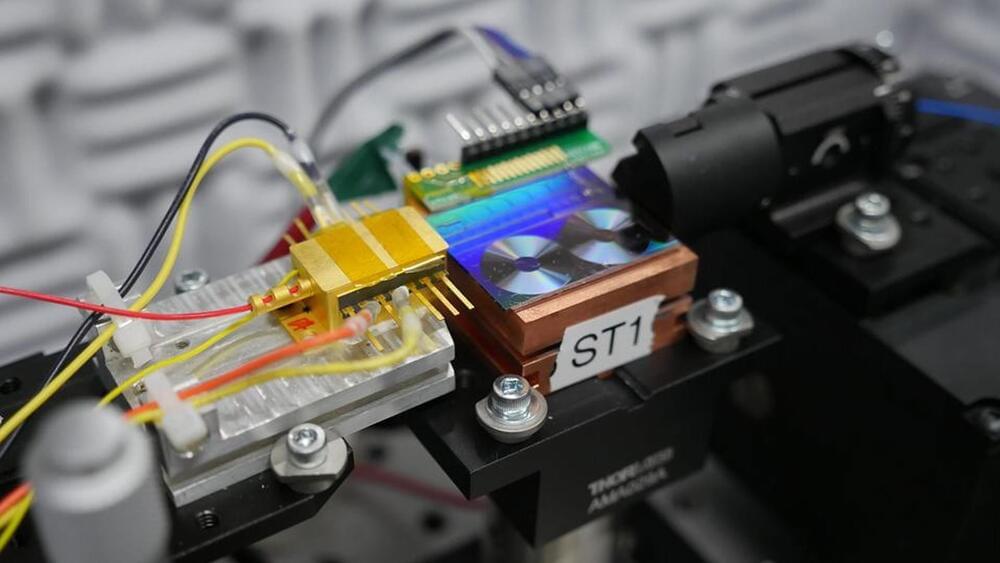
“The goal is to make all these parts work together effectively on a single platform, which would greatly reduce the loss of signals and remove the need for extra technology,” said Quinlan. “Phase one of this project was to show that all these individual pieces work together. Phase two is putting them together on the chip,” he added.

A team of researchers from several prestigious institutions helped NIST with this amazing achievement. These included the University of Colorado Boulder, the NASA Jet Propulsion Laboratory, the California Institute of Technology, the University of California Santa Barbara, the University of Virginia, and Yale University.

“I like to compare our research to a construction project. There are a lot of moving parts, and you need to make sure everyone is coordinated so the plumber and electrician show up at the right time in the project,” said Quinlan. We all work together really well to keep things moving forward,” he added.

/* */