Toggle light / dark theme

Quantum networks bring new precision to dark matter searches

Detecting dark matter—the mysterious substance that holds galaxies together—is one of the greatest unsolved problems in physics. Although it cannot be seen or touched directly, scientists believe dark matter leaves weak signals that could be captured by highly sensitive quantum devices.

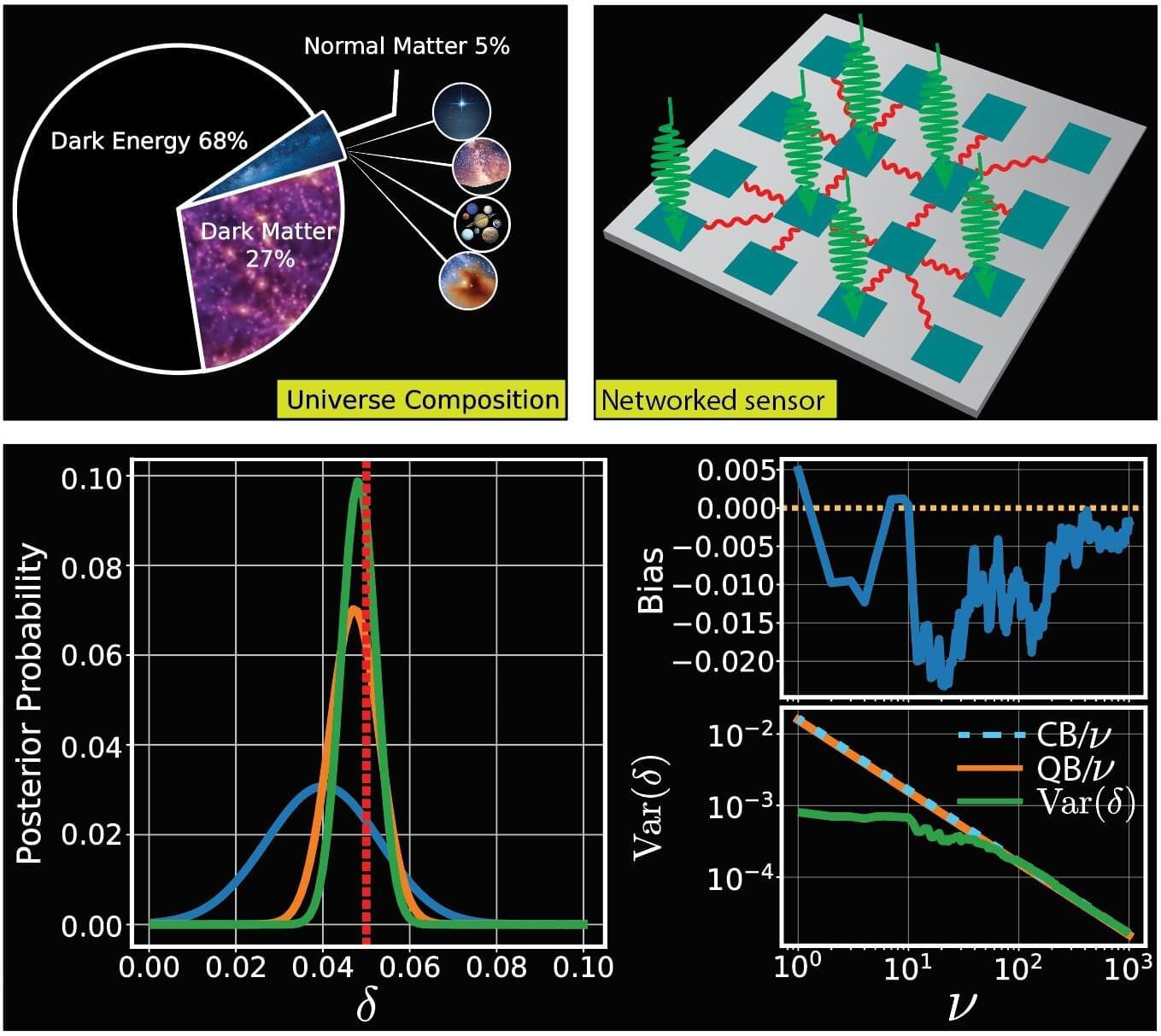
In a new study published in Physical Review D, researchers at Tohoku University propose a way to boost the sensitivity of quantum sensors by connecting them in carefully designed network structures. These quantum sensors use the rules of quantum physics to detect extremely small signals, making them far more sensitive than ordinary sensors. Using these, accurately detecting the faint clues left behind from dark matter could finally become possible.

The study focuses on , which are tiny electric circuits cooled to very low temperatures. These qubits are normally used as building blocks of quantum computers, but here they act as powerful quantum sensors. Just as a team working together can achieve more than a single person, linking many of these superconducting qubits in an optimized network allows them to detect weak dark matter signals much more effectively than any single sensor could on its own.
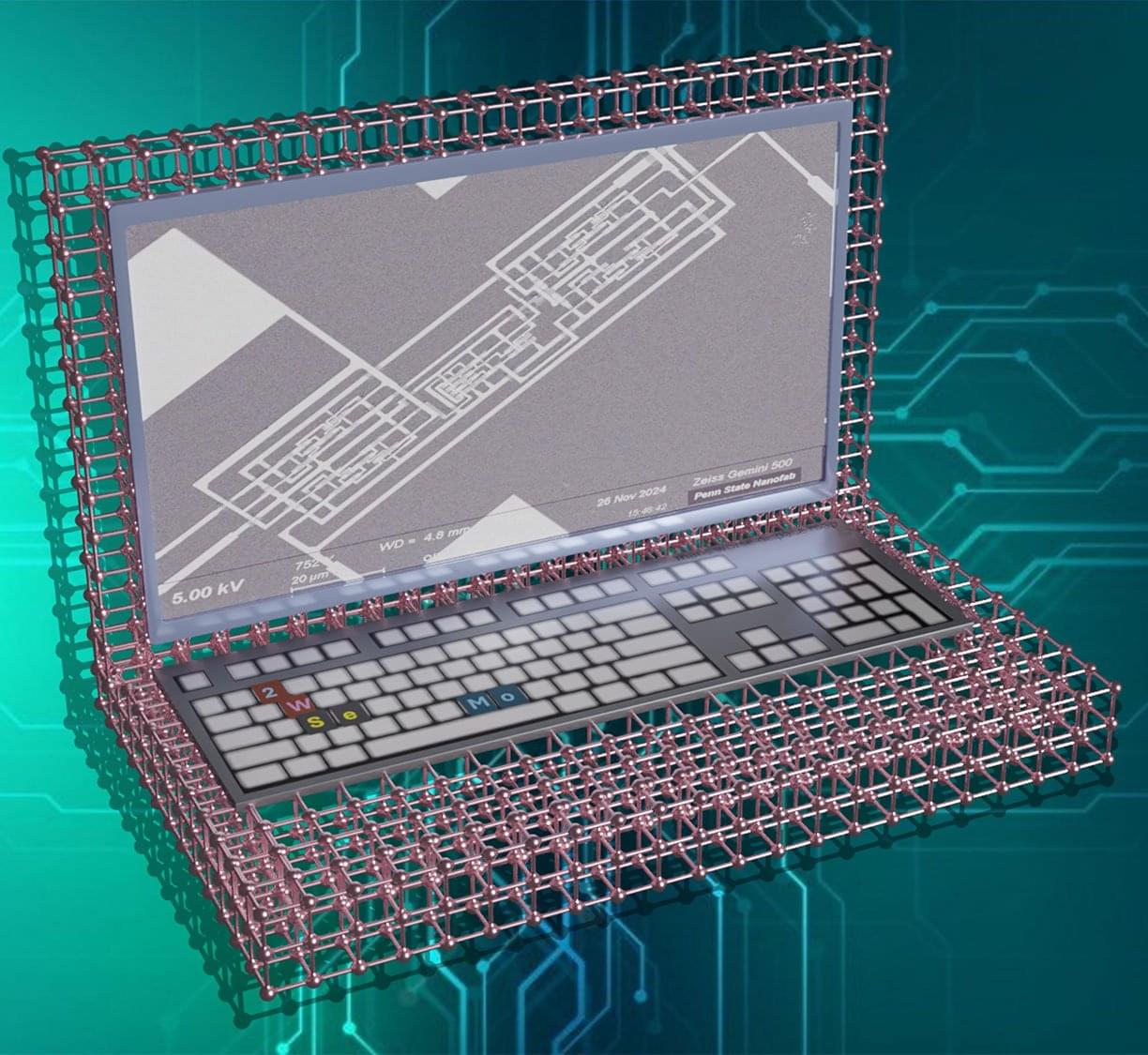
Is This the End of the Silicon Era? Scientists Unveil World’s First 2D Computer

Researchers at Penn State have developed the first silicon-free computer using atom-thin materials. This breakthrough could reshape the future of electronics, paving the way for ultra-efficient, miniaturized computing devices. Silicon has long been the foundation of semiconductor technology that

How poisonous glands helped modern toads conquer the world

Modern toads (Bufonidae) are among the most successful amphibians on the planet, a diverse group of more than 600 species that are found on every continent except Antarctica. But just how did they conquer the world? An international team of researchers set out to find the answer and discovered the toads’ global success was due to their toxic glands and geological timing.

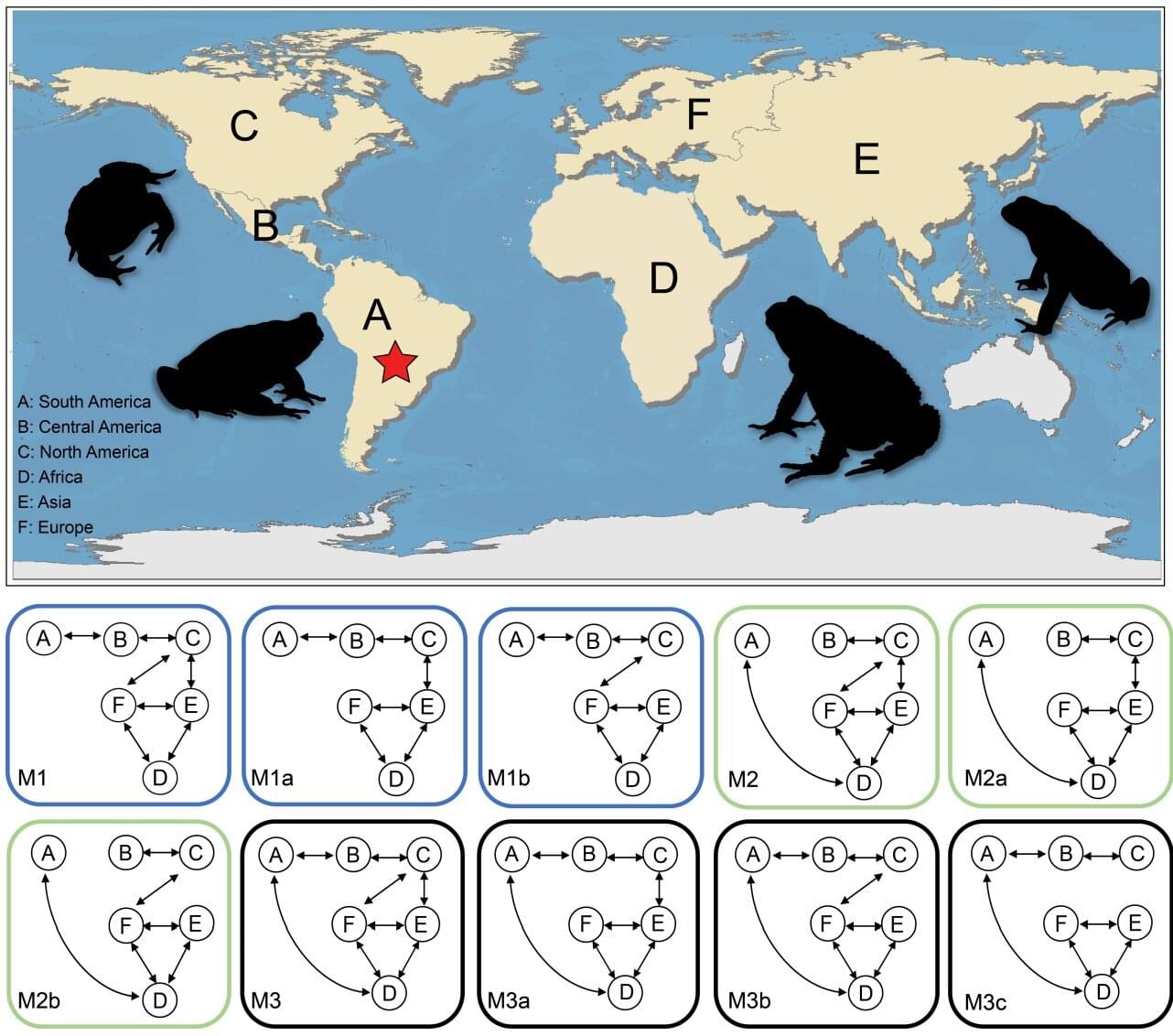
Modern toads are a type of frog with a stout, squat body, relatively short legs, toothless mouths and a thick, dry, warty skin. One of their most distinctive features is a large behind each eye that secretes a poison to deter predators. They originated in South America and are found in diverse habitats like deserts and rainforests.

To find out how they got from South America to almost every other continent, the scientists analyzed fresh DNA samples from 124 species from Africa, Asia, Europe, South America, North America and Oceania. They combined this with existing from hundreds of other species. Using powerful computer models to process the genetic information, they traced the geological spread of toads over millions of years, identifying when survival features like their poisonous glands evolved and when they branched out to form new species.

Old-school material could power quantum computing and cut data center energy use

A new twist on a classic material could advance quantum computing and make modern data centers more energy efficient, according to a team led by researchers at Penn State.

Barium titanate, first discovered in 1941, is known for its powerful electro-optic properties in bulk, or three-dimensional, crystals. Electro-optic materials like act as bridges between electricity and light, converting signals carried by electrons into signals carried by photons, or particles of light.

However, despite its promise, barium titanate never became the industry standard for electro-optic devices, such as modulators, switches and sensors. Instead, lithium niobate—which is more stable and easier to fabricate, even if its properties don’t quite measure up with those of barium titanate—filled that role instead. But by reshaping barium titanate into ultrathin strained thin films, this could change, according to Venkat Gopalan, Penn State professor of materials science and engineering and co-author of the study published in Advanced Materials.

G7 and Australia sign deal on quantum tech benchmarks

Scientists from the G7 nations and Australia signed an “unprecedented agreement” regarding quantum technology on Wednesday, France’s national metrology lab told AFP.

The deal between laboratories involved in the science of measurement hopes to establish benchmarks regarding progress in areas such as quantum computers.

The field has seen leading claim breakthroughs in recent years that have later been questioned by researchers.

Streamlined method to directly generate photons in optical fiber could secure future quantum internet

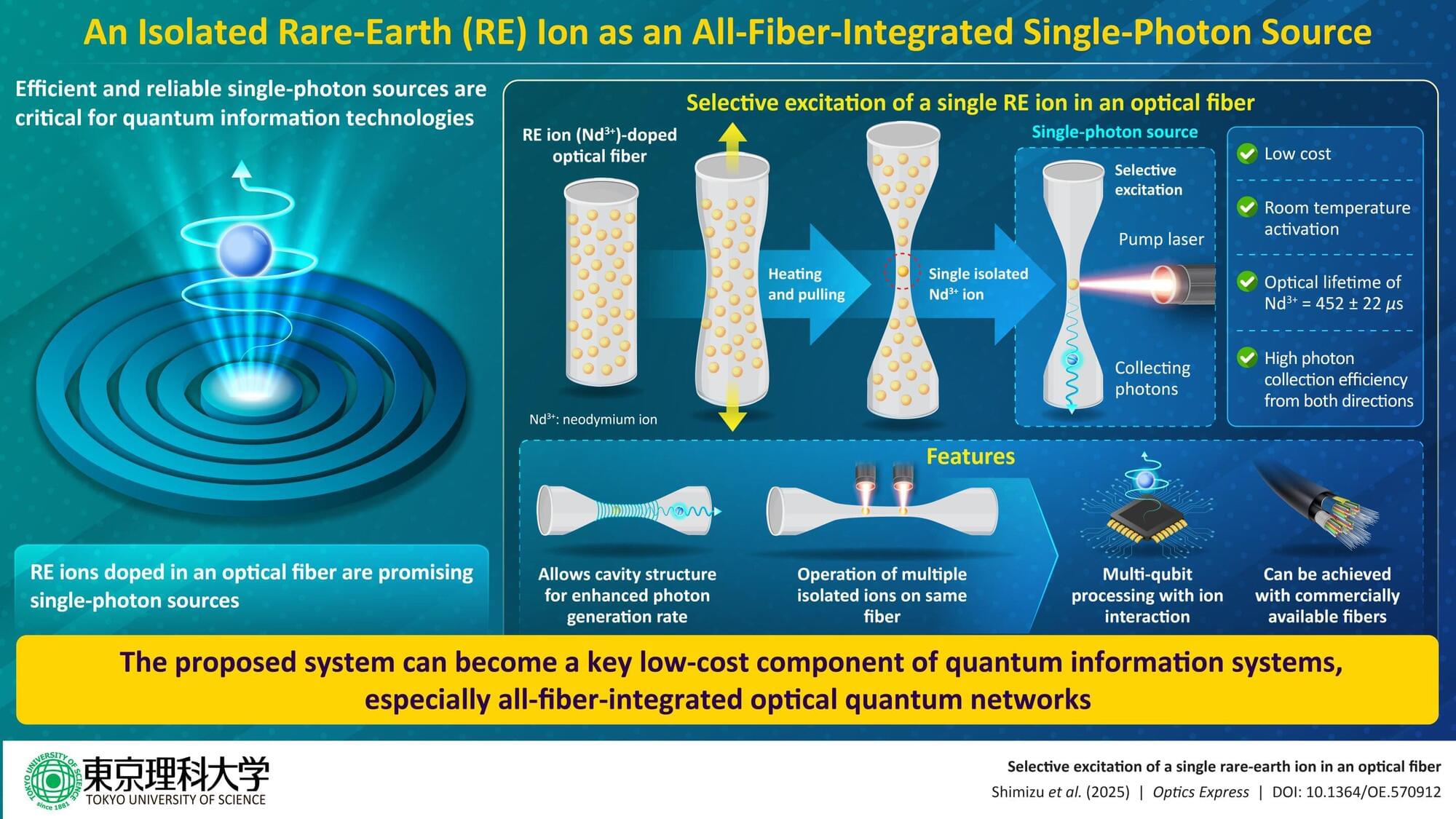
With the rise of quantum computers, the security of our existing communication systems is at risk. Quantum computers will be able to break many of the encryption methods used in current communication systems. To counter this, scientists are developing quantum communication systems, which utilize quantum mechanics to offer stronger security. A crucial building block of these systems is a single-photon source: a device that generates only one light particle at a time.

These photons, carrying quantum information, are then sent through optical fibers. For to work, it is essential that single photons are injected into optical fibers with extremely low loss.

In conventional systems, single-photon emitters, like and rare-earth (RE) element ions, are placed outside the fiber. These photons then must be guided to enter the fiber. However, not all photons make it into the fibers, causing high transmission loss. For practical quantum communication systems, it is necessary to achieve a high-coupling and channeling efficiency between the and the emitter.

Twice around to return home: A hidden reset button for spins and qubits

The world is filled with rotating objects—gyroscopes, magnetic spins, and more recently, qubits in quantum computers. For example, the atomic nuclei in our bodies precess at megahertz frequencies inside NMR machines. In practice, it is often desirable to return such a rotating system precisely to its starting point. At first glance, this seems impossible: after an elaborate sequence of twists and wobbles, how could one possibly retrace the path back to the origin?

The astonishing answer is that it is always possible. No matter how tangled the history of rotations, there exists a simple recipe: rescale the driving force and apply it twice. A single application is never sufficient, but applying this doubled, rescaled force guarantees an exact return. Under this operation, the spin—or the qubit, or any rotor—will unfailingly come home.

This discovery was made by Distinguished Professor Tsvi Tlusty from the Department of Physics at UNIST and Jean-Pierre Eckmann from the University of Geneva, Switzerland. Their study, published in Physical Review Letters on October 1, 2025, reveals that, despite their apparent complexity, rotations conceal a fundamental order.

/* */