Toggle light / dark theme

Organic molecule achieves both strong light emission and absorption for displays and imaging

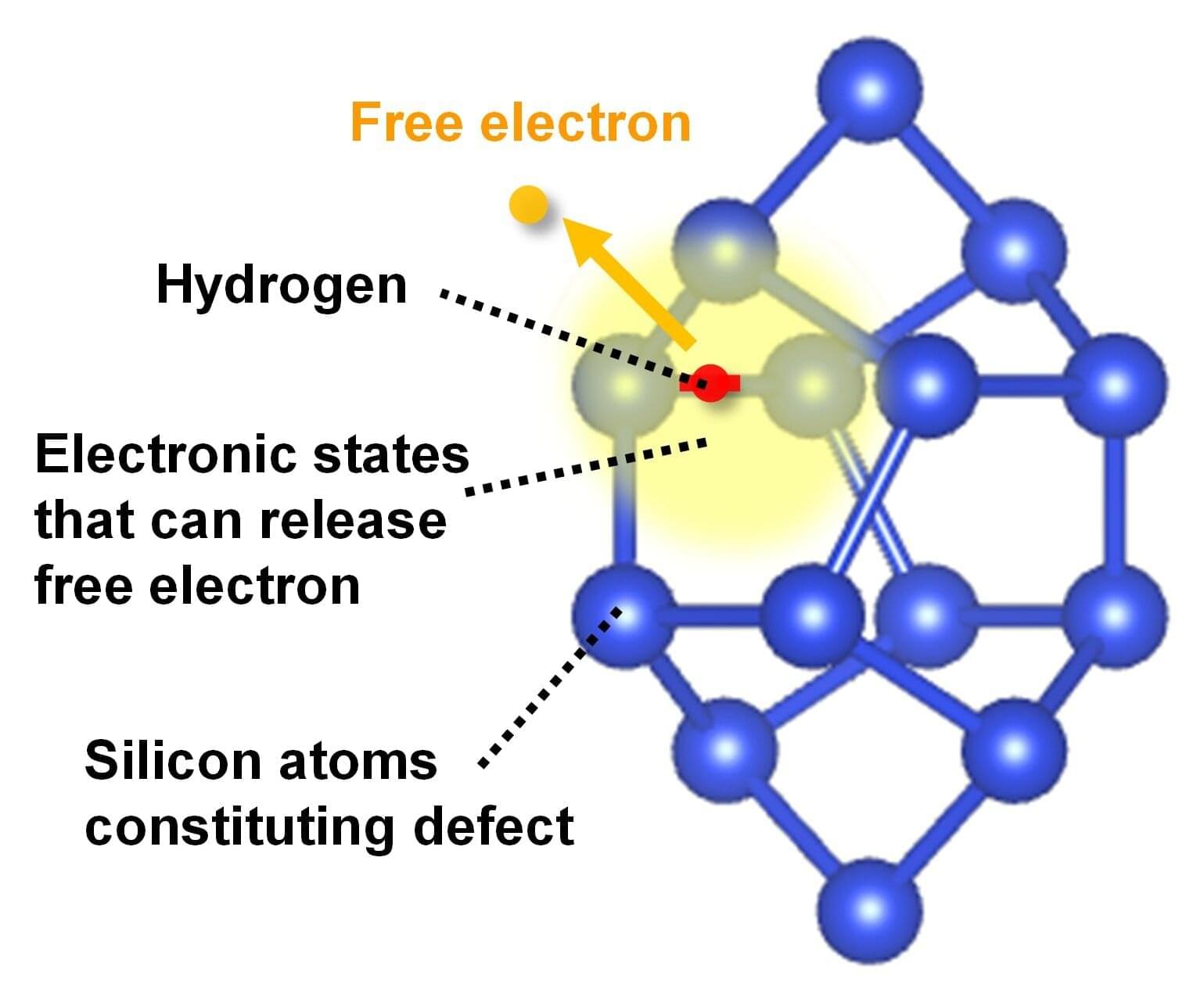
Researchers at Kyushu University have developed a novel organic molecule that simultaneously exhibits two highly sought-after properties: efficient light emission suitable for advanced displays and strong light absorption for deep-tissue bioimaging. This breakthrough addresses a long-standing challenge in molecular design, paving the way for next-generation multifunctional materials.

Their study, published online in the journal Advanced Materials on July 29, 2025, was conducted in collaboration with the National Taipei University of Technology and the National Central University.

Organic light-emitting diodes (OLEDs) are at the forefront of modern display and lighting technologies, powering nearly everything from smartphone screens to large televisions and monitors. A key phenomenon that is actively being researched to enhance OLED efficiency is thermally activated delayed fluorescence (TADF).

Could Metasurfaces Be The Next Quantum Information Processors?

In the race toward practical quantum computers and networks, photons — fundamental particles of light — hold intriguing possibilities as fast carriers of information at room temperature. Photons are typically controlled and coaxed into quantum states via waveguides on extended microchips, or through bulky devices built from lenses, mirrors, and beam splitters. The photons become entangled – enabling them to encode and process quantum information in parallel – through complex networks of these optical components. But such systems are notoriously difficult to scale up due to the large numbers and imperfections of parts required to do any meaningful computation or networking.

Could all those optical components could be collapsed into a single, flat, ultra-thin array of subwavelength elements that control light in the exact same way, but with far fewer fabricated parts?

Optics researchers in the Harvard John A. Paulson School of Engineering and Applied Sciences (SEAS) did just that. The research team led by Federico Capasso, the Robert L. Wallace Professor of Applied Physics and Vinton Hayes Senior Research Fellow in Electrical Engineering, created specially designed metasurfaces — flat devices etched with nanoscale light-manipulating patterns — to act as ultra-thin upgrades for quantum-optical chips and setups.


Researchers blend theoretical insight and precision experiments to entangle photons on an ultra-thin chip.

Apple Becomes First Company to Announce an ‘End‑to‑End’ Silicon Supply Chain Built in the U.S.

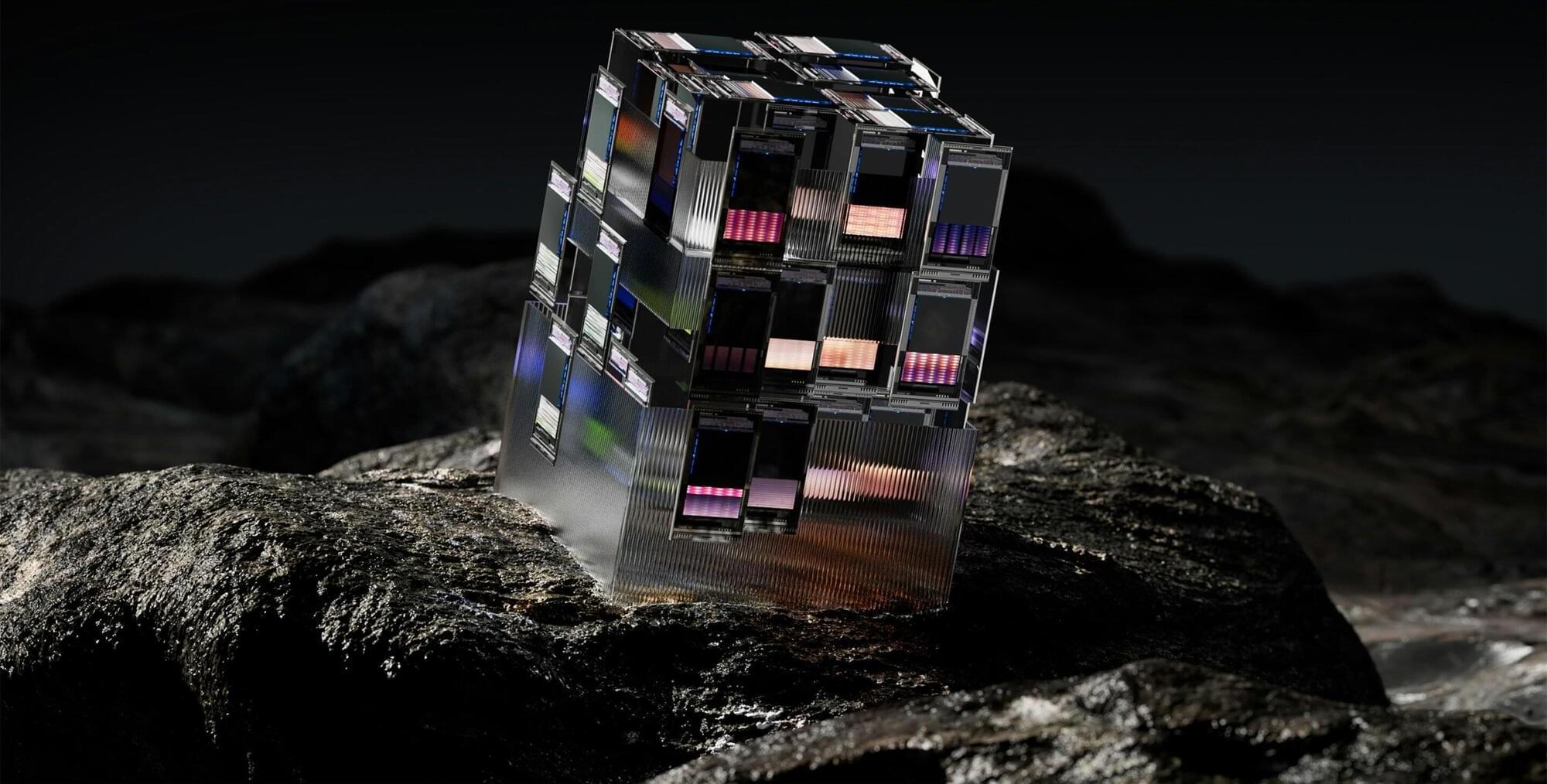
Apple has just made history by becoming the first company to build a complete end-to-end silicon chip supply chain entirely in the United States.


Apple will produce all custom chips entirely in the U.S. under its $600B manufacturing program, reducing reliance on overseas supply chains.

Scientists map the genes behind diet and dementia risk

Concordance was high between imputed and sequenced APOE genotypes. Moreover, the researchers replicated known GWAS associations with diet-related biomarkers.

The authors also noted several limitations to provide context for future research. These include that the study population was predominantly of European ancestry, which may limit the generalizability of findings, and that the specific participant criteria (e.g., overweight, family history of dementia) mean the resource is not representative of the general population. They also advise that potential batch effects from specimen type and study site should be accounted for in future analyses.

This genetic resource enables analyses of genetic contributions to variability in cognitive responses to the MIND diet, supporting integrative analysis with other data types to delineate underlying biological mechanisms. The data will be made available to other researchers via The National Institute on Aging Genetics of Alzheimer’s Disease Data Storage Site (NIAGADS).

New work achieves a pure quantum state without the need for cooling

Three nano-glass spheres cling to one another. They form a tower-like cluster, similar to when you pile three scoops of ice cream on top of one another—only much smaller. The diameter of the nano cluster is ten times smaller than that of a human hair.

With the help of an optical device and , researchers at ETH Zurich have succeeded in keeping such objects almost completely motionless in levitation. This is significant when it comes to the future development of quantum sensors, which, together with quantum computers, constitute the most promising applications of quantum research.

The team’s work appears in Nature Physics.

Accelerating anti-aging cyclic peptide discovery through computational design and automated synthesis

Cyclic peptides, with their unique structures and versatile biological activities, hold great potential for combating skin aging issues such as wrinkles, laxity, and pigmentation. However, traditional discovery methods relying on iterative synthesis and screening are labor-intensive and resource-intensive. Here, we present an integrated platform combining automated rapid cyclopeptide synthesis, virtual screening, and biological activity assessment, enabling the transformation of designed cyclic peptide sequences into chemical entities within minutes with high crude purity. Using ADCP docking with the ADFR suite, we identified a series of novel cyclic peptides targeting JAK1, Keap1, and TGF-β proteins.

From Algebra to Cosmology: Stephen Wolfram on Physics & the Nature of the Universe

Physicist and computer scientist Stephen Wolfram explores how simple rules can generate complex realities, offering a bold new vision of fundamental physics and the structure of the universe.

Stephen Wolfram is a British-American computer scientist, physicist, and businessman. He is known for his work in computer algebra and theoretical physics. In 2012, he was named a fellow of the American Mathematical Society. He is the founder and CEO of the software company Wolfram Research, where he works as chief designer of Mathematica and the Wolfram Alpha answer engine.

Watch more CTT Chats here: https://t.ly/jJI7e

Computational tool ranks compounds to improve cancer immunotherapy effectiveness

A study published in Cell Reports Medicine reports a scalable, data-driven computational framework for designing combinatorial immunotherapies, offering hope for patients with poor responses to current immunotherapies.

Immunotherapy, particularly immune checkpoint blockade (ICB), has revolutionized . Widespread resistance to ICB is a major challenge in clinical practice.

To enhance treatment efficacy and overcome resistance, combining ICB therapy with chemotherapy or targeted therapy has become an important research direction. However, candidate combinations rely on empirical selection from existing drugs, and it is difficult to discover new candidates.

/* */