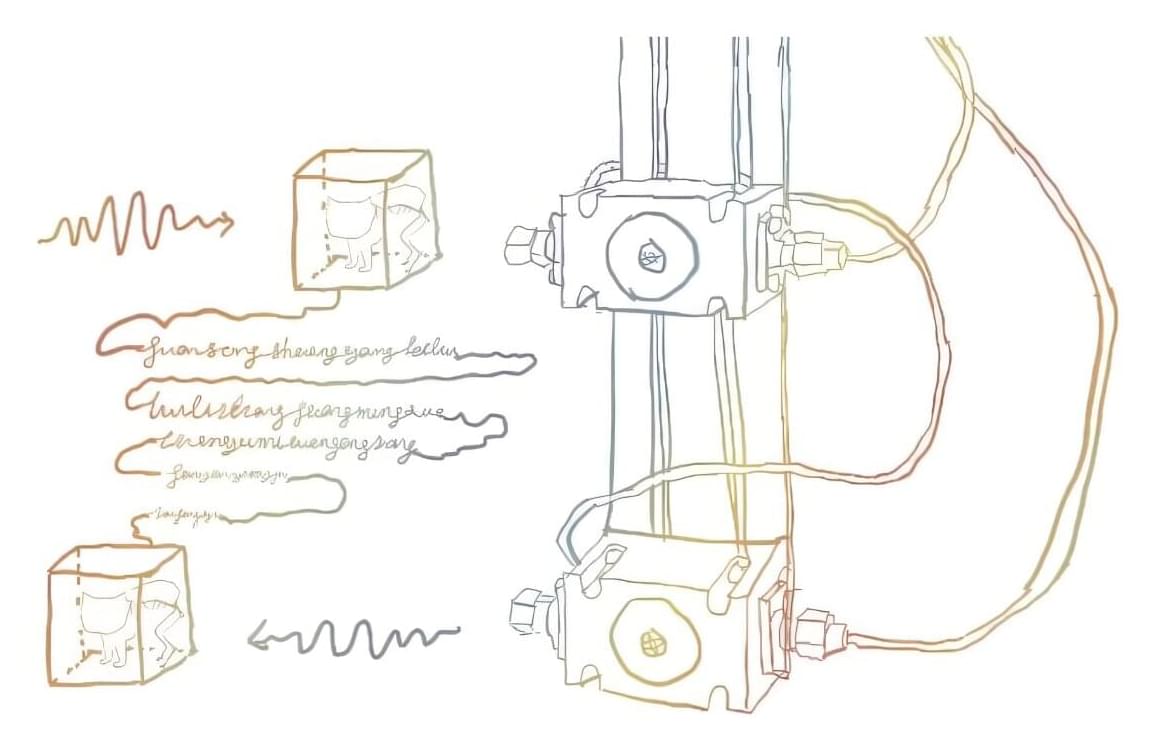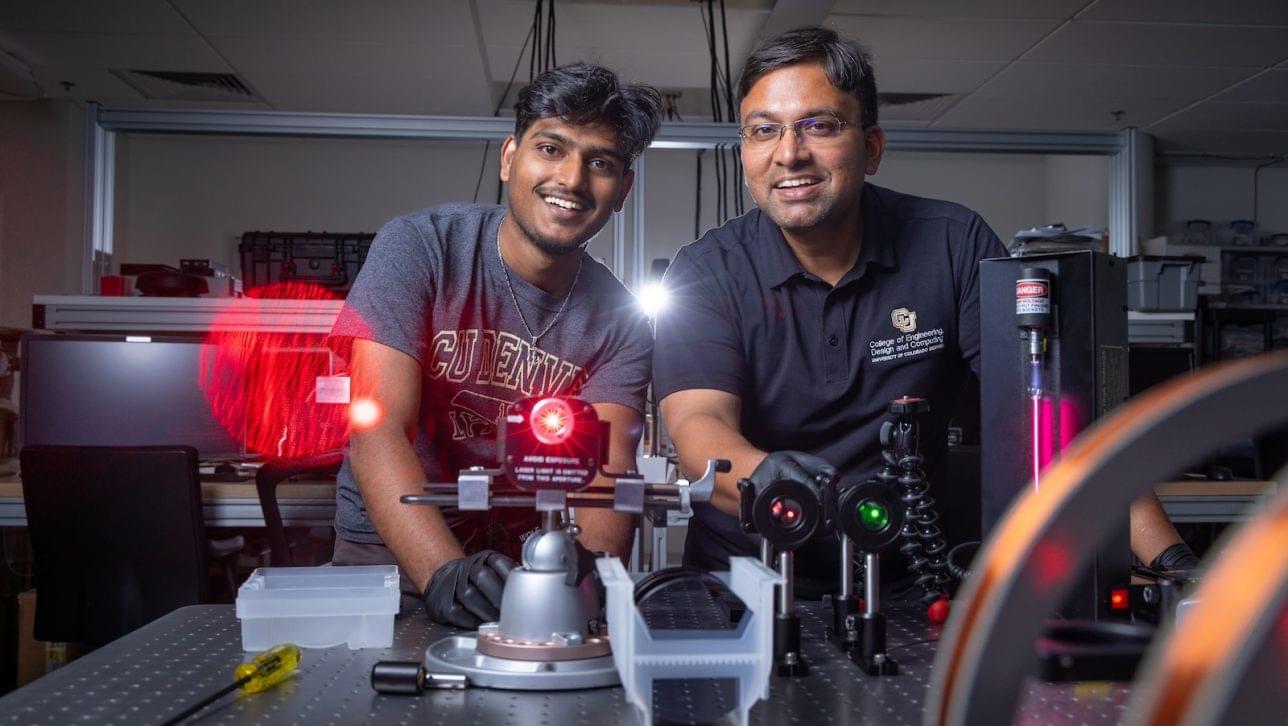
This tiny invention mimics how our brain sees and remembers—redefining what smart machines can do.
Whether bismuth is part of a class of materials highly suitable for quantum computing and spintronics was a long‑standing issue. Kobe University research has now revealed that the true nature of bismuth was masked by its surface, and in doing so uncovered a new phenomenon relevant to all such materials.
The team have published their results in a letter in the journal Physical Review B.
There is a class of materials that are insulators in their bulk, but robustly conductive at their surface. As this conductivity does not suffer from defects or impurities, such “topological materials,” as they are called, are expected to be highly suitable for use in quantum computers, spintronics and other advanced electronic applications.
Light is all around us, essential for one of our primary senses (sight) as well as life on Earth itself. It underpins many technologies that affect our daily lives, including energy harvesting with solar cells, light-emitting-diode (LED) displays and telecommunications through fiber optic networks.
The smartphone is a great example of the power of light. Inside the box, its electronic functionality works because of quantum mechanics. The front screen is an entirely photonic device: liquid crystals controlling light. The back too: white light-emitting diodes for a flash, and lenses to capture images.
We use the word photonics, and sometimes optics, to capture the harnessing of light for new applications and technologies. Their importance in modern life is celebrated every year on 16 May with the International Day of Light.
Quantum entanglement—a connection between particles that produces correlations beyond what is classically possible—will be the backbone of future quantum technologies, including secure communication, cloud quantum computing, and distributed sensing. But entanglement is fragile; noise from the environment degrades entangled states over time, leaving scientists searching for methods to improve the fidelity of noisy entangled states.
Now, researchers at the University of Chicago Pritzker School of Molecular Engineering (UChicago PME), University of Illinois Urbana-Champaign, and Microsoft have shown that it is fundamentally impossible to design a single one-size-fits-all protocol to counteract that noise.
“In quantum information, we often hope for a protocol that works in all scenarios—a kind of cure-all,” said Asst. Prof. Tian Zhong, senior author of the new work published in Physical Review Letters. “This result shows that when it comes to purifying entanglement, that’s simply too good to be true.”
To improve photonic and electronic circuitry used in semiconductor chips and fiber optic systems, researchers at the McKelvey School of Engineering at Washington University in St. Louis tinkered with the rules of physics that govern the movement of light over time and space. They have introduced a new way to manipulate light transmission, opening possibilities for advanced optical devices.
Their method causes a “mirror-flip of the system,” said Lan Yang, the Edwin H. & Florence G. Skinner Professor of electrical and systems engineering and senior author of the research, now published in Science Advances.
Using parity-time (PT) symmetric photonic waveguides, they can manipulate the light waves to “reverse time” so the system behaves the same as before, Yang added.
As demand surges for batteries that store more energy and last longer—powering electric vehicles, drones, and energy storage systems—a team of South Korean researchers has introduced an approach to overcome a major limitation of conventional lithium-ion batteries (LIBs): unstable interfaces between electrodes and electrolytes.
Most of today’s consumer electronics—such as smartphones and laptops—rely on graphite-based batteries. While graphite offers long-term stability, it falls short in energy capacity.
Silicon, by contrast, can store nearly 10 times more lithium ions, making it a promising next-generation anode material. However, silicon’s main drawback is its dramatic volume expansion and contraction during charge and discharge, swelling up to three times its original size.
While some quantum computing companies push to demonstrate near-term commercial value, Rigetti Computing is taking a different approach. The company has identified specific technical milestones it said must be achieved before quantum systems can deliver meaningful business results, including 99.9% fidelity, 20-nanosecond gate speeds and real-time error correction.
In an interview we conducted at The Economist Commercializing Quantum event, Rigetti CEO Subodh Kulkarni outlined how the company’s novel chiplet-based architecture could help scale systems to 10,000 qubits, while also revealing an intriguing potential role for quantum computing in advancing artificial general intelligence.
Enter Quantum: What’s your take on the debate between return on investment versus technical capability in quantum computing?
A scientist from Tokyo Metropolitan University has solved the longstanding problem of a “dissonance” in gravitational waves emitted by a black hole.
Using high precision computing and a new theoretical physics framework, it was discovered that it was caused by a resonance between a pair of distinctive “modes” i.e. different ways in which a black hole can “ring.” The phenomenon offers new insights into the nascent field of black hole spectroscopy.
The research is published in the journal Physical Review Letters.