Toggle light / dark theme

The most elusive black holes in the universe could lurk at the Milky Way’s center

— What’s the biggest black hole in the universe?

LISA will consist of a trio of satellites orbiting the sun that will constantly monitor the distances among them. When a gravitational wave comes by, the satellites will detect the telltale signature, like buoys in the ocean recognizing a passing tidal wave.

To search for IMBHs, the astronomers have to hope for a lucky break. If an IMBH in the galactic center happens to capture a wandering dense remnant (like a smaller black hole, a neutron star, or a white dwarf), the process will emit gravitational waves that LISA can potentially detect. Because the IMBH itself will be orbiting around the central supermassive black hole, these gravitational waves will undergo a Doppler shift (like the shifting in frequencies from a passing ambulance) due to the IMBH’s motion.

Superstring Theory and Higher Dimensions: Bridging Einstein’s Relativity and Quantum Mechanics

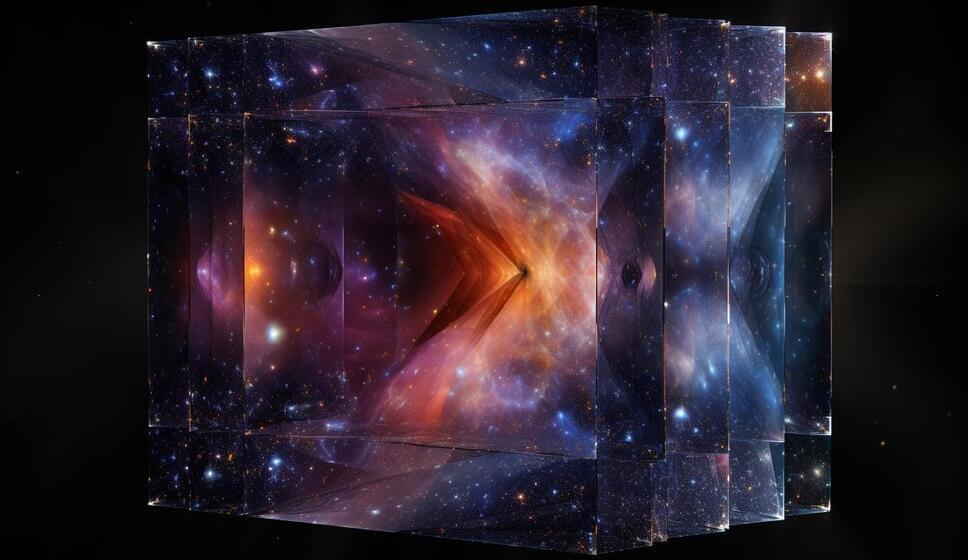
A team of researchers at Kyoto University is exploring the use of higher dimensions in de Sitter space to explain gravity in the early universe. By developing a method to compute correlation functions among fluctuations, they aim to bridge the gap between Einstein’s theory of general relativity and quantum mechanics. This could potentially validate superstring theory and enable practical calculations about the early universe’s subtle changes. Although initially tested in a three-dimensional universe, the analysis may be extended to a four-dimensional universe for real-world applications.

Having more tools helps; having the right tools is better. Utilizing multiple dimensions may simplify difficult problems — not only in science fiction but also in physics — and tie together conflicting theories.

For example, Einstein’s theory of general relativity — which resides in the fabric of space-time warped by planetary or other massive objects — explains how gravity works in most cases. However, the theory breaks down under extreme conditions such as those existing in black holes and cosmic primordial soups.

Primordial Black Holes May Have “Frozen” the Early Universe

Primordial holes formed in the exotic conditions of the big bang may have become their own source of matter and radiation.

The standard story of the early universe goes like this. When our cosmos was incredibly young, it underwent a period of incredibly rapid expansion known as inflation. Then inflation went away and flooded the universe with particles and radiation in the hot big bang. Then the universe expanded and cooled, and as it did so the density of that matter and radiation dropped. Eventually the matter got itself together informed stars, galaxies and clusters.

But new research suggests that this simple story may be missing a key ingredient: primordial black holes. Currently we know of only one guaranteed way to create black holes. That’s through the deaths of massive stars. When they collapse in on themselves at the end of their lives, they reach high enough densities to overwhelm every other force and trigger the formation of a black hole.

Strange New Explanation for Why Quantum World Collapses Into Reality

Get a Wonderful Person Tee: https://teespring.com/stores/whatdamath.
More cool designs are on Amazon: https://amzn.to/3wDGy2i.
Alternatively, PayPal donations can be sent here: http://paypal.me/whatdamath.

Hello and welcome! My name is Anton and in this video, we will talk about the suggestion that horizons from black holes and the expansion of the universe cause the quantum collapse into reality.
Links:
https://arxiv.org/pdf/2301.00026.pdf.
#quantumphysics #blackhole #universe.

0:00 What this study is trying to solve.
2:05 Applying Einstein principles to Quantum Physics.
4:00 Do black holes server as observers?
5:00 What about the edge of the universe?
6:45 Does this prove universe is conscious? (no)

Support this channel on Patreon to help me make this a full time job:
https://www.patreon.com/whatdamath.

Bitcoin/Ethereum to spare? Donate them here to help this channel grow!
bc1qnkl3nk0zt7w0xzrgur9pnkcduj7a3xxllcn7d4
or ETH: 0x60f088B10b03115405d313f964BeA93eF0Bd3DbF

Space Engine is available for free here: http://spaceengine.org.

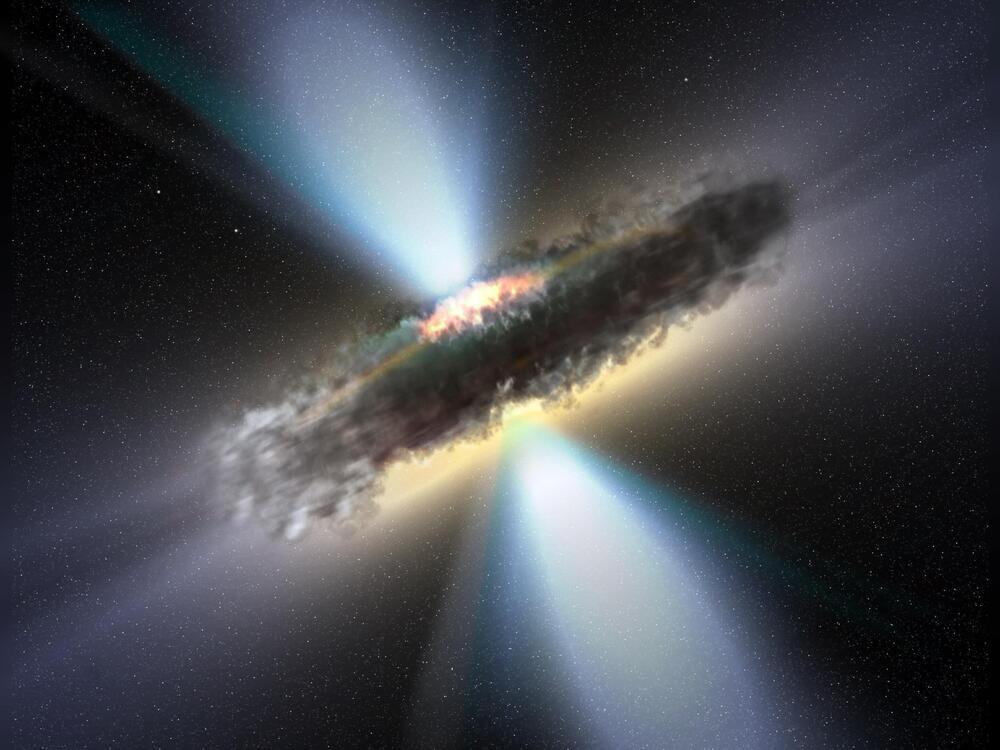
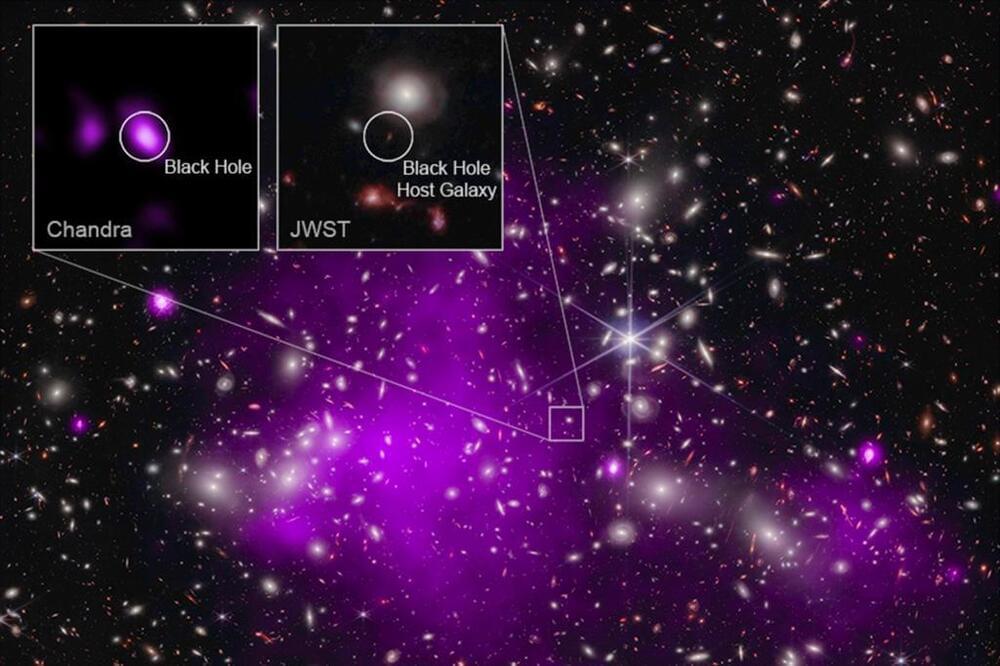
NASA discovers ultra-rare ‘double quasar’ about to collide into an unbelievably massive black hole

After 33 years, the Hubble Space Telescope is still uncovering new cosmic surprises. The venerable instrument recently added to its extensive catalog of finds when it spotted a rare double quasar blazing away in the distant reaches of the universe.

Researchers published a paper detailing the discovery on April 5 in the journal Nature (opens in new tab).

Dark Photon Dark Matter Breakthrough: Trailblazing Cryogenic Detection Techniques

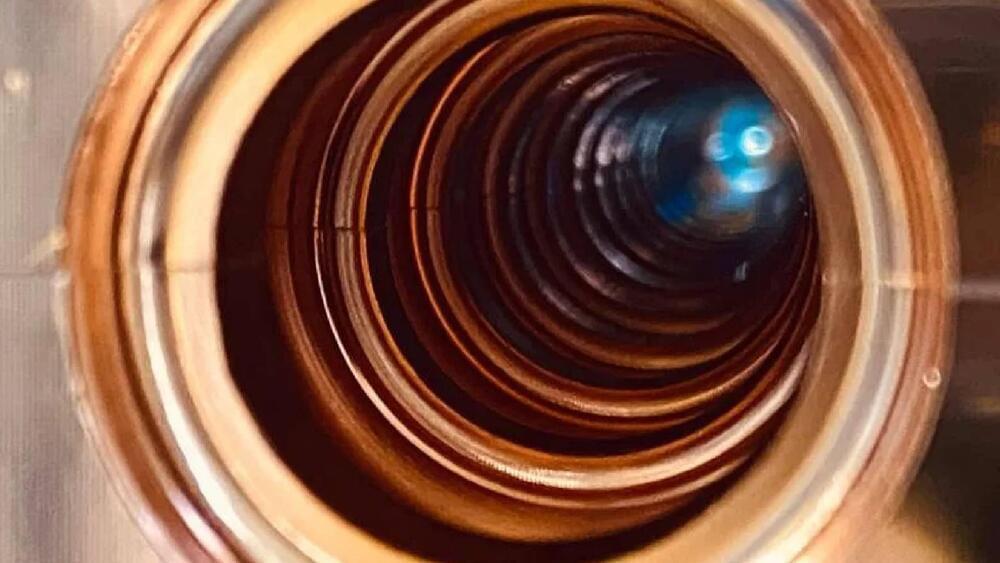
Scientists at Kyoto University have developed an experimental method to examine ultra-light dark matter by observing its gravitational effects on visible matter. Using millimeter-wave sensing in cryogenic conditions, the team achieved experimental parameters for unexplored mass ranges of dark photon.

A photon is a particle of light. It is the basic unit of light and other electromagnetic radiation, and is responsible for the electromagnetic force, one of the four fundamental forces of nature. Photons have no mass, but they do have energy and momentum. They travel at the speed of light in a vacuum, and can have different wavelengths, which correspond to different colors of light. Photons can also have different energies, which correspond to different frequencies of light.

Groundbreaking New Dark Matter Map Validates Einstein’s Theory of General Relativity

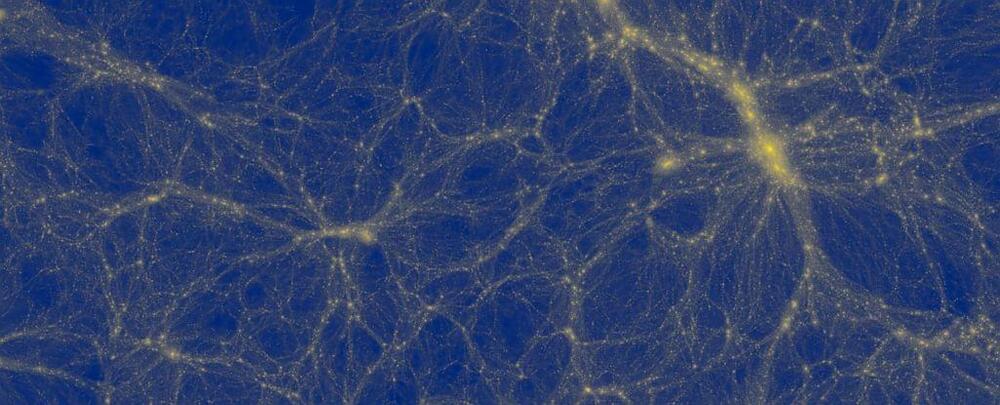
Research by the Atacama Cosmology Telescope collaboration has culminated in a significant breakthrough in understanding the evolution of the universe.

For millennia, humans have been fascinated by the mysteries of the cosmos.

Unlike ancient philosophers imagining the universe’s origins, modern cosmologists use quantitative tools to gain insights into its evolution and structure. Modern cosmology dates back to the early 20th century, with the development of Albert Einstein’s theory of general relativity.

Stellar Revelation: AI Discovers the Universe’s First Stars Weren’t Alone

Using artificial intelligence, an international team analyzed the chemical composition of extremely metal-poor stars, finding that the first stars in the Universe were likely born in groups rather than individually. This method will be applied to future observations to better understand the early Universe.

An international team has used artificial intelligence to analyze the chemical abundances of old stars and found indications that the very first stars in the Universe were born in groups rather than as isolated single stars. Now the team hopes to apply this method to new data from on-going and planned observation surveys to better understand the early days of the Universe.

After the Big Bang, the only elements in the Universe where hydrogen, helium, and lithium. Most of the other elements making up the world we see around us were produced by nuclear reactions in stars. Some elements are formed by nuclear fusion at the core of a star, and others form in the explosive supernova death of a star. Supernovae also play an important role in scattering the elements created by stars, so that they can be incorporated into the next generation of stars, planets, and possibly even living creatures.

/* */