Toggle light / dark theme

Machine learning makes a better Luke Skywalker hand

A 3D-printed prosthetic hand controlled using a new AI-based approach could significantly lower the cost of bionic limbs for amputees.

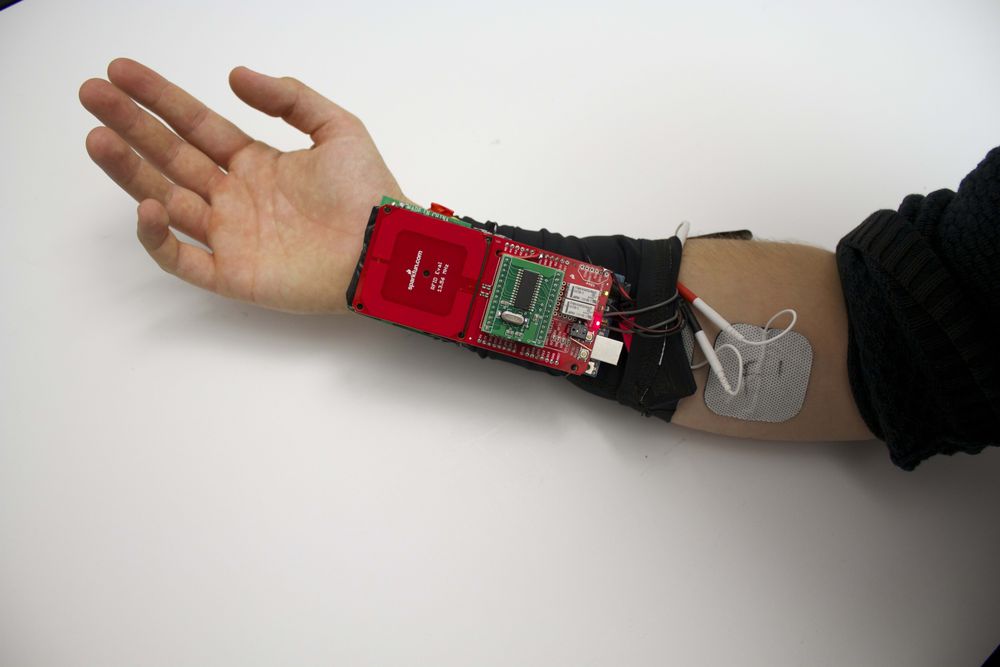
Real need: There are approximately 540,000 upper-limb amputees in the United States, but sophisticated “myoelectric” prosthetics, controlled by muscle contractions, are still very expensive. Such devices cost between $25,000 and $75,000 (not including maintenance and repair), and they can be difficult to use because it is hard for software to distinguish between different muscle flexes.

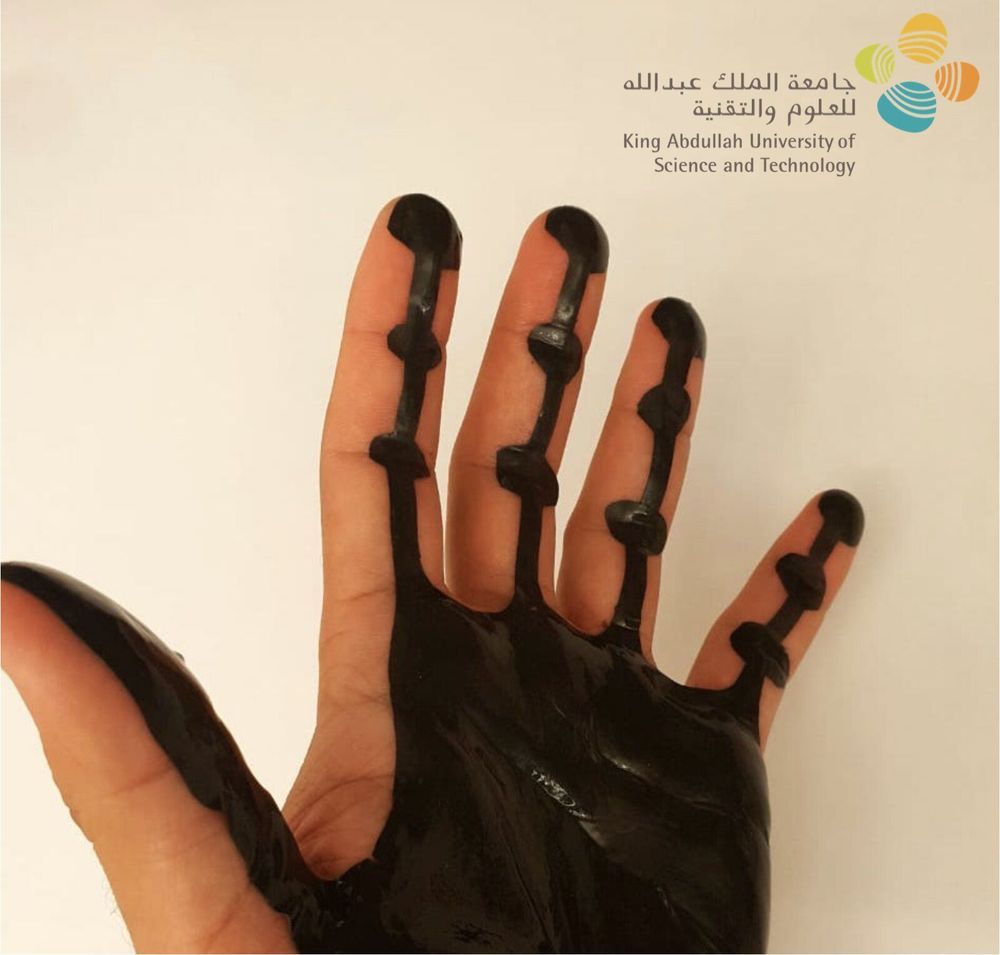
Handy invention: Researchers in Japan came up with a cheaper, smarter myoelectric device. Their five-fingered, 3D-printed hand is controlled using a neural network trained to recognize combined signals—or, as they call them, “muscle synergies.” Details of the bionic hand are published today in the journal Science Robotics.

Syringe-Injectable Electronics with a Plug-and-Play Input/Output Interface

Nano Lett. 2017 Sep 13;17:5836–5842. doi: 10.1021/acs.nanolett.7b03081. Epub 2017 Aug 14.

Syringe-injectable mesh electronics represent a new paradigm for brain science and neural prosthetics by virtue of the stable seamless integration of the electronics with neural tissues, a consequence of the macroporous mesh electronics structure with all size features similar to or less than individual neurons and tissue-like flexibility. These same properties, however, make input/output (I/O) connection to measurement electronics challenging, and work to-date has required methods that could be difficult to implement by the life sciences community. Here we present a new syringe-injectable mesh electronics design with plug-and-play I/O interfacing that is rapid, scalable, and user-friendly to nonexperts. The basic design tapers the ultraflexible mesh electronics to a narrow stem that routes all of the device/electrode interconnects to I/O pads that are inserted into a standard zero insertion force (ZIF) connector.

Humans, Cyborgs, Posthumans: Francesca Ferrando at TEDxSiliconAlley

In the spirit of ideas worth spreading, TEDx is a program of local, self-organized events that bring people together to share a TED-like experience. At a TEDx event, TEDTalks video and live speakers combine to spark deep discussion and connection in a small group. These local, self-organized events are branded TEDx, where x = independently organized TED event. The TED Conference provides general guidance for the TEDx program, but individual TEDx events are self-organized.* (*Subject to certain rules and regulations)

No more dialysis, Scientists Have Developed A Bionic Kidney!

Many of them must wait for years to get a kidney transplant and live normally, with seemingly no other solution on the horizon. However, there’s finally a light in the dark tunnel – scientists from the University of California at San Francisco, USA, have developed the world’s first bionic kidney which can replace damaged kidneys easily and effectively.

Adam Savage Made Real Life Flying Iron Man Armor

Adam Savage has made bullet-proof Iron Man Armor using 3D printed titanium and a flying jet suit from Gravity.

It is more precisely a real-life Titanium Man (comic book enemy of Iron Man).

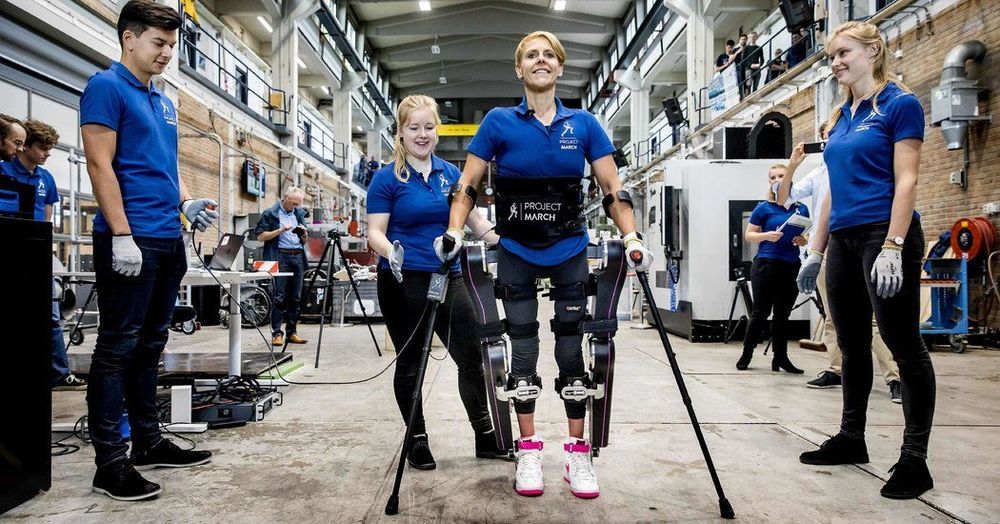
The US military (Special Ops) recently canceled an attempt to make real-life iron man exoskeleton armor with strength enhancement. They are looking to use components of the system to help boost the strength of joints and to increase light-weight armor protection for many soldiers.

Technology Platform

Kyle Reese: The Terminator’s an infiltration unit, part man, part machine. Underneath, it’s a hyperalloy combat chassis — micro processor-controlled, fully armored. Very tough. But outside, it’s living human tissue — flesh, skin, hair, blood, grown for the cyborgs…


3D bioprinting is the automated fabrication of multicellular tissue via spatially defined deposition of cells. The ability to spatially control deposition in the x, y and z axes allows for creation of tissue-specific patterns or compartments, with in vivo-like architecture that mimics key aspects of native biology.

3D bioprinted tissues exhibit a microenvironment more suited to in vivo-like cellular function in comparison to traditional 2D monoculture (or monolayer co-cultures), as well as maintenance of a more defined architecture than is observed in self-aggregated co-culture models.

Read more

/* */