Toggle light / dark theme

Transhumanism Becoming the ‘Relentless Drumbeat’ Shaping Our Future – Advocate

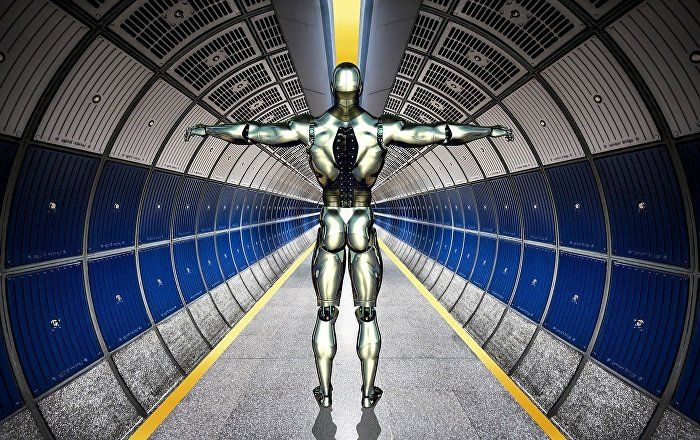
Following recent trends in state-of-the-art developments, from cryptocurrencies and universal basic income to biohacking and the surveillance state, transhumanism has been moved into the limelight of political discourse to reshape humanity’s future.

Andrew Vladimirov, Information security specialist, biohacker and one of the original members of the Transhumanist Party UK, spoke in-depth with Sputnik about the rise of transhumanism and its implications.

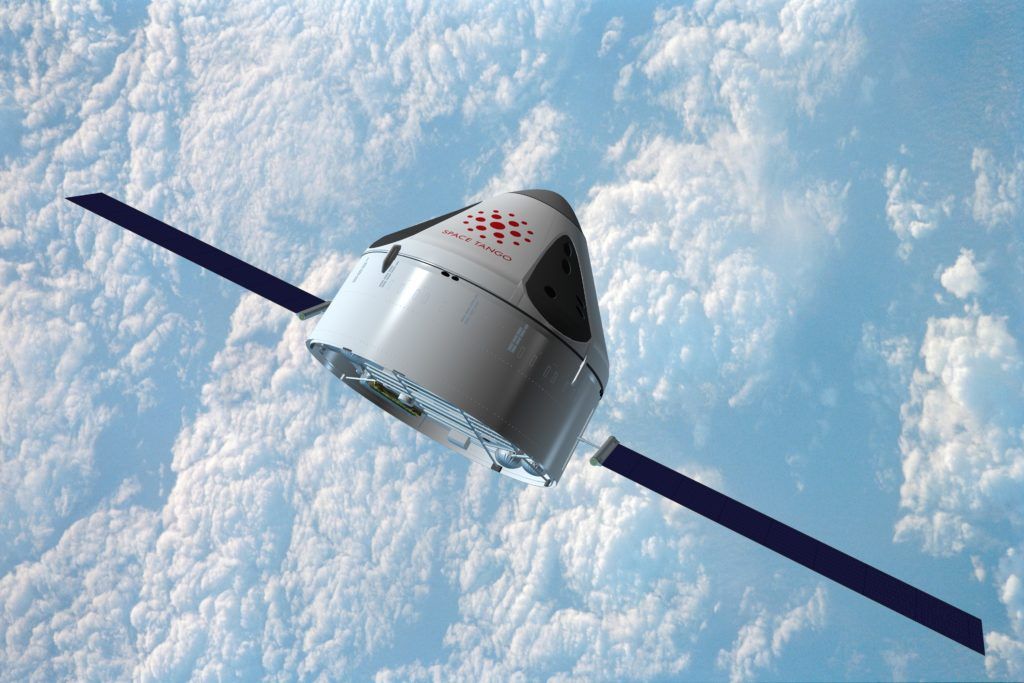
Unveils ST-42 for Scalable Manufacturing in Space for Earth-Based Applications

LEXINGTON, Ky. (NOVEMBER 15, 2018) – Space Tango, a leader in the commercialization of space through R&D, bioengineering and manufacturing in microgravity, today announced ST-42, a fully autonomous robotic orbital platform designed specifically for scalable manufacturing in space. Launching in the mid 2020’s, ST-42 aims to harness the unique environment of microgravity to produce high value products across industries; from patient therapeutics to advanced technology products that have the potential to revolutionize industries here on Earth. ST-42 is an extension of the International Space Station’s (ISS) capabilities, and NASA’s creation of a robust commercial marketplace in low Earth orbit (LEO).

ST-42 will bring the economics of production in orbit into reality coupling autonomy with the reduced cost and larger number of launch vehicle providers. Space Tango expects the platform to be at the forefront of new breakthroughs in knowledge discovery, therapeutic solutions and manufacturing, and to provide the required capabilities for creation of new biomedical and technology product sectors in the commercial Space economy.

Pioneering sociologist foresaw our current chaos 100 years ago

‘’Durkheim’s profound insight was that despite the negative risks associated with the sacred, humans cannot live without it. He asserted that a lack of social solidarity within society would not only lead individuals to experience anomie and alienation, but might also encourage them to engage in extremist politics. Why? Because extremist politics would satiate their desperate desire to belong.


Globally, we are currently experiencing tremendous social and political turbulence. At the institutional level, liberal democracy faces the threat of rising authoritarianism and far-right extremism. At the local level, we seem to be living in an ever-increasing age of anxiety, engendered by precarious economic conditions and the gradual erosion of shared social norms. How might we navigate these difficult and disorienting times?

Emile Durkheim, one of the pioneers of the discipline of sociology, died 101 years ago this month. Although few outside of social science departments know his name, his intellectual legacy has been integral to shaping modern thought about society. His work may provide us with some assistance in diagnosing the perennial problems associated with modernity.

Whenever commentators argue that a social problem is “structural” in nature, they are invoking Durkheim’s ideas. It was Durkheim who introduced the idea that society is composed not simply of a collection of individuals, but also social and cultural structures that impose themselves upon, and even shape, individual action and thought. In his book The Rules of the Sociological Method he called these “social facts.”
Harnessing artificial intelligence for sustainability goals

As ESA’s ɸ-week continues to provoke and inspire participants on new ways of using Earth observation for monitoring our world to benefit the citizens of today and of the future, it is clear that artificial intelligence is set to play an important role.

Taking place at ESA’s centre of Earth observation in Frascati, Italy, on 12–16 November, ɸ-week has drawn hundreds of people from numerous disciplines to explore innovation, new technologies and cross disciplinary cooperation – to see how satellite data coupled with new technologies such as artificial intelligence can bring benefits to science, business, the economy and society at large.

One might initially associate artificial intelligence and machine learning with robots and science fiction. However, it is, without question, seeping into our everyday lives through, for example, digital advertising, speech recognition tools and innovations such as Apple’s Siri and Amazon’s Alexa.

Superbugs pose a dangerous, $65 billion threat to the US health-care system

The economic toll of this superbug crisis is huge: In the United States alone the health-care costs dealing with antimicrobial resistance could reach $65 billion by 2050, according to the OECD report. That is more than the flu, HIV and tuberculosis. If projections are correct, resistance to backup antibiotics will be 70 percent higher in 2030 compared to 2005 in OECD countries. In the same period, resistance to third-line treatments will double across EU countries.


A new report released Wednesday from the OECD estimates that antimicrobial resistant infection is on track to kill 30,000 Americans per year by 2050. The OECD is calling on the US and other rich countries to implement 5 simple reforms to save lives.

Culture may explain why brains have become bigger

A theory called the cultural brain hypothesis could explain extraordinary increases in brain size in humans and other animals over the last few million years, according to a study published in PLOS Computational Biology by Michael Muthukrishna of the London School of Economics and Political Science and Harvard University, and colleagues at the University of British Columbia and Harvard University.

“The problems the Bay Area is facing are the problems of success,” says Grant. The northern California metropolis is among the top 50 science cities in the Nature Index, measured by its contribution to the authorship of 82 high-quality research journals. When assessed solely on the output of its corporate institutions, it ranks number one. The question is whether the Bay Area can, in the face of mounting social problems, retain these companies and the brilliant researchers whose work they depend on.


Scientific innovation has long powered the San Francisco Bay Area’s economy, but community and political challenges could undermine progress.

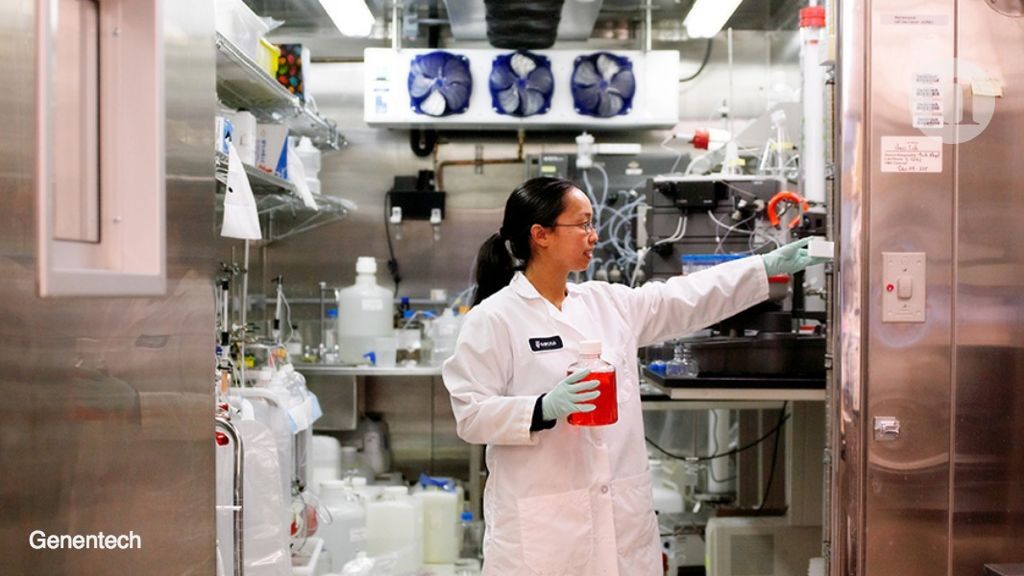
Investors are pouring money into startups that are trying to find a cure for aging

Active discussion on tne most effective technologies in comments to this page post. Number one is blood plasma-derived therapy.


Money has been pouring into startups researching longevity as treatments for aging become more of a reality. Here are the venture funds and pharma companies placing bets.

Almost Half of U.S. Births Happen Outside Marriage, Signaling Cultural Shift

The data show such births in the U.S. and EU are predominantly to unmarried couples living together rather than to single mothers, the report says. The data suggest that societal and religious norms about marriage, childbearing and women in the workforce have changed, said Kelly Jones, the director for the Center on the Economics of Reproductive Health at the Institute for Women’s Policy Research.


Births outside marriage have skyrocketed in developed nations, according to a report from the United Nations.

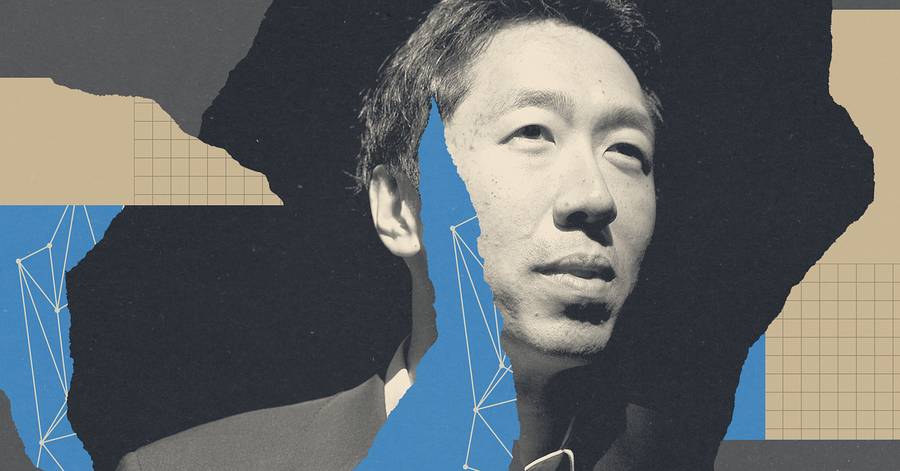
AI Guru Andrew Ng on the Job Market of Tomorrow

…but Our Timelines Are Too Rosy I would actually welcome a correction in public opinion about what AI can and cannot do. This has happened to me multiple times, where I would listen to a CEO on stage make an announcement about what their company is doing with AI, and then 20 minutes later I’d talk to one of their engineers, and they’d say, “No, we’re not doing that, and we have no idea how to do it.” I think it still takes judgment to know what is and what isn’t possible with AI, and when the C-suite does not yet have that judgment it’s possible for companies to make promises very publicly that are just not feasible. Frankly, we see some of this in the self-driving space. Multiple auto [original equipment manufacturer] CEOs have promised self-driving car roadmaps that their own engineers think are unrealistic. I feel [CEOs are] being sincere but just not really understanding what can be done in a certain timeframe.


The co-founder of Google’s deep-learning research team on the promise of a conditional basic income, the need for a skills-based education system and what CEOs don’t understand about artificial intelligence.

/* */