Toggle light / dark theme

When Living 200 Year Becomes Normal — The End of Ageing (Medical Science Documentary) | Only Human

Do you want to stop ageing? Do you want to live forever? Can science help you cheat death? In this pioneering documentary, Professor Rose Anne Kenny takes us through the science and the consequences of living longer lives.

Imagine for a moment that old age became a thing of the past. Today, for better or for worse, it would appear that eternal life may soon be a reality. Some scientists are forecasting that the only way many humans will die is if they are shot or run over by a bus.

The programme unveils what is happening in age prevention, shows how we can lengthen our own lifespans and explains how some scientists now believe we are closer than ever to finding the Elixir of Life.

Such power over life itself poses many profound questions: what impact is it going to have on our societies? What preparations should our governments be making for an ever-ageing population? Do people really want to live longer and suffer the inevitable weakening of their capacities? And is it morally right to transcend human fallibility and assume the role of God?

https://goo.gl/Ro2hdY

Follow us on Facebook

The mystery of millipede mating revealed in landmark imaging study

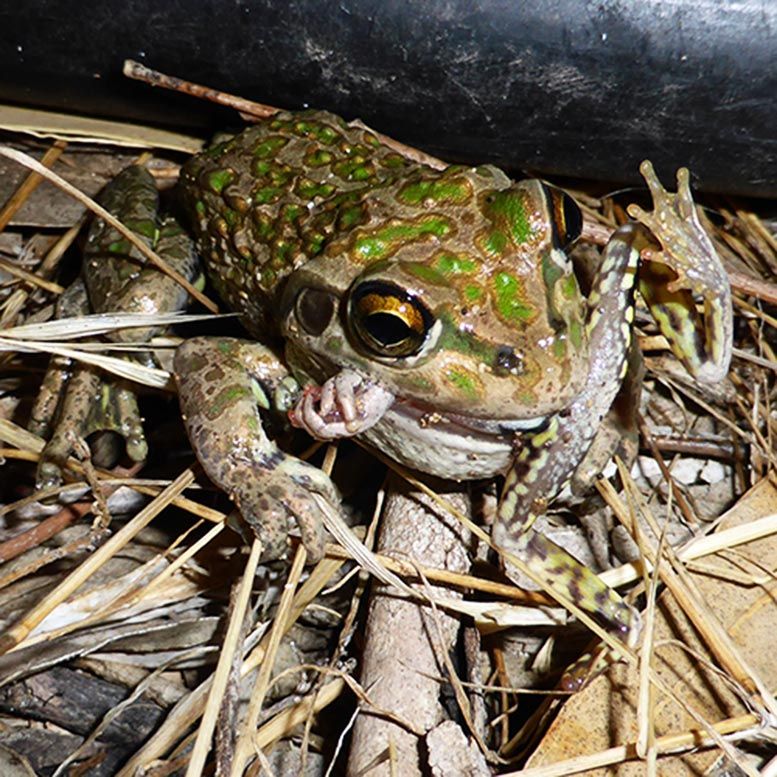
A team of US scientists has just solved a long-standing biological mystery – how exactly do millipedes mate? Using a variety of novel imaging methods, including microscopic ultraviolet photography and micro-CT scanning, the research finally figured out how these tiny creatures get it on.

“This is the first time we’ve been able to understand these millipedes’ mechanism of insertion, how the male and female organs interact with each other,” says Petra Sierwald, from Chicago’s Field Museum and one of the study’s authors. “Before this, we had no idea how he would actually get the sperm into her.”

Millipedes can generally be somewhat shy organisms, so getting them to mate in laboratory conditions hasn’t been easy. The new study focused on a type of small, brown North American millipede called Pseudopolydesmus, known for being more than willing to mate, even in the most exhibitionist situations.

VAYU: NASA scientist starts world’s first yoga university outside India

The announcement by the university came within three months of receiving official recognition from the Bureau for Private Postsecondary Education, California to offer yoga-based higher education programmes in November 2019.

VAYU would facilitate collaborative research, credit transfers and joint programmes with multiple premier universities across the world.

“As Swami Vivekananda said education is the manifestation of perfection already in man, VAYU aims at providing man-making and nation-building education by promoting an all-round personality development in students of generation next,” Nagendra said in a statement to PTI.

‘Rosetta stone’ for urban scaling makes sense of how cities change across time and space

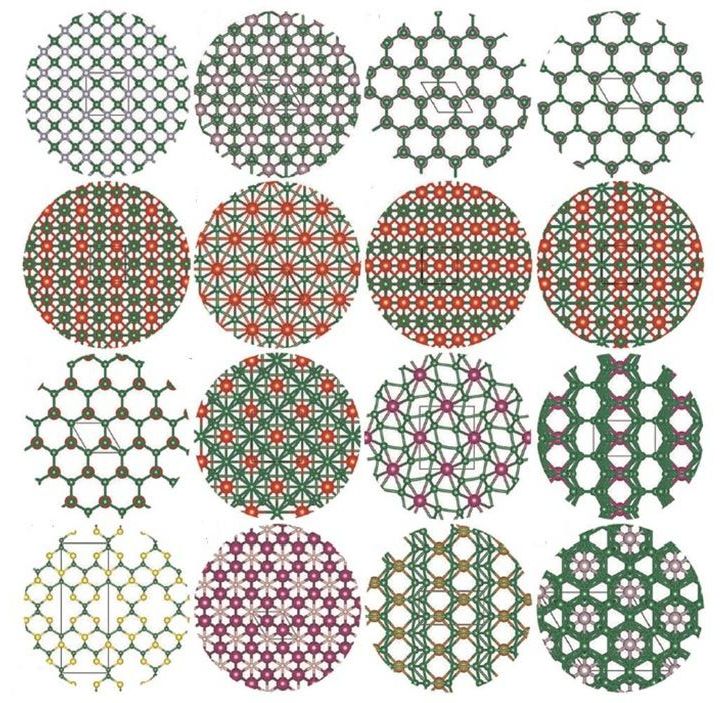
Cities change as they grow — not only by adding area or population but also in a variety of other ways, from the length and width of their roads to economic growth to the distribution of elementary schools. Social scientists often clash over the best way to measure change as a city swells. Traditionally, they’ve taken a cross-sectional approach, which means collecting data on a large number of cities of diverse sizes at the same moment in time. More recently, some researcher…


New work reconciles divergent methods used to analyze the scaling behavior of cities.

Can art be effective medicine for treatment of mental and physical illness?

Yes! In this video with my dear friend, artist Nicholas Wilton, I review the scientific data linking creativity and disease remission from Mind Over Medicine. Plus, Nick reads the quote he wrote in Brene Brown’s Daring Greatly about art-making as treatment for perfectionism. If you or someone you love has been hoping to become a “health outlier” who experiences a better than usual outcome from a health struggle, or if you just love art and want to improve your art-making as part of your prescription for optimal health and a vital, fully expressed life, we hope this will offer you inspiration—and a few medicinal laughs! (As an OB/GYN, I couldn’t resist drawing the female reproductive systems when we got to the art-making part.)

Nick will be teaching a wonderful free online art class ART 2 LIFE that starts on Valentine’s Day, so give yourself this gift of your love of art-making. You can sign up for the free course here. https://share.tellafrienda2l.com/a/a2lworkshop/LissaR

Electron transport chain

One day, we gonna engineer all of these to build better humankind for those capable of surviving in the vas space.


From our free online course, “Cell Biology: Mitochondria”: https://www.edx.org/course/cell-biology-mitochondria-harvard…n=harvardx

Harvard Professor Rob Lue explains how mitochondrial diseases are inherited and discusses the threshold effect and its implications for mitochondrial disease inheritance.

— Subscribe to our channel:

— Sign up for emails about new courses: https://harvardx.link/email

Elon Musk is recruiting for Tesla: I ‘don’t care if you even graduated high school’

Elon Musk is recruiting for his AI team at Tesla, and he says education is “irrelevant.” The team members will report “directly” to Musk and “meet/email/text” with Musk “almost every day.” Musk will also throw a “super fun” party at his house with the Tesla artificial intelligence and autopilot teams.

Early Life Experiences Biologically and Functionally Mature the Brain

Experiences early in life have an impact on the brain’s biological and functional development, shows a new study by a team of neuroscientists. Its findings, which centered on changes in mice and rats, reveal how learning and memory abilities may vary, depending on the nature of individual experiences in early life.

“The implications of this are many, including environmental influences on mental health, the role of education, the significance of poverty, and the impact of social settings,” says Cristina Alberini, a professor in New York University’s Center for Neural Science and the senior author of the paper, which appears in the journal Nature Communications.

“These results also offer promise for potential therapeutic interventions,” add Alberini and Benjamin Bessières, an NYU postdoctoral researcher and the paper’s co-lead author. “By identifying critical time periods for brain development, they provide an indicator of when pharmaceutical, behavioral or other type of interventions may be most beneficial.”

The scent of a rose improves learning during sleep

Fragrance helps learning even during sleep!


Effortless learning during sleep is the dream of many people. The supportive effect of smells on learning success when presented both during learning and sleep was first proven in an extensive sleep laboratory study. Researchers at the University of Freiburg—Medical Center, the Freiburg Institute for Frontier Areas of Psychology and Mental Health (IGPP) and the Faculty of Biology at the University of Freiburg have now shown that this effect can be also achieved very easily outside the lab. For the study, pupils in two school classes learned English vocabulary—with and without scent sticks during the learning period and also at night. The students remembered the vocabulary much better with a scent. The study was published in the Nature Group’s Open Access journal Scientific Reports on 27 January 2020.

“We showed that the supportive effect of fragrances works very reliably in and can be used in a targeted way,” said study leader PD Dr. Jürgen Kornmeier, head of the Perception and Cognition Research Group at the Freiburg-based IGPP and scientist at the Department of Psychiatry and Psychotherapy at the University of Freiburg—Medical Center in Germany.

The smell of roses when learning and sleeping

For the study, first author and student teacher Franziska Neumann conducted several experiments with 54 students from two 6th grade classes of a school in southern Germany. The young participants from the group were asked to place rose-scented incense sticks on their desks at home while learning English and on the bedside table next to the bed at night. In another experiment, they also placed the incense sticks on the table next to them during a vocabulary test at school during an English test. The results were compared with test results in which no incense sticks were used during one or more phases.

/* */