Scientists have found a new chemical process to turn a stinky, toxic gas into a clean-burning fuel.
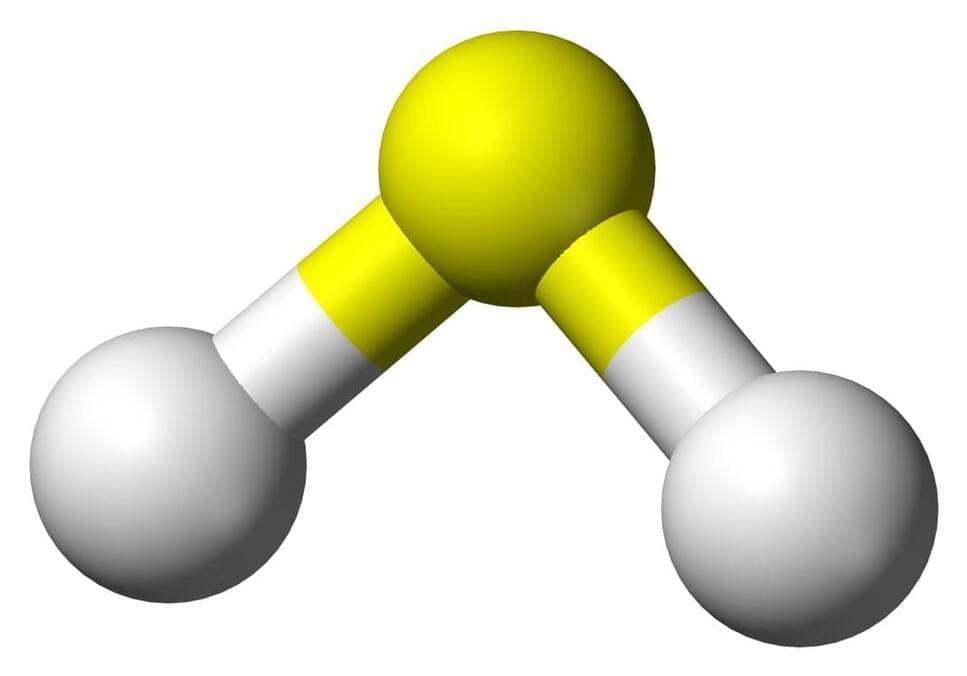
The process, detailed recently in the American Chemical Society journal ACS Sustainable Chemical Engineering, turns hydrogensulfide —more commonly called “sewer gas”—into hydrogen fuel. Hydrogen sulfide is emitted from manure piles and sewer pipes and is a key byproduct of industrial activities including refining oil and gas, producing paper and mining.
The process detailed in this study uses relatively little energy and a relatively cheap material—the chemical iron sulfide with a trace amount of molybdenum as an additive.
Hang onto your superconductors everyone. Scientists from the University of Chicago have discovered a new type of matter, where they may be able to conduct energy and electricity at 100% efficiency, without losing heat or friction.
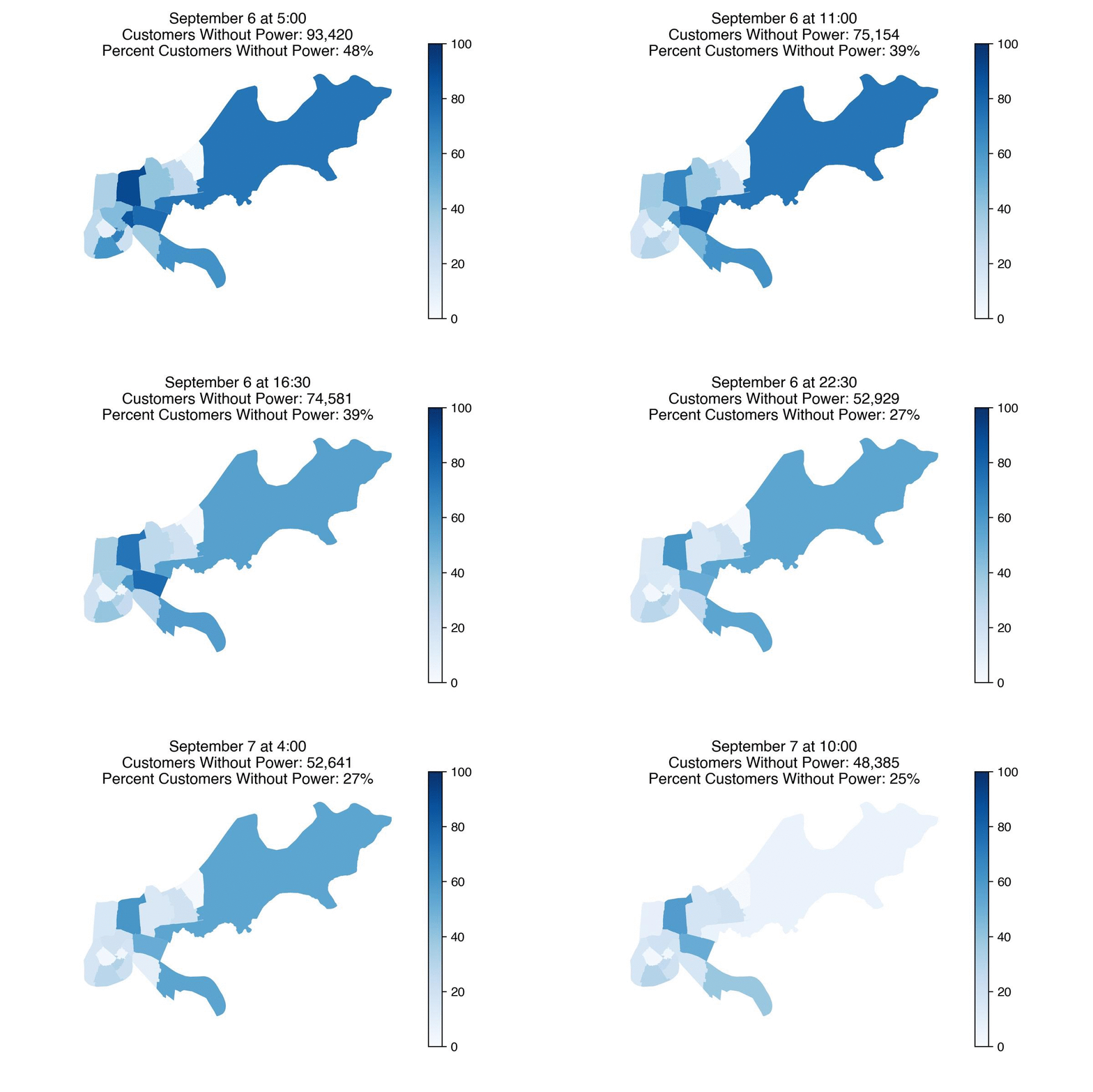
Entergy has restored power to more than half a million of its customers, Louisiana’s largest utility said Tuesday morning.
But there are still roughly 370,000 customers without power across the state, with about 50,000 of them in New Orleans. Entergy expects 90% of its customers in the city to have power back Wednesday.
Some neighborhoods such as Venetian Isles will likely take longer due to more damage in those areas. Details of power restoration timelines for specific neighborhoods in New Orleans can be found here.
All the way back in the 1940s, in Switzerland, work was underway on a breakthrough Bus that would be pure electric, and not need batteries. Introducing the Gyro-bus, a innovative look at storing energy in a flywheel! Mechanical Energy storage baby, and we’re doing a deep dive this week on Two Bit da Vinci!
BAE Systems unveiled its ultra-small MicroGRAM-M global positioning system (GPS) receiver compatible with next-generation M-Code military GPS signals that are resistant to jamming and spoofing.
According to the defense company, about the size of a postage stamp, MicroGRAM-M is “the world’s smallest, lightest, and most power-efficient M-Code embedded GPS receiver.” The GPS receiver is intended to enable assured positioning, navigation, and timing (PNT) for size-constrained and other micro-applications.
MicroGRAM-M features rapid, secure GPS signal acquisition, enhanced security and resiliency, anti-jamming, and anti-spoofing capabilities. At its heart is a proven, tamper-proof M-Code Common GPS Module that encapsulates classified data and signal processing, according to the manufacturer.
Despite what the mainstream media have been telling you for decades now, the future of consumer and commercial transportation is not electric.
It also won’t be gas-powered…
Instead, it will be a combination of the two, and it will all be made possible by a marvel of modern science — a wonder fuel — that few people even know exists.
HOUSTON — (Jan. 27 2020) — That banana peel, turned into graphene, can help facilitate a massive reduction of the environmental impact of concrete and other building materials. While you’re at it, toss in those plastic empties. A new process introduced by the Rice University lab of chemist James Tour can turn bulk quantities of just about any carbon source into valuable graphene flakes. The process is quick and cheap; Tour said the “flash graphene” technique can convert a ton of coal, food waste or plastic into graphene for a fraction of the cost used by other bulk graphene-producing methods. “This is a big deal,” Tour said. “The world throws out 30% to 40% of all food, because it goes bad, and plastic waste is of worldwide concern. We’ve already proven that any solid carbon-based matter, including mixed plastic waste and rubber tires, can be turned into graphene.” As reported in Nature, flash graphene is made in 10 milliseconds by heating carbon-containing materials to 3,000 Kelvin (about 5,000 degrees Fahrenheit). The source material can be nearly anything with carbon content. Food waste, plastic waste, petroleum coke, coal, wood clippings and biochar are prime candidates, Tour said. “With the present commercial price of graphene being $67,000 to $200,000 per ton, the prospects for this process look superb,” he said.
Scientists at Rice University are using high-energy pulses of electricity to turn any source of carbon into turbostratic graphene in an instant. The process promises environmental benefits by turning waste into valuable graphene that can then strengthen concrete and other composite materials.
This is where floating wind farms come into play. The world’s first floating wind farm, Hywind, opened in 2,017 almost 25 miles off the coast of Aberdeen in Scotland. The wind farm counts six floating wind turbines that are slotted in a buoyant cylinder filled with heavy ballast to make it float vertically. Because they’re only tethered to the seabed with thick mooring lines, they can operate in waters more than 3,000 feet deep.
Hywind is powering around 36,000 British homes, and it has already broken U.K. records for energy output. Wind Catching Systems launched the same year Hywind opened. It claims that one unit could power up between 80,000 and 100,000 European households. In ideal conditions, where the wind is at its strongest, one wind catcher unit could produce up to 400 gigawatt-hours of energy. By comparison, the largest, most powerful wind turbine on the market right now produces up to 80 gigawatt-hours.
The Desert Quartzite Solar+Storage Project is in Riverside County, California, and could enter service in early 2024.
From pv magazine USA
EDF Renewables North America, the US unit of French energy giant EDF, and Clean Power Alliance signed a 15-year power purchase agreement (PPA) for the Desert Quartzite Solar-plus-Storage project.
Juno Solar is one of five projects that SB Energy is building this year, with an additional 1.3 GW scheduled to go online over the next seven months.
From pv magazine USA
Project construction was performed by Signal Energy. SB Energy, along with SOLV, will provide ongoing operations and maintenance services and asset management. First Solar supplied its Series 6 modules and Nextracker supplied its NX Horizon smart solar tracker.