An email reveals what I have been saying for long…Hossenfelder’s video: https://www.youtube.com/watch?v=shFUDPqVmTgMy books: www.amazon.com/Alexander-Unzi…
Category: energy – Page 65
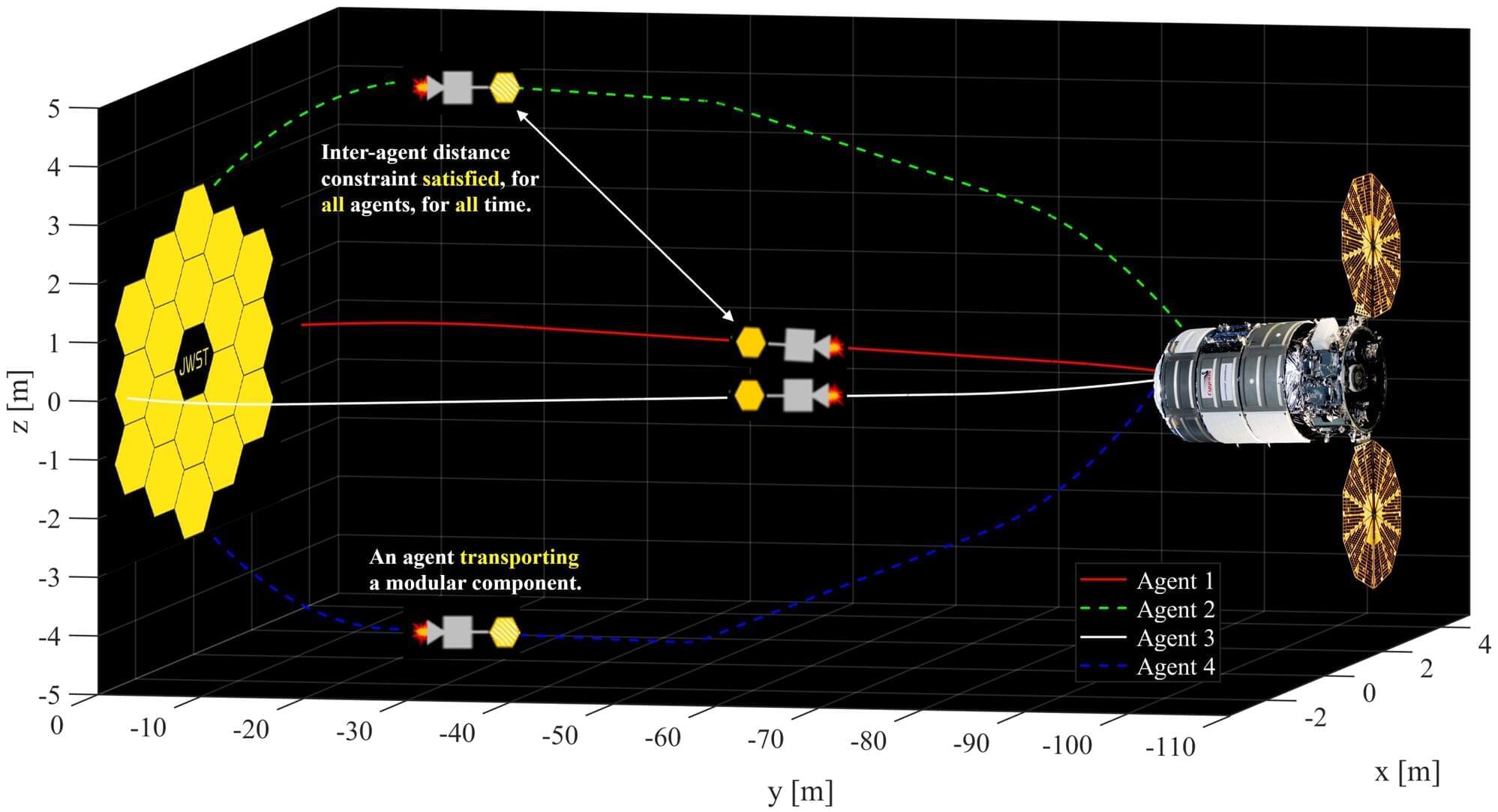
Research sheds light on using multiple CubeSats for in-space servicing and repair missions
As more satellites, telescopes, and other spacecraft are built to be repairable, it will take reliable trajectories for service spacecraft to reach them safely. Researchers in the Department of Aerospace Engineering in The Grainger College of Engineering, University of Illinois Urbana-Champaign are developing a methodology that will allow multiple CubeSats to act as servicing agents to assemble or repair a space telescope.
Published in The Journal of the Astronautical Sciences, their method minimizes fuel consumption, guarantees that servicing agents never come closer to each other than 5 meters, and can be used to solve pathway guidance problems that aren’t space related.
“We developed a scheme that allows the CubeSats to operate efficiently without colliding,” said aerospace Ph.D. student Ruthvik Bommena. “These small spacecraft have limited onboard computation capabilities, so these trajectories are precomputed by mission design engineers.”
New optical tech boosts gravitational-wave detection capabilities
In a paper published earlier this month in Physical Review Letters, a team of physicists led by Jonathan Richardson of the University of California, Riverside, showcases how new optical technology can extend the detection range of gravitational-wave observatories such as the Laser Interferometer Gravitational-Wave Observatory, or LIGO, and pave the way for future observatories.
Since 2015, observatories like LIGO have opened a new window on the universe. Plans for future upgrades to the 4-kilometer LIGO detectors and the construction of a next-generation 40-kilometer observatory, Cosmic Explorer, aim to push the gravitational-wave detection horizon to the earliest times in the history of the universe, before the first stars formed. However, realizing these plans hinges on achieving laser power levels exceeding 1 megawatt, far beyond LIGO’s capabilities today.
The research paper reports a breakthrough that will enable gravitational-wave detectors to reach extreme laser powers. It presents a new low-noise, high-resolution adaptive optics approach that can correct the limiting distortions of LIGO’s main 40-kilogram mirrors which arise with increasing laser power due to heating.

Understanding Titan’s Interior and History Through Tidal Friction
What can a moon’s tidal friction teach us about its formation and evolution? This is what a recent study published in Science Advances hopes to address as a team of researchers at the University of California Santa Cruz investigated a connection between the spin rate and tidal energy on Saturn’s moon, Titan, to determine more about Titan’s interior. This study has the potential to help researchers better understand the internal processes of Titan, leading to better constraints on the existence of a subsurface ocean.
For the study, the researchers used a combination of data obtained by NASA’s now-retired Cassini spacecraft and a series of mathematical calculations to determine Titan’s tidal dissipation, which is the amount of tidal energy lost in an object from friction and other processes, and for which the only moons in the solar system this has been successfully been accomplished being the Earth’s Moon and Jupiter’s volcanic moon, Io. Better understanding a moon’s tidal dissipation helps researchers better understand its formation and evolution, which the researchers successfully estimated for Titan.
“Tidal dissipation in satellites affects their orbital and rotational evolution and their ability to maintain subsurface oceans,” said Dr. Brynna Downey, who is a postdoctoral researcher at the Southwest Research Institute in Colorado and lead author of the study. “Now that we have an estimate for the strength of tides on Titan, what does it tell us about how quickly the orbit is changing? What we discovered is that it’s changing very quickly on a geologic timescale.”
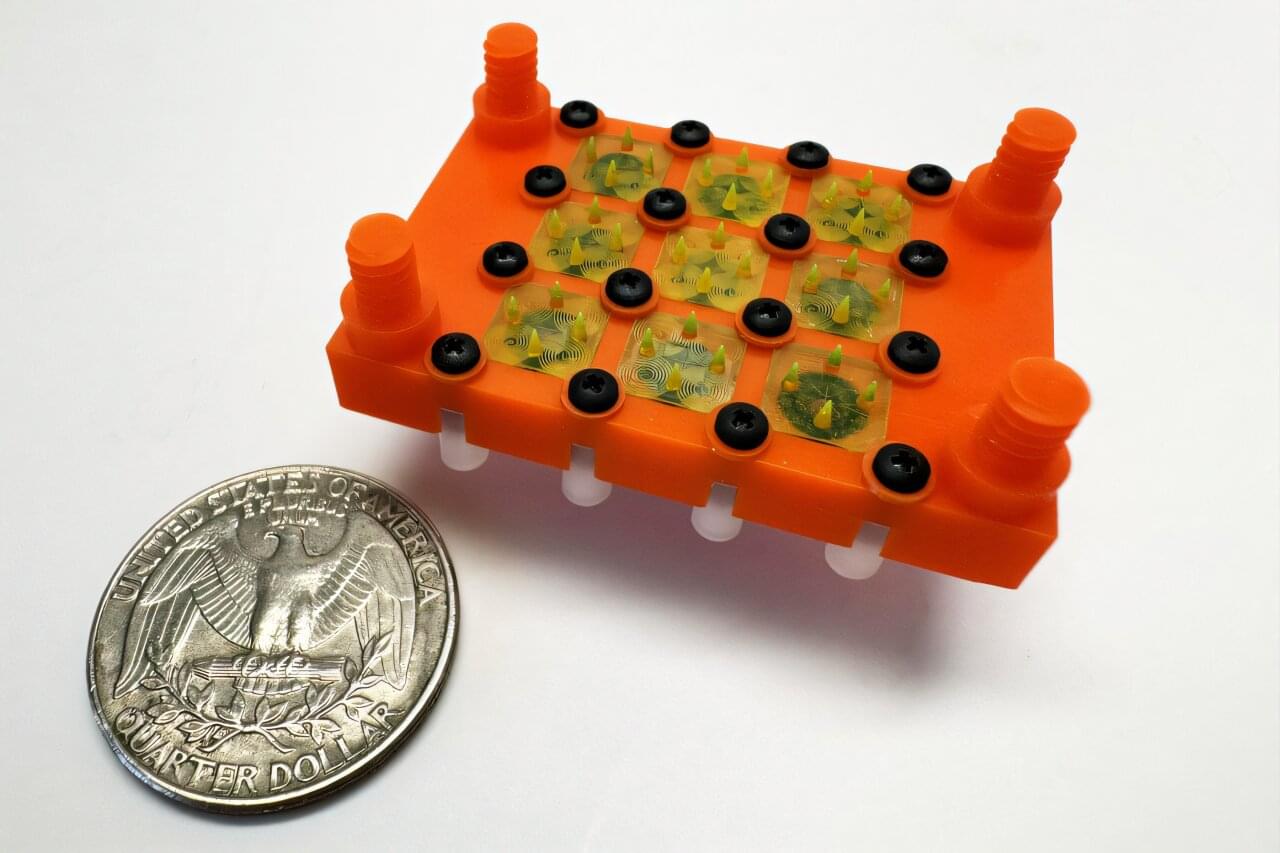
Engineers develop a fully 3D-printed electrospray engine that can power tiny satellites
An electrospray engine applies an electric field to a conductive liquid, generating a high-speed jet of tiny droplets that can propel a spacecraft. These miniature engines are ideal for small satellites called CubeSats that are often used in academic research.
Since electrospray engines utilize propellant more efficiently than the powerful, chemical rockets used on the launchpad, they are better suited for precise, in-orbit maneuvers. The thrust generated by an electrospray emitter is tiny, so electrospray engines typically use an array of emitters that are uniformly operated in parallel.
However, these multiplexed electrospray thrusters are typically made via expensive and time-consuming semiconductor cleanroom fabrication, which limits who can manufacture them and how the devices can be applied.

South Korean professor develops toilet that turns human waste into energy
A professor at South Korea’s Ulsan National Institute of Science and Technology (UNIST) has developed BeeVi, an eco-friendly toilet that uses human waste to generate electricity to power a building.
The BeeVi toilet, developed by Professor Cho Jae-weon, is equipped with a vacuum pump that sends human waste into an underground tank.
UNIST’s Breakthrough Additive Enhances Lithium-air Battery Efficiency and Lifespan
A team of researchers has unveiled an innovative additive that significantly enhances the lifespan and efficiency of lithium-air batteries. This advancement, announced on Feb. 10, potentially more than doubles the driving range of vehicles compared to those using traditional lithium-ion batteries. The research was spearheaded by Prof. Kwak Won-jin from the Ulsan National Institute of Science and Technology (UNIST), in collaboration with Prof. Seo Seong-eun from Ajou University and Prof. Chen Shuming from Oberlin College in the United States.
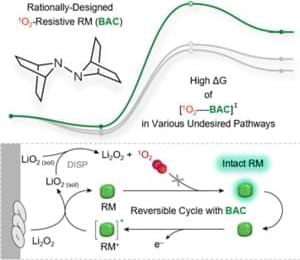
Lithium-air batteries, known for their high energy density, use lithium as the anode and oxygen from the air as the cathode, offering up to five times the capacity of conventional lithium-ion batteries. However, these batteries face challenges due to the formation of reactive oxygen species (ROS) during operation, which can degrade battery components and reduce efficiency. The newly developed additive, a ‘redox mediator’ named BAC, addresses these challenges by maintaining a consistent charging voltage level of 3.5V, even after exposure to singlet oxygen, a particularly reactive form of oxygen.
The redox mediator, although comprising only 5% of the battery electrolyte’s weight, plays a crucial role in determining the energy efficiency and lifespan of lithium-air batteries. By reducing the voltage required for charging, the BAC mediator enhances energy efficiency and minimizes battery overload, thereby extending its lifespan. Researcher Lee Hyun-wook, the first author of the study, explained, “We were able to develop such a redox mediator through a design method that analyzes the molecular stereostructure.”
Physicists stabilize superconducting states at ambient pressure
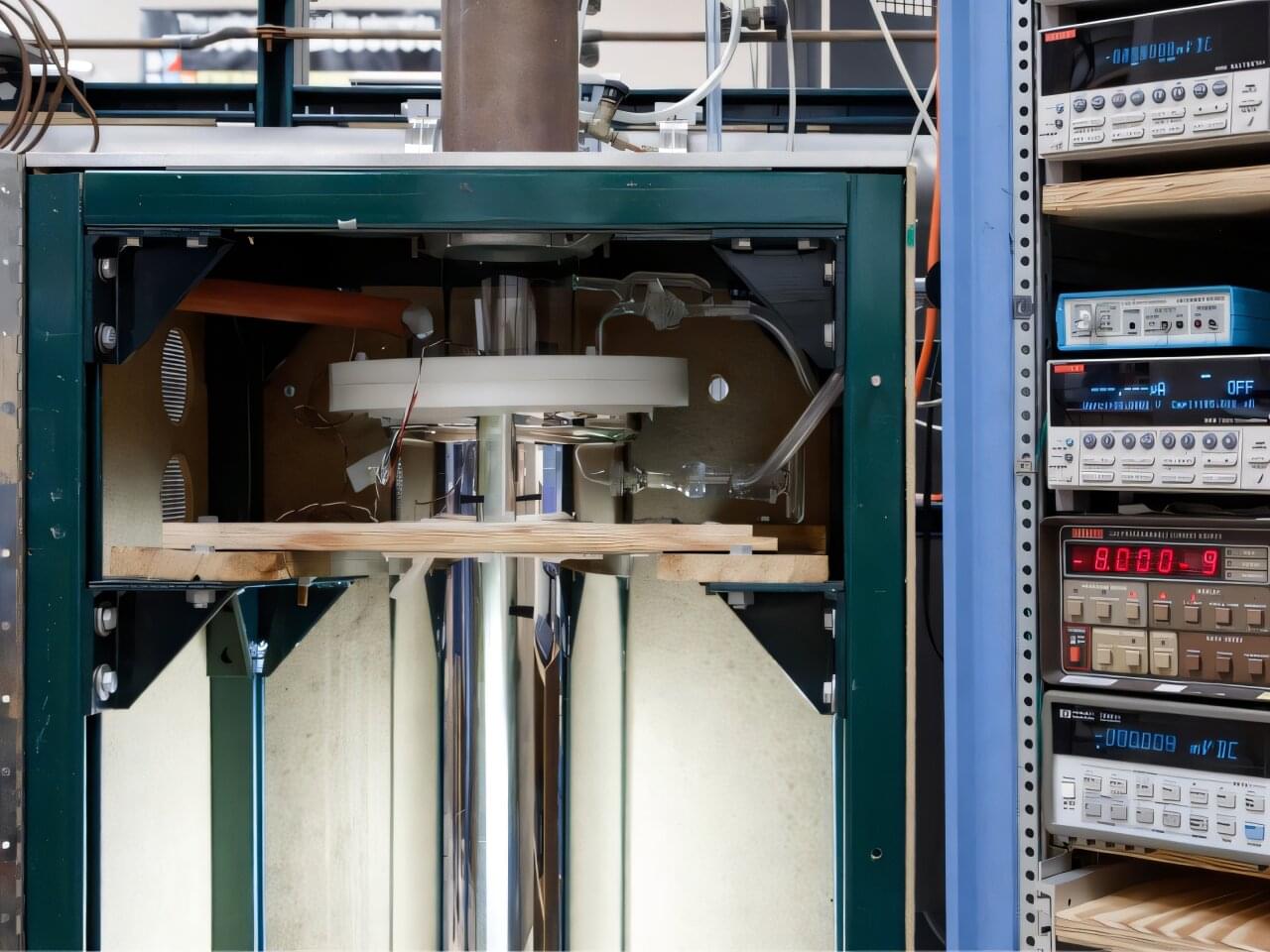
Researchers at the University of Houston’s Texas Center for Superconductivity have achieved another first in their quest toward ambient-pressure high-temperature superconductivity, bringing us one step closer to finding superconductors that work in everyday conditions—and potentially unlocking a new era of energy-efficient technologies.
In their study titled “Creation, stabilization, and investigation at ambient pressure of pressure-induced superconductivity in Bi0.5 Sb1.5 Te3,” published in the Proceedings of the National Academy of Sciences, professors Liangzi Deng and Paul Ching-Wu Chu of the UH Department of Physics set out to see if they could push Bi0.5 Sb1.5 Te3 (BST) into a superconducting state under pressure—without altering its chemistry or structure.
“In 2001, scientists suspected that applying high pressure to BST changed its Fermi surface topology, leading to improved thermoelectric performance,” Deng said. “That connection between pressure, topology and superconductivity piqued our interest.”
Global study finds dramatic disparities in progress toward Sustainable Development Goals
The Sustainable Development Goals (SDGs) constitute the leading global framework for achieving human progress, economic prosperity, and planetary health. This framework emphasizes issues such as public health, education for all, gender equality, zero hunger, adoption of clean and renewable energy, and biodiversity conservation. Yet, despite this comprehensive agenda, questions remain about how different nations navigate their own paths toward these goals.
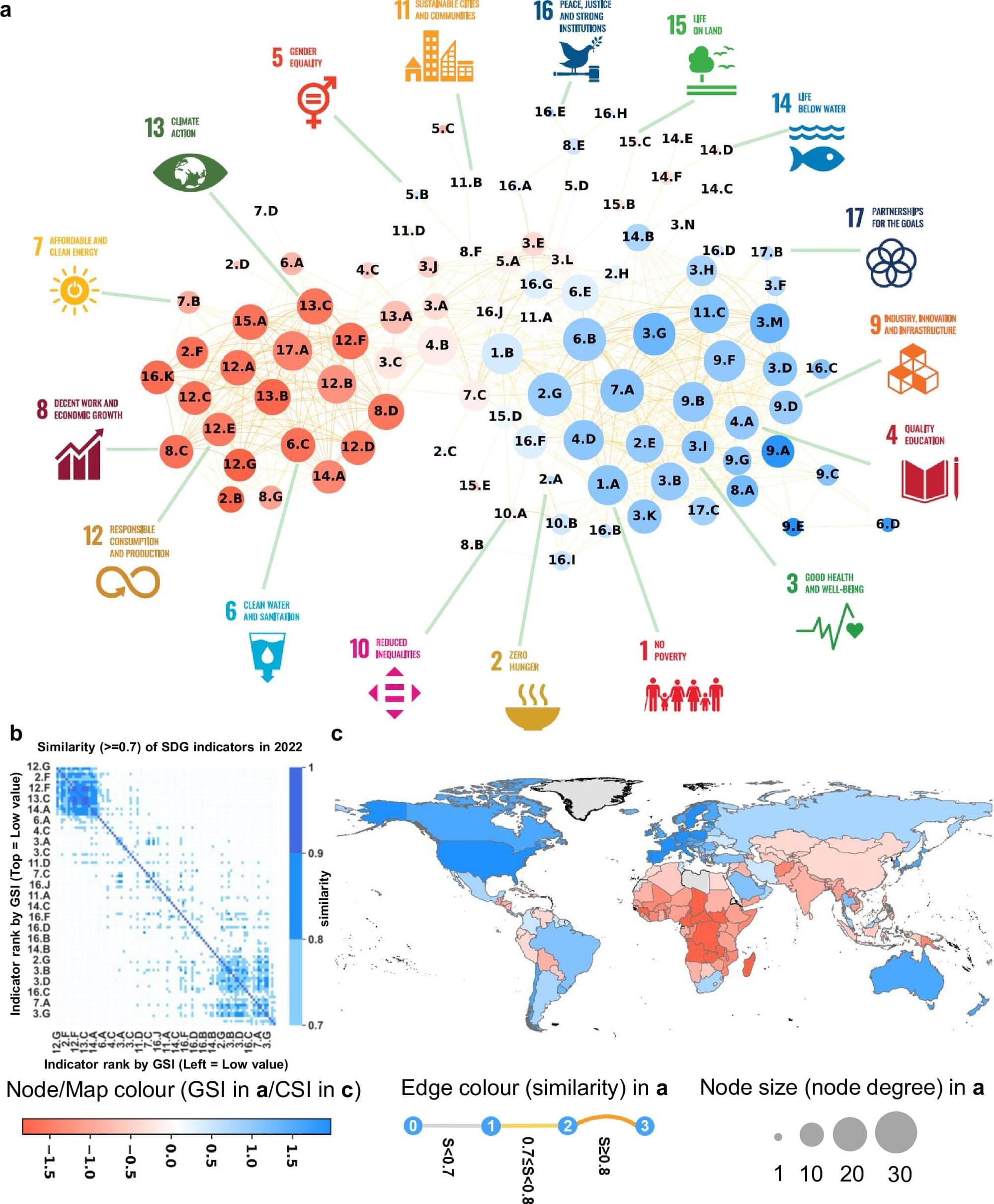
A recent study, published in Nature Communications provides insights into the trajectories of 166 countries as they have worked toward the SDGs over the past two decades.
By applying network analysis and the Product Space methodology, commonly used in the field of complexity economics, the researchers constructed the “SDG Space of Nations.” The elaborate model shows that countries do not simply march in lockstep toward sustainable development; instead, they cluster into distinctive groups, each with its own strengths and specializations, sometimes quite unexpected.