Of my Sci-Fi short film Simulation.
Category: entertainment – Page 84
Square Enix Shows Real-Time Graphics Of The Future
Square Enix studio Luminous Productions has unveiled a new tech demo called “Back Stage” that shows how it uses ray-tracing tech. The demo is rendered in real-time.
Luminous Productions was established last year and staffed with former Final Fantasy XV staff. The game’s director Hajime Tabata initially headed up the studio. He has since left Square Enix.
As Siliconera points out, this tech demo shows off next-gen possibilities for its in-house Luminous Engine. Here, the real-time ray tracing shows the character’s face and emotions reflected in a realistic way that simply isn’t possible in previous real-time rending tech.
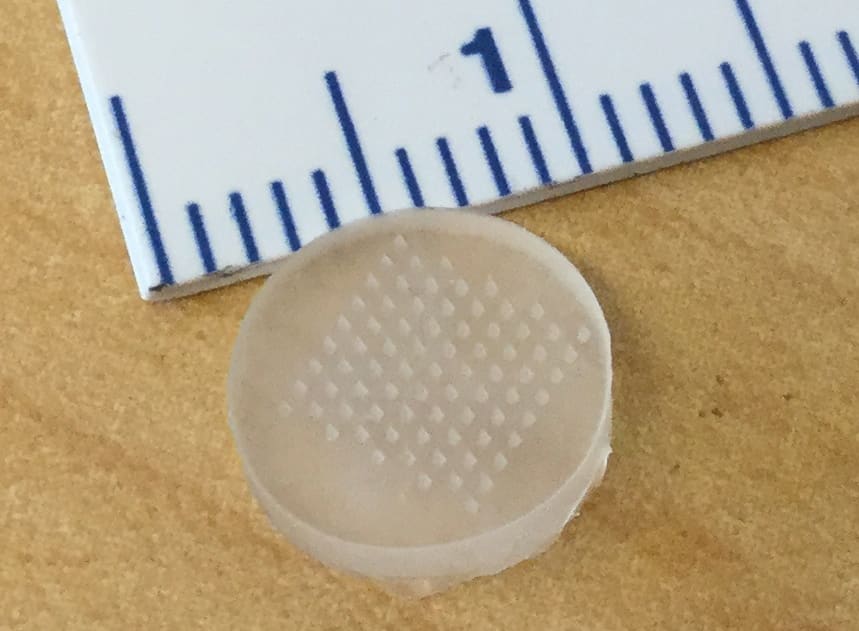
MIT scientists say new skin patch to deliver cancer medication in 60 seconds shows promise in mice
Researchers from Massachusetts Institute of Technology (MIT) developing new method to deliver #cancer medication.
An experimental patch designed to deliver cancer medications through the skin showed promise in mice and human skin samples, according to new research presented Sunday at the American Chemical Society conference in California, San Diego.
Researchers at the Massachusetts Institute of Technology developed the patch to fight melanoma, a deadly but highly treatable form of skin cancer. The patch is less than a centimeter long and coated with a sticky film, which allows it to be applied and removed from the skin in a minute.
The researchers used the device to deliver an antigen in healthy mice and then compared the immune response to treatment methods often used to vaccinate against the flu and measles. The researchers said the patch elicited “a robust antibody response” and “show promise in eliciting a strong immune response in human skin.”

Google’s Stadia game service is officially coming November: Everything you need to know
Today, Google has revealed the key details that were conspicuously missing from its March announcement of the new Stadia game streaming service. Namely, what the heck we’re going to be able to play, how much we’ll pay, and when we can get started with the exciting new service — which beams high-end console and PC games to any Chrome web browser, Chromecast Ultra TV dongle or Pixel 3 smartphone from beefy new Google servers.
The short version: Google Stadia will launch in November, in 14 different territories including the US, UK and Canada, with at least 31 games from 21 different publishers, for an initial “Founder’s Edition” price of $130 for a hardware starter kit with three months of premium service, and $10 a month afterwards. There’s a separate free tier coming in 2020.
Pre-orders for the “Founder’s Edition” are now open, and I’ll explain what it is in a tad, but there’s something important you should know first.
The First Human Head Transplant Was Successful? THE TRUTH || DOCTOR SERGIO CANAVERO
This is interesting because it has today type applications, but I wonder, what about a 3D printed body? Remember the movie Starship Troopers when they repaired that guy’s leg in the water tank thing? I’ve seen similar devices in other movies. Could be easier than removing the head completely and safer, when the ability to print human tissues is feasible.
GUYS HOPE YOU LIKE THE VIDEO PLEASE LIKE AND SUBSCRIBE TO MY CHANNEL AND HIT THE BELL ICON.
And if you have any question related to the video then please comment down below.
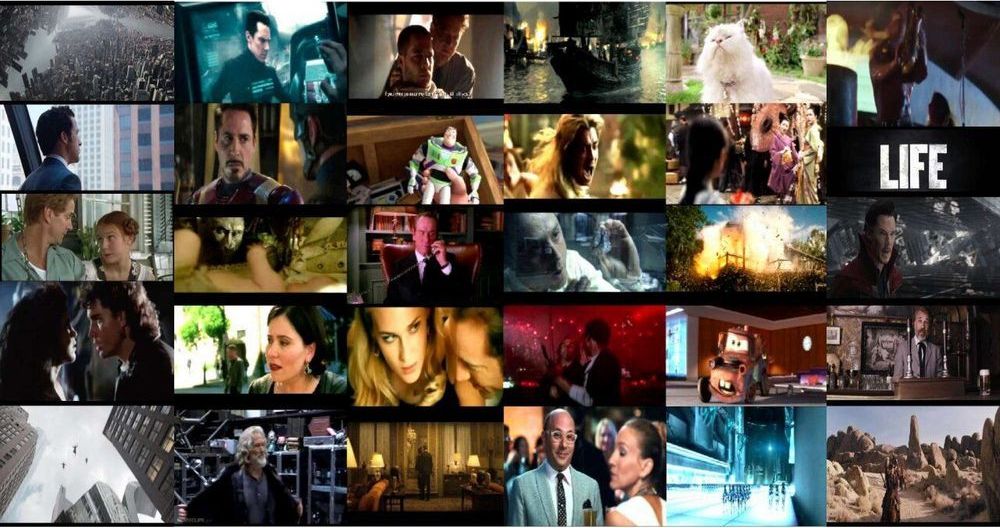
Investigating the best features for predicting a movie’s genre and estimated budget
A team of researchers at the University of Virginia has recently carried out a large-scale analysis aimed at identifying features in film trailers that best predict a movie’s genre and estimated budget. In their study, outlined in a paper pre-published on arXiv, the researchers specifically compared the effectiveness of visual, audio, text, and metadata-based features.
“Video understanding is the next frontier after image understanding,” Vicente Ordonez, one of the researchers who carried out the study, told TechXplore. “However, much work on video understanding has so far focused on short clips with a human performing a single action. We wanted something longer, but there is also the issue of computational power. Video trailers seemed like an intermediate compromise, as they display a multitude of things, from scary to funny.”
Movie trailers are short and can easily be paired with movie descriptions. Ordonez and his colleagues realized that these characteristics make them ideal to investigate parallels between video and language.
Quantum engineering atomically smooth single-crystalline silver films
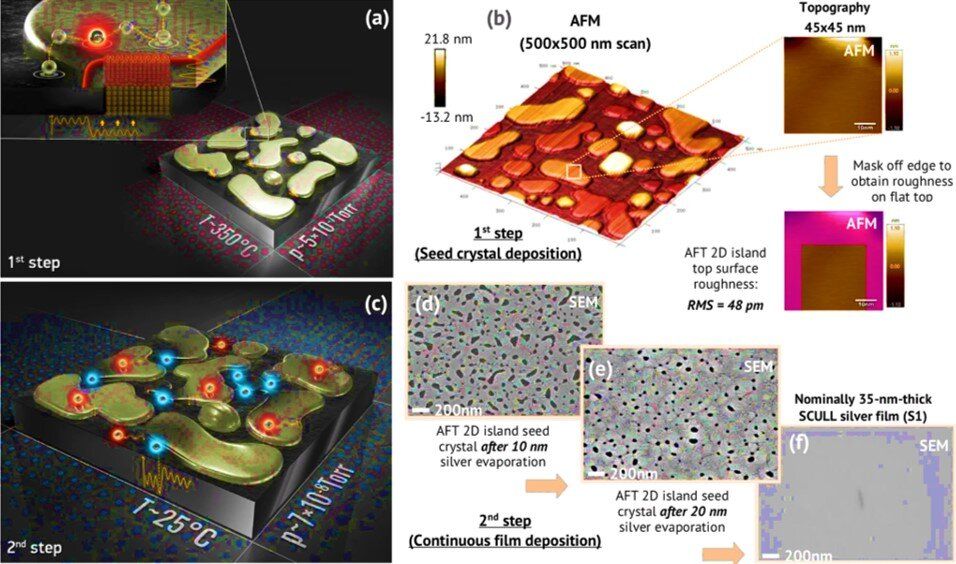
Ultra-low-loss metal films with high-quality single crystals are in demand as the perfect surface for nanophotonics and quantum information processing applications. Silver is by far the most preferred material due to low-loss at optical and near infrared (near-IR) frequencies. In a recent study now published on Scientific Reports, Ilya A. Rodionov and an interdisciplinary research team in Germany and Russia reported a two-step approach for electronic beam evaporation of atomically smooth single crystalline metal films. They proposed a method to establish thermodynamic control of the film growth kinetics at the atomic level in order to deposit state-of-the-art metal films.
The researchers deposited 35 to 100 nm thick, single-crystalline silver films with sub-100 picometer (pm) surface roughness with theoretically limited optical losses to form ultrahigh-Q nanophotonic devices. They experimentally estimated the contribution of material purity, material grain boundaries, surface roughness and crystallinity to the optical properties of metal films. The team demonstrated a fundamental two-step approach for single-crystalline growth of silver, gold and aluminum films to open new possibilities in nanophotonics, biotechnology and superconductive quantum technologies. The research team intends to adopt the method to synthesize other extremely low-loss single-crystalline metal films.
Optoelectronic devices with plasmonic effects for near-field manipulation, amplification and sub-wavelength integration can open new frontiers in nanophotonics, quantum optics and in quantum information. Yet, the ohmic losses associated in metals are a considerable challenge to develop a variety of useful plasmonic devices. Materials scientists have devoted research efforts to clarify the influence of metal film properties to develop high performance material platforms. Single-crystalline platforms and nanoscale structural alterations can prevent this problem by eliminating material-induced scattering losses. While silver is one of the best known plasmonic metals at optical and near-IR frequencies, the metal can be challenging for single-crystalline film growth.
Human Headphones Just Changed The Game
Go to https://wix.com/go/Unbox to create your own website! Use code Unbox15 for 15% off a yearly premium plan!
Human Headphones are the World’s first true wireless over-ear headphones.
FOLLOW ME IN THESE PLACES FOR UPDATES
Twitter — http://twitter.com/unboxtherapy
Facebook — http://facebook.com/lewis.hilsenteger
Instagram — http://instagram.com/unboxtherapy
STAR WARS 9 Trailer # 2 (NEW 2019) The Rise of the Skywalker
© 2019 — Disney
Comedy, Kids, Family and Animated Film, Blockbuster, Action Cinema, Blockbuster, Scifi Movie or Fantasy film, Drama… We keep you in the know!
Subscribe now to catch the best movie trailers 2017 and the latest official movie trailer, film clip, scene, review, interview.
Nanoparticles could someday give humans built-in night vision
Movies featuring heroes with superpowers, such as flight, X-ray vision or extraordinary strength, are all the rage. But while these popular characters are mere flights of fancy, scientists have used nanoparticles to confer a real superpower on ordinary mice: the ability to see near-infrared light. Today, scientists report progress in making versions of these nanoparticles that could someday give built-in night vision to humans.
The researchers will present their results at the American Chemical Society (ACS) Fall 2019 National Meeting & Exposition.
“When we look at the universe, we see only visible light,” says Gang Han, Ph.D., the project’s principal investigator, who is presenting the work at the meeting. “But if we had near-infrared vision, we could see the universe in a whole new way. We might be able to do infrared astronomy with the naked eye, or have night vision without bulky equipment.”